- Pillar 2A2: Indirect Taxes
- Definition:
- Indirect taxes are levies imposed on goods and services, collected by intermediaries (e.g., traders, manufacturers) and passed on to consumers through the price of the product, administered by the Ministry of Finance, Department of Revenue, through the Central Board of Indirect Taxes and Customs (CBIC), renamed from Central Board of Excise and Customs (CBEC) in Budget-2018.
- Context:
- Indirect taxes are a critical revenue source for the Union and State governments, funding public services and infrastructure while influencing consumption patterns and economic behavior through targeted taxation.
- Significance for India:
- Indirect taxes, particularly GST, have unified India’s tax structure, reduced cascading effects, and promoted ease of doing business, aligning with India’s goals of economic integration, transparency, and global competitiveness under initiatives like Make in India and Atmanirbhar Bharat.
- Indirect Taxes Types:
- Definition:
- Indirect taxes are categorized based on their method of imposition, either on the value of goods/services or on their quantity.
- Types:
- Ad-Valorem Tax:
- Levied as a percentage of the value of goods or services (e.g., 35% customs duty on imported orange juice worth ₹1000 results in ₹350 tax).
- Advantages:
- Easier to administer due to standardized valuation methods.
- Disadvantages:
- Leads to inspector-raj and litigation; small rate increases significantly impact consumer prices.
- Specific Tax per Unit:
- Levied based on quantity or volume (e.g., ₹260 excise duty per 1000 cigarettes of 65-70mm length, regardless of price).
- Advantages:
- Effective in reducing harmful consumption by passing greater burden to consumers.
- Disadvantages:
- Difficult to administer due to quantity-based assessments.
- Burden of Indirect Tax – Forward vs. Backward Shifting
- Definition:
- The burden of indirect taxes can shift to consumers (forward) or suppliers/producers (backward), depending on market dynamics.
- Forward Shifting:
- Sellers increase product prices to maintain profit margins (e.g., Vadilal raises ice cream prices after GST increase from 18% to 28%).
- Backward Shifting:
- Sellers absorb tax increases by cutting costs (e.g., Vadilal reduces worker salaries to maintain ice cream prices and market share).
- Factors Influencing Shifting:
- Determined by supply and demand elasticity (e.g., forward shifting is common for essential medicines due to inelastic demand).
- Merits and Demerits
- Merits:
- Convenient to collect as traders act as unpaid tax collectors, ensuring a wide tax base (e.g., 18% GST on biscuits).
- Elastic, generating significant revenue from small rate increases, impacting all consumers.
- Reduces harmful consumption through high taxes on sin goods (e.g., tobacco, alcohol, soft drinks).
- Demerits:
- Regressive, disproportionately affecting the poor, who pay a higher income share (e.g., same GST rate on biscuits for all income groups).
- Hidden in product prices, reducing civic awareness of tax contributions.
- Increases product costs, creating demand uncertainty and variable government revenue.
- High risk of corruption and tax evasion without input tax credit, leading to cascading effects.
- Pigouvian Tax
- Definition:
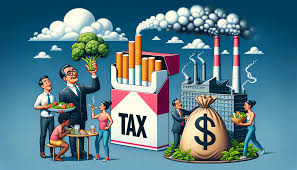
- A tax imposed to correct negative externalities, where third parties bear unintended costs of economic activities (e.g., pollution from cement factories affecting local communities).
-
- Concept:
- Proposed by Arthur C. Pigou to tax activities causing negative externalities (e.g., pollution, passive smoking, alcohol-related social issues).
- Examples in India:
- High indirect taxes on petroleum, tobacco, and alcohol; Clean Environment Cess on coal (₹400/tonne, abolished under GST).
- Sin Tax:
- Taxes on morally undesirable goods (e.g., alcohol, tobacco); distinction from Pigouvian tax is minor and not exam-critical.
- Customs Duty in Budget – Normal Patterns
- Definition:
- Taxes levied on imported goods, separate from GST, with additional cess/surcharges.
- Patterns:
- Budget-2020 introduced 5% Health Cess on imported medical devices to fund hospitals in Aspirational Districts under Ayushman Bharat.
- Customs duty remains a significant revenue source, unaffected by GST regime.
- Customs Duty on Imported Lab Chemicals:
- Changes (Budget-2024-July):
- Increased from 10% to 150%, reverted to 10% after protests by scientists.
- Industrial-grade ethanol imports retain 150% duty to prevent misuse in liquor production.
- Customs Duty on Gold and Other Precious Metals
- Changes (Budget-2024):
-
| Item | Before | After |
|---|
| Gold and Silver Bars | 15% | 6% |
| Platinum, Palladium, Osmium, Ruthenium, Iridium | 15.4% | 6.4% |
- Justification:
- High customs duty on gold encourages smuggling; reduction aims to curb black money and enhance compliance.
- Customs Duty-Free Gold Baggage Allowance
- Allowance:
-
| Passenger Category | Jewellery Weight Limit | Max Value Limit | Customs Duty |
|---|
| Male | Up to 20 grams | ₹50,000 | No duty |
| Female | Up to 40 grams | ₹1,00,000 | No duty |
- Excess Gold:
- Subject to 3%-10% customs duty based on weight.
- Issues:
- NRIs bringing gold for events like weddings face harassment by customs officials; Delhi High Court (2025) ordered CBIC to review baggage limits.
- Cess and Surcharges on Excise & Customs
- Types:
-
| Cess/Surcharge | Description |
|---|
| Social Welfare Surcharge (SWS) | Budget-2018: 10% on customs duty; exempted for gold/silver in Budget-2021 to reduce tax burden and smuggling. |
| Health Cess | Budget-2020: 5% on customs duty + surcharge for medical devices, funding hospitals in Aspirational Districts. |
| Agriculture Infrastructure and Development Cess (AIDC) | Budget-2021: Applied on excise (₹2.5/litre petrol, ₹4/litre diesel) and customs (gold, silver, alcohol, edible oils, pulses, cotton, urea; 1.5%-100%). |
- Budget-2025 – Rationalising Cess/Surcharges on Customs Duty
- Changes:
-
| Before | After |
|---|
| Multiple cess/surcharges on single item (e.g., customs duty + SWS + Health Cess on medical devices) | Not more than one cess/surcharge per item |
- Justification:
- Response to international criticism (e.g., US claims of India’s high import tariffs).
- Indirect Tax – Petrol & Diesel Price High
- Tax Structure (Mid-2021):
-
| Fuel | Union Taxes | State Taxes | Total Tax |
|---|
| Petrol | Basic Excise (₹1.40) + Special Additional Excise (₹11) + Road Infrastructure Cess (₹18) + AIDC (₹2.50) | State VAT (₹20/litre) | 135% of base price |
| Diesel | Basic Excise (₹1.80) + Special Additional Excise (₹18) + Road Infrastructure Cess (₹18) + AIDC (₹4) | State VAT (₹15/litre) | 116% of base price |
- Comparison:
- Global tax rates:
- EU (45-60%), Canada (15-30%), USA (15%).
- Impact of GST:
- Applying 28% GST would reduce taxes to ~₹5-6/litre, causing a revenue loss of over ₹4 lakh crore, making cheap fuel unfeasible without significant revenue cuts.
- Context:
- Post-COVID, direct tax collections fell, reducing government willingness to lower fuel taxes.
- Special and Additional Excise Duty Not Shared with States
- Structure:
-
| Tax Type | Shareable with States (Finance Commission) |
|---|
| Basic Excise Duty | Yes |
| Additional Excise Duty | No |
| Special Additional Excise Duty | No |
- Additional Differential Excise Duty on Unblended Petrol
- Objective:
- Promote 20% ethanol blending by 2025 to reduce GHG emissions.
- Tax Structure (Budget-2022):
-
| Fuel Type | Taxes | Additional Differential Excise Duty |
|---|
| Ethanol Blended Petrol | Basic Excise + Special Additional Excise + Road Infrastructure Cess + AIDC | ₹0/litre |
| Unblended Petrol | Basic Excise + Special Additional Excise + Road Infrastructure Cess + AIDC | ₹2/litre |
- Windfall Tax on Export of Petrol/Diesel/ATF (2022)
-
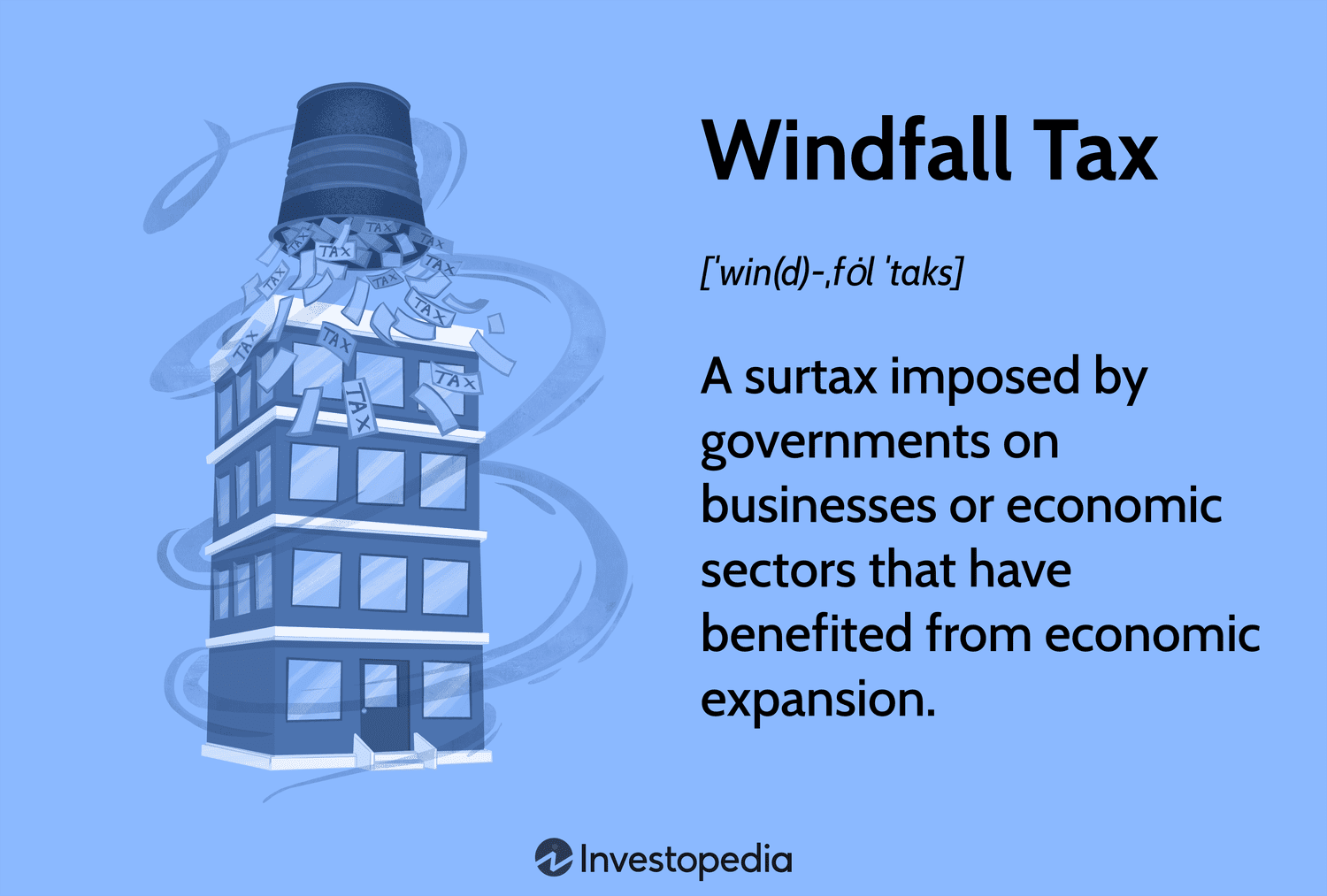
- Definition:
- A tax on unexpectedly large profits, termed “windfall tax” by media, applied to fuel exports during high global prices.
- Analogy:
- Imagine an apple tree. You usually have to climb the tree or use a ladder to get the fruit (Normal Profit).
- Suddenly, a massive wind blows, and 100 ripe apples fall to the ground for free (Windfall Profit).
- Context (2022):
- Sharp rise in global fuel prices increased profits for Indian refineries exporting petrol/diesel.
- Excessive exports reduced domestic supply, contributing to inflation.
- Implementation:
- Special Additional Excise Duty (SAED):
- ₹6/litre (petrol), ₹12/litre (diesel), ₹6/litre (ATF).
- Gradually reduced/eliminated from August 2022 as global prices fell.
- Faqs:
- Can windfall tax be imposed only on indirect taxes / petrol diesely?
- If government is imposing any direct or indirect tax because of some unforeseen profits to a party, then journalist may label as Windfall Tax.
- Then can't we say bitcoin profit pe Capital Gains Tax is also windfall taxy?
- Journalists/Newspaper/Govt/Chief Economic Advisor/NITI etc have not used this word yet. So I would not use it.
- GST on Petrol, Diesel, Electricity:
- NITI Aayog 6-Year Roadmap
- Proposal (2021-Aug):
- 28% GST on petrol/diesel + compensation cess for states (6 years).
- 18% GST on electricity.
- Status:
- Under consideration; case pending in Kerala High Court.
- Petrol-Diesel: Dynamic Fuel Pricing System & Oil Bond Repayment
- Evolution:
- 1970s-2002:
- Administered Price Mechanism (APM) with government-fixed prices and subsidies via oil bonds.
- 2002-2014:
- Gradual decontrol to reduce subsidy burden.
- Current:
- Dynamic Fuel Pricing System (since 2017), where Oil Marketing Companies (OMCs) set daily prices based on international Trade Parity Price (TPP).
- Benefits:
- Aligns domestic prices with global markets, theoretically lowering prices when global prices fall.
- Challenges:
- High taxes (Union and State) keep prices elevated despite global price drops.
- Oil bond repayments (from UPA-II era) limit Union’s ability to reduce excise duties (FM Sitharaman, 2021).
- Miscellaneous Issues Related to Indirect Taxes
- Minerals: Royalty Not Tax (SC, 2024)
- Ruling:
- Royalty is a contractual payment for mineral rights, not a tax.
- States can impose taxes on mines and minerals from April 1, 2005, under State List Entry 49 (taxes on lands and buildings).
- States cannot demand interest/penalties for 2005-2024 tax dues; payable in installments over 12 years.
- Context:
- India Cement case (Tamil Nadu) clarified states’ taxing powers despite Union’s Mines and Minerals (Development and Regulation) Act, 1957.
- Urban Local Bodies (ULB) Solid Waste Management (SWM) Cess
- Levied under Solid Waste Management Rules, 2016, typically ₹30-50/month, collected with property tax.
- Himachal Water Cess on Hydel Projects (Unconstitutional)
- Issue:
- Himachal Pradesh imposed 10-50 paise/cubic meter water cess on hydel projects (2023-24).
- Union challenged, citing existing electricity duty; additional cess violates constitutional taxation provisions.
- Ruling (Himachal HC, 2024):
- Water cess declared unconstitutional.
- Cascading Effect of Indirect Taxes
- Definition:
- It refers to the "tax on tax" phenomenon where a tax is levied on a value that already includes tax from a previous stage of the supply chain.
- Happens in absence of Input Tax Credit (ITC) under older tax regimes (like excise, VAT, service tax).
- Cause:
- No mechanism to offset taxes paid on inputs/services.
- Each intermediary adds value and charges tax on the full amount (including previously paid tax).
- Example:
- Manufacturer pays excise on raw materials.
- Wholesaler pays VAT on a price that includes excise.
- Retailer then charges tax again on this compounded price.
- Impact:
- Increases cost of goods/services for the final consumer.
- Reduces tax transparency and complicates accounting.
- Hurts competitiveness of Indian products (esp. in exports).
- GST Reform:
- GST allows seamless ITC, eliminating cascading by enabling tax credit across goods/services and interstate supply chains.
- Ensures tax is levied only on the value addition at each stage.
- A Timeline of Reforms
- Evolution:
-
| System | Period | ITC on Union Taxes | ITC on State Taxes |
|---|
| MODVAT | 1986-2004 | Yes (excise) | No |
| CENVAT | 2004-2017 | Yes (excise, service tax) | No |
| State VAT | 2005-2017 | No | Yes (VAT) |
| GST | 2017-Present | Yes (CGST) | Yes (SGST) |
- Significance:
- GST unified Union and State indirect taxes, providing ITC for both, reducing cascading effects and simplifying tax administration.
- GST Timeline
- Key Milestones:
- 2004:
- Vijay Kelkar Task Force on FRBM recommends GST.
- 2006:
- P. Chidambaram announces GST launch by 2010.
- 2011:
- 115th Constitutional Amendment Bill (lapsed).
- 2014-16:
- 122nd Constitutional Amendment Bill passed, leading to 101st Constitutional Amendment Act, 2016.
- 2017:
- GST implemented (July 1).
- Constitutional Amendments:
- 101st Amendment enabled GST, amending Articles 246-A, 268-A, 269-A, 270, 279-A, 366.
- 101st Constitutional Amendment Act, 2016
- Key Provisions:
- Article 246-A:
- States empowered to tax goods and services; Union retains IGST for inter-state trade.
- Article 268-A:
- Deleted, as service tax subsumed under GST.
- Article 269-A:
- IGST distribution formula set by GST Council.
- Article 270:
- CGST distribution between Union and States per Finance Commission.
- Article 279-A:
- President of India to appoint a constitutional body, "GST Council headed by Finance Minister".
- Article 366:
- Excluded alcoholic liquor for human consumption from GST.
- Implementation:
- Effective from July 1, 2017, with ITC for CGST and SGST.
- GST Council Composition
- Structure:
-
| Union Representatives (2) | States’ Representatives (31) |
|---|
| Finance Minister (Chairman), Union Minister of State for Finance/Revenue | One minister per state/UT with legislature (J&K, Delhi, Puducherry); one selected as Vice-Chairman |
- Voting:
- Union:
- 1/3rd voting power; States: 2/3rd.'
- 3/4th majority required for decisions; quorum of 50% membership.
- GST Council – Functions
- Purpose:
- Constitutional body created by 101st Constitutional Amendment Act, 2016.
- Makes recommendations to Union and States on GST-related matters.
- Headed by Union Finance Minister. Members include state finance ministers.
- Key Functions:
- 1. Subsumed Taxes:
- Decide which indirect taxes, cesses, surcharges (of Union & States) to subsume into GST regime.
- 2. Inclusion of Petroleum Products:
- Decide the date from which following five products will be included under GST:
- Crude Oil
- Petrol
- Diesel
- Aviation Turbine Fuel (ATF)
- Natural Gas
- Until then:
- Union & States will continue to levy excise and VAT independently on them.
- 3. Standard Rates of GST:
- Recommend standard rates for:
- CGST (Central GST)
- SGST (State GST)
- UTGST (Union Territory GST)
- IGST = CGST + (SGST or UTGST, depending on destination state)
- 4. Special Rates in Calamities:
- Recommend additional GST rates during natural calamities.
- Example:
- In Jan 2019, GST Council allowed Kerala to levy 1% calamity cess on intra-state trade for 2 years (for 2018 flood rehabilitation).
- 5. IGST System:
- Design the framework for interstate commerce under IGST and recommend tax-sharing formula.
- 6. GST Registration Norms:
- Decide registration threshold for businesses:
- Originally:
- ₹20 lakh for normal states
- ₹10 lakh for Special Category states + Telangana
- After Jan 2019 update:
- ₹40 lakh for normal states
- ₹20 lakh for special category states
- E-commerce sellers:
- Some relaxations applied.
- Service sector turnover thresholds (like Manipur, Mizoram): not important for UPSC.
- 7. Special Category States:
- Protect interests of 11 special category states:
- 8 North-Eastern States
- 2 Himalayan States (Himachal Pradesh & Uttarakhand)
- Jammu & Kashmir
- Example: In 2021, Sikkim proposed Covid Cess on pharma and power companies.
- GST Council's Group of Ministers (GoM) rejected the proposal.
- Instead, GoM recommended ₹250 crore grant to Sikkim from Union Govt for Covid relief.
- 8. Compensation to States:
- Decide mechanism for compensating states for GST revenue loss (due to shift from VAT to GST).
- Funded through GST Compensation Cess.
- 9. Dispute Settlement:
- Framework for resolving disputes between:
- Union vs State(s)
- State vs State
- Implementation:
- GST Council meetings → Recommendations → Laws passed by Parliament and State Legislatures.
- Central Laws Passed:
- Central Goods and Services Tax Act (CGST)
- Integrated Goods and Services Tax Act (IGST)
- Union Territory Goods and Services Tax Act (UTGST)
- Finance Act 2020 updated UT list:
- Ladakh (UT without legislature)
- Dadra & Nagar Haveli + Daman & Diu merged into one UT
- GST (Compensation to States) Amendment Act
- State Laws:
- State Goods and Services Tax Acts (SGST)
- Example:
- Jammu & Kashmir passed SGST on 8 July 2017.
- J&K Reorganisation Act, 2019 did not repeal SGST.
- Current Status:
- SGST applicable in J&K (UT with legislature)
- UTGST applicable in Ladakh (UT without legislature)
- GST Council Decisions – Not Binding
- 2022 – Supreme Court Ruling:
- GST Council’s decisions are not binding on States.
- Only recommendatory in nature as per constitutional design.
- Implication:
- Federal tension may rise if states (especially opposition-ruled) do not follow Council decisions.
- May lead to inconsistent GST implementation across India.
- GST Input Tax Credit (ITC)
- Definition:
- A GST mechanism that allows a business to reduce the tax it has already paid on inputs
- ITC allows businesses to offset GST paid on inputs against GST collected on outputs, reducing tax burden.
- Core idea:
- Input = purchases for business
- Output = sales by business
- GST paid on inputs -> credit allowed
- GST collected on outputs -> tax payable
- Net tax paid = Output GST - Input GST credit
- Mechanism:
- Intra-state:
- CGST (Union) + SGST (State) or UTGST (UT without legislature).
- Inter-state:
- IGST (CGST + SGST/UTGST), distributed to destination state/UT.
- Example:
- Infosys pays 18% GST on laptops (input) but gets ITC for 0% GST on exported software services (output).
- Inverted Duty Structure Problem in GST on Textile
- Issue:
- Higher GST on inputs (e.g., 18% on fiber) than outputs (e.g., 5% on apparel < ₹1000), leading to ITC accumulation and refund burdens.
- Reform (Postponed):
- GST Council proposed uniform 12% GST on manmade fiber, yarn, fabrics, and apparel; deferred after industry protests.
- Popcorn – 3 Rates of GST
- Rates:
-
| Item | GST Rate |
|---|
| Loose Popcorn | 5% |
| Pre-packaged/Branded Popcorn | 12% |
| Caramelised Popcorn (considered confectionary item, so higher gst) | 18% |
- Justification:
- Prevents inverted duty structure by aligning rates with product processing.
- Ensures final product GST is not lower than input tax (e.g., oil, butter, packaging), preventing ITC accumulation and refund dependency.
- GST on Used Cars – Margin Value (2024 Clarification)
- Rules:
-
| Transaction | GST Applicability |
|---|
| Individual to Individual | No GST |
| Dealer Sells Used Car (₹9 lakh buy, ₹10 lakh sell) | 18% GST on ₹1 lakh margin |
| Dealer Sells New Car | GST on full price (e.g., 12% ambulance, 28% SUV) |
- Exempt vs. Zero Rated
-
| Type |
Definition |
Input Tax Credit (ITC) |
Examples |
Impact on Business |
Government Implication |
| GST Zero Rated |
- Government levies 0% GST on output.
- Allows claiming full ITC on inputs/services used.
- Primarily for promoting exports and SEZ supplies.
|
Yes |
- Export of software services by Infosys.
- Supply to SEZs (Special Economic Zones).
|
- Business can claim refund of ITC on inputs.
- Effective tax burden becomes zero.
- Boosts competitiveness in international markets.
|
- No GST revenue from such transactions.
- But encourages exports, jobs, and economic growth.
- Govt gains via higher Corporate Tax from profitable exporters.
|
| GST Exempt / Nil Rated |
- Government levies 0% GST on output.
- Does not allow ITC claim on inputs/services.
|
No |
- Jaggery (गुड़)
- Unbranded food grains, milk, etc.
|
- No refund of input tax → hidden tax burden.
- Business may increase selling price to cover input taxes.
- Reduces transparency in tax chain.
|
- No GST revenue.
- Provides relief on essential goods/services.
- Input tax gets embedded in the final price → indirect burden on consumer.
|
| Non-GST Supply |
- Goods/services that are completely outside the GST regime.
- These are taxed under other laws like Excise/VAT.
|
No |
- Petrol, diesel, ATF, natural gas (Excise + VAT).
- Alcohol for human consumption (State Excise).
|
- No GST compliance required.
- Businesses deal with older, state-wise tax systems.
- Tax rates vary by state.
|
- GST revenue not applicable.
- States/centre earn via excise and VAT.
- Creates a dual tax regime and compliance complexity.
|
- Impact:
- Zero-rated exports boost competitiveness by refunding ITC, increasing jobs and GDP.
- Why vaccine GST can't be 0% ZERO RATED or EXEMPTED
- Present GST Structure:
- Export of Vaccine:
- 0% GST (Zero Rated)
- Domestic Sale of Vaccine:
- 5% GST
- If Domestic Sale made 0% GST (Zero Rated):
- Businessman allowed to claim full Input Tax Credit (ITC) on raw materials, machinery, services.
- Leads to:
- Accumulation of large ITC with businessman.
- Government must refund unused ITC.
- Results in revenue loss for Government.
- Outcome:
- More refunds = Less net GST collection.
- If Domestic Sale made GST Exempt/Nil Rated:
- Businessman not allowed to claim ITC on inputs (machinery, raw material).
- Leads to:
- Cost of inputs becomes part of final price.
- Businessman inflates selling price to recover non-creditable input costs.
- Consumer (patient) pays more.
- Example:
- Just like jaggery case:
- Sugarcane crushing machine → no ITC → higher jaggery price.
- Conclusion:
- Keeping 5% GST on domestic vaccine sales:
- Allows ITC to offset input cost.
- Avoids excess refund burden on govt.
- Keeps vaccine price lower than exempted scenario.
- Ensures some GST revenue while keeping cost under control.
- Broader Impact:
- On Exports:
- Vaccines exported at 0% → ITC allowed → refunded or used for domestic tax offset.
- Encourages exports = ↑ GDP, ↑ jobs, ↑ corporate tax revenue.
- On Domestic Use:
- Balanced approach of 5% GST preserves revenue & affordability.
- Centre’s Indirect Taxes Subsumed in CGST
-
| Tax Type | Description | Related Act | CGST Replacement | Cess/Surcharge | Budget Updates | 2025 Trends (Hypothetical) |
|---|
| Customs Duty (Basic, SAD, CVD, Anti-Dumping Duty) | Levied on import/export goods. Basic Customs Duty (5–20% on most goods), Special Additional Duty (SAD), Countervailing Duty (CVD), and Anti-Dumping Duty protect domestic industries. | Customs Act, 1962 | No, remains separate. Imported goods face Customs Duty + IGST. | - 2018: Education Cess replaced with 10% Social Welfare Surcharge.
- 2020: 5% Health Cess on imported medical devices for hospital construction in Aspirational Districts.
| - 2018: Social Welfare Surcharge introduced.
- 2020: Health Cess added.
| Customs Duty collections rose by 10% in 2024–25 due to increased imports and streamlined digital clearance (Economic Survey 2025). |
| Central Sales Tax (CST) | Union tax on inter-state trade, assigned to origin state (2% rate on registered dealers). | Central Sales Tax Act, 1956 | Yes, replaced by IGST (CGST + SGST). | None | Abolished with GST rollout in 2017. | IGST collections grew by 12% in 2024–25, reflecting robust inter-state trade (Economic Survey 2025). |
| Service Tax | Introduced in 1994 (FM: Manmohan Singh) at 5% on services like telephone bills, non-life insurance, stockbrokers; later expanded to most services (except postal, school fees), reaching 15% with cesses. | Finance Act, 1994 | Yes, fully replaced by CGST. | Krishi Kalyan Cess, Swachh Bharat Cess (abolished with GST). | Abolished in 2017 with GST rollout. | Service sector CGST contributions increased by 15% in 2024–25, driven by digital services growth (Economic Survey 2025). |
| Excise Duty (General) | Levied on manufacturing/production of goods (e.g., medicinal preparations, deodorants, perfumes containing alcohol). | Central Excise Act, 1944 | Yes, fully replaced by CGST (except hydrocarbons). | Various cesses/surcharges (abolished with GST). | Abolished for most goods in 2017 with GST. | CGST on manufactured goods grew by 10% in 2024–25, reflecting industrial recovery (Economic Survey 2025). |
| Excise Duty (Tobacco Products) | Levied on tobacco products (e.g., cigarettes, cigars) at ~14%. | Central Excise Act, 1944 | Yes, replaced by 14% CGST. | - GST Compensation Cess (variable, ~5–10%).
- National Calamity Contingent Duty (NCCD) funds National Disaster Response Fund (Disaster Management Act, 2005).
| 2023: Increased NCCD on cigarettes. | NCCD collections rose by 8% in 2024–25, supporting disaster preparedness (Economic Survey 2025). |
| Excise Duty (Hydrocarbons) | Levied on production/refining of crude oil, petrol, diesel, aviation turbine fuel, natural gas. | Central Excise Act, 1944 | No, remains outside GST until GST Council decides inclusion. | Road and Infrastructure Cess funds Central Road & Infrastructure Fund (Central Road Fund Act, 2000). | Ongoing exclusion; refineries pay Excise + cess, petrol pumps pay state VAT. | Petrol/diesel Excise collections grew by 5% in 2024–25; GST inclusion discussions ongoing (Economic Survey 2025). |
| Direct Taxes (Corporation Tax, Income Tax, Capital Gains Tax) | Levied on income/profits of companies and individuals; not part of indirect tax regime. | Income Tax Act, 1961 | No, not replaced by GST (direct taxes). | Health & Education Cess (4% on direct taxes). | Not applicable to GST regime. | Direct tax collections increased by 10% in 2024–25, unaffected by GST (Economic Survey 2025). |
- Notes:
- NCCD funds National Disaster Response Fund (Disaster Management Act, 2005).
- Hydrocarbon fuels (petrol, diesel, etc.) remain under excise until GST inclusion.
- States’ Indirect Taxes Subsumed in SGST
- Subsumed Taxes:
-
| State Tax |
Subsumed under SGST? |
Remarks |
| State VAT on sale of goods |
Yes |
Except for 5 petro-products: crude oil, petrol, diesel, ATF, natural gas — to be included in GST when GST Council decides. |
| State VAT on crude oil, petrol, diesel, ATF, natural gas |
No |
VAT still applicable; collected by dealers and deposited to the state government. |
| State Excise on liquor for human consumption |
No |
Liquor kept out of GST due to states’ revenue dependence; constitutionally protected. |
| State VAT on liquor for human consumption |
No |
Same reason as above. |
| Electricity Duty |
No |
Not replaced by GST. |
| Road Tax on vehicles |
No |
Status varies across states; sometimes treated as direct tax. |
| Purchase Tax (on vehicles, boats, animals) |
Yes |
Subsumed under SGST. |
| Advertisement Tax (on banners, hoardings, etc.) |
Yes |
Now covered under GST for supply of advertising services. |
| Entertainment Tax (by State) |
Yes |
Except when levied by local bodies (e.g., Kerala 10% movie ticket tax). |
| Luxury Tax (Hotels, Resorts, Spas) |
Yes |
Subsumed under GST. |
| Tax on Lottery, Betting, Gambling |
Yes |
Taxed at highest slab: 14% SGST + 14% CGST = 28%. |
| Professional Tax, Property Tax, Land Revenue, Stamp Duty |
No |
These are direct taxes; GST subsumes only indirect taxes. |
- States’ Control/Tax on Industrial Alcohol (SC, 2024)
- Ruling:
- States can regulate and tax industrial alcohol (denatured ethanol) in addition to GST.
- GST applicable:
- 18% (9% CGST + 9% SGST).
- Supreme Court overturned its own 1991 ruling which had limited states' taxation power over industrial alcohol.
- Context:
- Industrial alcohol (denatured ethanol) is used in pharmaceuticals, cosmetics, etc.
- It can also be misused for making potable liquor.
- To prevent such misuse, states claim regulatory and taxation powers are necessary.
- GST Revenue Collection Figures
- Trends:
- Monthly GST collections vary due to seasonality; significant growth from FY18 to FY24.
- FY24:
- Average monthly collection: ~₹1.51 lakh crore (indicative, exact figures fluctuate).
- Components (approximate monthly breakup):
- CGST:
- ₹28,000–30,000 crore
- SGST:
- ₹35,000–37,000 crore
- IGST:
- ₹75,000–80,000 crore (shared between Centre and States)
- Compensation Cess:
- ₹10,000–12,000 crore
- Monthly collections are settled between Centre and States based on intra/inter-state nature.
- Tax Collection Highest to Lowest (Budget-2025)
- Order:
- Income Tax > GST > Corporation Tax > Excise > Customs > Service Tax (₹100 crore from old cases)
- Historical Trends:
- Budget-2023/2022:
- GST > Corporation Tax > Income Tax > Excise > Customs
- Pre-2019:
- Corporation Tax > GST > Income Tax > Excise > Customs
- GST Rates on Services (dynamic data)
- Zero-Rated/Exempt Services:
- Services by Union/State governments, local bodies, RBI, ESIC, EPFO.
- Religious/charitable activities, public libraries, toilets, crematoriums.
- Residential rent, aviation services in North-Eastern states, milk/newspaper transport.
- Educational services (schools, colleges, not coaching institutes).
- Exported services (zero-rated, ITC eligible).
- Taxable Services:
-
| Service | GST Rate |
|---|
| Plumbing, Print Ads, E-books | 5% |
| Hotel Accommodation (≤₹7500/day), Movie Tickets | 12% |
| Coaching, OTT Platforms, DTH, 5-Star Hotels | 18% |
| Gambling, Casino, Online Gaming | 28% |
- GST on Rent (Home/Hostel/Office/Shop)
- Residential Rent:
- Exempted
- Commercial Rent (e.g., office/shop):
- 18% GST.
- GST on Actionable Claims
- Definition:
- Legal right to demand/recover money, goods, or services (e.g., loans, credit cards, unpaid invoices).
- GST Applicability:
-
| Component | Amount | GST |
|---|
| Loan/Credit Card Limit | ₹10 lakh | N/A |
| Application Processing Fee | ₹500 | 18% |
| Late Fees/Penalty | ₹100 | 18% |
- GST on Actionable Claims – Lottery/Online Gaming
- Dispute:
- Gaming companies argued lotteries/online gaming are not actionable claims, seeking lower GST or exemption.
- GST Council Ruling:
- 28% GST on all gaming, regardless of skill or luck.
- GST on Lottery/Online Gaming – Full Bet Value
- Structure:
-
| Component | Amount | GST |
|---|
| Bet | ₹80 | 28% |
| Platform Fees | ₹20 | 28% |
| Total Bet Value | ₹100 | 28% |
- Rejected Demands:
- Companies sought GST only on fees or lower rates for skill-based games.
- GST on Lottery/Online Gaming – Entry Bets, Not Winnings
- Clarification:
- 28% GST applies to entry bets (gross value), not winnings.
- GST Rates on Goods (dynamic data)
- Zero-Rated/Exempt Goods:
- Fresh milk, live animals, unbranded fresh/unpacked food, puja items, contraceptives, books, khadi, agricultural tools, exported goods.
- Taxable Goods (Various Slabs):
-
| Goods | GST Rate |
|---|
| Semi-precious Stones, Unworked Diamonds | 0.25% |
| Polished Diamonds | 1.5% |
| Jewellery, Gold, Platinum | 3% |
| Milk Powder, Vaccines, Textiles (<₹1000) | 5% |
| Textiles (>₹1000), Ambulances, Notebooks | 12% |
| Ice Cream, Electronics, Medicines | 18% |
| Luxury/Sin Goods (e.g., Tobacco, SUVs) | 28% |
- GST Rates on Goods: 0% Removed
- Changes (2022):
-
| Item | Before | After |
|---|
| Pre-packed Cereals, Flour, Pulses (<25kg) | 0% | 5% |
| Maps, Chequebooks | 0% | 18% |
- GST on Extra Neutral Alcohol (ENA)
- Clarification (2023-Oct):
- ENA (used in liquor, cosmetics, medicines): 18% GST (9% CGST + 9% SGST).
- States can impose additional VAT/excise on ENA for liquor.
- GST on Millets (2023)
- Changes:
-
| Item | Before | After |
|---|
| Pre-packed/Branded Millet Products | 18% | 5% |
| Loose/Unbranded Millets | 0% | 0% |
- Context:
- Aligned with International Year of Millets (FAO/UN, 2023).
- GST Composition Scheme
- Definition:
- A simplified GST scheme for small taxpayers with aggregate annual turnover up to ₹1.5 crore (₹75 lakh for special category states).
- Allows eligible taxpayers to pay GST at a fixed rate on turnover and file returns quarterly instead of monthly.
- Reduces compliance burden and bookkeeping complexity.
- Features:
- Cannot collect GST from customers.
- Cannot claim Input Tax Credit (ITC).
- Separate rates for manufacturers, traders, and restaurants (e.g., 1%, 5%).
- Eligibility:
- Only intra-state suppliers (not inter-state or export-oriented businesses).
- Not available to service providers (except restaurants and some notified services).
- Note:
- Technical nuances like Form CMP-02, CMP-08, and GSTR-4 exist, but not exam-critical.
- 1% GST Deposit in Cash for Fake ITC Claims
- Status:
- Outdated compliance rule; not relevant for Prelims anymore.
- Earlier intended as a deterrent against fake invoices/ITC fraud.
- Reverse Charge Mechanism (RCM)
- Definition:
- A system under GST where the recipient of goods/services is liable to pay tax directly to the government instead of the supplier.
- Triggered when:
- The supplier is unregistered but the recipient is registered under GST.
- Specific categories of goods/services are notified by the government.
- Significance:
- Ensures tax collection even from unregistered sellers.
- Brings informal/unorganized sectors into tax net indirectly.
- Buyer can claim ITC on tax paid under RCM (if used for business).
- Examples:
- Legal services from advocate to business entity.
- Transport of goods by GTA (Goods Transport Agency).
- Supply from unregistered vendor to a registered business in case of certain goods/services.
- Related Concepts:
- Similar compliance mechanism as E-way bill: requires buyer to take responsibility when certain threshold conditions are met.
- Mandatory self-invoicing by the buyer in certain RCM cases.
- E-way Bill System (2018 Onwards)
- Definition:
- Electronic document generated on GSTN portal for goods movement (≥₹50,000) intra-state or inter-state.
- Benefits:
- Reduces bribery, delays, and harassment at checkposts, ensuring hassle-free transport.
- E-Invoice (2022 Onwards)
- Comparison:
-
| Aspect | E-Bill | E-Invoice |
|---|
| Generator | Transport company | Business selling goods/services |
| Objective | Ease transport | Tax surveillance, prevent fake ITC |
- Implementation:
- Announced 2020, postponed due to COVID, effective 2022.
- Compensation to States
- Why?
- Union Government:
- Largest tax sources:
- Corporate tax and personal income tax (direct taxes, excluded from GST).
- State Governments:
- Largest tax source:
- VAT, subsumed under GST along with other indirect taxes, cess, and surcharges.
- States feared revenue loss due to GST replacing VAT.
- Destination-Based Tax:
- Industrialized states (e.g., Gujarat, Maharashtra, Tamil Nadu, Haryana) concerned about lower SGST revenue compared to VAT regime.
- Example:
- Nano car manufactured in Gujarat, sold in Uttar Pradesh → UP gets SGST, Gujarat gets nothing. Reverse also true (e.g., UP’s bicycle sold in Gujarat).
- How?
- GST Compensation to States Act 2017:
- GST Compensation Cess imposed on luxury and demerit goods:
- Pan masala (60%)
- Tobacco products (varies by product)
- Aerated water & caffeinated beverages (12%)
- Coal/lignite (₹400 per tonne)
- Motor vehicles, aircraft, yachts (3-22% depending on type)
- Cess collected used to compensate states for revenue losses during first five years of GST (July 1, 2017 – June 30, 2022).
- Compensation Formula (Section 7):
- Projected Revenue:
- 14% annual compound growth rate on 2015 VAT collection (base year).
- If current SGST collection < Projected Revenue, Union compensates the shortfall.
- Extension (Section 8):
- GST Council can recommend extending cess beyond five years.
- Eligibility:
- Compensation only for SGST (not for UTGST, e.g., Ladakh).
- State liquor taxes outside GST, so states with liquor prohibition (e.g., Bihar, Gujarat) cannot claim compensation for liquor revenue loss.
- GST Compensation Cess Collections:
-
| Year | Amount (₹) |
|---|
| 2018-19 | 95,000 Cr |
| 2019-20 | 98,000 Cr |
| 2020-21 | 1.10 Lakh Cr (expected), 85,000 Cr (actual) |
| 2021-22 | 1.05 Lakh Cr |
| 2022-23 | 1.30 Lakh Cr |
| 2023-24 | 1.45 Lakh Cr |
| 2024-25 | 1.51 Lakh Cr |
- Controversy:
- Pre-COVID Period (from August 2019 onwards):
- Several states began reporting delays in receiving GST compensation from the Centre.
- GST arrears started piling up, despite the Centre continuing to collect Compensation Cess.
- States raised concerns about fiscal stress due to non-receipt of guaranteed compensation.
- December 2019:
- The Central Government released only partial compensation to states.
- It cited insufficient balance in the Compensation Cess fund as the reason for delayed/full payments.
- This led to a political and fiscal dispute, with states demanding timely compensation as per the GST (Compensation to States) Act, 2017.
- GST Compensation & Back-to-Back Loans
- 2020:
- COVID lockdown reduced SGST collections, states demanded ₹2.35 Lakh Cr in compensation.
- Union’s Initial Response:
- Claimed not legally obliged to pay ₹2.35 Lakh Cr due to “Act of God” (COVID).
- Offered to pay only estimated amount (₹97,000 Cr).
- Attorney General’s Opinion:
- GST Compensation Act does not allow such exceptions; Union must pay full ₹2.35 Lakh Cr.
- Solution:
- Due to low cess collection, Union offered two borrowing options.
- States accepted modified Option #1, receiving ₹1.10 Lakh Cr.
- Beneficiary States
- Eligible:
- States & 3 UTs with legislature (e.g., Andhra, Assam, Bihar, Goa, Gujarat, Haryana, Kerala, Delhi, Jammu and Kashmir, Puducherry).
- Not Eligible:
- Some North-Eastern states with no SGST shortfall (per Section 7 formula).
- GST Compensation Cess Extension:
- Original Expiry:
- The GST (Compensation to States) Act, 2017, provided compensation to states for a period of 5 years, i.e., from July 1, 2017 to June 30, 2022.
- The cess collected was meant to bridge the shortfall in state revenues due to GST rollout, based on a 14% annual revenue growth promise over 2015-16 base year.
- Extension to March 31, 2026:
- While the compensation payout period to states ended in June 2022, the levy of GST Compensation Cess was extended till March 31, 2026.
- Purpose of Extension:
- To repay the borrowings made by the Central Government to compensate states during COVID-19 induced revenue shortfall.
- In FY21 and FY22, the Centre borrowed over ₹2.69 lakh crore on behalf of states and transferred it as back-to-back loans.
- Thus, although states stopped receiving compensation after June 2022, the cess continues to be levied on luxury and sin goods till 2026 to service debt obligations.
- GST Related Organizations
- GST Council
- Definition:
- Statutory body under Central Goods & Services Tax Act, 2017, responsible for GST policy decisions and recommendations.
- Role:
- Decides GST rates, exemptions, and compensation policies.
- Comprises Union Finance Minister (chair) and state finance ministers.
- Group of Ministers (GoM)
- Definition:
- Temporary committees formed by GST Council to address specific GST-related issues.
- Example:
- 2021:
- Headed by Conrad Sangma (Meghalaya CM)
- Objective: Review GST rates on COVID-19 vaccines, drugs, and related items.
- Benefits:
- Provides expert recommendations to streamline GST Council decisions.
- National Anti-Profiteering Authority (NAA/NAPA)
- Definition:
- Statutory body under CGST Act, 2017, to ensure businesses pass on input tax credit benefits to consumers by reducing prices.
- Purpose:
- Prevents profiteering by penalizing companies that do not lower prices despite lower production costs due to GST input tax credits.
- Example:
- Companies like Dominos Pizza, Nestle, and Hindustan Unilever initially failed to reduce prices for products like toothpaste and detergents.
- Timeline:
- Established:
- 2017
- Original Expiry:
- 2019 (2 years from inception)
- Extended by GST Council:
- Until November 2022
- Post-December 2022:
- Anti-profiteering matters transferred to Competition Commission of India (CCI), a statutory body under Ministry of Corporate Affairs (Competition Act, 2002).
- Benefits:
- Protects consumers from inflated prices, ensuring GST benefits reach end-users.
- Authority for Advance Ruling (AAR)
- Definition:
- Statutory body under CGST Act, 2017, providing advance clarifications on GST applicability to businesses.
- Purpose:
- Resolves tax-related ambiguities before production/marketing to avoid raids, litigation, or penalties.
- Example:
- Amul’s “Camel Milk” labeled as beneficial for diabetics—clarifies if it attracts 0% GST (like pasteurized milk) or 12% GST (like diabetic food supplements).
- Appeal Process:
- Higher appeals go to Appellate Authority for Advance Ruling (AAAR).
- Benefits:
- Reduces litigation, harassment, and bribe demands.
- Enhances ease of doing business, attracting Foreign Direct Investment (FDI).
- Goods and Services Tax Appellate Tribunal (GSTAT) (2023)
- Definition:
- Statutory and quasi-judicial body established by amending CGST Act, based on Dushyant Chautala committee recommendations.
- Composition:
- President (Judge of Supreme Court/High Court)
- 1 Judicial Member
- 1 Technical Member (Union)
- 1 Technical Member (State)
- Structure:
- Headquarters:
- Delhi
- Benches:
- Various states/cities
- Role:
- Hears appeals related to CGST, SGST, UTGST, and IGST Acts.
- Common forum for resolving disputes between Centre and States’ GST laws.
- Appeal Process:
-
| Level | Description |
|---|
| 1. Adjudicating Authority | Additional/Joint/Deputy/Assistant Commissioner or Superintendent (based on case/amount) |
| 2. First Appellate Authority | Joint/Additional Commissioner (based on case/amount) |
| 3. GSTAT | Hears appeals from First Appellate Authority |
| 4. High Court | Hears further appeals |
| 5. Supreme Court | Final appellate authority |
- Benefits:
- Reduces case pendency in High Courts and Supreme Court.
- Note:
- GSTAT President is distinct from the President of India (e.g., Droupadi Murmu).
- Customs, Excise and Service Tax Appellate Tribunal (CESTAT)
- Definition:
- Statutory body handling appeals for Union’s indirect taxes (excise, customs, service tax) excluding GST.
- Appeal Process:
-
| Stage | Description |
|---|
| 1. Junior Officers | Initial adjudication |
| 2. Commissioner | First appeal |
| 3. CESTAT | Hears appeals from Commissioner |
| 4. High Court → Supreme Court | Further appeals |
- Comparison with GSTAT:
- GSTAT handles GST-related appeals; CESTAT handles non-GST indirect tax appeals.
- GST Fitment Committee
- Definition:
- Committee of revenue officials from Union and States, analyzing proposals to modify GST rates on specific items.
- Role:
- Submits recommendations to GST Council for final decisions.
- Example:
- 2023 Tobacco industry requested GST reduction; Fitment Committee recommended against it, and GST Council upheld the decision.
- Note:
- Recommendations are advisory, not binding on GST Council.
- Benefits:
- Ensures data-driven decisions on GST rate changes.
- GSTN Network
- Definition:
- Not-for-profit private limited company under Companies Act, 2013, managing the GSTN online portal.
- Ownership:
-
| Entity | 2013-2018 | From 2018 |
|---|
| Union Government | 24.5% | 50% |
| All States (incl. Delhi, Puducherry) | 24.5% | 50% |
| Non-Government Financial Institutions (e.g., HDFC, ICICI, NSE, LIC) | 51% | 0% |
- Functions:
- Runs GSTN portal for supplier registration, GST payment, input tax credit claims, and e-way bill generation.
- Provides IT infrastructure and software for tax compliance monitoring, issuing notices, and data mining.
- Developed with assistance from Infosys Ltd.
- Future Scope:
- Data sharing with RBI’s Public Credit Registry (PCR) to provide lenders a comprehensive view of borrowers’ businesses.
- GST Suvidha Providers (GSPs):
- Private IT/Fintech companies (e.g., Zoho Accounting Software) developing apps/software to help taxpayers interact with GSTN portal.
- Benefits:
- Streamlines tax compliance and enhances digital infrastructure for GST.
- Project Saksham (2016)
- Definition:
- Initiative by CBEC/CBIC for digital integration of tax-related portals.
- Portals Integrated:
-
| Tax Type | Associated Portal |
|---|
| Excise Duty | ACES |
| Customs Duty | SWIFT |
| GST | GSTN |
- Other CBIC Portals:
- Antarang:
- Internal communication for CBIC officers.
- ECTS:
- Electronic Cargo Tracking System.
- RMS:
- Risk Management System.
- CIP:
- Indian Customs Compliance Information Portal.
- Note:
- Indian Railways’ Project Saksham (2018) is unrelated, focusing on employee training.
- Benefits:
- Enhances coordination and efficiency in tax administration.
- HSN and SAC Codes
- Definition:
- Service Accounting Code (SAC):
- Classifies services for GST rates.
- Example:
- Coaching services = SAC 999293 = 18% GST.
- Harmonized System of Nomenclature (HSN):
- Developed by World Customs Organization (WCO) for classifying goods for GST rates.
- Example:
- Jarda scented tobacco = HSN 24039930 = 28% GST.
- Benefits:
- Standardizes tax classification, aiding compliance and international trade.
- PAN vs GSTIN vs AADHAR
- Definition:
- PAN:
- Permanent Account Number, issued by the Income Tax Department for tracking direct tax transactions.
- GSTIN:
- Goods and Services Tax Identification Number, issued by the Central Board of Indirect Taxes & Customs (CBIC) for GST compliance.
- AADHAR:
- Unique Identification Number (UID), issued by the Unique Identification Authority of India (UIDAI) for identity verification and subsidy delivery.
- Comparison:
-
| Aspect | PAN | GSTIN | AADHAR |
|---|
| Full Form | Permanent Account Number | Goods and Services Tax Identification Number | Unique Identification Number |
| Issuing Authority | Income Tax Department (Ministry of Finance) | CBIC (Ministry of Finance) | UIDAI (Ministry of Electronics and Information Technology) |
| Legal Basis | Income Tax Act, 1961 | Goods & Services Tax Acts, 2017 | Aadhaar Act, 2016 |
| Format | 10-digit alphanumeric (e.g., AADCS0472N) | 15-digit: 2-digit state code + 10-digit PAN + 3 characters (e.g., 24AADCS0472N1Z8) | 12-digit number (e.g., 1234 5678 9012) |
| Who Must Get It | Income tax assessees (individuals, HUFs, firms, companies, trusts) | Businesses registered under GST laws, or with turnover > ₹40 lakh (ordinary states) or ₹20 lakh (special states), or e-commerce sellers | Resident individuals (living in India ≥182 days in last 12 months), voluntary |
| Mandatory | Required for income tax payers | Required for GST-registered entities; all GSTIN holders must have PAN | Voluntary, but mandatory for certain subsidies/services |
| Number per Entity | One PAN per individual/company; subsidiaries need separate PANs | One GSTIN per state per firm; subsidiaries need separate GSTINs | One AADHAR per individual; not issued to companies |
| Objective | Prevent direct tax evasion; used for bank accounts, demat accounts, GST/VAT registration | Prevent GST evasion, enable input tax credit claims | Eliminate bogus beneficiaries, reduce subsidy leakage, aid identity verification |
| Contains | Name, photograph (individuals), date of birth, address | Based on PAN, linked to business details | Demographic (name, DOB, gender, address, optional mobile/email), biometric (fingerprints, iris scans, facial photo) |
| Linkage | PAN mandatory for GSTIN; must be linked with AADHAR by June 30, 2023 | Requires PAN | Must be linked with PAN by June 30, 2023 |
- Additional Notes:
- PAN is evolving into a Common Business Identification Number (CBIN/BIN), enabling tracking across financial and tax activities (e.g., bank accounts, demat accounts, tenders, GST/VAT registration for petrol/liquor dealers).
- AADHAR supports auxiliary purposes:
- Identifying deceased, tracking criminals, verifying mobile number ownership, and aiding tax evasion detection.
- Budget 2019:
- Proposal to issue immediate AADHAR to NRIs with Indian passports for faster KYC in banking/share market transactions.
- Registration:
- PAN and GSTIN registration is free; AADHAR enrollment is voluntary and free.
- Note:
- Detailed terms and conditions exist but are not critical unless preparing for State Tax Department exams.
- Ease of Doing Business (EoD) – Decriminalisation
- Objective:
- To reduce legal burden on small and medium businesses.
- To promote a more business-friendly and non-adversarial tax regime under GST.
- To align tax enforcement with the principle of trust-based compliance.
- Measures Announced in Budget 2023:
- The Finance Minister proposed amendments to the CGST Act to rationalize punitive provisions.
- Decriminalisation of certain offenses to ensure proportionality in enforcement.
- Specific changes:
-
| Offense | Before | After (Budget 2023) |
|---|
| Fake Input Tax Credit (ITC) Claims |
Threshold for prosecution: ₹1 crore |
No change: Remains ₹1 crore due to seriousness of offense |
| Other Offenses (e.g., failure to pay tax, issue of fake invoices without supply) |
Threshold: ₹1 crore |
Raised to ₹2 crore (except for fake ITC) |
| Obstruction of Officers in Duty |
Cognizable & Non-bailable offense |
Decriminalized – now attracts only monetary penalty, not imprisonment |
- Significance:
- Eases compliance pressure on genuine taxpayers.
- Reduces fear of arrest for minor and unintentional defaults.
- Helps streamline the judicial process by avoiding criminal proceedings in petty cases.
- Enhances investor confidence and aligns India’s tax administration with global best practices.
- GST Benefits
- Structural Reform:
- Replaced a complex web of indirect taxes (VAT, CST, Service Tax, Excise, etc.) with a single, unified tax system.
- Ensures "One Nation, One Tax, One Market".
- Standardization & Transparency:
- Uniform tax rates across goods/services reduce classification disputes.
- Fewer cesses and surcharges ensure predictability for businesses.
- GST Council’s cooperative federalism ensures balanced rate decisions across Centre and States.
- Digital Governance:
- GSTN (Goods and Services Tax Network) enables full-digitization of registration, filing, payment, and refund.
- E-way Bills ensure real-time tracking of goods, reducing check-post delays and inspector raj.
- Automated compliance helps curb discretion and corruption at the ground level.
- Input Tax Credit (ITC):
- Eliminates cascading effect ("tax on tax") across the value chain.
- Encourages firms to procure only from GST-registered suppliers, formalizing the economy.
- Reduces overall production cost and improves tax compliance.
- Anti-Profiteering Mechanism:
- Ensures that tax rate cuts or ITC gains are passed to the consumer through MRP reduction.
- Monitored by the National Anti-Profiteering Authority (NAA).
- National Market Integration:
- Common rates across states prevent rate arbitrage, reduce compliance costs for inter-state trade.
- Encourages free movement of goods and services across India.
- Boost to Manufacturing & Employment:
- Promotes ancillarisation (SMEs as suppliers to large industries).
- Reduces logistic and compliance burden for industries under Make in India.
- Enhances competitiveness of Indian products through tax-efficient production.
- GST Benefit: Zero-Rated Exports
- Exports treated as zero-rated supplies:
- 0% IGST charged on exports.
- Input tax credit on raw materials and input services fully refundable.
- Ensures Indian exporters remain competitive in global markets by removing embedded taxes.
- GST Challenges
- Technological Issues:
- Initial glitches in the GSTN portal during rollout caused delays in return filing and refunds.
- SMEs and traders faced difficulty in adapting to digital-only compliance, especially in Tier-2/3 towns.
- Compliance Burden:
- Complex return filing with multiple forms: GSTR-1, GSTR-3B, etc.
- Monthly filings for each GSTIN create high compliance costs, especially for businesses operating in multiple states.
- Input Tax Credit (ITC) Issues:
- Frequent changes in ITC rules (e.g., 5% mismatch allowance) create confusion.
- Delays in refund of ITC especially hurt exporters and working capital for SMEs.
- Fake ITC scams led to tighter scrutiny, affecting genuine taxpayers too.
- Multiple Tax Slabs:
- Four main tax slabs (5%, 12%, 18%, 28%) + special rates for gold (3%) and real estate (1%, 5%) make the system complex.
- Frequent rate revisions create uncertainty for businesses and tax planning.
- Classification Disputes:
- Ambiguity in classifying goods/services under different tax slabs leads to frequent litigation.
- Example: Paratha vs. Roti, Ice cream parlours vs. restaurants.
- Advanced Ruling Authorities (ARAs) give inconsistent rulings across states.
- State Revenue Dependence:
- States lost power to independently vary indirect tax rates.
- Reliance on GST Compensation Cess led to Centre–State disputes, especially post-COVID when cess collections dropped.
- Compensation Cess Controversy:
- Centre delayed payment of GST compensation during COVID-19.
- States faced fiscal stress; debates on borrowing responsibility (Centre vs. States).
- Trust deficit in fiscal federalism.
- Impact on Informal Sector:
- GST formalizes supply chains, making it hard for small, unregistered businesses to survive.
- Many traders dropped out of the value chain to avoid compliance burden.
- Sectoral Concerns:
- Petroleum products (crude oil, petrol, diesel, ATF, natural gas) still outside GST → leads to cascading effect.
- Alcohol also excluded → breaks the value chain for related industries (e.g., hospitality).
- Anti-Profiteering Mechanism:
- Criticized for lack of transparency and standard methodology to determine profiteering.
- Businesses find it arbitrary; NAA lacks appellate mechanism.
- E-Commerce Tensions:
- Platforms face TCS compliance under GST.
- Sellers face blocked ITC and delays in refunds, especially small online sellers.
- Constitutional Limitation:
- GST is levied on “supply,” but legal disputes continue over intermediary services, cross-border software supply, etc.
- Frequent Policy Changes:
- Over 1,000 notifications issued in early years → confusion and lack of policy stability.
- Mid-year rate changes affect inventory planning and accounting.