- SECTION A - VISUAL ARTS
- INDIAN ARCHITECTURE, SCULPTURE AND POTTERY
- Introduction
- Architecture comes from the Latin word “tekton,” meaning builder. It began when early humans started building shelters.
- Sculpture comes from the Proto-Indo-European (PIE) root “kel,” meaning to bend. Sculptures are small works of art, either handmade or made with tools, focusing more on aesthetics than engineering and measurements.
- Difference between Architecture and Sculpture
| Point of Difference |
Architecture |
Sculpture |
| Size and Scope |
Architecture refers to the design and construction of buildings. |
Sculptures are relatively small 3-dimensional works of art. |
| Material Used |
Uses a mixture of various types of materials like stone, wood, glass, metal, sand, etc. |
A single piece of sculpture is usually made of a single type of material. |
| Principle |
Involves the study of engineering and engineering mathematics. It requires detailed and accurate measurements. |
Involves creativity and imagination and may not depend as heavily on accurate measurements. |
| Example |
Taj Mahal, Red Fort, etc. |
Nataraja, Dancing Girl, etc. |
- Indian Architecture
- Indian art and architecture have evolved over time.
- From the Indus Valley Civilization to British rule, buildings and sculptures narrate history.
- The rise and fall of great empires, foreign invasions, and the fusion of cultures shaped their development.
- Over time, invading rulers adapted to Indian styles, influencing architecture and sculpture.
- Classification of Indian Architecture
-
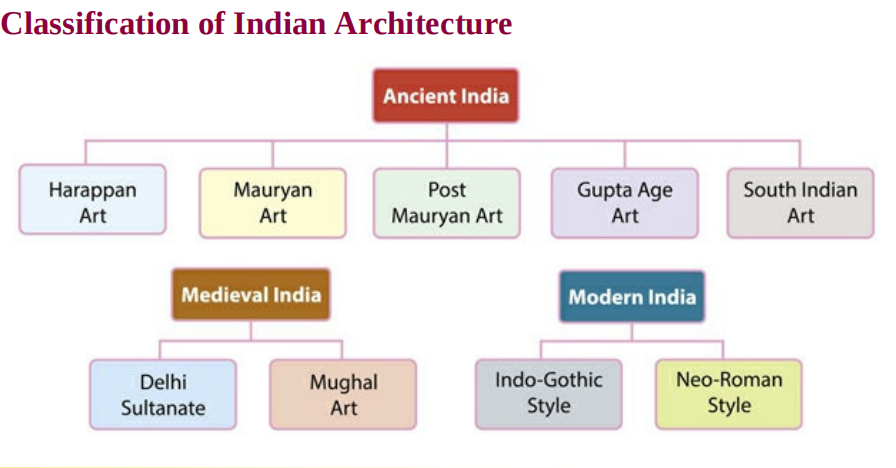
- Harappan Art and Architecture
- Origins and Spread:
- The Harappan Civilization, also known as the Indus Valley Civilization (IVC), emerged in the second half of the third millennium BCE.
- It flourished along the banks of the Indus River and extended across large parts of Northwestern and Western India.
- Artistic Excellence:
- Excavations reveal a rich artistic tradition, evident in sculptures, seals, pottery, and jewelry.
- These artifacts reflect the vivid imagination and refined artistic sensibilities of the Harappan people.
- Urban Planning and Architecture:
- Harappa and Mohenjo-daro, the two major sites of this civilization, showcase advanced urban planning.
- Well-planned roads, systematically designed houses, and an efficient drainage system highlight the engineering expertise of the time.
- Important Sites of the Indus Valley Civilization and Their Archaeological Findings
- Major Sites in Present-Day Pakistan
- Harappa (Punjab, Pakistan – River Ravi)
- Two rows of six granaries with a large platform
- Stone symbol of Lingam and Yoni
- Mother Goddess sculpture
- Wheat and barley in wooden mortar
- Dice, copper scale, and mirror
- Bronze sculpture of dog chasing a deer
- Red sandstone male torso
- Mohenjo-daro (Sindh, Pakistan – River Indus)
- Citadel, Great Bath, Great Granary
- Post-cremation burial
- Sculpture of Bearded Priest
- Famous bronze statue of the Dancing Girl
- Pashupati Seal
- Mehrgarh (Balochistan, Pakistan)
- Considered a precursor to the Indus Valley Civilization
- Pottery and copper tools
- Chanhudaro (Sindh, Pakistan – “Lancashire of India”)
- Only Indus site without a citadel
- Bead-making factory
- Evidence of lipstick use
- Kot Diji (Sindh, Pakistan)
- Tar, statues of bull and mother goddess
- Suktagandor (Balochistan, Pakistan – Westernmost IVC site)
- Clay bangles found
- Kot Bala (Pakistan)
- Earliest evidence of a furnace
- Ganeriwala (Punjab, Pakistan)
- An important but lesser-known site
- Major Sites in Present-Day India
- Gujarat
- Dholavira
- Giant water reservoir
- Unique water harnessing system
- Stadium, dams, embankments
- Inscription with 10 large-sized signs (like an advertisement board)
- Latest discovered IVC city
- Lothal (“Manchester of Indus Valley Civilization”)
- Dockyard – an important naval trade center
- Rice husk, fire altars, painted jar
- Modern-day chess, terracotta figures of horse and ship
- Instruments for measuring 45°, 90°, and 180° angles
- Burial of cremated remains
- Surkotada
- First actual remains of horse bones
- Desalpur, Pabumath, Rangpur, Shikarpur, Kerala-no-dhoro
- Kerala-no-dhoro: Salt production center
- Haryana
- Rakhigarhi (Largest Indus Valley site)
- Granary, cemetery, drains, terracotta bricks
- Considered the provincial capital of the Harappan Civilization
- Banawali (On dried-up Saraswati River)
- Toy plough, barley grains, lapis lazuli, fire altars
- Oval-shaped settlement – Only city with radial streets
- Balu
- Various plant remains found (earliest evidence of garlic)
- Kunal
- Early Harappan findings
- Rajasthan
- Kalibangan
- Citadel, lower town, fire altars
- Decorated bricks, bones of camel
- Bangle factory, toy carts
- Balathal
- Early Harappan site
- Karanpura
- Harappan site with distinct settlement patterns
- Punjab (India)
- Ropar (On River Sutlej)
- First Harappan site excavated after India’s independence
- Dog buried with human in an oval pit burial
- Copper axe
- Uttar Pradesh
- Alamgirpur (Meerut – On River Yamuna, Easternmost IVC site)
- Broken copper blade
- Ceramic items
- Impression of cloth on a trough
- Sanauli
- Important burial site with chariots
- Maharashtra
- Daimabad (Southernmost IVC site)
- Bronze sculptures, including a Bronze Chariot
- Jammu and Kashmir
- Mand (Northernmost IVC site)
- Other Prominent IVC Sites
- Kunal (Haryana)
- Karanpura (Rajasthan)
- Ganeriwala (Pakistan)
- Architecture in the Harappan Civilization
- The remains of Harappa and Mohenjo-daro reveal a remarkable sense of town planning. The cities were laid out in a rectangular grid pattern, with roads running north-south and east-west, intersecting at right angles.
- Types of Buildings
- Excavations have revealed three major types of buildings:
- Dwelling Houses – Residential structures, often private, with wells and ventilated bathrooms.
- Public Buildings – Large administrative and functional structures.
- Public Baths – Used for ritualistic cleansing.
- The Harappans used burnt mud bricks of standardized dimensions for construction. Multiple layers of well-baked bricks were joined together using gypsum mortar.
- City Layout and Citadel
-
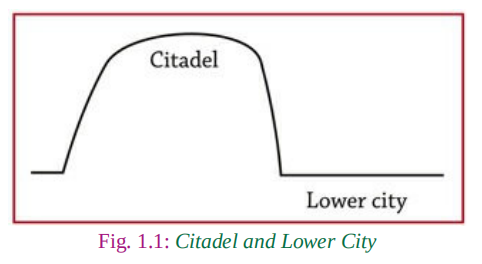
- Harappan cities were divided into two parts:
- Citadel (Western part, Upraised platform)
- Housed large structures such as:
- Granaries (strategically designed with air ducts and raised platforms for grain storage and pest protection).
- Administrative buildings
- Pillared halls and courtyards
- Some buildings might have served as residences for rulers and aristocrats.
- Lower Town (Eastern part)
- Small one-room houses, possibly used as workers’ quarters.
- Some houses had stairs, suggesting they were double-storied.
- Unlike Egyptian and Mesopotamian civilizations, Indus Valley Civilization (IVC) sites lack large monumental structures like temples or palaces.
- Public Baths and Water Management
- One of the most notable features of Harappan cities is the prevalence of public baths, indicating the importance of ritualistic cleansing. These baths had an array of galleries and surrounding rooms.
- The Great Bath (Mohenjo-daro) is the most famous example of a public bath.
-
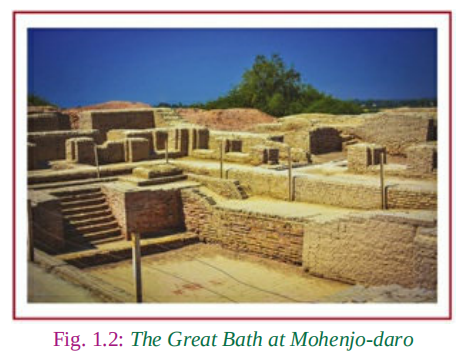
- The presence of wells has been observed at multiple sites, showcasing their advanced water management system.
- Drainage and Sanitation System
- The Harappan drainage system is one of the most advanced in the ancient world:
- Small drains from each house were connected to larger drains running along main roads.
- Drains were covered loosely to facilitate regular cleaning.
- Cesspits were placed at regular intervals.
- The emphasis on hygiene—both personal and public—is remarkable.
- Indus-Mesopotamian Connections
- Many scholars believe the Mesopotamians referred to the Indus Valley Civilization as ‘Meluha’.
- Several Indus Valley seals have been found in Mesopotamia, indicating long-distance trade and cultural exchanges.
- Sculptures of the Harappan Civilization
- The Harappan sculptors demonstrated exceptional skill in handling three-dimensional volumes. The most commonly found artifacts include seals, bronze figures, terracotta sculptures, pottery, and ornaments.
- Seals
- Archaeologists have discovered numerous seals of different shapes and sizes across excavation sites. While most are square, triangular, rectangular, and circular seals have also been found.
- Materials Used:
- Steatite (most common)
- Agate, chert, copper, faience, terracotta
- Rare cases of gold and ivory
- Features of Seals:
- Pictographic inscriptions (yet to be deciphered)
- Mostly written right to left, sometimes bidirectional
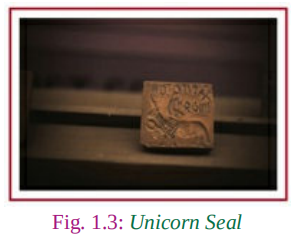
- Animal motifs (unicorn, humped bull, rhinoceros, tiger, elephant, buffalo, bison, goat, markhor, ibex, crocodile)
- No depiction of cows
- Seals generally had an animal or human figure on one side and inscriptions on the other. Some had inscriptions on a third side.
- Uses of Seals:
- Commercial and trade purposes (seals found in Mesopotamia and sites like Lothal)
- Amulets (some seals with holes were found on dead bodies, possibly used for identification)
- Educational purposes (mathematical symbols found on some seals)
- Religious significance (some seals feature symbols resembling the Swastika)
- Famous Seals:
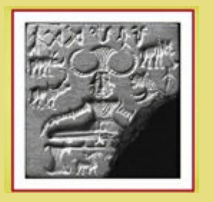
- Pashupati Seal (Mohenjo-daro)
- Depicts a human figure/deity seated cross-legged.
- Wears a three-horned headgear.
- Surrounded by animals:
- Left: Elephant, tiger
- Right: Rhinoceros, buffalo
- Below seat: Two antelopes
-
- Unicorn Seal
-
- Bronze Figures
- The Harappans widely practiced bronze casting, using the lost wax technique (Cire Perdue):
- Wax figures were coated with wet clay and dried.
- The figures were heated, melting the wax.
- Molten metal was poured into the hollow mold.
- Once cooled, the clay was removed, revealing a metal figure.
- This technique is still practiced in parts of India today.
- Examples:
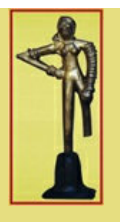
- Dancing Girl (Mohenjo-daro) – The world’s oldest bronze sculpture
- Four-inch figure of a naked girl wearing only ornaments (bangles on the left arm, amulet, and bracelet on the right arm).
- Stands in a tribhanga (three-bend) posture with her right hand on her hip.
-
- Bronze Bull (Kalibangan)
- Terracotta Sculptures
- Terracotta (fire-baked clay) sculptures are fewer in number than bronze figures and are cruder in shape and form. They were made using the pinching method and are mostly found in Gujarat and Kalibangan.
- Examples:
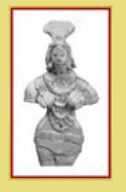
- Mother Goddess
- Found at several Indus sites, suggesting religious importance.
- Crude figure of a standing female, adorned with necklaces hanging over prominent breasts.
- Wears a loincloth, girdle, and fan-shaped headgear.
- Likely worshipped for prosperity and fertility.
-
- Mask of Horned Deity
- Terracotta Toys
- Other Notable Figures:
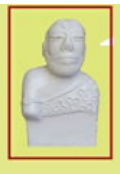
- Bearded Priest (Mohenjo-daro, Steatite)
- Figure of a bearded man draped in a shawl with trefoil patterns.
- Eyes are elongated and half-closed, suggesting meditation.
-
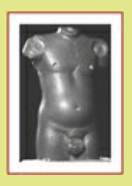
- Red Sandstone Male Torso (Harappa, Red Sandstone)
- Frontal posture, well-defined shoulders, and a prominent abdomen.
- Socket holes in the neck and shoulders, possibly for attaching a head and arms.
-
- Pottery
- Harappan pottery is broadly classified into two types:
- Plain Pottery
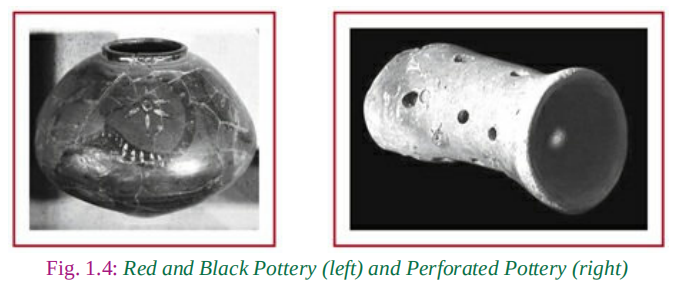
- Painted Pottery (Red and Black Pottery)
- Background painted in red with black glossy designs.
- Common motifs: trees, birds, animals, and geometric patterns.
-
- Pottery Manufacturing:
- Mostly wheel-made, with a few handmade pieces.
- Rare instances of polychrome pottery (multi-colored designs).
- Uses of Pottery:
- Household purposes – Storage of grains and water (plain pottery).
- Miniature decorative vessels – Less than half an inch in size.
- Perforated pottery –
- Large hole at the bottom with small holes on the sides.
- Possibly used for straining liquor.
- Ornaments and Fashion
- The Harappans used a wide variety of materials for ornaments, including:
- Precious metals (gold, silver)
- Gemstones (carnelian, amethyst, quartz, steatite)
- Bones and baked clay
- Types of Ornaments:
- Worn by both men and women:
- Necklaces, fillets, armlets, finger rings
- Exclusive to women:
- Girdles, earrings, anklets
- Bead Production:
- Harappans were skilled in bead-making.
- Factories for bead production were discovered in Chanhudaro and Lothal.
- Fabric and Fashion:
- Cotton and wool were spun and worn by both rich and poor.
- Different hairstyles and beards suggest a sense of fashion.
- Mauryan Art and Architecture
- With the advent of Buddhism and Jainism, which were part of the Shramana tradition, the religious and social scenario of the Gangetic valley began to change.
- Both religions opposed the varna and jati system of the Vedic age and, therefore, gained the patronage of the Kshatriya rulers, who had grown wary of Brahmanical supremacy.
- Under the Mauryas, a clear distinction emerged between:
-
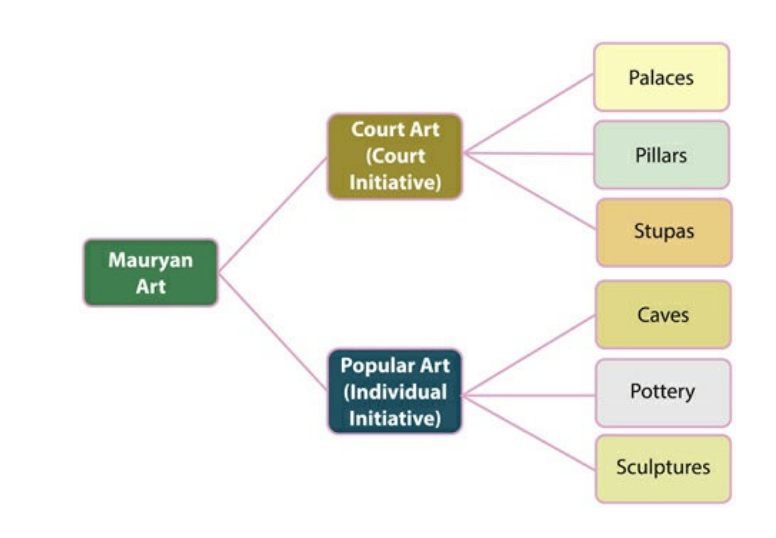
- Court Art – Developed under state patronage
- Popular Art – Developed by individual efforts
- Thus, Mauryan art can be classified as follows:
- Court Art
- The Mauryan rulers commissioned large-scale architectural works for both political and religious purposes.
- Palaces
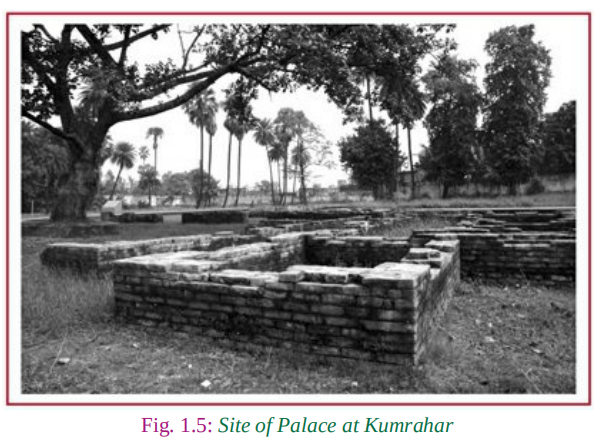
- The Mauryan Empire, the first powerful empire in India, had its capital at Pataliputra, with grand palaces at Kumrahar showcasing the empire’s splendour (magnificent / grandeur).
- Chandragupta Maurya’s palace was inspired by the Achaemenid palaces at Persepolis, Iran. It was primarily made of wood. Greek ambassador Megasthenes described it as one of mankind’s greatest creations.
- Ashoka’s Palace at Kumrahar was a massive three-storey wooden structure with a high central pillar. Its walls were adorned with carvings and sculptures.
-
- Pillars
- Ashoka’s pillars were inscribed with edicts and used to propagate imperial (relating to empire) sermons (talk on religions or moral subject) and commemorate (celebrate / pay tribute) battle victories.
-
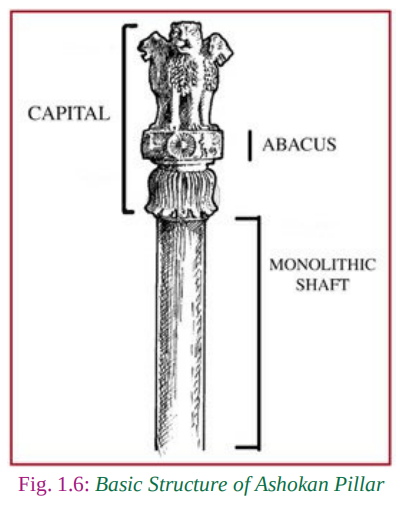
- They were usually made of Chunar sandstone, with an average height of 40 ft.
- Each pillar consisted of two parts:
1. Shaft – A monolithic structure (single stone piece).
2. Capital – Either lotus-shaped or bell-shaped, influenced by Iranian design.
- The Abacus, a circular or rectangular base, held an animal figure.
- Examples:
- Lauria Nandangarh Pillar (Champaran)
- Sarnath Pillar (near Varanasi)
- National Emblem
-
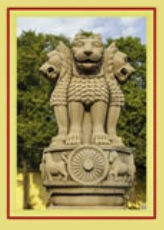
- The Sarnath pillar forms India’s national emblem.
- Its abacus depicts four animals representing four directions:
- Horse (west) – Represents Kanthaka, Buddha’s horse.
- Elephant (east) – Represents Queen Maya’s dream of a white elephant entering her womb.
- Bull (south) – Symbolizes the Taurus zodiac sign, under which Buddha was born.
- Lion (north) – Represents Buddha’s enlightenment.
- Below the abacus, the Wheel of Law (Dharma Chakra) is inscribed (carved).
- The four lions symbolize Buddha spreading Dhamma in all directions.
- The phrase “Satyameva Jayate” (Truth Alone Triumphs) from the Mundaka Upanishad is inscribed in Devanagari script.
- Built to commemorate (recall and show respect for) Buddha’s first sermon (Dhammachakrapravartana).
- Difference between Ashokan Pillars and Achaemenian Pillars
| Basis |
Ashokan Pillars |
Achaemenian Pillars |
| Composition |
The shaft of the Ashokan pillars were monolithic, i.e., they were inscribed from a single piece of stone (mainly Chunar sandstones). |
The shaft of Achaemenian pillars was made up of various pieces of sandstone cemented together. |
| Location |
The Ashokan pillars were independently erected. |
The Achaemenian pillars were generally attached to state buildings. |
- Stupas
-
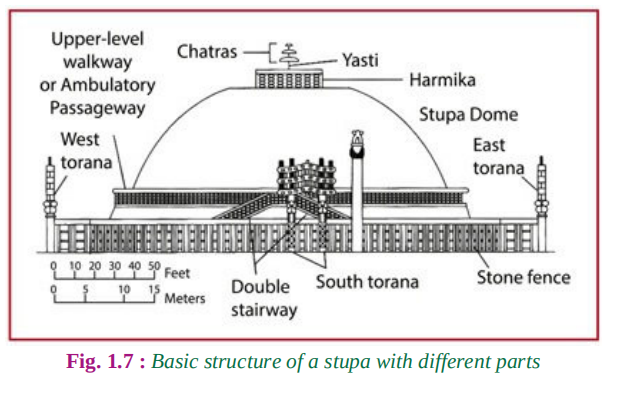
- Stupas were burial mounds used to house relics (an object surviving from an earlier time) and ashes of the deceased, a practice prevalent (widespread in a partiular area or at a particular time) since the Vedic period.
- Ashoka popularized stupas and constructed nearly 84,000 stupas during his reign.
- After Buddha’s death, nine stupas were built:
- Eight contained his relics.
- One housed the pot that originally held the relics.
- Structure:
- Core – Made of unburnt bricks.
- Outer surface – Made of burnt bricks and covered with plaster.
- Medhi (terrace) and Torana (gateway) were adorned with wooden sculptures.
- Devotees circumambulated (walk all the way around) via the Pradakshina patha.
- Examples:
- Sanchi Stupa (Madhya Pradesh) – The most famous Ashokan stupa.
- Piprahwa Stupa (Uttar Pradesh) – The oldest one.
- Locations of the nine stupas after Buddha’s death:
- Rajagriha, Vaishali, Kapilavastu, Allakappa, Ramagrama, Vethapida, Pava, Kushinagar, and Pippalivana.
- Popular Art
- Apart from state patronage, Mauryan art flourished through individual efforts, including cave architecture, sculpture, and pottery.
- Cave Architecture
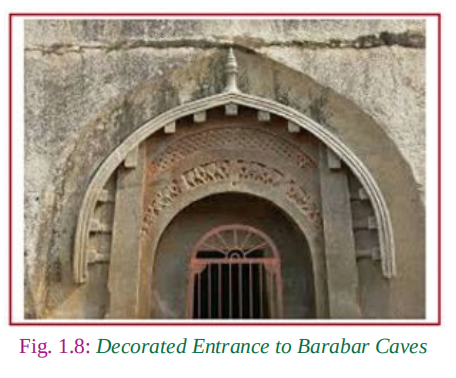
- Rock-cut caves were used as Viharas (living quarters) by Jain and Buddhist monks.
- Initially used by Ajivika sect, later became Buddhist monasteries.
- Features:
- Highly polished interior walls.
- Decorative gateways.
- Examples:
- Barabar and Nagarjuni caves (Bihar) – Built during Ashoka and his grandson Dasharatha’s rule (3rd century BCE).
-
- Nasik Caves (Maharashtra) –
- 24 Buddhist caves, also called “Pandav Leni”.
- Carved between 1st century BCE and 3rd century CE.
- Initially followed Hinayana Buddhism (Buddha represented through motifs/symbols).
- Later, Mahayana influence led to the carving of Buddha’s idols.
- Featured an advanced water management system, with rock-cut water tanks.
- Sculptures
- Mainly used for stupa decoration (torana and medhi) and religious expressions.
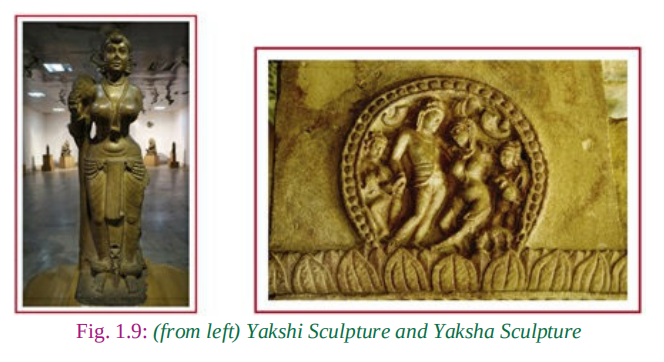
- Yaksha and Yakshi sculptures were prominent and associated with Jainism, Hinduism, and Buddhism.
- The earliest reference to Yakshis appears in the Tamil text Silappadikaram.
- Jain Tirthankaras were linked with Yakshis.
-
- Pottery
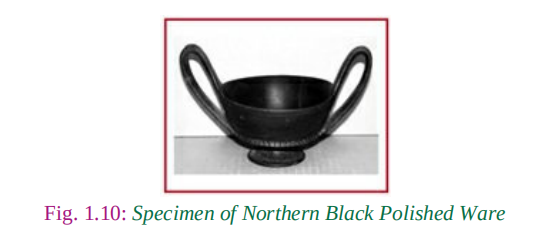
- Mauryan pottery is categorized as Northern Black Polished Ware (NBPW).
- Features:
- Black paint with a highly lustrous finish.
- Used as luxury items.
- Considered the highest level of pottery in ancient India.
-
- Post Mauryan Art
- After the decline of the Mauryan Empire in the 2nd century BC, several small dynasties emerged across India.
- Political Developments:
- In North India, dynasties like the Shungas, Kanvas, Kushanas, and Shakas gained prominence.
- In Southern and Western India, dynasties such as the Satavahanas, Ikshavakus, Abhiras, and Vakatakas rose to power.
- Religious Developments:
- The period witnessed the emergence of Brahmanical sects, including the Shaivites, Vaishnavites, and Shaktites.
- Artistic and Architectural Changes:
- The changing socio-political landscape influenced art and architecture.
- Rock-cut caves and stupas continued as significant architectural forms, with each dynasty introducing distinctive features.
- Different schools of sculpture emerged, and the art of sculpture reached its climax during this post-Mauryan period.
- Architecture
- Rock-cut Caves
- The tradition of rock-cut caves continued from the Mauryan period, but with new architectural developments:
- Two types of caves emerged:
- Viharas – Residential halls for Buddhist and Jain monks, which had already developed during the Mauryan period.
- Chaityas – Prayer halls introduced during this period, usually quadrangular with flat roofs.
- The caves featured open courtyards and stone screen walls for protection from rain.
- They were often decorated with human and animal figures.
- Examples:
- Karle Chaitya Hall
- Ajanta Caves – 29 caves (25 Viharas + 4 Chaityas)
- Udayagiri and Khandagiri Caves (Odisha)
- Built under Kalinga King Kharavela in 1st-2nd century BC, near modern Bhubaneswar.
- The complex contains both artificial and natural caves, likely used as Jain monk residences.
- Udayagiri has 18 caves, and Khandagiri has 15 caves.
- Udayagiri is notable for the Hathigumpha inscription in Brahmi script, which:
- Begins with the Jain Namokar Mantra.
- Chronicles King Kharavela’s military campaigns.
- Ranigumpha Cave in Udayagiri is double-storied and adorned with beautiful sculptures.
- Stupas
- Stupas grew larger and more decorative in this period.
- Stone replaced wood and brick as the primary construction material.
- The Shunga dynasty introduced toranas – elaborately decorated gateways with intricate carvings, influenced by Hellenistic art.
- Examples:
- Bharhut Stupa (Madhya Pradesh)
- Torana at Sanchi Stupa (Madhya Pradesh)
- Sculpture
- During this period, three prominent schools of sculpture emerged in different regions of India:
- Gandhara School of Art
- Developed in the western frontiers of Punjab, near modern Peshawar and Afghanistan.
- Influenced by Greek and Roman sculptural traditions introduced by Greek invaders.
- Also known as the Greco-Indian School of Art.
- Flourished between 50 BC to 500 AD, in two distinct stages:
- Early stage: Used bluish-grey sandstone.
- Later stage: Used mud and stucco for sculpture-making.
- Buddha and Bodhisattva images were modeled on Greco-Roman deities, especially Apollo.
- Greek and Roman Styles in Gandhara Art
-
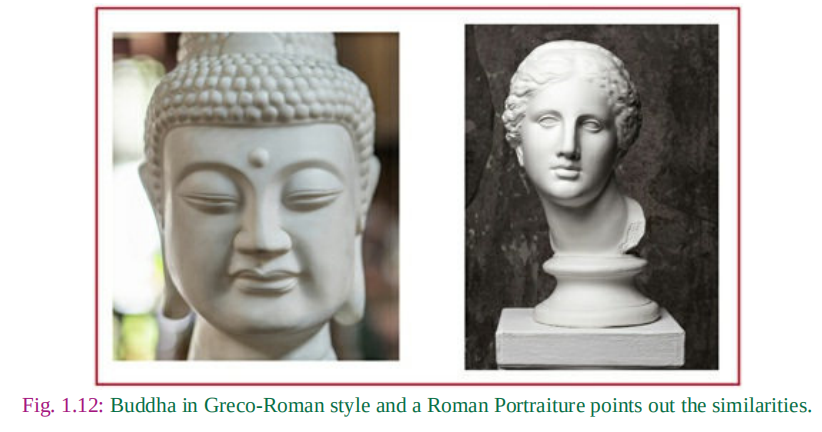
- The Gandhara School of Art blended elements of both Greek and Roman artistic traditions, each of which had distinct characteristics:
- Greek Influence:
- Focused on idealism – portraying gods and men with muscular, well-proportioned bodies to symbolize strength and beauty.
- Used marble for sculpting figures, often inspired by Greek mythology (e.g., figures from the Greek Parthenon).
- Roman Influence:
- Emphasized realism rather than idealized forms.
- Roman sculptures often depicted real people and historical events with great accuracy.
- Used concrete instead of marble for sculptures.
- Romans were also known for their mural paintings, which were used for ornamentation and decoration.
- Mathura School of Art
- Developed along the banks of the Yamuna River between 1st and 3rd centuries AD.
- Influenced by all three religions of the time – Buddhism, Hinduism, and Jainism.
- Buddha images were inspired by Yaksha sculptures from the Mauryan period.
- Distinctive features:
- Symbolism played a key role.
- Hindu gods were represented through their Avayudhas (weapons or symbols).
- Shiva was depicted as Linga or Mukhalinga.
- Buddha’s halo was larger than in Gandhara School, often decorated with geometric patterns.
- Buddha was shown flanked by two Bodhisattvas:
- Padmapani (holding a lotus).
- Vajrapani (holding a thunderbolt).
- Amaravati School of Art
- Developed on the banks of the Krishna River under the Satavahana rulers.
- Unlike the Gandhara and Mathura schools, which focused on single images, the Amaravati School emphasized dynamic compositions and narrative art.
- Distinctive feature:
- Extensive use of the Tribhanga posture (three-body bends).
- Additional side information
- Various Mudras Related to Buddha
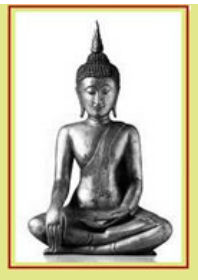
- Bhumisparsha Mudra (Calling the Earth to Witness the Truth)
- One of the most common mudras found in Buddha statues.
- Depicts Buddha sitting in meditation with his left hand resting on his lap (palm upright) and his right hand touching the earth.
- Commonly associated with the blue Buddha (Akshobya).
- Significance: Represents the moment of Buddha attaining enlightenment.
-
- Dhyana Mudra (Meditation Mudra)
- Also known as Samadhi or Yoga Mudra.
- Depicts Buddha with both hands in the lap, the right hand resting on the left palm, fingers extended.
- Often, thumbs touch to form a mystic triangle.
- Significance: Symbolizes attainment of spiritual perfection.
- Used by Buddha during final meditation under the Bodhi tree.
-
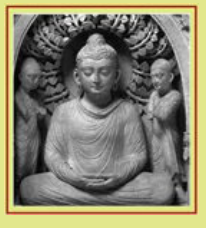
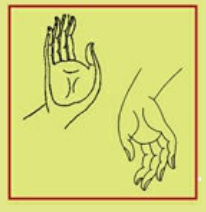
- Vitarka Mudra (Teaching & Discussion)
- Represents intellectual debate and teaching.
- The thumb and index finger touch, forming a circle.
- The right hand is at shoulder level, while the left hand is at hip level (palm facing upwards).
- Significance: Symbolizes the teaching phase in Buddhism.
- The circle represents a constant flow of energy and perfection.
-

- Abhaya Mudra (Fearlessness & Protection)
- Symbolizes strength, inner security, and fearlessness.
- The right hand is raised to shoulder height, palm facing outward, fingers upright and joined.
- The left hand hangs downwards by the side of the body.
- Significance: Gesture was shown by Buddha immediately after attaining enlightenment.
-
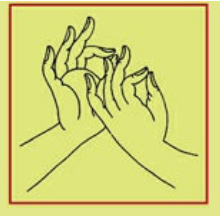
- Dharmachakra Mudra (Turning the Wheel of Dharma)
- Symbolizes setting into motion the wheel of Dharma (Law).
- Both hands are involved:
- The right hand is held at chest level, palm outward, with the thumb and index finger forming a circle.
- The left hand is turned inward, with the index finger and thumb touching the right hand’s circle.
- Significance: Buddha used this mudra while delivering his first sermon in the Deer Park, Sarnath.
-
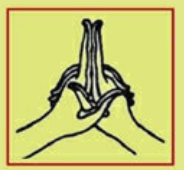
- Anjali Mudra (Greetings & Devotion)
- Symbolizes adoration, devotion, and deep respect.
- Both hands are joined vertically at chest level (similar to Namaste).
- Significance:
- Represents reverence for a superior.
- Bodhisattvas (aspiring Buddhas) are depicted using this mudra, but fully enlightened Buddhas do not make this gesture.
-

- Uttarabodhi Mudra (Supreme Enlightenment)
- Symbolizes perfection and supreme knowledge.
- Both hands are held at chest level, with all fingers interlocked except for the index fingers, which point straight up and touch.
- Significance: Associated with Shakyamuni Buddha (liberator of Nagas).
- Known for energizing and charging the practitioner with wisdom.
-
- Varada Mudra (Charity & Compassion)
- Represents granting wishes, generosity, and kindness.
- Right arm is extended downward, palm outward. If standing, the arm extends slightly forward.
- Can also be performed with the left hand.
- Significance: The five extended fingers symbolize the Five Perfections:
1. Generosity
2. Morality
3. Patience
4. Effort
5. Meditative Concentration
-
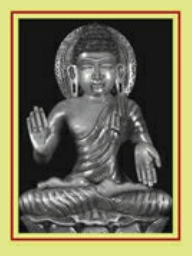
- Karana Mudra (Warding Off Evil)
- Represents expelling demons and negative energy.
- Hand is stretched out (horizontally or vertically), palm facing outward.
- Thumb presses the folded middle fingers, while the index and little fingers remain raised.
- Significance: Believed to remove obstacles, sickness, and negative thoughts.
-
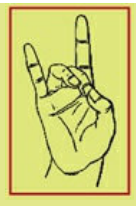
- Vajra Mudra (Symbol of Knowledge)
- Represents supreme wisdom and knowledge.
- More commonly seen in Korea and Japan.
- The erect forefinger of the left hand is enclosed within the fist of the right hand (sometimes seen in a mirror-inverted form).
- Significance:
- The forefinger symbolizes knowledge, while the fist represents protection of knowledge.
-

- Differences Between Gandhara, Mathura and Amaravati Schools
-
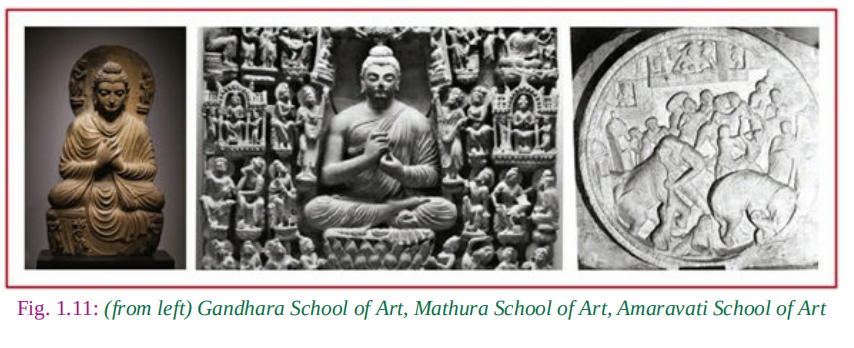
| Basis |
Gandhara School |
Mathura School |
Amaravati School |
| External Influence |
Heavy influence of Greek or Hellenistic sculpture, so it is also known as Indo-Greek art. |
Developed indigenously and was not influenced by external cultures. |
Developed indigenously and was not influenced by external cultures. |
| Ingredient Used |
Early Gandhara School used bluish-grey sandstone, while the later period saw the use of mud and stucco. |
The sculptures were made using spotted red sandstone. |
The sculptures were made using white marbles. |
| Religious Influence |
Mainly Buddhist imagery, influenced by the Greco-Roman pantheon. |
Influence of all three religions of the time, i.e., Hinduism, Jainism, and Buddhism. |
Mainly Buddhist influence. |
| Patronage |
Patronized by Kushana rulers. |
Patronized by Kushana rulers. |
Patronized by Satavahana rulers. |
| Area of Development |
Developed in the North-West Frontier, in the modern-day area of Kandahar. |
Developed in and around Mathura, Sonkh, and Kankalitila, which was famous for Jain sculptures. |
Developed in the Krishna-Godavari valley, in Amaravati and Nagarjunakonda. |
| Features of Buddha Sculpture |
The Buddha is shown in a spiritual state, with wavy hair. He wears fewer ornaments and is seated in a yogi position. The eyes are half-closed as in meditation. A protuberance is shown on the head, signifying the omniscience of Buddha. |
Buddha is shown in a delighted mood with a smiling face. The body symbolizes muscularity, wearing a tight dress. The face and head are shaven. Buddha is seated in padmasana with different mudras, and his face reflects grace. A similar protuberance is shown on the head. |
Since the sculptures are generally part of a narrative art, there is less emphasis on the individual features of Buddha. The sculptures generally depict life stories of Buddha and the Jataka tales, i.e., previous lives of Buddha in both human and animal form. |
- Gupta Age
- The Gupta Empire emerged in the 4th century AD and is often hailed as the “Golden Age of India” due to its remarkable advancements in art, architecture, literature, and science.
- Architecture Flourished:
- The early Gupta rulers were Buddhists and continued the traditions of Buddhist architecture.
- However, under the Hindu rulers of the later Gupta phase, temple architecture came to the forefront and reached its climax during this period.
- Alongside Hindu temple architecture, Buddhist and Jain art also attained its peak.
- Religious Tolerance:
- Despite being predominantly Brahmanical rulers, the later Gupta kings exhibited exemplary tolerance towards all religions.
- The three principal deities worshipped during this period were:
1. Vishnu – Northern and Central India
2. Shiva – Southern India
3. Shakti – Eastern India and the Malabar Coast (Southwest India)
- Architecture
- Caves
- The Gupta period saw continued development in cave architecture, with the addition of mural paintings on cave walls. Some of the finest examples of these paintings can be found in the Ajanta and Ellora caves.
- Ajanta Caves
- Located in the Sahyadri ranges on the Waghora River, near Aurangabad, Maharashtra.
- Consists of 29 rock-cut caves, developed between 200 BC and 650 AD.
- 25 caves were used as Viharas (residential caves).
- 4 caves were Chaityas (prayer halls).
- Patronized by the Vakataka kings, particularly Harishena.
- The figures were made using the fresco painting technique, with colors derived from local vegetation and minerals.
- Striking feature: Absence of blue color in paintings.
- Thematic focus: Life of Buddha and Jataka tales.
- Development Phases:
- 5 caves belong to the Hinayana phase.
- 24 caves belong to the Mahayana phase.
- References in the travel accounts of Fa Hien and Hiuen Tsang.
- Prominent Sculptures in Ajanta Caves
- Cave No. 16: One of the finest specimens (sample) of cave architecture.
- Cave No. 26: Mahaparinirvana of Buddha.
- Cave No. 19: Naga King and his consort.
- Technique of Painting (Fresco Method)
1. A layer of clay, mixed with cow dung and rice husk was applied to the rock surface.
2. A coating of lime plaster was applied over it.
3. Colors and pigments were applied to the moist surface, allowing them to seep in and create lasting images.
- Examples of Ajanta Paintings
- Dying Princess
-
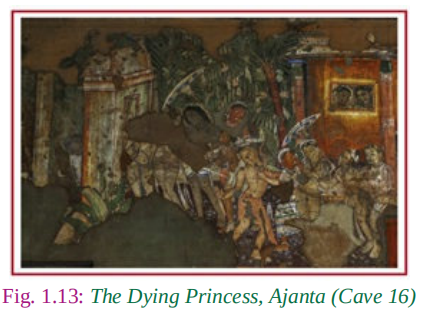
- Flying Apsara
- Fresco: A technique of mural painting on freshly laid wet lime plaster, closely associated with Italian Renaissance painting.
- Ellora Caves
- Located 100 km from Ajanta, developed between 5th and 11th centuries AD.
- Consists of 34 caves, belonging to three different religions:
- Caves 1–12: Buddhist
- Caves 13–29: Hindu
- Caves 30–34: Jain (Digambara sect)
- Developed by various guilds from Vidarbha, Karnataka, and Tamil Nadu, reflecting architectural diversity.
- Hindu and Buddhist caves were constructed by the Rashtrakuta dynasty.
- Jain caves were built by the Yadava dynasty.
- Prominent Caves in Ellora
- Cave No. 10: Visvakarma (Carpenter’s) Cave, a Buddhist Chaitya cave, with Buddha seated in Dharmachakra Mudra.
- Cave No. 14: Raavan ki Khai.
- Cave No. 15: Dashavatar Temple.
- Cave No. 16: Kailasha Temple, dedicated to Lord Shiva, built under Rashtrakuta king Krishna I, carved out of a monolith with a courtyard.
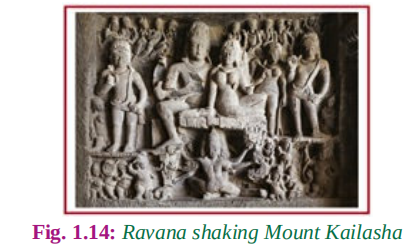
- Contains a sculpture of Ravana shaking Mount Kailasha, considered a masterpiece of Indian sculpture.
- Cave No. 29: Dhumar Lena Cave.
- Cave No. 21: Rameshwar Lena Cave.
- Jain Caves:
- Cave No. 32: Indra Sabha.
- Cave No. 33: Jagannath Sabha.
-
- Other Notable Caves
- Bagh Caves (Madhya Pradesh)
- Located on the Baghni River.
- 9 Buddhist caves, developed around 5th–6th century AD.
- Architecturally similar to Ajanta Caves.
- Significant cave: Rang Mahal.
- Paintings depict materialistic themes rather than spiritualism.
- Junagadh Caves (Gujarat)
- A group of Buddhist caves in Junagadh district.
- Includes three different sites:
- Khapra Kodiya
- Baba Pyare
- Uparkot
- Unique feature: Presence of a 30–50 ft high citadel known as “Upar Kot” in front of the prayer hall.
- Mandapeshwar Caves (Mumbai)
- Also known as Montperir Caves.
- Developed in the late Gupta period as a Brahmanical cave, later converted into a Christian cave.
- Notable sculptures: Nataraja, Sada Shiva, and Ardhanarishwara.
- A church and graveyard are situated above the cave precincts.
- Udayagiri Caves (Madhya Pradesh)
- Developed under Chandragupta II in the early 5th century AD.
- Famous for sculptures carved on hill walls.
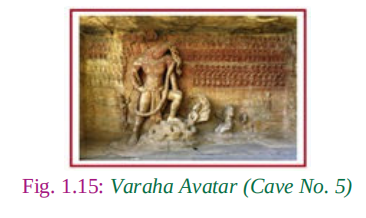
- Notable sculpture: Varaha (Boar) incarnation of Vishnu.
- Contains early Hindu sculptures and depictions of Shiva, Narasimha, Narayana, and Skanda.
-
- Stupas
- The Gupta period saw a decline in the construction of stupas.
- Notable example: Dhamek Stupa at Sarnath, Varanasi, marking the spot where Buddha delivered his first sermon.
- Sculptures
- A new school of sculpture developed around Sarnath.
- Characteristics:
- Use of cream-colored sandstone and metal.
- Immaculately dressed figures, lacking nudity.
- Intricately decorated halo around Buddha’s head.
- Notable Example
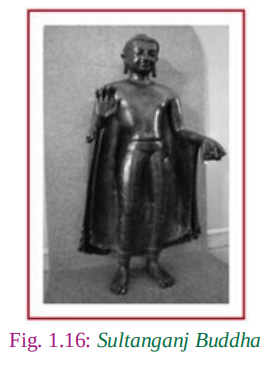
- Sultanganj Buddha (Bihar)
- 7.5 ft high copper sculpture.
-
- Additional side information
- Important Inscriptions in Indian History
- Sohgaura Copper Plate
- The earliest known copper plate inscription from the Mauryan period.
- Mentions famine relief efforts.
- One of the few pre-Ashokan Brahmi inscriptions, found in Gorakhpur district, Uttar Pradesh.
- Ashokan Edicts
- A collection of 33 inscriptions by Emperor Ashoka (269–232 BC).
- Found on pillars, boulders, and cave walls.
- Represent the earliest tangible evidence of Buddhism and Ashoka’s governance philosophy.
- Themes include conversion to Buddhism, moral and religious precepts, and welfare programs.
- Ashoka refers to himself as Devanampiyadasi (Beloved Servant of the God).
- Identification with Ashoka was confirmed by the Maski inscription.
- Eastern inscriptions are in Magadhi Prakrit, written in the Brahmi script.
- Types of Edicts:
- Pillar Edicts
- Major Rock Edicts: 14 edicts (1st to 14th) + two separate ones in Odisha.
- Major Rock Inscriptions: Minor Rock Edicts, Queen’s Edict, Barabar Cave Inscriptions, and the Kandahar Bilingual Inscription.
- Rummindei Pillar Edict (Lumbini, Nepal)
- A Minor Pillar Inscription in Brahmi script.
- Records Ashoka’s visit to Lumbini, the birthplace of Buddha.
- States that Lumbini was exempted from tax and had a reduced grain contribution (one-eighth).
- Prayag-Prashasti (Allahabad Pillar Inscription)
- Located on the Ashokan Pillar in Allahabad (originally in Kaushambi).
- “Prayag” refers to the confluence of the Ganga, Yamuna, and mythical Saraswati rivers.
- “Prashasti” means a eulogy in praise of a ruler.
- Contains Four Inscriptions:
a. Ashoka’s inscription in Brahmi script.
b. Queen’s Edict mentioning the charitable works of Kaurwaki, Ashoka’s wife.
c. Samudragupta’s (335–375 AD) inscription by his court poet Harisena, in Sanskrit (Brahmi script).
- Mentions conquests and the boundaries of the Gupta Empire.
d. Jahangir’s inscription in Persian.
- Mehrauli Iron Pillar Inscription (Delhi)
- Located in the Qutub Minar complex.
- Famous for its rust-resistant iron composition.
- Established by Chandragupta II (Gupta Dynasty) as Vishnupada (in honor of Lord Vishnu).
- Mentions Chandragupta’s conquest of Vanga and the Bahlikas across seven mouths of the Indus River.
- Kalsi Rock Edict (Dehradun, Uttarakhand)
- The only Ashokan edict in North India.
- Found on a quartz rock (8 ft broad, 10 ft long).
- Written in Prakrit (Brahmi script) around 450 BC.
- Highlights Ashoka’s humanistic approach, commitment to non-violence, and administrative reforms.
- Maski Inscription (Karnataka)
- Located in Raichur district, Karnataka (on the Maski River, a Tungabhadra tributary).
- First edict to mention Ashoka’s name explicitly instead of just “Devanampriya” or “Piyadassi”.
- Advocates Buddhist principles and shows Mauryan rule extended to the Krishna Valley.
- Kalinga Edicts (Odisha)
- Located in Odisha, marking Ashoka’s transformation after the Kalinga War.
- Language: Magadhi Prakrit; Script: Early Brahmi.
- Contain 11 of the 14 Major Rock Edicts.
- Separate Kalinga Edicts replace Edicts 11, 12, and 13, focusing on peace and administration of the newly conquered Kalinga region.
- Kanganahalli Inscriptions (Karnataka)
- Found in Gulbarga district, Karnataka.
- Features a Mahastupa (75 ft in diameter) with various sculptural slabs.
- Contains a portrait of King Ashoka and his queen with two attendants.
- Identified as Ashoka through an inscription reading “Rayo Ashoka” in Brahmi script (Satavahana period).
- Aihole Inscription (Karnataka)
- Found at Meguti Temple, Aihole (first capital of the Chalukyas).
- Written in Sanskrit, Kannada script.
- Composed by Ravikirti, the court poet of Pulakeshin II (610–642 AD).
- Mentions:
- Pulakeshin II’s victory over Harshavardhana.
- Chalukya conquests over Pallavas.
- Capital shift from Aihole to Badami.
- Hathigumpha Inscription (Odisha)
- Found in Udayagiri-Khandagiri Caves, Odisha.
- Composed by King Kharavela (2nd century BC).
- Language: Prakrit; Script: Brahmi.
- Contains 17 lines narrating Kharavela’s achievements:
- Conquests.
- Patronage of culture.
- Spread of Jainism.
- Shahbazgarhi and Mansehra Rock Edicts (Pakistan)
- Located in modern-day Pakistan.
- Contain 14 Major Rock Edicts of Ashoka.
- Written in Kharosthi script.
- TEMPLE ARCHITECTURE
- Temple architecture evolved during the Gupta period, featuring a square sanctum and a pillared portico. The style progressed from flat-roofed, monolithic temples to sculptured shikharas over time.
- Five Stages of Development:
- First Stage:
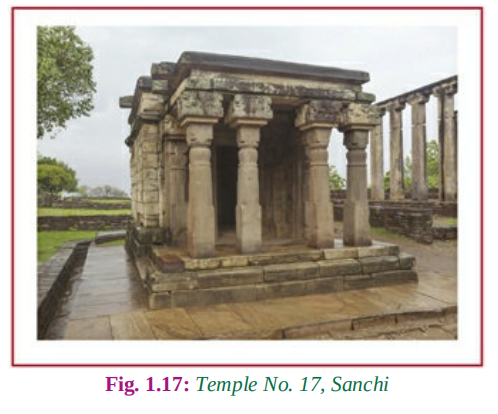
- Flat-roofed temples.
- Square-shaped structures.
- Portico with shallow pillars.
- Built on a low platform.
- Example: Temple No. 17 at Sanchi (Madhya Pradesh).
-
- Second Stage:
- Higher platforms or raised structures.
- Some temples had two stories.
- Introduction of ambulatory passageway (pradakshina path) around the sanctum.
- Example: Parvati Temple at Nachna Kuthara (Madhya Pradesh).
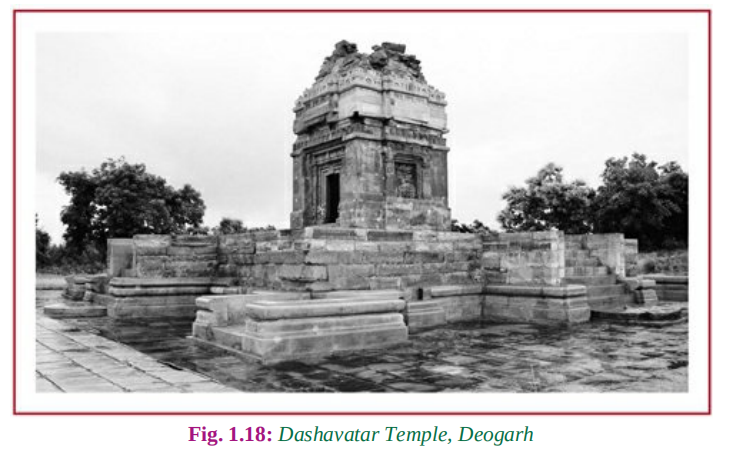
- Third Stage:
- Shikharas replaced flat roofs but remained low and curvilinear.
- Panchayatan style introduced (main temple + four subsidiary shrines).
- Main temple was square, with an elongated mandap, creating a cruciform ground plan.
- Examples: Dashavatar Temple at Deogarh (Uttar Pradesh), Durga Temple at Aihole (Karnataka).
-
- Fourth Stage:
- Similar to the third stage, but the main shrine became more rectangular.
- Example: Ter Temple (Maharashtra).
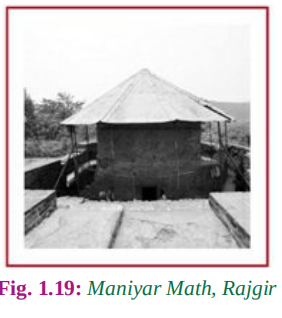
- Fifth Stage:
- Circular temples with shallow rectangular projections.
- Other features of the previous stages continued.
- Example: Maniyar Math at Rajgir.
-
- Basic structure of a hindu temple
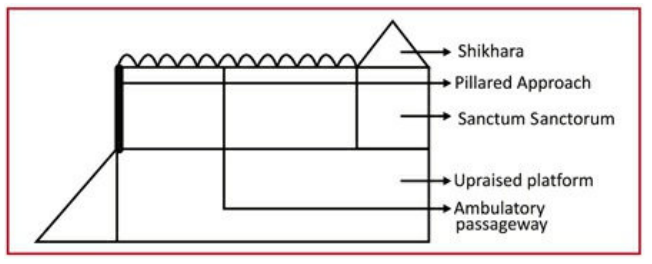
- The basic structure of a Hindu temple consists of the following key elements:
- Sanctum Sanctorum (Garbhagriha):
- The innermost chamber of the temple.
- Houses the principal deity.
- Usually a small, cubical room.
- Mandapa:
- The entrance or hall of the temple.
- May be a portico or a large hall.
- Designed to accommodate a large number of worshippers.
- Shikhara:
- A mountain-like spire above the sanctum.
- Can be pyramidal or curvilinear in shape.
- Vahana:
- The mount or vehicle of the main deity.
- Placed just before the sanctum sanctorum.
- Regional Variations
- Under the patronage of local rulers, distinct architectural styles developed across different regions of India.
- Styles of Temple Architecture
-
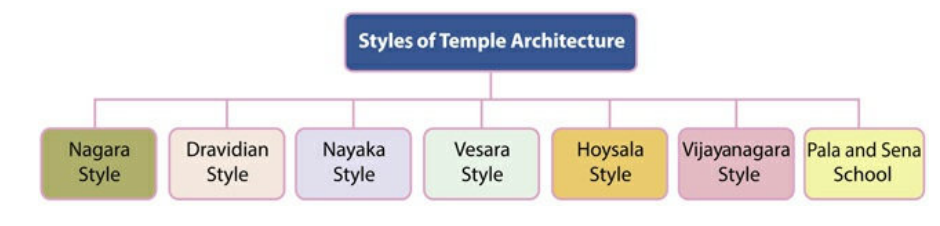
- Hindu temples are primarily classified into three broad architectural styles:
- Nagara Style (North Indian Style)
- Developed in North India.
- Shikhara is curvilinear and rises in a gradual curve.
- Temples are built on a raised platform without elaborate boundary walls.
- Mandapas are usually open and pillared.
- Sub-types:
- Rekha-Prasada, Phamsana, and Valabhi styles.
- Example: Kandariya Mahadeva Temple (Khajuraho, Madhya Pradesh).
- Dravida Style (South Indian Style)
- Developed in South India.
- Shikhara is pyramidal and consists of multiple stepped layers (called Vimana).
- Temples have elaborate boundary walls and gopurams (gateway towers).
- Mandapas are large and enclosed.
- Water tanks are often present within the temple complex.
- Example: Brihadeshwara Temple (Thanjavur, Tamil Nadu).
- Vesara Style (Hybrid of Nagara & Dravida)
- Developed in Deccan region.
- Combines Nagara’s curvilinear shikhara and Dravida’s stepped vimana.
- Mandapas and temple layout are more flexible.
- More ornamentation and sculptural details.
- Example: Hoysaleswara Temple (Halebidu, Karnataka).
- Schools of architecture
- In architectural history, term "school” in this context does not refer to an educational institution but rather a tradition or movement that developed over time
- Nagara School of Architecture
- From the 5th century AD onwards, a distinct style of temple architecture developed in North India, known as the Nagara Style. Different sub-schools of this style emerged in western, central, and eastern regions.
- Key Features of Nagara Style
- Panchayatan Layout:
- Temples followed the Panchayatan style, where four subsidiary shrines were placed around the main shrine, forming a cruciform ground plan.
- Mandapa (Assembly Hall):
- Located in front of the sanctum.
- Garbhagriha Entrance:
- Images of river goddesses Ganga and Yamuna were placed outside the sanctum.
- Platform-Based Construction:
- Temples were built on raised platforms.
- Pillared Porticos:
- The approach to the temple had pillared porticos.
- Absence of Water Tanks:
- Unlike Dravidian temples, Nagara temples lacked water tanks or reservoirs in the premises.
- Types of Shikharas (Temple Towers):
- Latina (Rekha-Prasada):
- Square base with curving walls that taper to a point.
- Phamsana:
- Broader base, shorter in height, and rising in a straight line.
- Valabhi:
- Rectangular base with a vaulted (wagon-like) roof.
- Amalak & Kalash:
- The shikhara ended in a fluted disc (Amalak), with a spherical Kalash placed on top.
- Vertical Wall Division:
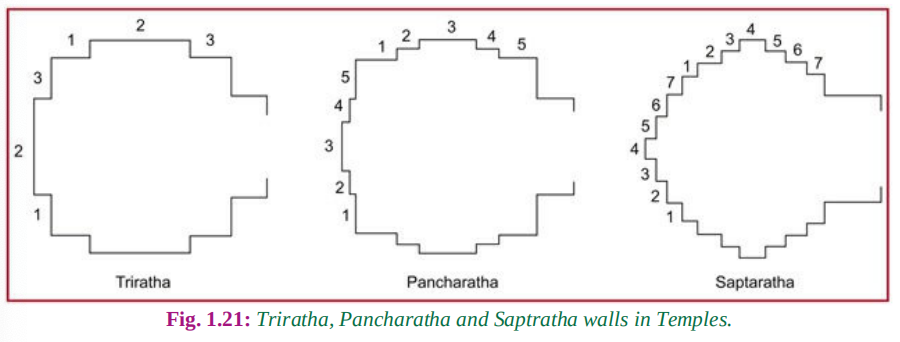
- Inside the temple, walls were divided into three vertical planes (Triratha temples). Later, more complex designs emerged (Pancharatha, Saptaratha, Navaratha).
- Pradakshina Path:
- The ambulatory passage around the sanctum was covered.
- No Elaborate Boundary Walls:
- Unlike Dravidian temples, Nagara temples lacked boundary walls and gateways.
-
-
- Sub-Schools of Nagara Architecture
- Odisha (Kalinga) School
- Developed in the Kalinga Empire (present-day Odisha).
- Exterior walls were highly decorated, but interior walls were plain.
- No use of pillars in the porch; instead, iron girders supported the roof.
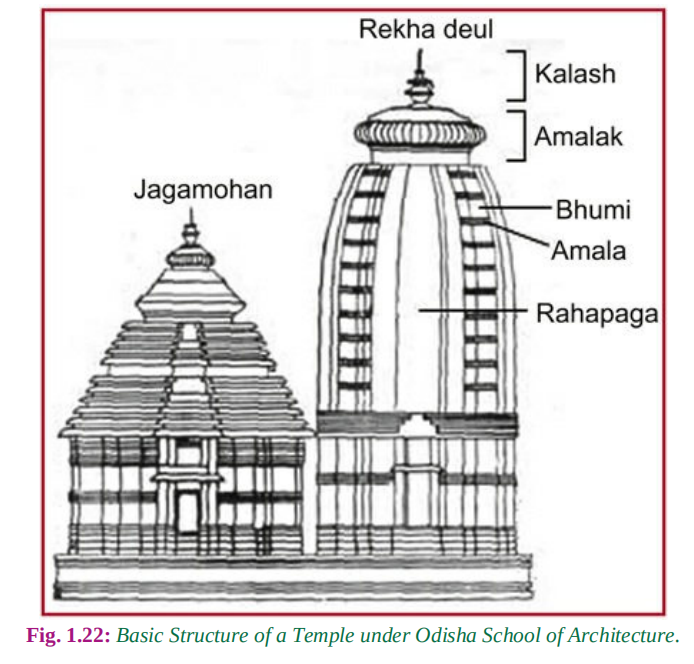
- The shikhara (tower) was called Rekha Deul, which had a vertical profile that curved inward sharply.
- The mandapa (hall) was known as Jagamohan.
- The main temple was square in ground plan.
- Temples were enclosed within a boundary wall (similar to Dravidian style).
-
- Examples:
- Sun Temple, Konark (Black Pagoda)
-
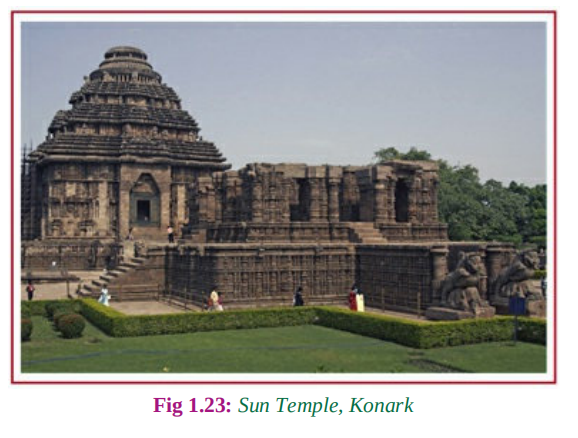
- Rabindranath Tagore remarked about Konark Temple:
“This is a monument where the language of stone surpasses the language of man.”
- Jagannath Temple, Puri
- Lingaraj Temple, Bhubaneswar
- Khajuraho (Chandela) School
- Developed under the Chandela rulers in Central India.
- Both interior and exterior walls were richly carved.
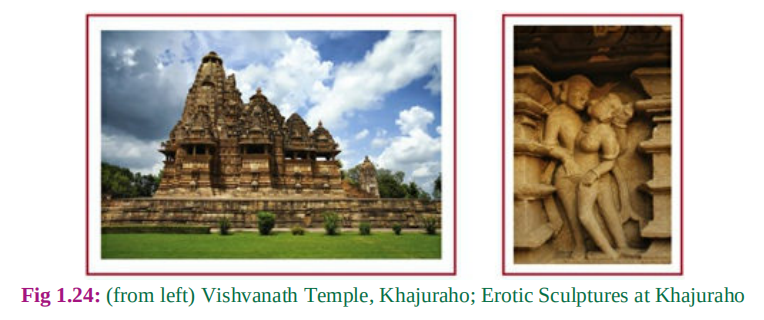
- Erotic sculptures inspired by Vatsyayana’s Kamasutra were common.
- Temples were made of sandstone.
- Three chambers in temples:
1. Garbhagriha (Sanctum)
2. Mandapa (Hall)
3. Ardhamandapa (Entrance porch)
- Some temples had a vestibule (Antarala) before the sanctum.
- Temples were faced north or east.
- Followed the Panchayatan style with rekha-prasada shikharas, resembling a mountain range.
- Built on raised platforms and included both Hindu & Jain temples.
- Examples:
- Kandariya Mahadev Temple
- Lakshmana Temple at Khajuraho
-
- Solanki (Maru-Gurjara) School
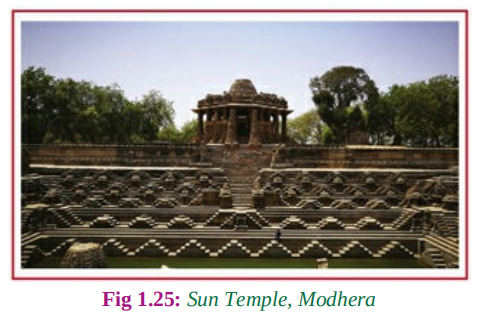
- Developed in North-Western India (Gujarat & Rajasthan) under the Solanki rulers.
- Walls lacked carvings, making them plain.
- The Garbhagriha was connected to the Mandapa both internally & externally.
- Decorative arched gateways (Torans) were present at the entrance.
- Unique step-tanks (Suryakund) were built near the temple.
- The steps of the tank had small shrines with intricate wooden carvings.
- Used various materials like sandstone, black basalt, and soft marble.
- Temples were east-facing, designed to allow sunlight into the sanctum during equinoxes.
- Example:
- Modhera Sun Temple, Gujarat (built in 1026–27 by Bhima-I)
-
- South Indian schools of architecture
- Just as the Nagara school of architecture with different sub-schools emerged in North India, a distinct style of temple architecture developed in Peninsular India.
- The evolution of temple architecture in South India can be categorized into different phases, starting with the Pallavas and later advancing under the Cholas, Nayakas, Vijayanagara rulers, Chalukyas, and Hoysalas.
- Dravidian Style of Temple Architecture
- Under the Chola rulers, temple construction continued with variations, giving rise to the Dravidian style of temple architecture.
- Features of Dravidian Style
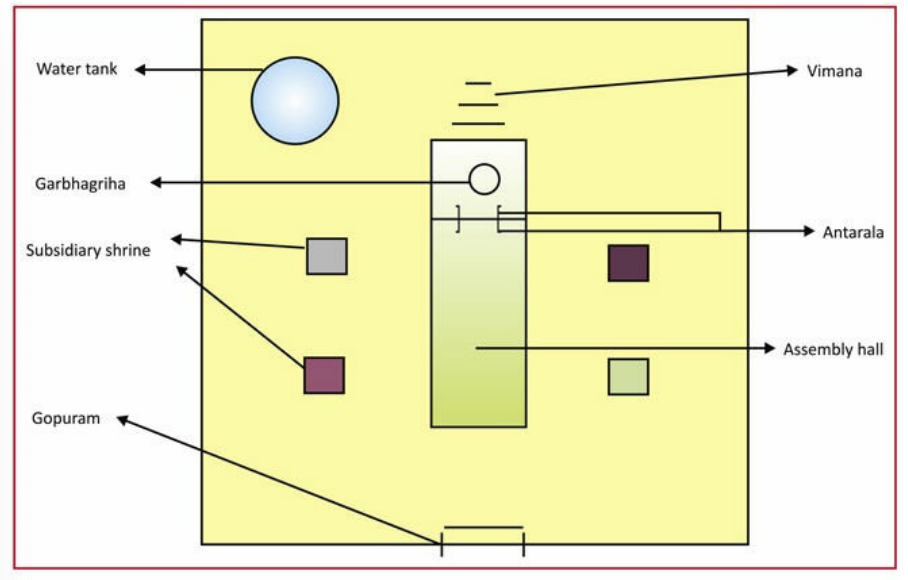
- High boundary walls (unlike Nagara temples).
- Gopuram: High entrance gateway in the front wall.
- Panchayatan style: A principal temple with four subsidiary shrines.
- Vimana: A stepped pyramid-like spire rising linearly (instead of curving like Nagara shikharas).
- Shikhara: The crowning element in an octagonal shape (unlike the spherical Kalash of Nagara temples).
- Only one vimana: Subsidiary shrines did not have vimanas, unlike Nagara temples.
- Antarala: Vestibular tunnel connecting the garbhagriha to the assembly hall.
- Water tank: A unique feature within temple enclosures.
- Examples of Dravidian Architecture
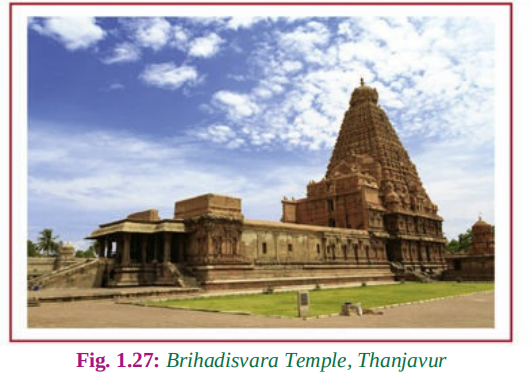
- Brihadeeswara Temple, Thanjavur (Raja Raja I, 1011 AD)
- Gangaikondacholapuram Temple (Rajendra I, built to commemorate his victory in the Gangetic delta)
- Important South Indian schools of architecture
- Pallava School of Architecture
- Temple architecture in South India began under the Pallava ruler Mahendravarman.
- The temples developed during the Pallava dynasty reflected the stylistic preferences of individual rulers and evolved through four stages:
- Mahendra Group (First Stage)
- Built under Mahendravarman, these were rock-cut temples.
- Unlike the Nagara style, where mandapas meant only the assembly hall, under Mahendravarman, temples were also known as mandapas.
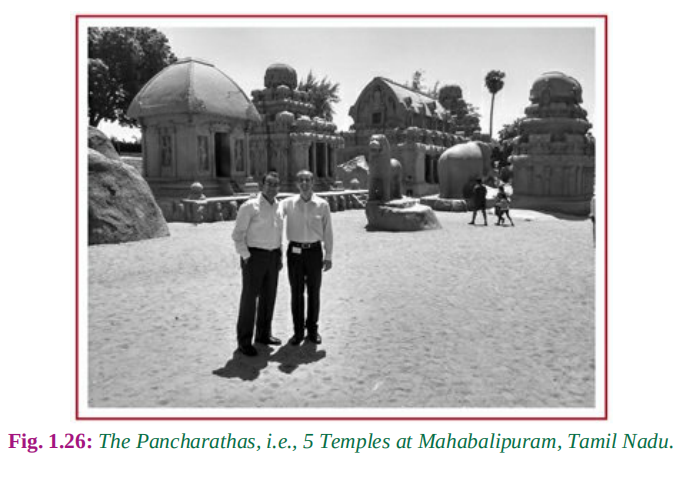
- Narasimha Group (Second Stage)
- Under Narasimhavarman, temples became more decorative with intricate sculptures.
- The rock-cut mandapas were now divided into separate rathas (chariots).
- Examples:
- Dharmaraja Ratha (largest)
- Draupadi Ratha (smallest)
- The Dravidian style of temple design is a successor of the Dharmaraja Ratha.
-
- Rajasimha Group (Third Stage)
- Under Rajasimha, the transition from rock-cut temples to real structural temples began.
- Examples:
- Shore Temple (Mahabalipuram)
- Kailashnath Temple (Kanchipuram)
- Nandivarman Group (Fourth Stage)
- The temples were smaller but retained Dravidian architectural features.
- After the decline of the Pallavas, temple architecture evolved into the Dravidian style under the Cholas.
- Chola School of Art and Architecture
- The Chola Dynasty (850–1279 AD) left a lasting architectural legacy. Their capital Thanjavur became a center for temple building, sculpture, and bronze casting.
- Features of Chola Temples
- Massive Structures with towering vimanas.
- Intricate Shikharas rising above the sanctum.
- Granite Pillars with detailed carvings.
- Elaborate Mandapas for rituals and gatherings.
- Water Tanks inside temple premises.
-
-
- Chola Sculpture
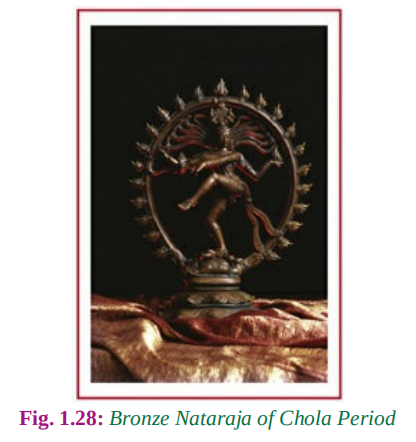
- The Nataraja sculpture reached its peak under the Cholas.
- Features of Nataraja:
- Upper right hand: Drum (Damru) - creation.
- Upper left hand: Eternal fire - destruction.
- Lower right hand: Abhaya mudra - reassurance.
- Lower left hand: Points to uplifted foot - path to salvation.
- Dwarf underfoot - ignorance and ego.
- Ganges flowing through Shiva’s hair - cosmic order.
- Ardhanarishwara depiction - fusion of male and female.
- Snake - kundalini power.
-
- Notable Chola Temples
- Brihadeeswara Temple, Thanjavur
- Airavatesvara Temple, Darasuram
- Gangaikonda Cholapuram Temple
- Nayaka School of Architecture
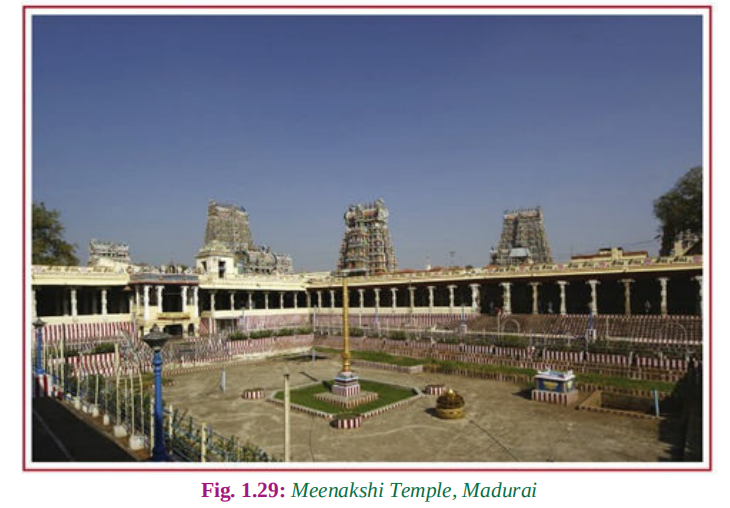
- The Nayaka rulers (16th–18th centuries AD) developed the Madurai School, which was larger in scope and had Islamic influences.
- Features of Nayaka Temples
- Prakarms: Huge corridors around the garbhagriha.
- Largest Gopurams: Meenakshi Temple in Madurai has the tallest gopuram.
- Highly intricate carvings.
- Example
- Meenakshi Temple, Madurai
-
- Vijayanagara School of Architecture
- The Vijayanagara Empire (1335–1565 AD) combined features from Chola, Hoysala, Pandya, and Chalukya styles, with Indo-Islamic influences.
- Features of Vijayanagara Temples
- Carved walls and geometric patterns.
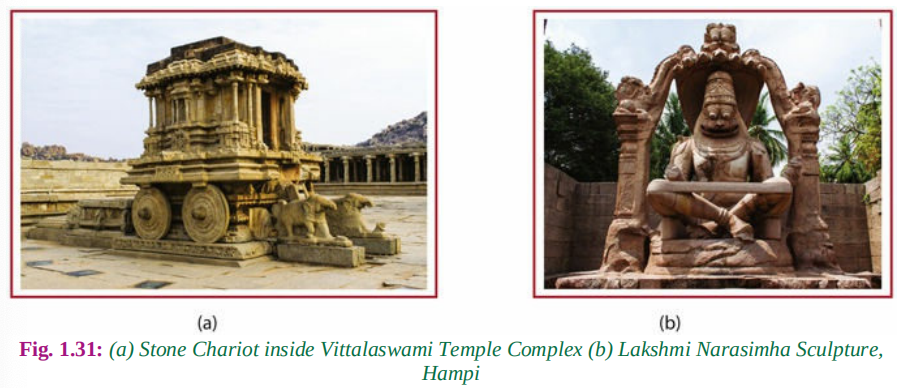
- Multiple Gopurams (on all sides, not just front).
- Monolithic rock pillars.
- Mythical creature Yali on temple pillars.
- Kalyana Mandapas (for divine marriage).
- Secular buildings inside temple premises.
- Examples
- Vittalaswami Temple Complex
- Virupaksha Temple, Hampi
- Rock-cut Narasimha idol at Hampi
-
- Chalukyan School of Architecture
- The Chalukyas (6th–8th century CE) built temples at Badami, Aihole, and Pattadakal, blending Dravidian and Nagara styles.
- Features of Chalukyan Architecture
- Curvilinear (Nagara) & Stepped (Dravidian) shikharas.
- Intricately carved pillars and temple walls.
- Star-shaped and apsidal layouts.
- Mandapas with lathe-turned pillars.
- Stepped tanks within temple complexes.
- Examples
- Badami Cave Temples (Rock-cut caves for Hinduism & Jainism)
- Badami Cave Temples
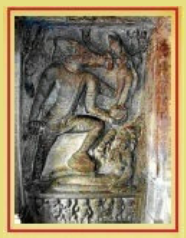
- Cave 1: Shiva as Nataraja, Harihara relief.
- Cave 2: Vishnu as Trivikrama, Varaha avatar.
- Cave 3: Largest cave, reliefs of Narasimha, Anantasayana Vishnu.
- Cave 4: Jain cave, sculptures of Bahubali, Parshvanatha, Mahavira.
-
- Durga Temple, Aihole
- Virupaksha Temple, Pattadakal
- Hoysala School of Architecture
- Developed in Karnataka (1050–1300 AD), with centers at Belur, Halebidu, and Sringeri.
- Features of Hoysala Temples
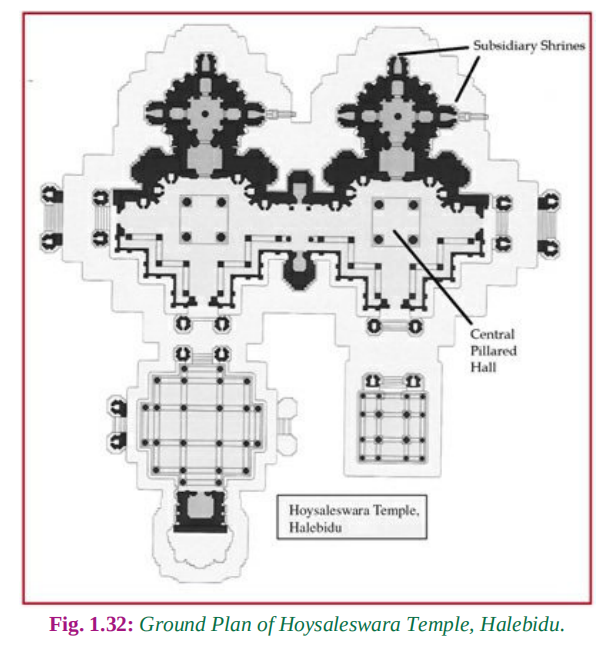
- Multiple shrines around a central hall.
- Star-shaped layouts.
- Highly detailed sculptures and friezes.
- Lathe-turned pillars.
- Examples
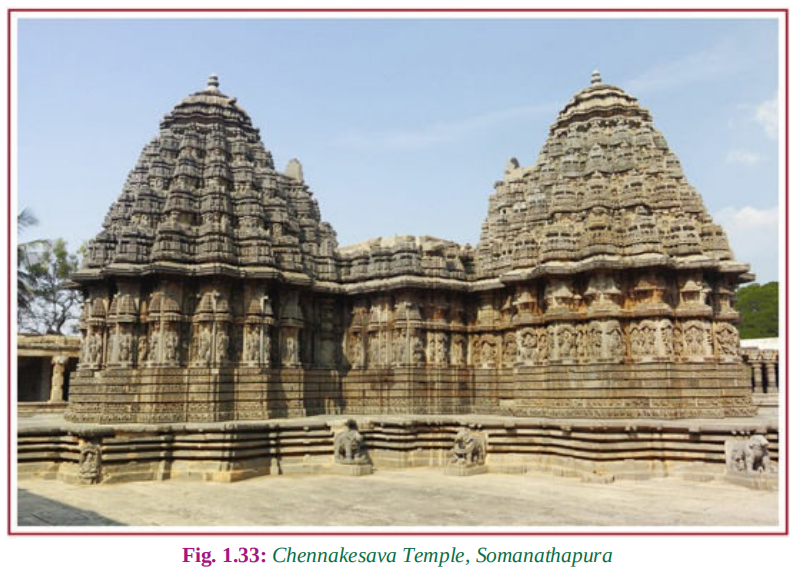
- Chennakesava Temple, Belur
-
- Hoysaleswara Temple, Halebidu
-
- Vesara School of Architecture
- Also known as the Karnataka School of Architecture, the Vesara style emerged under the later Chalukya rulers in the mid-7th century AD.
- It combined features of both the Nagara and Dravidian schools, resulting in a hybridized architectural style.
- Key Features:
- Emphasis on Vimana and Mandapa.
- Presence of an open ambulatory passageway.
- Intricate carvings on pillars, doorways, and ceilings.
- Prominent Dynasties & Contributions:
- Chalukyas of Badami and Kalyani – Early Vesara developments.
- Rashtrakutas (750-983 AD) – Notable example: Kailasha Temple, Ellora.
- Hoysala Dynasty (1050-1300 AD) – Developed the style further, seen in temples at Halebidu, Belur, etc.
- Influences from Other Schools:
- Nagara Style: Curvilinear Shikhara and square base.
- Dravidian Style: Intricate carvings, sculptural details, Vimana design, and stepped or terraced Shikhara.
- Notable Examples:
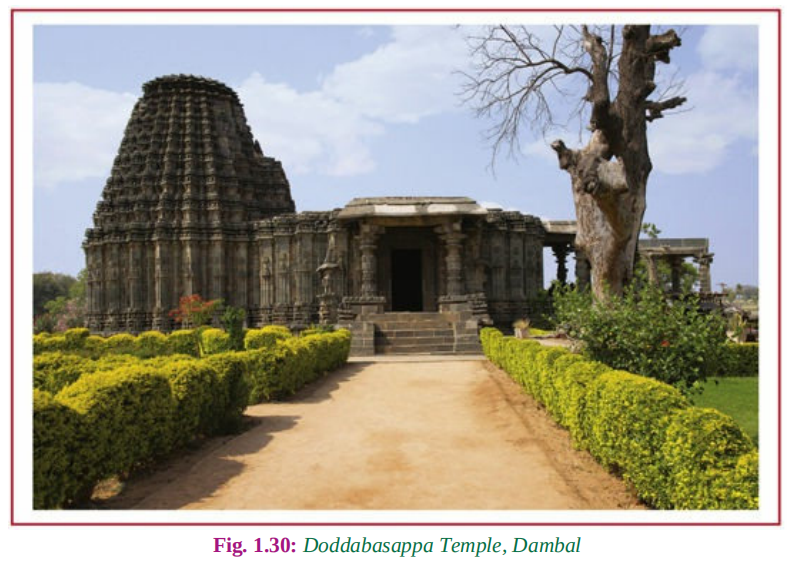
- Doddabasappa Temple, Dambal
-
- Ladkhan Temple, Aihole
- Temples at Badami
- Pala and Sena School of Architecture
- Developed in Bengal between 8th–12th century AD under the Pala and Sena dynasties.
- Pala rulers (Buddhists) built Viharas, Chaityas, and Stupas.
- Sena rulers (Hindus) built temples but also supported Buddhist architecture.
-
- Notable Monuments
- Pala Rulers:
- Universities: Nalanda, Jagaddala, Odantapuri, Vikramshila.
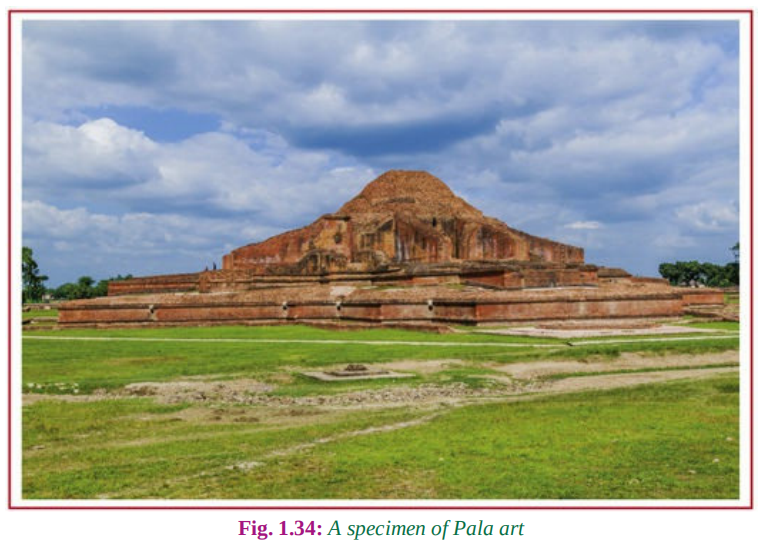
- Somapura Mahavihara (Bangladesh).
- Sena Rulers:
- Dhakeshwari Temple (Bangladesh).
- Key Features
- Bangla Roof: Curved/sloping roof, later adopted in Mughal architecture.
- Terracotta Bricks: Burnt clay bricks were commonly used.
- Temple Design: Tall Shikhara with Amalaka, similar to Odisha style.
- Sculptures:
- Made of stone and metal.
- Highly lustrous finish.
- Examples
- Siddhesvara Mahadeva Temple, Barakar.
- Temples in Bishnupur (West Bengal)
- Architecture in Medieval India
- Islamic Influence on Indian Architecture
• Arrival of Islamic Rulers
• Arab conquest of Sind in 712 AD marked the beginning of Islamic rule in India.
• By the 12th century AD, Delhi came under an Islamic ruler, starting the medieval period of Indian history.
• Impact on Indian Architecture
• Introduction of new elements like calligraphy and inlay ornamentation.
• Persian architectural styles blended with Indian traditions.
• Formation of Indo-Islamic Architecture
• Local architects retained Indian architectural elements.
• The fusion of Persian and Indian styles led to Indo-Islamic (Indo-Saracenic) architecture.
- Indo-Islamic Architecture
- Features of Indo-Islamic Architecture
- Structural Elements
- Arcuate Style: Use of arches and domes replaced the traditional Trabeate style.
- Minars: Introduced around mosques and mausoleums.
- Mortar: Used as a cementing agent in construction.
- Aesthetic Features
- Calligraphy: Replaced sculptures as a means of decoration.
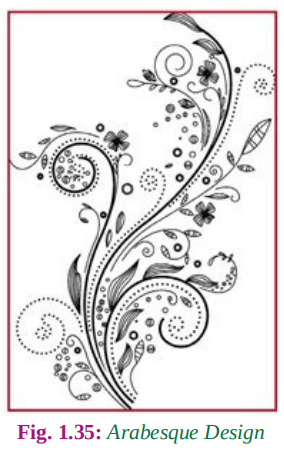
- Arabesque Method:
- Geometrical vegetal ornamentation.
- Continuous stem splitting into secondary leafy stems, creating decorative patterns.
-
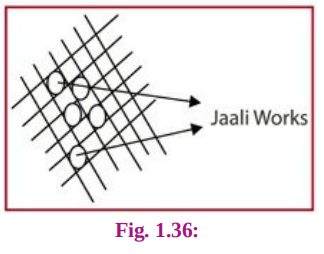
- Jaali Work: Intricate lattice screens emphasizing the importance of light in Islam.
-
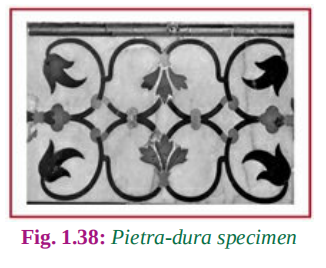
- Pietra-Dura Technique: Inlay of precious colored stones and gems for decoration.
-
- Foreshortening Technique: Inscriptions appear closer than they really are.
- Design Principles
- Spaciousness & Symmetry: Buildings were more massive and broad, avoiding congestion.
- Use of Geometry: Applied in decorative patterns and symmetrical structures.
- Avoidance of Human & Animal Figures: Due to religious beliefs.
- Water Features
- Water was used in courtyards, pools, fountains, and small drains for:
- Religious purposes
- Cooling the premises
- Decoration
- Gardening Style
- Charbagh Layout: A square block divided into four identical gardens.
-
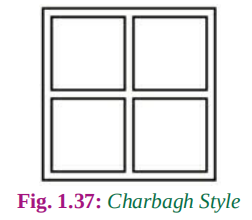
- Difference between Arcuate Style and Trabeate Style Basis
| Trabeate Style |
Arcuate Style (used under Indo-Islamic architecture) |
| Entrance characterized by the use of Lintel. |
Characterized by the use of arches and domes.
- 
|
| Top |
|
| The use of shikhara on top of the temples. They were generally conical or curvilinear. |
The use of domes, generally hemispherical, on top of the mosques. |
| Minars were absent. |
Minars were present on the four corners of the mosques. |
| Building Material |
|
| Stone was the primary component of all constructions. |
Brick, lime plaster, and mortar started to be used for constructions. |
- Architecture During the Delhi Sultanate (1206-1526 AD)
- During the Delhi Sultanate, architecture evolved under two broad styles:
- Imperial Style of Architecture
- The Imperial Style flourished under different dynasties, each contributing unique features while maintaining a consistent architectural approach.
- Slave Dynasty (Ilbari Dynasty) (1206-1290 AD) – Mameluke Style
- Early constructions were remodeled Hindu structures.
- Qutub Minar was a significant architectural achievement.
- Examples:
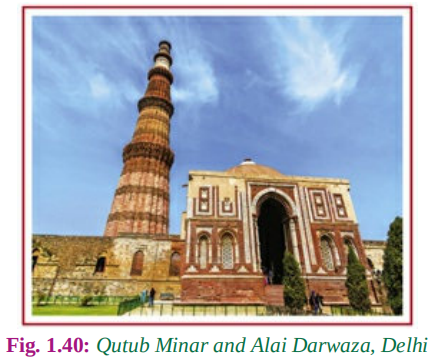
- Qutub Minar:
- Initiated by Qutb-ud-din Aibak (constructed only the ground floor).
- Completed by Iltutmish (added three storeys).
- Fifth storey added by Feroze Shah Tughlaq.
-
- Quwwat-ul-Islam Mosque (converted from a Jain temple).
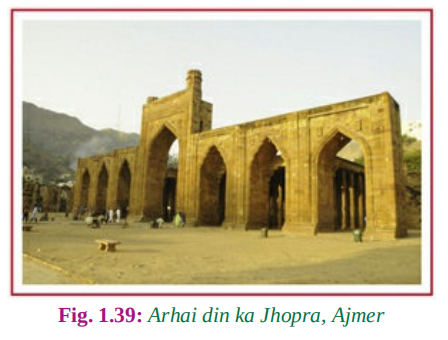
- Arhai-din-ka-Jhopra (Ajmer).
-
- Khilji Dynasty (1290-1320 AD) – Seljuk Style
- Extensive use of red sandstone.
- Arcuate style became prominent.
- Mortar used as a cementing agent.
- Examples:
- Alai Darwaza (by Ala-ud-din Khilji).
- Siri Fort.
- Tughlaq Dynasty (1320-1414 AD) – Strength Over Decoration
- Use of grey sandstone.
- Focus on structural strength rather than decoration.
- Combination of arch and lintel entrance designs.
- Batter technique introduced (sloping walls for extra strength).
- Examples:
- Cities of Tughlaqabad, Jahanpanah, and Ferozabad.
- Lodi Dynasty (1451-1526 AD) – Introduction of Double Domes
- Only tombs were built.
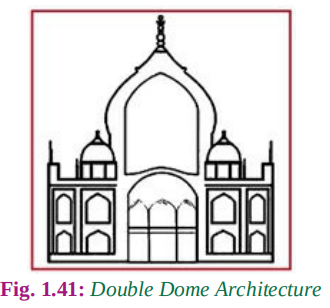
- Double domes introduced to:
- Increase structural strength.
- Reduce the inner height of the dome.
- Tombs were octagonal, plain, and supported by sloping verandahs.
- Examples:
- Lodi Gardens.
- City of Agra (established by Sikandar Lodi).
-
- Provincial Style of Architecture
- During the Delhi Sultanate, Indo-Islamic influences blended with local traditions, leading to distinct regional architectural styles in Bengal, Jaunpur, Malwa, and Bijapur.
- Provinicial Schools of Architecture
- Bengal School of Architecture (1203–1573 AD)
- Use of bricks and black marble.
- Retained traditional Bangla-style sloping roofs (previously used in temples).
- Examples:
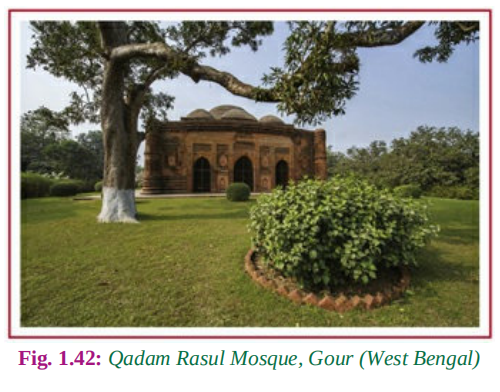
- Qadam Rasul Mosque (Gour).
-
- Adina Mosque (Pandua).
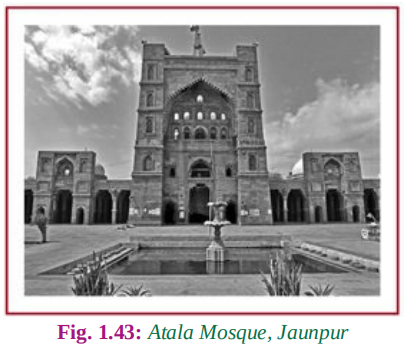
- Jaunpur School of Architecture (1394–1479 AD) – Sharqi Style
- Patronized by the Sharqi rulers.
- No minarets, following Pathan-style preferences.
- Bold inscriptions on huge screens in prayer halls.
- Example:
- Atala Mosque (Jaunpur).
-
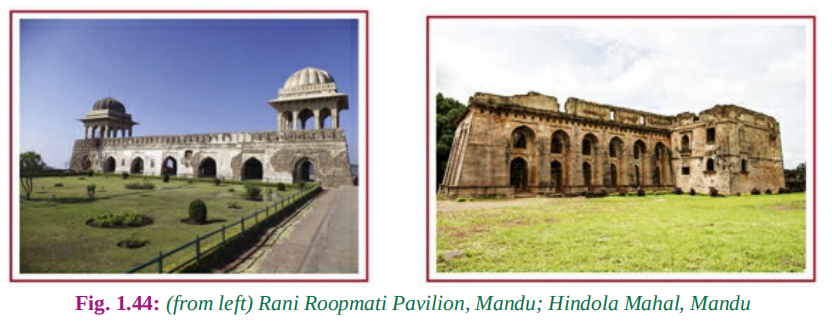
- Malwa School of Architecture (1405-1569 AD) – Pathan School
- Dhar and Mandu became major architectural hubs.
- Extensive use of colored stones and marbles.
- European influence seen in large windows.
- Stylized arches and pillars for decoration.
- Minarets were not used.
- Environmental Adaptations:
- Large windows ensured ventilation.
- Lightly arched pavilions kept interiors cool.
- Artificial reservoirs (‘baulis’) for water storage.
- Locally available materials were used.
- Batter system (introduced by Tughlaqs) strengthened buildings.
- Examples:
- Rani Roopmati Pavilion.
- Jahaz Mahal.
- Ashrafi Mahal.
-
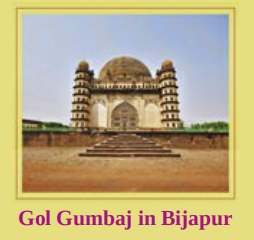
- Bijapur School of Architecture (1490-1656 AD) – Deccan Style
- Developed under the Adil Shah rulers.
- Introduced 3-arched facades, bulbous domes, and narrow-neck domes.
- Cornices used for embellishment.
- Ceilings had no apparent support (held by iron clamps and mortar plaster).
- Walls richly decorated with carvings.
- Example:
- Gol Gumbaz (mausoleum of Adil Shah, Bijapur).
- Whispering Gallery
- Built to amplify even whispers across the gallery.
- Examples:
- Gol Gumbaz.
- Victoria Memorial.
- Golghar Granary (Bandipore).
-
- Mughal Architecture
- The Mughals were great patrons of art and architecture. Under their rule, architecture regained prominence, marked by grand visions and artistic inspiration.
- Early Mughal Architecture
- Babur (1526–1530)
- Babur constructed mosques in Panipat and Rohilkhand in 1526 AD.
- His reign was too short-lived to establish a distinct architectural style.
- Humayun (1530–1540, 1555–1556)
- His reign was marked by conflicts, preventing much architectural development.
- Initiated the construction of Dinpanah, but it remained incomplete.
- Persian influence became prominent during this period.
- Sher Shah Suri (1540–1545) (Interregnum period)
- His reign marked a transition from Lodi to Mughal architecture.
- Key constructions:
- Qila-e-Kuhna Mosque (Old Fort, Delhi).
- Rohtas Fort (Pakistan).
- Sher Shah Suri Masjid (Patna, Afghan style).
- Grand Trunk Road (Sadak-e-Azam): Extended from Bengal to Punjab with sarais and tree-lined roads for travelers.
- Sher Shah Suri’s Tomb (Sasaram):
- Built with red sandstone, situated in a lake.
- Continued Delhi Sultanate architectural traditions.
- With Akbar’s accession in 1556, the golden period of Mughal architecture began.
- Akbar’s Architecture (1556–1605)
- Akbar took a keen interest in architecture, favoring red sandstone and introducing the Tudor arch (four-centered arch).
- Key Constructions
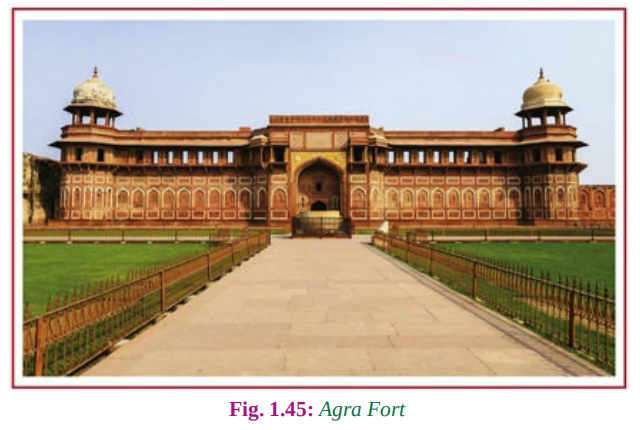
- Agra Fort
- One of the first constructions under Akbar.
- Most existing structures were later built by Shah Jahan.
- Prominent buildings:
- Moti Masjid (Shah Jahan).
- Diwan-i-Aam & Diwan-i-Khas (Shah Jahan).
- Jahangiri Mahal.
- Sheesh Mahal (Turkish Bath).
- Charbagh-style gardens were introduced.
- Akbar’s harem housed over 5000 women inside the fort.
-
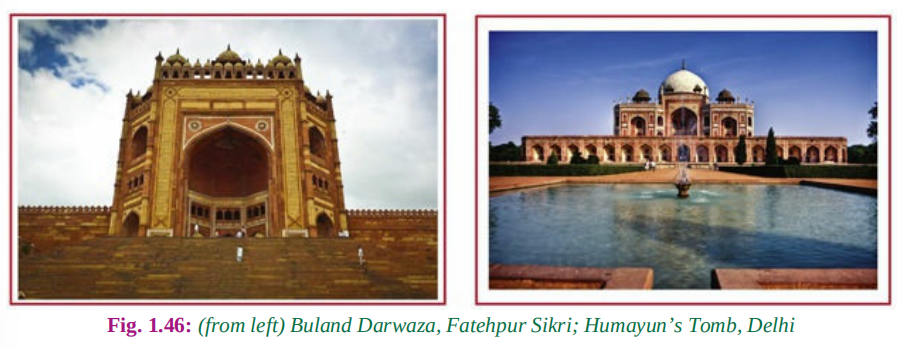
- Fatehpur Sikri (Akbar’s capital city, a blend of Hindu and Persian styles)
- Notable structures:
- Buland Darwaza (1576 AD): 40m high, commemorating victory over Gujarat.
- Salim Chishti’s Tomb (1581 AD): White marble, intricate jaali work, Quranic inscriptions.
- Panch Mahal: Five-storied wind-catcher structure (Persian badgir concept).
- Jodha Bai’s Palace (Mariam-uz-Zamani’s Palace): Hindu motifs of bell and flowers.
- Ibadat Khana: Religious debates among scholars.
- Pachisi Court: Akbar played chess here.
- Hiran Minar: Built for Akbar’s favorite elephant, doubled as a lighthouse.
- Akbar also built Govind Dev Temple in Vrindavan.
-
- Jahangir’s Architecture (1605–1627)
- Jahangir focused more on paintings than architecture, but notable constructions include:
- Akbar’s Tomb (Sikandra).
- Shalimar Bagh (Kashmir).
- Moti Masjid (Lahore).
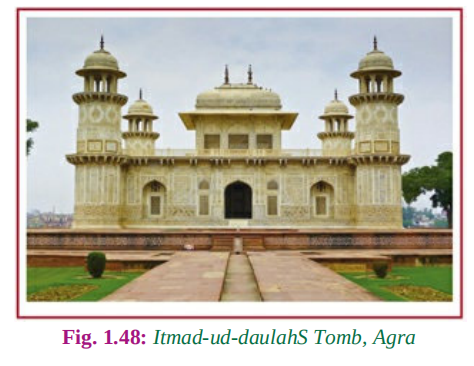
- Tomb of Itmad-ud-Daulah (Father of Noor Jahan):
- First Mughal structure built entirely in white marble.
- Finest pietra dura (inlay work).
- Tomb of Jahangir (built by Shah Jahan in Lahore).
-
- Shah Jahan’s Architecture (1628–1658)
- Mughal architecture reached its climax under Shah Jahan.
- Key Constructions
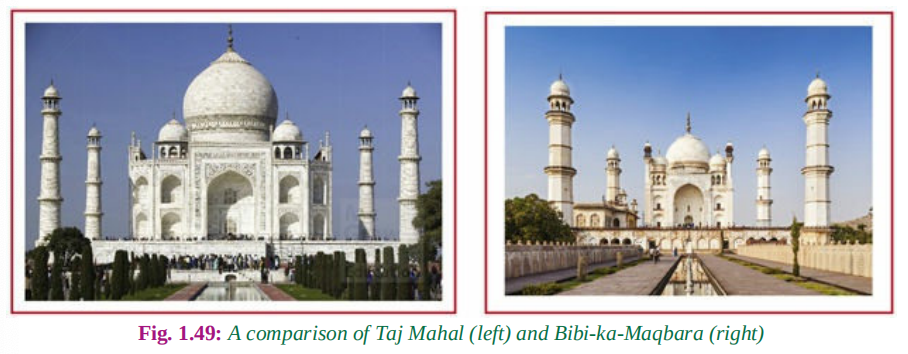
- Taj Mahal (1632–1653, Agra)
- Built in memory of Mumtaz Mahal (Arjumand Banu Begum).
- Features:
- Calligraphy, pietra dura inlay work, foreshortening technique, Charbagh gardens, water features.
- Jaali work: Extremely fine, lace-like.
- Low relief carvings on marble.
- Other Constructions
- Red Fort (Delhi).
- Jama Masjid (Delhi).
- Shalimar Bagh (Lahore).
- City of Shahjahanabad (Delhi).
- Peacock Throne: Finest example of Mughal metalwork.
- Aurangzeb’s Architecture (1658–1707)
- Mughal architecture declined under Aurangzeb due to his orthodox policies.
- Commissioned Bibi-ka-Maqbara (Aurangabad) in memory of Begum Rabia-ud-Daurani.
- Often called a poor imitation of the Taj Mahal.
-
- Regional Architectural Styles (Developed during the Mughal Period)
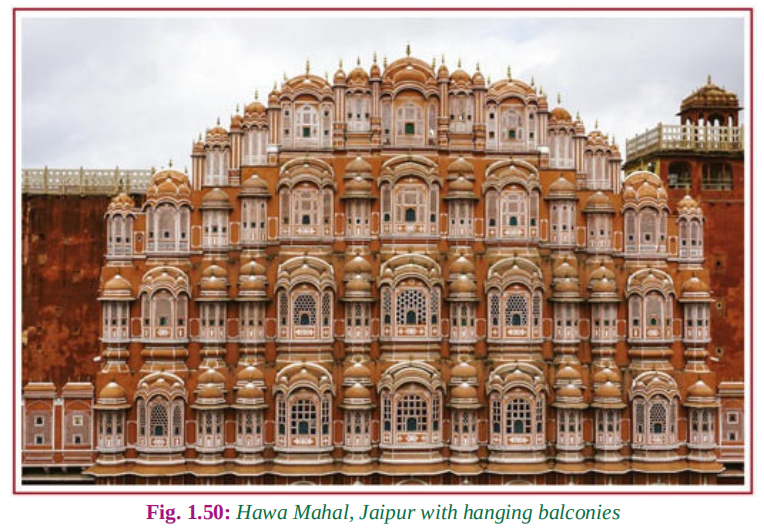
- Rajput Architecture (Influenced by Mughal style, but distinct in scale and grandeur)
- Features:
- Jharokha (hanging balconies).
- Arched cornices creating bow-shaped shadows.
-
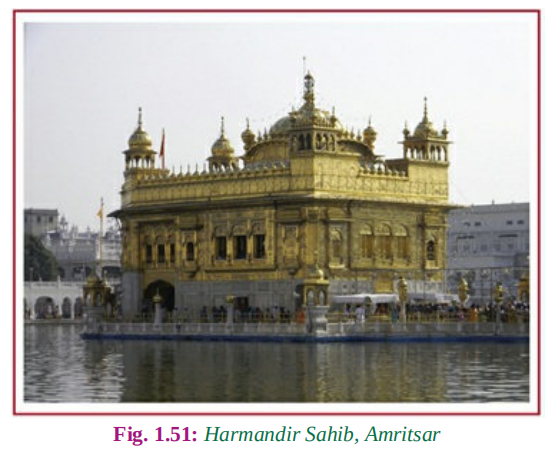
- Sikh Architecture (Developed in Punjab, combining Mughal and Rajput styles)
- Features:
- Multiple chhatris (kiosks) on rooftops.
- Onion domes, shallow cornices, fluted domes covered with brass/copper gilding.
- Decorated arches with multiple foliations.
- Example: Harmandir Sahib (Golden Temple, 16th–17th century).
-
- Awadh Architecture (18th–19th Century, Lucknow)
- Built by Nawabs of Awadh to preserve Mughal traditions.
- Experimented with new materials (mortar mix of brick dust, urad dal, rice husk, tree gum).
- Prominent structures:
- Bara Imambara (1784): Includes Asfi mosque, Bhul-bhulaiya (labyrinth), and step well.
- Chota Imambara (1838): Mausoleum of Nawab Muhammad Ali Shah & mother.
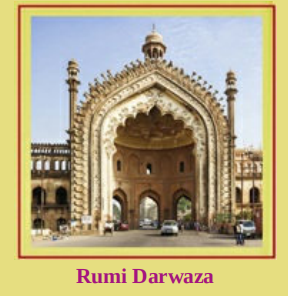
- Rumi Darwaza (Turkish Gate, 1784): Named after Sufi saint Jalaluddin Rumi.
-
- Conclusion
- Mughal architecture evolved from early Indo-Islamic influences to a distinct style blending Persian, Central Asian, and Indian elements.
- It reached its peak under Shah Jahan but declined under Aurangzeb, giving rise to regional styles in Rajasthan, Punjab, and Awadh.
- Architecture in Kashmir
- Development of Kashmiri architecture can be broadly divided into two important phases of its political rule – early medieval Hindu phase and 14th century onwards Muslim rule.
- No major monuments that were made prior to 600 AD exist, except for a few Buddhist monuments like monasteries and stupas (now in ruins) discovered at Harwan and Ushkar.
- Temples in Kashmir
- Kashmiri temple architecture has unique features suited to the local geography and is renowned for its exquisite stone carvings.
- Due to its location on important trade routes, the architectural style is influenced by various foreign sources.
- Temple-making reached great heights under the rulers of the Karkota Dynasty and Utpala Dynasty.
- Main Features of Kashmiri Temple Architecture
- Trefoil arches (influenced by Gandhara style)
- Cellular layout and enclosed courtyard
- Straight-edged pyramidal roofs
- Column walls (Greek influence)
- Triangular pediments (Greek influence)
- Relatively more number of steps
- Important Temples
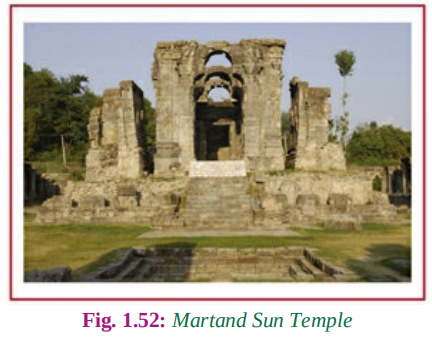
- Martand Sun Temple
- Location: Anantnag, Kashmir
- Built: 8th century AD under Karkota Dynasty ruler Lalitaditya Muktapida
- Features:
- A synthesis of Gandhara, Chinese, and Gupta architectural influences
- Constructed in a courtyard layout surrounded by columns
- Main temple has a pyramidal roof
- Carvings of Vishnu, River Goddesses (Ganga & Yamuna), and Sun God
-
- Temples at Awantipora
- Built by: King Avantivarman (first ruler of Utpala Dynasty)
- Built: 9th century AD
- Features:
- Two temples:
- Avantiswami Temple (dedicated to Lord Vishnu)
- Avantisvara Temple (dedicated to Lord Shiva)
- Situated inside a paved courtyard with four shrines in its corners
- Roman and Gandharan influences clearly visible
- Gateway has two chambers with intricate carvings
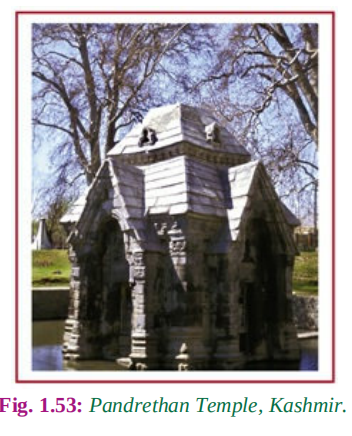
- Pandrethan Temple
- Also known as Meruvardhana-swami
- Dedicated to Vishnu, but also has Shiva images
- Built: Early 10th century AD (near Srinagar)
- Features:
- Carved from a single block of stone
- Exquisite wall carvings
- Domed roof and arches
-
- Mamleshwar Shiva Temple
- Location: Pahalgam
- Built: Around 400 AD
- Mentioned in Kalhana’s Rajatarangini
- Monuments in Paraspore
- Location: Modern-day Paraspore
- Built by: Lalitaditya Muktapida (who made Parihaspora his capital)
- Features:
- Temples dedicated to Vishnu and Parihaskesana
- Also had Buddhist structures
- Architectural Development under Islamic Rule
- With the establishment of Muslim rule, Kashmiri architecture saw a fusion of existing Hindu-Kashmiri styles with Islamic influences.
- The monuments were mostly square in shape, made of wood, brick, and stone masonry.
- Key architectural elements included:
- Absence of cloisters and domes
- Multi-levelled sloping roofs
- Tall spires
- Important Islamic Monuments
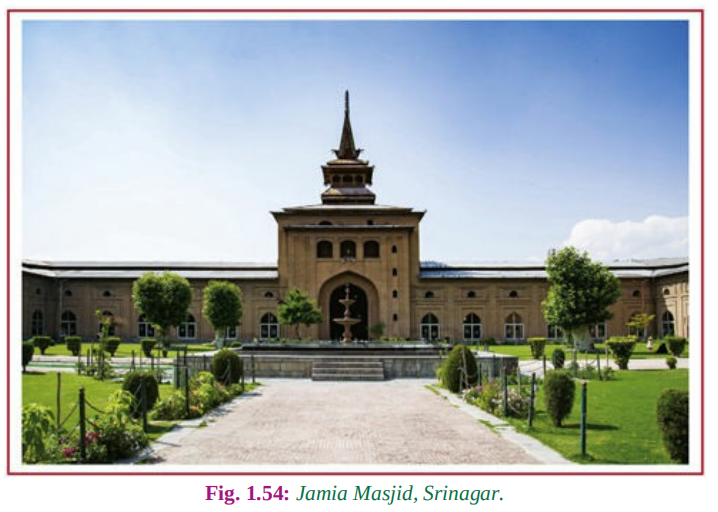
- Jamia Masjid, Srinagar
- Built: 14th–15th century AD
- Features:
- Large courtyard
- 370 wooden pillars
- Absence of curved dome, following Kashmiri architectural traditions
-
- Aali Masjid, Srinagar
- Built by: Shahmiri king Sultan Hassan Shah (15th century AD)
- Second-largest mosque in Kashmir Valley
- Features:
- Absence of dome, using timber and stone construction
- Pyramidal roof with arch-shaped windows
- Pari Mahal
- Built by: Mughal prince Dara Shikoh (mid-17th century AD)
- Features:
- Originally an observatory
- Terraced structure on a hill overlooking Dal Lake
- Located near Chashme Shahi Garden
- Gardens in Kashmir
- The Mughal rulers built numerous gardens inspired by Persian designs, using the Charbagh style. These gardens feature:
- Water streams, fountains, and trees as essential elements
- Terraced layouts with distinct sections
- Prominent Mughal Gardens in Kashmir
- Chashme Shahi
- Built around a fresh spring in Persian style
- Shalimar Bagh
- Built by: Jahangir (1619 AD)
- Served as Jahangir’s royal summer residence
- Three terraces:
- Diwan-e-Aam (Public Audience Hall)
- Diwan-e-Khas (Private Audience Hall)
- Zenana Garden (for royal women)
- Nishat Bagh
- Largest Mughal garden in Kashmir
- Located near Dal Lake
- Has 12 terraces
- Other Important Gardens
- Badamwari Garden (Srinagar)
- Verinag, Kokernag, and Achabal Gardens (Anantnag)
- Additional important information
- List of Prominent Temples in India
| Name of Temple |
Location (Place) |
Dedicated to |
Built By (Name & Dynasty Period) |
| Venkateswara Temple |
Tirumala, Tirupati, Andhra Pradesh |
Lord Venkateswara (Incarnation of Vishnu) |
Thondaiman (Tamil ruler), Later developed by Chola Dynasty Kings |
| Varaha Lakshmi Narasimha Temple |
Simhachalam Hill, Andhra Pradesh |
Lord Varaha Narasimha (a lion-man incarnation of Lord Vishnu) |
- |
| Sri Bramarambha Mallikarjuna Temple |
Srisailam, Andhra Pradesh |
Lord Shiva and Parvati |
Satavahana Dynasty (inscriptional evidences), later additions by King Harihara of Vijayanagar Empire |
| Suryanarayana Temple |
Arasavalli, Andhra Pradesh |
Sun God |
Devendra Varma (7th century AD) |
| Sri Ranganathaswamy Temple |
Nellore, Andhra Pradesh |
Lord Ranganatha (a resting form of Lord Vishnu) |
12th century |
| Veerabhadra Temple |
Lepakshi, Anantapur, Andhra Pradesh |
Lord Shiva |
Built in 1530 by Virupanna Nayaka and Viranna, governors under the Vijayanagar Empire |
| Malinithan Temple |
Northern bank of the Brahmaputra River, Arunachal Pradesh |
Deity Durga in her Shakti form |
14th-15th century |
| Kamakhya Temple |
Nilachal Hill, Guwahati, Assam |
Mother Kamakhya |
8th-17th century |
| Umananda Devaloi |
Peacock Island, Brahmaputra River, Guwahati, Assam |
Lord Shiva (Umananda) |
Ahom King Gadadhar Singha (1681-1696) |
| Navagraha Temple |
Chitrasal Hill, Guwahati, Assam |
Navagraha |
Ahom King Rajeswar Singha (Late 18th century) |
| Negheriting Shiva Doul |
Dergaon, Assam |
Lord Shiva |
Kacharis (8th-9th century AD), reconstructed in 1687 by an Ahom King |
| Hayagriva Madhava Temple |
Monikut Hill, Hajo, Assam |
Narasimha |
King Raghudeva Narayan (1583), possibly earlier by Pala dynasty |
| Mundeshwari Devi Temple |
Kaura, Kaimur district, Bihar |
Lord Shiva and Shakti |
105 AD |
| Somnath Temple |
Veraval, Gujarat |
Lord Shiva |
First temple unknown, second built around 649 AD |
| Dwarkadheesh Temple |
Dwarka, Gujarat |
Lord Krishna |
- |
| Brihadeeswara Temple |
Thanjavur, Tamil Nadu |
Lord Shiva |
Raja Raja I (1010 AD) |
| Meenakshi Temple |
Madurai, Tamil Nadu |
Goddess Parvati |
16th century |
| Sabarimala Temple |
Periyar Tiger Reserve, Kerala |
Lord Ayyappan (Incarnation of Vishnu and Shiva) |
Before 12th century AD |
| Konark Sun Temple |
Konark, Odisha |
Sun God |
By Eastern Ganga dynasty in the 13th century |
| Lingaraja Temple |
Bhubaneswar, Odisha |
Harihara (form of Shiva and Vishnu) |
By Somavamsi dynasty in the 11th century |
| Shore Temple |
Mahabalipuram, Tamil Nadu |
Lord Shiva |
8th century AD by the Pallavas |
| Vishvanath Temple |
Varanasi, Uttar Pradesh |
Lord Shiva |
600-700 AD |
| Dakshineswar Temple |
Kolkata, West Bengal |
Goddess Kali |
1855 AD |
12 Jyotirlingas in India (Dedicated to Lord Shiva)
| Jyotirlinga |
Location |
State |
| Somnath Temple |
Saurashtra |
Gujarat |
| Nageshvara Jyotirlinga |
Jamnagar |
Gujarat |
| Mallikarjuna Swami |
Srisailam |
Andhra Pradesh |
| Mahakaleshwar |
Ujjain |
Madhya Pradesh |
| Omkareshwar |
Khandwa district |
Madhya Pradesh |
| Kashi Vishwanath Temple |
Varanasi |
Uttar Pradesh |
| Kedarnath |
Kedarnath |
Uttarakhand |
| Baidyanath Temple |
Deoghar |
Jharkhand |
| Rameshwar |
Rameswaram |
Tamil Nadu |
| Grishneshwar |
Near Ellora, Aurangabad |
Maharashtra |
| Trimbakeshwar Temple |
Nasik |
Maharashtra |
| Bhimashankar |
Pune |
Maharashtra |
- Famous universities of ancient India
- Nalanda (Bihar)
- Most renowned university in South Asia.
- Existed during the Gupta period, flourished under Harshavardhana and Pala kings.
- Major centre for Mahayana Buddhist teachings, but all three Buddhist doctrines were taught.
- Subjects: Vedas, fine arts, grammar, philosophy, logic, medicine, etc.
- Attracted scholars from Central Asia, South-East Asia, and beyond.
- Famous scholars: Nagarjuna (Madhyamika Shunyavad), Aryabhatta (astronomer).
- Chinese scholars: Hsuan Tsang (spent 2 years), I-Tsing (spent 10 years).
- Had eight separate compounds and dormitories for students.
- Deeply influenced Tibetan Buddhism.
- Vikramshila (Bihar - Bhagalpur district)
- Established by King Dharampala of the Pala Dynasty.
- Primarily a Buddhist learning centre; Vajrayana sect flourished here.
- Tantric teachings, logic, Vedas, astronomy, law, grammar, philosophy, etc. were taught.
- Scholars were invited by foreign rulers to spread Buddhist teachings.
- Odantapuri (Bihar)
- Built by Pala King Gopala I as a Buddhist Mahavihara.
- Destroyed by Bakhtiyar Khilji.
- Jaggadala (Bengal)
- Centre for Vajrayana Buddhism, established by King Ramapala (Pala dynasty).
- Provided refuge to scholars after the decline of Nalanda and Vikramshila.
- Takshashila (Modern-day Pakistan)
- Existed since 5th century BC.
- Both Buddhist and Hindu theologies were taught.
- Subjects: Political science, hunting, medicine, law, military tactics, etc.
- Noted scholars: Chanakya (Arthashastra), Charak, Panini, Jivaka, Prasenajit.
- Valabhi (Saurashtra, Gujarat)
- Major centre for Hinayana Buddhism.
- Subjects: Administration, statecraft, laws, philosophy, etc.
- Chinese scholar Hsuan Tsang visited.
- Supported by Maitraka Dynasty rulers.
-
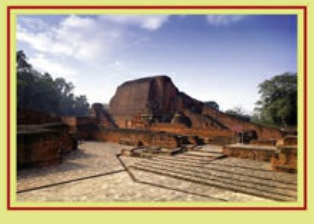
- Kancheepuram (Tamil Nadu)
- A centre of Hinduism, Jainism, and Buddhism since 1st century AD.
- Gained prominence under Pallava rule.
- Manyakheta (Karnataka - Malkhed)
- Rose to prominence under Rashtrakuta rule.
- Scholars of Jainism, Buddhism, and Hinduism studied here.
- Home to a Dvaita school of thought Matha.
- Pushpagiri Vihara & Lalitagiri (Odisha)
- Established by Kalinga kings around 3rd century AD.
- Primarily a Buddhist learning centre.
- Sharada Peeth (Pakistan-occupied Kashmir)
- Important centre for Sanskrit scholars.
- Many significant texts were written here.
- Also has a Sharda Devi temple.
- Nagarjunakonda (Andhra Pradesh - 160 km from Amaravathi)
- Major Buddhist centre, attracted scholars from Sri Lanka, China, etc.
- Had many Viharas and Stupas.
- Named after Nagarjuna, a scholar of Mahayana Buddhism.
- Prominent Temples Outside India
- Angkor Wat (Cambodia)
- World’s largest Hindu temple, located in Cambodia.
- Built between 800-1300 AD by Khmer rulers, mainly Suryavarman II.
- Closely related to Chola architecture, but with local influences.
- Hinduism spread to South-East Asia due to Chola and Kalinga Empire’s sea-faring activities, leading to Hindu dynasties like Champa (Vietnam), Khmer (Cambodia), and Majapahit (Java).
- Prambanan Temple (Java, Indonesia)
- Largest Hindu temple in Indonesia, a UNESCO World Heritage Site.
- Dedicated to Trimurti – Brahma, Vishnu, and Shiva.
- Built in the 9th century AD by Sanjaya kings of the Mataram/Medang Kingdom.
- Features 240 small temples and shrines within its complex.
- Pashupatinath Temple (Kathmandu, Nepal)
- Built in Nepalese Pagoda style, located on the banks of River Bagmati.
- Dedicated to Lord Pashupatinath (Shiva).
- Cubical structure with two-tiered roofs and two Garbhagrihas (Inner & Outer).
- Inner sanctum houses a four-faced Shiva Linga.
- Includes Vasukinath Temple and sacred Arya Ghat.
- Exact builder is unknown.
- Preah Vihear Temple (Cambodia)
- Dedicated to Sikharesvara and Bhadresvara (forms of Lord Shiva).
- Symbolically represents Mount Meru, the abode of gods.
- Built mainly by Khmer Kings Suryavarman I & II (11th-12th century AD).
- UNESCO World Heritage Site.
- Subject of a border dispute between Thailand and Cambodia, resolved by the ICJ in favor of Cambodia (1962).
-
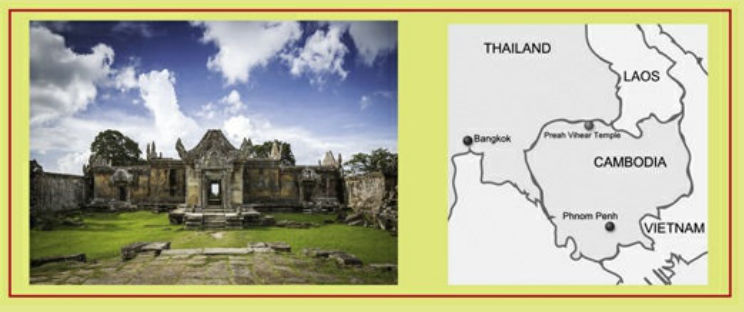
- Katas Raj Temple (Pakistan)
- Ancient Shiva temple, made of soft sandstone with trefoil arches, dentils, and pointed roofs.
- Believed to be visited by Pandavas during exile.
- Mentioned in the travelogues of Hiuen Tsang (7th century).
- Complex includes Satgraha (seven temples), a sacred lake, and ruins of a Buddhist stupa.
-
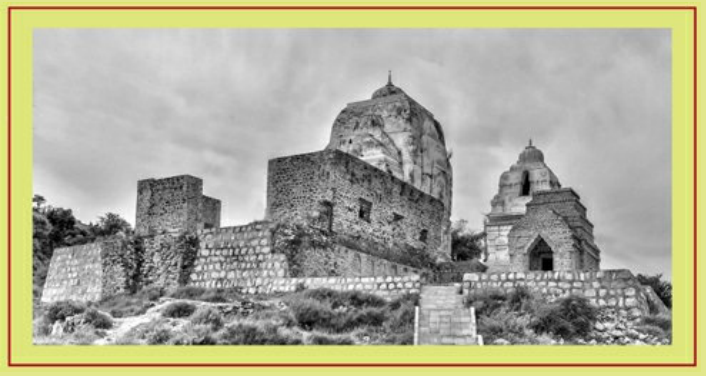
- Aditya Sun Temple (Multan, Pakistan)
- One of the oldest and most revered Sun temples of South Asia.
- Mentioned by Herodotus (5th century), Hiuen Tsang (7th century), and Al-Istakhri (10th century).
- Famous for its gold idol of the Sun god with ruby eyes.
- Frequently raided, notably by Mahmud of Ghazni.
- Munneswaram Temple (Sri Lanka)
- Over 1000 years old, reconstructed in the 16th century by Sri Lankan kings.
- Destroyed by Portuguese Jesuits in early 16th century and later rebuilt.
- Mainly dedicated to Lord Shiva, with shrines of Ganesha, Kali, and Ayyanayake (Sinhalese Buddhist deity).
- Major Buddhist Pilgrimage Sites in India
- Bihar
- Mahabodhi Temple, Bodh Gaya
- Mahaviharas: Nalanda, Vikramshila, Somapura, Odantapuri, Pushpagiri, Jagaddala
- Uttar Pradesh
- Sarnath (near Varanasi) – Site of Buddha’s first sermon
- Kushinagar
- Piprahwa (on the Nepal border)
- Madhya Pradesh
- Sanchi
- Bharhut
- Odisha
- Lalitagiri, Vajragiri, and Ratnagiri
- Rock-cut elephant and Ashokan edicts at Dhauli (Mauryan period)
- Chhattisgarh
- Sirpur
- Tamil Nadu
- Nagapattinam
- Maharashtra
- Bhaja and Karla Caves (Pune)
- Ajanta, Ellora, and Pithalkora Caves (Aurangabad)
- Kanheri Caves (Mumbai)
- Pandavleni Caves (Nashik)
- West Bengal
- Ghum Monastery
- Sikkim
- Rumtek Monastery
- Pemayangtse Monastery
- Enchay Monastery
- Ladakh
- Alchi Monastery
- Spituk Monastery
- Shey Monastery
- Himachal Pradesh
- Dhankar Monastery
- Nako Monastery (Kinnaur)
- Kye Monastery
- Tabo Monastery (Spiti Valley)
- Arunachal Pradesh
- Tawang Monastery (Largest monastery in India)
- Bomdila Monastery
- Karnataka
- Namdroling Monastery, Bylakuppe
- Major Jain Pilgrimage Sites in India
- Gujarat
- Palitana Temples, Shatrunjay Hills (Kathiawar) – Holiest site for the Śvētāmbara sect, dedicated to Rishabha (1st Tirthankara), with over 800 marble temples.
- Girnar Temples, Junagadh – Houses 16 temples, the largest dedicated to Neminath (22nd Tirthankara).
- Akota (Vadodara) – Site of discovered Jain bronze statues.
- Hathee Singh Jain Temple, Ahmedabad.
- Terminology: Jain temples in Gujarat and southern Rajasthan are called Derasar.
- Rajasthan
- Dilwara Temples, Mount Abu – Five intricately carved marble temples:
- Vimal Vasahi (built by Vimal Shah, 11th century AD)
- Luna Vasahi, Pittalhar, Parshvanath, and Mahavir Swami (13th–17th century).
- Ranakpur Temples, Pali District – Built in the 15th century, with over 1,400 uniquely carved pillars, showing Hoysala architectural influence rather than Nagara style.
- Nasiyan Temple (Soniji Ki Nasiyan), Ajmer – Built in the 19th century, dedicated to Rishabhdev (1st Tirthankara).
- Bihar
- Pawapuri, Nalanda – Site of Mahavira’s (24th Tirthankara) cremation.
- Chausa – Site of discovered Jain bronze statues.
- Jharkhand
- Shikharji (Parasnath Hills) – Holiest Jain pilgrimage site where 20 Tirthankaras attained Moksha.
- Madhya Pradesh
- Bawangaja, Barwani District – Home to an 84 ft statue of Lord Adinath, carved from a single rock.
- Various Jain temples at Gwalior, Chanderi, and Khajuraho.
- Karnataka
- Shravanabelagola – Houses the Gomateshwara statue of Bahubali, built in the 10th century AD by Chamundaraya (minister of the Ganga dynasty). Contains several Basadis (Jain temples).
- Namdroling Monastery, Bylakuppe.
- Uttar Pradesh
- Shantinath Temple Complex, Deogarh (Lalitpur, Bundelkhand) – Houses 31 temples with exquisite iconography.
- Kankali Tila, near Mathura – Discovery of Ayagapata votive tablets (1st century BCE–3rd century CE) used in Jain worship, featuring symbols like stupa, dharmachakra, and triratna.
- Odisha
- Udayagiri and Khandagiri Caves – Dating back to 2nd–1st century BC, carved during the reign of King Kharavela.
- Famous caves: Hathi Gumpha, Rani Gumpha, Ganesh Gumpha.
- Rich carvings of Jain Tirthankaras and inscriptions, including the Hathigumpha inscription, which details King Kharavela’s conquests.
- Haryana
- Hansi (Hisar) – Site of discovered Jain bronze statues.
- Tamil Nadu
- Sittanavasal Caves – Ancient Jain rock-cut temple.
- Maharashtra
- Mangi-Tungi (near Tahrabad) – A twin-pinnacled peak dedicated to Jainism, considered a gateway to enlightenment.
- Contains 6th-century images of Tirthankaras in Padmasana and Kayotsarga postures.
- In 2016, the 108 ft “Statue of Ahimsa” was consecrated, making it the tallest Jain idol in the world (Guinness World Record).
- Terminology: Jain temples in Karnataka are called Basadis.
- Temples of the Parsi Community in India
- The Parsi faith has three major types of fire temples:
- Atash Behram (“Fire of Victory”) – the highest grade of fire temple.
- The exterior is generally kept simple, as the focus is on holding the sacred fire and performing the Yasna ceremony (prayers) rather than glorification of the faith.
- The temple has an inner sanctum where the fire is kept, with vents for smoke escape.
- The ceremonies performed are of the highest order, requiring elaborate arrangements.
- They are conducted by high priests called Dasturs.
- Atash Behram fire is the highest grade of sacred fire, created by gathering 16 different types of fire.
- Eight Atash Behrams (Fire Temples) in India
- Iranshah Atash Behram – Udvada, Gujarat (built in the 18th century).
- Bhagarsath Anjuman Atash Behram – Navsari, Gujarat (built in the 18th century).
- Dadiseth Atash Behram – Mumbai.
- Wadia Atash Behram – Mumbai.
- Banaji Atash Behram – Mumbai.
- Anjuman Atash Behram – Mumbai.
- Modi Atash Behram – Surat (built in the 19th century).
- Vakil Atash Behram – Surat (built in the 19th century).
- Atash Adaran – the second-highest grade.
- Atash Dadgah – the most common, with over 100 Dadgahs in India, mostly in Maharashtra and Gujarat.
- Sun Temples in India
- Basic information
- The Sun has been worshipped since the Vedic age.
- It is revered as Aditya or Surya in Hinduism.
- Many rituals and temples are dedicated to the Sun.
- Sun temples also exist in Japan, Egypt, and China.
- Suryavanshi Rajputs claim descent from the Sun God.
- Major Sun Temples in India
- Modhera Sun Temple, Gujarat
- Built in the 11th century.
- Konark Sun Temple, Odisha
- Built by Narasimhadeva I in the 13th century.
- Shaped like a chariot (Rath) with a raised mandapa.
- Brahmanya Dev Temple, Unao (Madhya Pradesh)
- Suryanaar Kovil, Kumbakonam (Tamil Nadu)
- Built in the 11th century in Dravidian style.
- Dedicated to the Sun God and Navagrahas.
- Features a five-layered Gopuram.
- Suryanarayana Swamy Temple, Arasavalli (Andhra Pradesh)
- Built by a Kalinga king in the 7th century.
- Granite idol holding a lotus.
- Dakshinaarka Temple, Gaya (Bihar)
- Built by King Prataparudra of Warangal in the 13th century.
- The deity wears Persian attire (waist girdle, boots, and jacket).
- Has a Surya Kund (water reservoir) nearby.
- Navalakha Temple, Ghumli (Gujarat)
- Built in the 11th century in Solanki and Maru-Gurjara styles.
- Faces east, built on a large platform.
- Surya Pahar Temple, Goalpara (Assam)
- Martand Sun Temple, Kashmir
- Modern Architecture
- European Influence on Indian Architecture
- The decline of the Mughal Empire coincided with the arrival of European colonists.
- A power struggle ensued among the Portuguese, French, Dutch, Danish, and British.
- Eventually, British rule was established until 1947.
- The Europeans introduced new architectural styles, which can be seen in their constructions.
- Portuguese Influence
- Introduced the Iberian style of architecture.
- Initially built trading posts and warehouses, later fortified towns along the coast.
- Introduced Patio houses and the Baroque style (late 16th century).
- Baroque architecture was elaborate, detailed, and theatrical, using contrasting colors to create a dramatic effect.
- Notable Constructions
- Sé Cathedral, Goa (Completed in 1619 AD).
- Built in Portuguese late-Gothic style.
- Houses the Golden Bell.
-
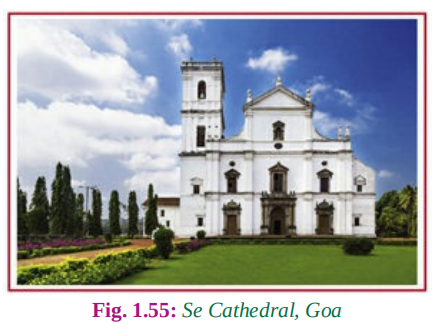
- Basilica of Bom Jesus, Goa (Completed in 1604 AD).
- Built in Baroque style.
- A World Heritage Site.
- Houses the body of St. Francis Xavier.
- Castella de Aguada, Mumbai.
- St. Paul’s Church, Diu (Completed in 1610 AD).
- Built in Baroque style.
- Diu Fort (Built in 1535 AD).
- Located on the coast of Diu island.
- Contains a lighthouse and cannons on the walls.
- Has three churches:
- St. Thomas Church
- St. Paul’s Church
- Church of St. Francis of Assisi
- Church of St. Anne, Talaulim (Goa) (Completed in 1695 AD).
- Built in Baroque style.
- French Influence
- Introduced urban city planning.
- Used Cartesian grid plans and scientific architectural designs in cities.
- Built imposing structures as a symbol of power.
- Introduced anonymous architecture (simple facades without ornamentation, similar to modern buildings).
- Developed coastal towns:
- Puducherry
- Chandernagore (West Bengal)
- Mahe (Kerala)
- Karaikal (Tamil Nadu)
- Yanam (Andhra Pradesh)
- Notable Constructions
- Church of Sacred Heart of Jesus, Puducherry.
-
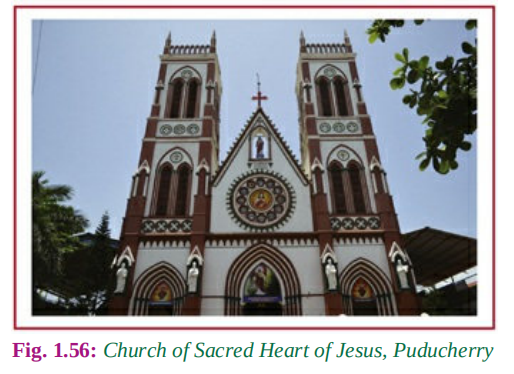
- Sacred Heart Church, Chandannagar.
- British Influence
- Introduced Gothic architecture, which merged with Indian styles.
- Led to the development of Indo-Gothic architecture.
- After 1911, the Neo-Roman style emerged.
- Indo-Gothic Style (Victorian Style)
- A blend of Indian, Persian, and Gothic elements.
- Features
- Large, elaborate constructions.
- Thinner walls compared to Indo-Islamic buildings.
- Pointed arches, unlike the curved arches of Indo-Islamic architecture.
- Large windows, a hallmark of Victorian architecture.
- Churches followed a cruciform (cross-shaped) ground plan.
- Used advanced British structural engineering:
- Steel, iron, and poured concrete became common.
- Notable Constructions
- Victoria Memorial, Kolkata.
-
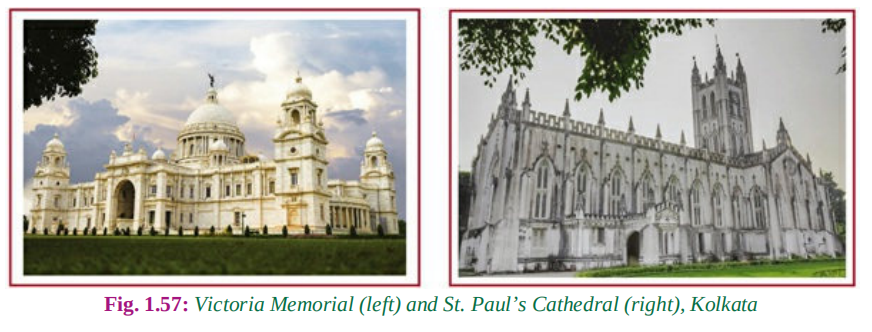
- Gateway of India, Mumbai.
- Neo-Roman (Neo-Classical) Style
- Post-1911, British Raj constructions followed the Neo-Roman (Neo-Classical) style.
- The architecture of New Delhi, designed by Edwin Lutyens and Herbert Baker, is a prime example.
- This phase is often referred to as the “Rome of Hindustan.”
- Key Features
- Anonymous and unremarkable constructions with minimal artistic expression.
- A confluence of multiple architectural styles, making the designs congested and cramped.
- Simplicity, modernity, and utility were compromised due to excessive hybridization.
- Emphasis on circular buildings.
- Overuse of oriental motifs to fit Western architectural aesthetics.
- Introduction of the upturned dome, seen in structures like:
- Supreme Court of India
- Rashtrapati Bhavan
-
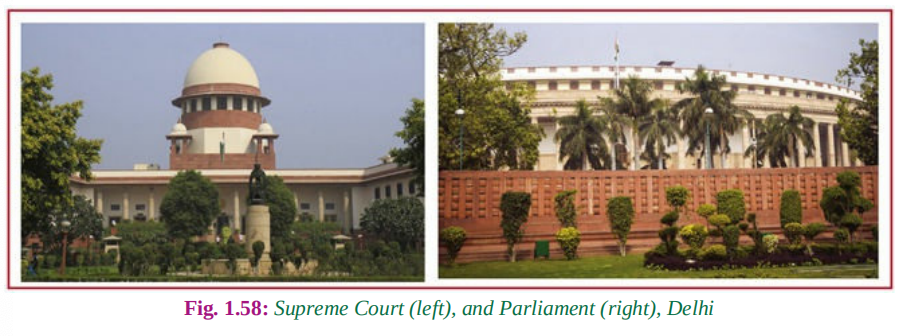
- Diffference between Iberian and Gothic Architecture
| Basis |
Iberian Architecture |
Gothic Architecture |
| Material Used |
Brick was the main material used by the Portuguese. Wood was used for roofs and stairs. |
Red sandstone and coarse limestone were primarily used. |
| Structural Variations |
The Portuguese continued with their western traditions and did not introduce any structural variations. |
The British adopted Indian motifs and styles, giving rise to the Indo-Gothic style of architecture. |
- Post-Independence Architecture
- After 1947, two architectural schools emerged:
- Revivalist
- Modernist
- However, both retained a colonial influence, leading to a decline in India’s architectural traditions.
- For instance, the Punjab government hired French architect Le Corbusier to design Chandigarh.
- Notable Architects
- Laurie Baker
- Known as the “Architect of the Poor” for revolutionizing mass housing in Kerala.
- Nominated for the Pritzker Prize (2006), often called the “Nobel Prize for Architecture”.
- Key Features of His Architectural Style
- Focused on environment-friendly buildings using locally available materials.
- Introduced filler slab construction to reduce steel and cement consumption.
- Emphasized ventilation and thermal comfort.
- Known as “The Conscience Keeper of Indian Architecture” and “The Gandhi of Indian Architecture”.
-
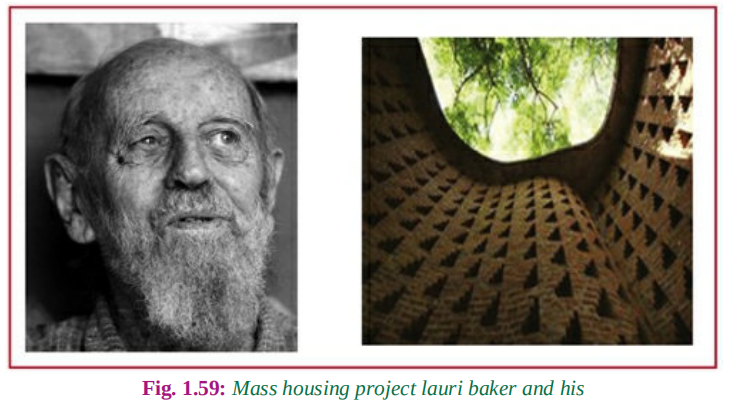
- Charles Correa
- Renowned for his contributions to urban architecture and spatial planning.
- Adapted modern architectural principles to suit local sensibilities and needs.
- Designed iconic buildings such as:
- Madhya Pradesh Assembly Building
- Mahatma Gandhi Memorial Museum, Ahmedabad
- LIC Building, Connaught Place, New Delhi
- Awarded Padma Vibhushan (2006).
- Conclusion
- From pre-historic times, art and architecture have played a vital role in India’s life and culture.
- Influences from Greeks, Arabs, Persians, and Europeans have contributed to the rich and diverse Indian architectural heritage.
- INDIAN PAINTINGS
- History of Painting in India
- India has a long tradition of artistic excellence, with painting being a major medium of expression.
- The history of Indian painting can be traced through various historical phases:
- Ancient Period
- Prehistoric Rock Paintings
- Earliest evidence of artistic expression.
- Found in Bhimbetka, Mirzapur, and Panchmarhi.
- Indus Valley Civilization
- Painted pottery suggests early artistic expression.
- Gupta Age – The True Beginning of Indian Painting
- Considered the real beginning of painting as an art form.
- Medieval Period
- The rise of Miniature Painting as a dominant style in Mughal and Rajput courts.
- Colonial Influence
- With the arrival of Europeans, painting and engraving adopted Western techniques.
- Modern Era
- Experimentation and Innovation
- Indian painters began experimenting with styles, colors, and designs.
- Global Recognition
- Many Indian artists gained worldwide recognition, winning prizes and accolades for their vision.
- PRINCIPLES OF PAINTING
- The Shadanga (3rd Century AD) (six limbs of painting) were described by Vatsyayana in his book Kamasutra.
- These principles form the foundation of traditional Indian painting.
| Variety of form |
Rupabheda |
| Proportion of the object or subject |
Pramanam |
| Creation of luster and gleam with the colours |
Bhava |
| Immersion of emotions |
Lavanya Yojanam |
| Portrayal of likeliness of the subject |
Sadrisyam |
| Mixing of colours to resemble the effects of modelling |
Varnikabhanga |
- References in Brahmanical and Buddhist Literature
- Ancient texts mention different types of paintings:
- Lepya Chitra – Representation of myths and lore on textiles.
- Lekhya Chitra – Line drawings and sketches.
- Other types include Dhuli Chitra and Pata Chitra.
- The play Mudrarakshasa by Vishakhadatta references various paintings (patas), helping understand different painting styles and the application of Shadanga.
- Some of the styles (from Mudrakshasa) were:
| Styles of Paintings |
Major Features |
| Cauka Pitaka |
Isolated framed drawings |
| Dighala Pitaka |
Long scrolls of paintings |
| Yama Pitaka |
Isolated paintings |
- Pre-historic paintings (Headings won't include everything)
-

- Pre-historic paintings were primarily executed on rocks, and these rock engravings were called Petroglyphs. The first set of pre-historic paintings was discovered in Bhimbetka caves, Madhya Pradesh.
- Phases of Pre-Historic Paintings (three major phases)
- Upper Paleolithic Period (40,000-10,000 BC)
- The rock shelter caves were made of quartzite, and minerals were used as pigments.
- One of the most commonly used minerals was ochre (geru) mixed with lime and water.
- Different minerals were used to produce colors like red, white, yellow, and green.
- Depictions in paintings:
- Large animals like bison, elephants, rhinos, and tigers were depicted using white, dark red, and green.
- Human figurines:
- Red was used for hunters.
- Green was used mostly for dancers.
- Mesolithic Period (10,000-4000 BC)
- This period primarily saw the use of red color.
- The paintings became smaller in size compared to the Upper Paleolithic Period.
- Common themes:
- Group hunting scenes were frequently depicted.
- Paintings also portrayed grazing activities and riding scenes.
- Chalcolithic Period (4000-1000 BC)
- Paintings from this period show increased use of green and yellow colors.
- Common themes:
- Battle scenes were frequently depicted.
- Many paintings show men riding horses and elephants, some carrying bows and arrows, possibly indicating preparedness for skirmishes.
- Late Historical Inscriptions:
- Samples of Ashokan and Gupta Brahmi scripts found in these cave sites suggest habitation in later historical periods.
-
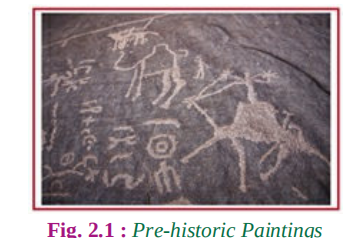
- Regional Pre-Historic Painting Sites
- Narsinghgarh, Madhya Pradesh
- Depictions:
- Skins of spotted deer left for drying, supporting the theory that early humans perfected the art of tanning skins for shelter and clothing.
- Musical instruments like the harp.
- Complex geometric shapes like spirals, rhomboids, and circles.
- Jogimara Caves, Chhattisgarh
- Located in Ramgarh Hills, Surguja district.
- Paintings date to around 1000 BC.
- Kanker District, Chhattisgarh
- Caves include Udkuda, Garagodi, Khairkheda, Gotitola, and Kulgaon.
- Depictions:
- Human figurines, animals, palm prints, bullock carts – showing a higher, more sedentary lifestyle.
- Korea District, Chhattisgarh
- Ghodsar and Kohabaur rock art sites feature similar paintings.
- Chitwa Dongri, Durg District, Chhattisgarh
- Depictions:
- A Chinese figure riding a donkey.
- Dragons and agricultural sceneries.
- Other Notable Sites
- Limdariha (Bastar District, Chhattisgarh)
- Oogdi & Sitalekhni (Surguja District, Chhattisgarh)
- Gudahandi Rock Shelter, Odisha
- Yogimatha Rock Shelter, Odisha
- Bhimbetka rock paintings
- Location: South of Bhopal, Madhya Pradesh, in the Vindhyan Ranges.
- Recognition: Declared a UNESCO World Heritage Site in 2003.
- Age:
- The oldest paintings are estimated to be 30,000 years old.
- The caves show continuous human habitation from 100,000 BC to 1000 AD.
- Many paintings were painted over older ones, showing an evolution of artistic styles.
- Artistic Periods Represented:
- Upper Paleolithic
- Mesolithic (Most dominant)
- Chalcolithic
- Early Historic
- Medieval Period
- Themes and Subjects in Bhimbetka Paintings
- Daily life of pre-historic humans:
- Stick-like human figures.
- Social activities: Dancing, playing music, honey collection, community life.
- Men carrying weapons (bows, arrows, spears, shields, swords).
- Animals depicted:
- Elephants, bison, deer, peacocks, snakes.
- War scenes:
- Men with weapons, possibly depicting battles or conflicts.
- Geometric designs:
- Simple symbols, spirals, and abstract shapes.
- Colors Used in Bhimbetka Paintings
- Natural pigments obtained from minerals:
- Red ochre (from haematite ores).
- Purple, brown, white, yellow, green.
- CLASSIFICATION OF INDIAN PAINTINGS
- Mural Paintings in India
-
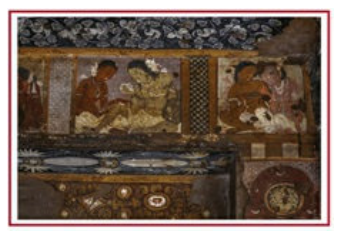
- Murals refer to paintings made on walls or solid structures.
- They have existed in India since ancient times and can be dated between 10th century BC and 10th century AD.
- Murals in India are found at multiple locations, including Ajanta, Armamalai Cave, Ravan Chhaya Rock Shelter, Bagh Caves, Sittanavasal Caves, and the Kailasha Temple at Ellora.
- Most of these paintings are in natural caves or rock-cut chambers, and they follow Hindu, Buddhist, and Jain themes.
- However, some murals also depict secular subjects, such as the ancient theatre room murals in Jogimara Caves.
- Jataka Stories in Indian Murals
- Jataka tales narrate the previous births of Gautam Buddha, where he appears in different forms like a king, outcast, god, or animal, exhibiting virtues to impart moral lessons.
- Famous Jataka Stories Depicted in Murals
- The Ass in the Lion’s Skin (Sihacamma Jataka)
- The Foolish, Timid Rabbit (Daddabha Jataka)
- The Jackal and the Crow (Jambu-Khadaka Jataka)
- King Shibi (Shibi Jataka)
- The Swan with Golden Feathers (Suvannaharnsa Jataka)
- The Turtle Who Couldn’t Stop Talking (Kacchapa Jataka)
- Famous mural paintings
- Ajanta Cave Paintings
-
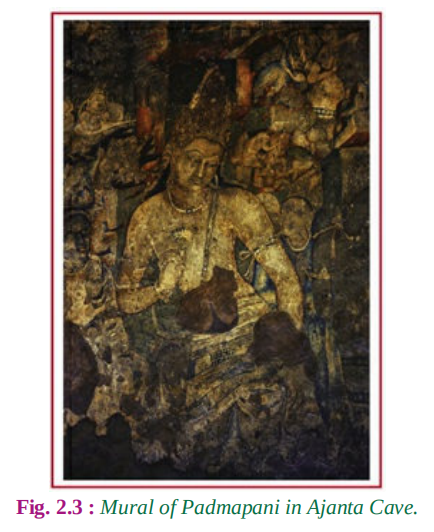
- One of the oldest surviving murals in the Indian subcontinent, Ajanta Caves were carved between 2nd century BC and 5th century AD out of volcanic rocks.
- The caves are carved in a horseshoe shape and consist of 29 Buddhist caves, known for their exquisite mural paintings.
- Key Features of Ajanta Murals
- Timeline:
- Cave No. 9 and 10 belong to the Shunga period.
- The rest belong to the Gupta period (Cave No. 1 and 2 being the most recent).
- Techniques Used:
- Both murals and fresco paintings (on wet plaster).
- Tempera style (pigments applied with binding agents).
- Themes Depicted:
- Jataka stories (previous lives of Buddha).
- Life of Gautam Buddha and various Bodhisattvas.
- Elaborate decorative patterns of flora and fauna.
- Distinctive Features:
- Female figures have unique hairstyles.
- Emotions are expressed through hand gestures.
- Even animals and birds are shown with emotions.
- Painting Medium:
- Vegetable and mineral dyes.
- Outlines in red ochre, with contours in brown, black, or deep red.
- Important Paintings at Ajanta
- Jataka Stories: Scenes from Buddha’s former lives.
- Bodhisattva Paintings (Cave No. 1)
- Vajrapani – Protector and guide, symbolizing Buddha’s power.
- Manjusri – Manifestation of Buddha’s wisdom.
- Padmapani (Avalokitesvara) – Symbol of Buddha’s compassion.
- The Dying Princess (Cave No. 16).
- Shibi Jataka: King Shibi offers his own flesh to save a pigeon.
- Matri-Poshaka Jataka: An ungrateful man betrays the elephant that saved him.
- Ellora Cave Paintings
-
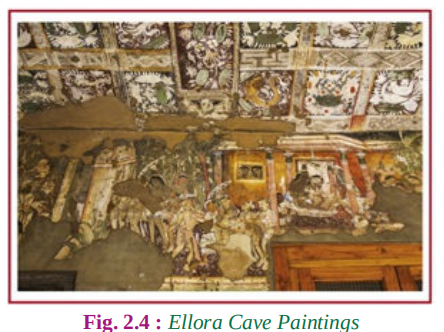
- Ellora murals are found in five caves, with the most famous being Cave No. 16 (Kailasha Temple).
- Phases of Painting
1. First Phase – Painted during the carving of caves.
2. Second Phase – Painted centuries later in Gujarati style.
- Themes Depicted
- Hindu Paintings:
- Vishnu with Lakshmi, carried by Garuda.
- Shiva with his followers.
- Shaiva Procession: Later paintings show Shaiva holy men.
- Religious Diversity: Murals represent Buddhism, Jainism, and Hinduism.
- Important Paintings at Ellora
- Goddess Lakshmi and Lord Vishnu.
- Graceful Apsaras.
- Bagh Cave Paintings
-
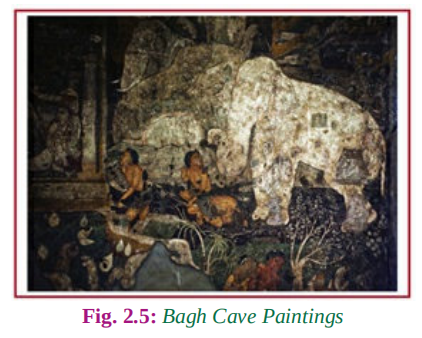
- Located in Madhya Pradesh, Bagh murals are an extension of the Ajanta school.
- Key Features
- Figures are tightly modeled, with stronger outlines and earthly, human-like expressions.
- Cave No. 4 (Rang Mahal) has murals similar to Ajanta’s Jataka tales.
- Secular Elements: Depicts contemporary lifestyle along with religious themes.
- Armamalai Cave Paintings
-
- Located in Vellore district, Tamil Nadu, these natural caves were converted into a Jain temple (8th century).
- Key Features
- Unbaked mud structures inside the caves served as resting places for Jain saints.
- Themes: Depicts Astathik Palakas (deities protecting eight directions) and Jainism.
- Sittanavasal Cave (Arivar Koil) Paintings
-
- Located in Tamil Nadu, dating from 1st century BC – 10th century AD.
- Key Features
- Themes: Jain Samavasarana (Preaching Hall).
- Similarities to Ajanta and Bagh – Paintings on walls, ceilings, and pillars.
- Scholarly Debate: Some attribute the paintings to Pallavas, while others to the Pandyas (7th century).
- Medium: Vegetable and mineral dyes applied on wet lime plaster.
- Prominent Colours: Yellow, green, orange, blue, black, and white.
- Notable Paintings
- Pond with lotuses, monks, ducks, swans, fishes, and animals.
- Depiction of Samavasarana: The sacred hall where Tirthankaras preach.
- Ravan Chhaya Rock Shelter
- Located in Keonjhar district, Odisha.
- Key Features
- Fresco paintings on a half-open umbrella-shaped rock shelter.
- Royal procession painting (7th century AD).
- Remains of Chola period paintings (11th century AD).
- Lepakshi Temple Paintings
-
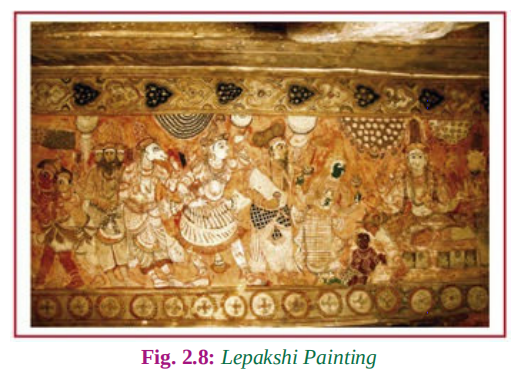
- Located in Anantapur, Andhra Pradesh, inside the Veerabhadra temple (16th century).
- Key Features
- Vijayanagara Period murals, based on Ramayana, Mahabharata, and Vishnu’s incarnations.
- Absence of blue color, showing decline in mural quality.
- Black outlines for costumes and figures.
- Jogimara Cave Paintings
- Located in Surguja district, Chhattisgarh, dated 1000–300 BC.
- Key Features
- Artificially carved cave, believed to be part of an ancient amphitheatre.
- Red-outlined paintings of dancing couples, elephants, and fish.
- Inscriptions in Brahmi script narrating a love story.
- Murals at Badami Cave Temples, Karnataka
- While famous for sculptures, Badami caves also feature murals (6th–7th century AD).
- Key Features
- Earliest surviving Hindu paintings.
- Subjects:
- Chalukyan kings.
- Jain saints renouncing worldly life.
- Shiva, Parvati, and Puranic deities.
- Notable Painting: Cave No. 3 features an ancient mural of four-armed Brahma on a swan.
- Conclusion
- Mural paintings in India are not just decorative but also historical records of religious, cultural, and social life.
- They exhibit advanced artistic techniques and rich storytelling, making them invaluable to India’s artistic heritage.
- Miniature Paintings in India (This heading is part of content of Medieval era paintings)
- Basic info
- The word ‘miniature’ comes from the Latin word Minium, meaning red lead paint.
- This paint was used in illuminated manuscripts during the Renaissance period.
- Many people confuse miniature with minimum, assuming it refers to small size.
- However, miniatures are small but highly detailed paintings.
- The Indian subcontinent has a long tradition of miniature paintings.
- Several schools of miniature painting developed, each differing in composition and perspective.
-
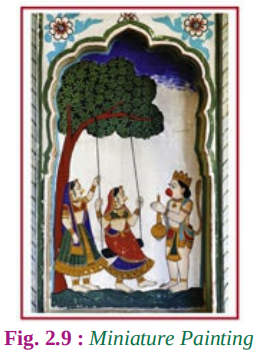
-
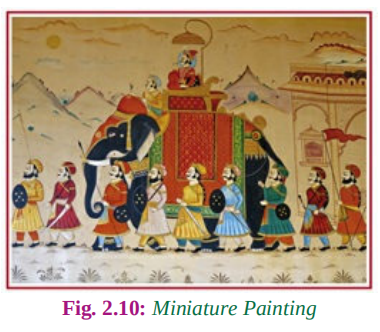
- Certain conditions must be met for a painting to be called a miniature:
- The painting should not be larger than 25 square inches.
- The subject should be painted at one-sixth of its actual size.
- For example, if a human head is 9 inches, it should not exceed 1.5 inches in the painting.
- Common Features of Indian Miniatures
- Human Figures
- Usually shown in side profile.
- Have bulging eyes, pointed nose, and a slim waist.
- Regional Variations
- Rajasthani miniatures depict people with brown skin.
- Mughal paintings show figures with fair skin.
- Lord Krishna is always depicted with blue skin.
- Facial Features
- Women have long black hair.
- Eyes and hair are generally painted in black.
- Clothing
- Men wear traditional clothes and turbans.
- Early Miniatures
- Miniature paintings were small, detailed artworks often created for books or albums.
- They were painted on perishable materials like paper, palm leaves, and cloth.
- This art form developed between the 8th and 12th centuries, emerging as a reaction to large mural paintings.
- Two prominent schools of early miniature painting were:
- Pala School of Art (750–1150 AD)
- Flourished in Bihar and Bengal under Pala rulers.
- Found in Buddhist manuscripts, painted on palm leaves or vellum paper.
- Buddhist monks used these paintings, adhering to non-violence by limiting materials to banana or coconut leaves.
- Characteristics:
- Sinuous lines and subdued background tones.
- Single figures dominate the compositions; group paintings are rare.
- Patronized by rulers promoting Buddhism, especially the Vajrayana School.
- Prominent painters: Dhimman and Vitapala.
-
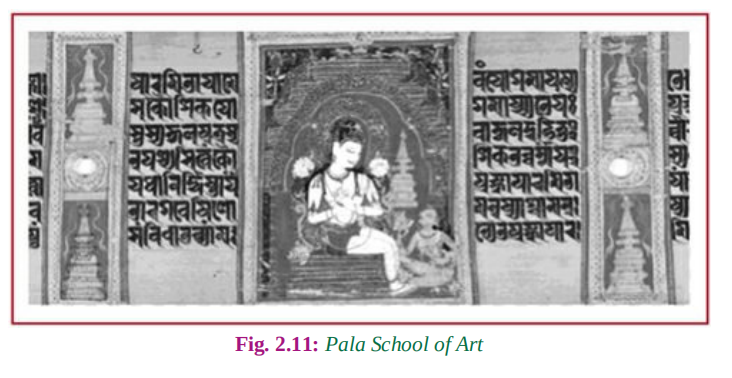
- Apabhramsa School of Art (11th–15th Century)
- Originated in Gujarat and Mewar (Rajasthan).
- Flourished as the main Western Indian painting style.
- Initially Jain-themed, later influenced by Vaishnavism, incorporating themes like Gita Govinda and secular love.
- Development:
- Early phase: Painted on palm leaves.
- Later phase: Shifted to paper as a medium.
- Unlike book illustrations, the style remained similar to mural paintings in a smaller form.
- Colors had symbolic meanings, mainly using red, yellow, and ochre.
- Gold and bright colors were introduced in the later period.
- Human and Animal Depictions:
- Bulging, fish-shaped eyes, pointed noses, and double chins.
- Early attempts at angular faces in three-quarter and fourth profiles.
- Figures are stiff, with detailed ornamentation.
- Female figures have enlarged hips and breasts.
- Animals and birds resemble toy-like forms.
- Famous Examples:
- Kalpasutra and Kalakacharya Katha (15th century).
-
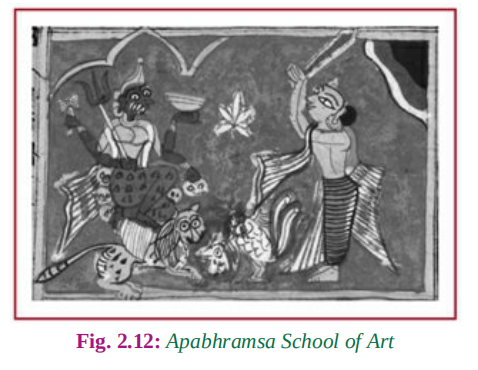
- Transition Period Miniature (14th Century)
- The arrival of Muslims in India led to cultural transformations and an artistic renaissance.
- However, traditional Indian styles survived in Western Indian courts, blending with new influences.
- In Vijayanagara (South India), a distinct Deccan style emerged.
- Colors were applied flatly, with black outlines for human figures.
- Three-quarter face profiles gave subjects a detached appearance.
- Landscapes were filled with trees, rocks, and decorative elements, rather than naturalistic scenery.
-
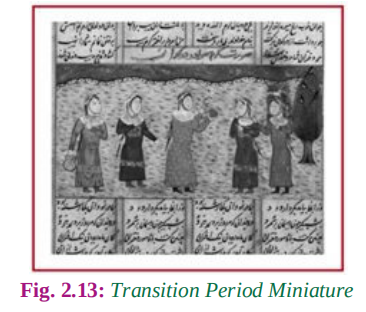
- Miniature Art During the Delhi Sultanate
- Miniature paintings from the Delhi Sultanate blended Persian and Indian artistic traditions.
- Illustrated Manuscripts
- Nimatnama (Book on Cookery) – commissioned by Nasir Shah of Mandu.
- This manuscript shows a fusion of Persian and Indian art styles.
- Lodi Khuladar Style
- A painting style used in Delhi, Jaunpur, and other Sultanate regions.
- Evolution into Major Styles
- The Sultanate period laid the foundation for three dominant miniature painting styles of medieval India:
1. Mughal Miniature Painting
2. Rajput Miniature Painting
3. Deccan Miniature Painting
- These styles built on Sultanate-era influences while developing their own distinct identity.
-
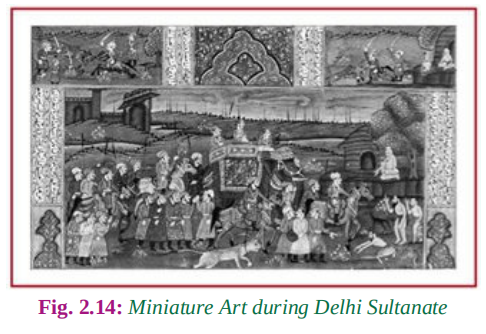
- Mughal Era Miniature Paintings
-
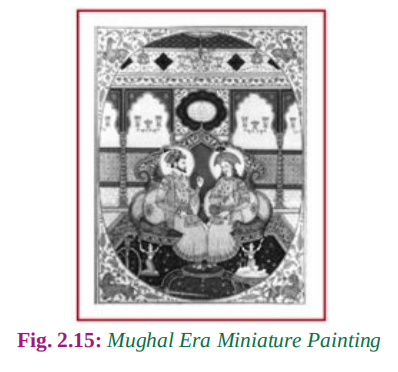
- Mughal paintings had a distinct style, drawing influence from Persian art.
- There were significant changes in color palette, themes, and forms.
- The focus shifted from depicting gods to glorifying rulers and court life.
- Popular themes included hunting scenes, historical events, and courtly depictions.
- The paintings combined Persian naturalistic styles with Mughal grandeur, creating beautifully illustrated folios.
- Brilliant colors and precise line drawings were key characteristics.
- Unlike religious paintings, Mughal art explored diverse themes.
- Innovations
- Introduced foreshortening (a technique where objects appear smaller as they recede).
- Developed a more realistic approach to depiction.
- Painting under different Mughal Era's
- Early Mughal Painters
- Babur & Humayun
- Babur had little time for paintings due to military campaigns, but he patronized Persian artist Bihzad.
- Humayun, a great patron of the arts, was exiled to Persia during Sher Shah Suri’s rule.
- In Persia, he met Abdus Samad and Mir Sayyid Ali, two renowned artists.
- After reclaiming the throne, Humayun brought these artists to India, introducing Persian influences to Mughal art.
- The first major Mughal illustrated manuscript: Tutinama (Tales of a Parrot) during Akbar’s reign.
-
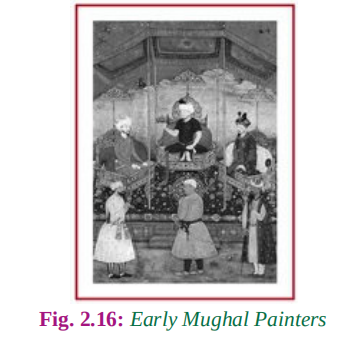
- Akbar’s Era (Significant Expansion of Mughal Painting)
- Akbar established a formal painting department called Tasvir Khana.
- Hired artists on salary, allowing them to develop unique styles.
- Viewed painting as both a learning tool and entertainment.
- Believed paintings could reflect a person’s demeanor and rewarded lifelike depictions.
- Encouraged the use of calligraphy in paintings.
- Shift from folk art to court art, focusing more on royal life than common people.
- Characteristics of Akbar’s Paintings
- Three-dimensional figures.
- Extensive use of foreshortening for realism.
- Fusion of Persian and Indian artistic styles.
- Famous Artists
- Daswanth, Basawan, Kesu.
- Important Illustrated Manuscripts
- Tutinama
-
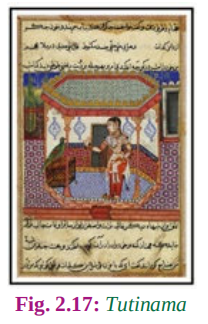
- Hamzanama
- Anvar-i-Suhaili
- Gulistan of Sadi
- Jahangir’s Era (Peak of Mughal Miniature Painting)
- Jahangir was a naturalist, favoring paintings of flora and fauna (birds, animals, trees, flowers).
- Shifted focus from illustrated manuscripts to albums.
- Developed individual portraits with an emphasis on naturalism.
- Introduced decorative margins around paintings, sometimes as elaborate as the artwork itself.
- Notable Contributions
- Personally interested in painting but no major work by him survives.
- His artists specialized in miniature paintings.
- Famous Artists
- Ustad Mansoor – known for realistic animal and human depictions.
- Famous Works
- Naturalistic paintings of a zebra, turkey, and cock.
-
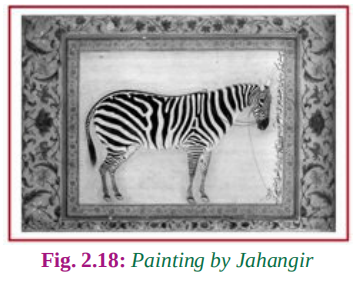
- Illustrated animal fable: Ayar-i-Danish (Touchstone of Knowledge).
- Shah Jahan’s Era (Shift Toward Artificial Elements)
- Moved away from naturalistic depictions to a more stylized approach.
- Introduced artificial stillness in paintings, inspired by European influences.
- Discouraged charcoal sketches, promoting pencil drawing instead.
- Increased use of gold and silver.
- Preferred brighter color palettes than his predecessors.
- Changes in Mughal Painting
- The Mughal atelier expanded, but the style and techniques changed significantly.
- Aurangzeb’s Era (Decline of Mughal Miniature Painting)
- Aurangzeb did not patronize art.
- Many Mughal court painters migrated to provincial courts in Rajasthan and elsewhere.
- This led to a sharp decline in the Mughal painting tradition.
- Regional Schools of Miniature Painting
-

- Even though the medieval period was dominated by the Mughal style of painting, sub-imperial schools developed their own distinct styles.
- They retained their Indian roots and a penchant for colorful paintings, contrasting the more naturalistic Mughal style.
- Rajasthani School of Painting (Rajput School of Painting)
- Rajput courts began patronizing paintings, either as an emulation of Mughal court practices or due to the influence of Deccan Sultanates and local artistic traditions.
- It has several sub-schools based on princely states:
- Mewar School of Painting
- Patronized even during periods of adversity; flourished during times of peace.
- Dominated by the 17th-century painter Sahibdin, who depicted literary texts such as:
- Ragamala
- Ramayana
- Bhagavata Purana
- Later paintings focused on court life, with unique tamasha paintings showing court ceremonies and city views.
-
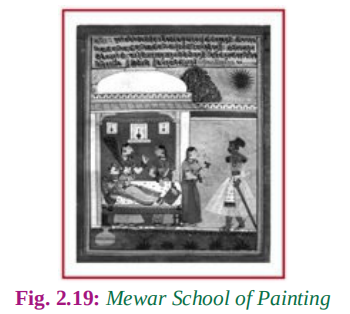
- Amber-Jaipur (Dhundar) School of Painting
- Close association with the Mughals, but identity less well-known due to private collections.
- Earliest evidence from wall paintings at Bairat and Amer Palace.
- Men depicted in Mughal-style attire, but the paintings have a folk-style finish.
- Reached its peak under Sawai Pratap Singh (18th century), who commissioned miniatures illustrating:
- Bhagavata Purana
- Ramayana
- Ragamala
-
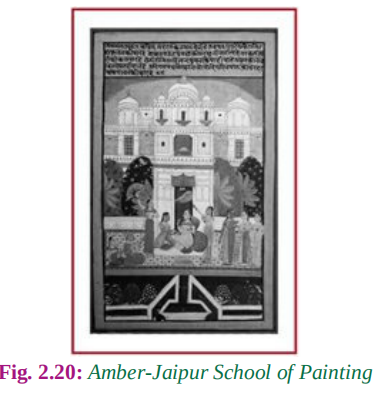
- Marwar School of Painting
- Includes Jodhpur, Bikaner, and Jaisalmer.
- Initially followed Mughal patterns (15th–16th centuries), later incorporated Rajput elements (18th century), such as:
- Linear rhythm and bright colors.
- Flourished under Man Singh (1803-1843), who commissioned paintings of:
- Shiva Purana
- Natacharitra
- Durgacharitra
- Panchatantra
-
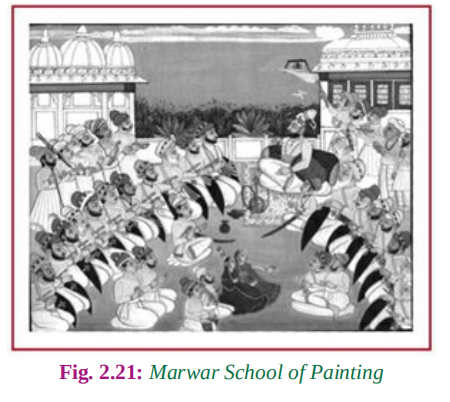
- Kishangarh School of Painting (17th–18th Century)
- Associated with the romantic legend of Sawant Singh and Bani Thani.
- Distinctive Features:
- Female figures with elongated lotus-like eyes, thin lips, and pointed chin.
- Famous for Radha-Krishna depictions in devotional and amorous themes.
-
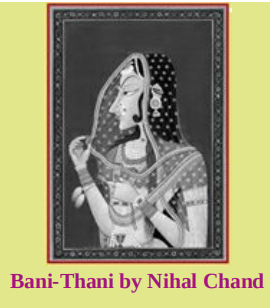
- Bundi School of Painting (17th–19th Century)
- Developed in Bundi and Kota (Hadoti region).
- Kings were devotees of Krishna, declaring themselves regents ruling on his behalf.
- Paintings feature:
- Detailed local vegetation.
- Round human faces with pointed noses.
- Sky painted in different colors, often with a red ribbon motif.
-
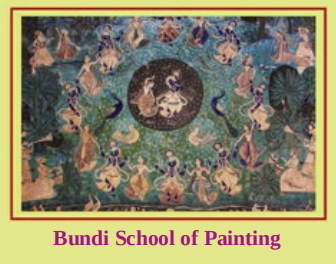
- Pahari School of Painting (17th–19th Century)
- Developed in sub-Himalayan states under Mughal influence, covering around 22 princely states from Jammu to Almora.
- Basholi School (17th Century)
- Originated in Basholi, Jammu & Kashmir.
- Characterized by:
- Expressive faces with receding hairline and lotus-petal-shaped big eyes.
- Bright primary colors (red, yellow, green).
- Patronized by Raja Kirpal Pal, with notable themes including:
- Rasamanjari
- Gita Govinda
- Ramayana
-
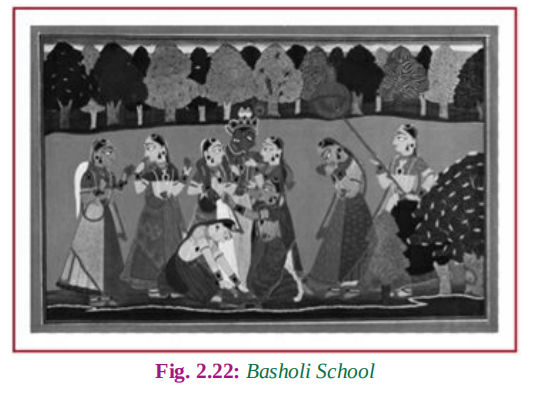
- Kangra School (Mid-18th Century)
- Emerged as Guler-Kangra School after Mughal decline.
- Flourished under Raja Sansar Chand, known for:
- Sensual and emotive style.
- Popular themes:
- Gita Govinda
- Bhagavata Purana
- Satsai of Biharilal
- Nal-Damayanti
- Love scenes of Krishna.
- A famous series from this school: “Twelve Months” – illustrating emotions associated with each month.
- Influenced later Kullu, Chamba, and Mandi paintings.
-
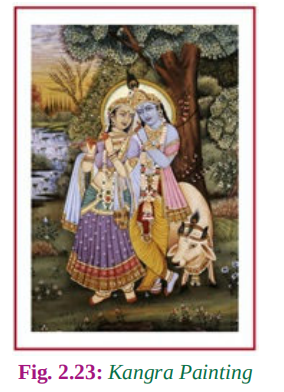
- Ragamala Paintings
- A series of illustrative paintings based on musical Ragas (16th–17th centuries).
- Represented in Pahari, Rajasthani, Deccan, and Mughal styles.
- Each Raga personified by:
- A hero and heroine (nayaka-nayika) in a specific mood.
- Depiction of seasons and time of day for performance.
- Hindu deities associated with Ragas, e.g.:
- Bhairava/Bhairavi → Shiva
- Sri → Devi
- Six principal Ragas:
- Bhairava
- Deepak
- Sri
- Malkaush
- Megha
- Hindola
-
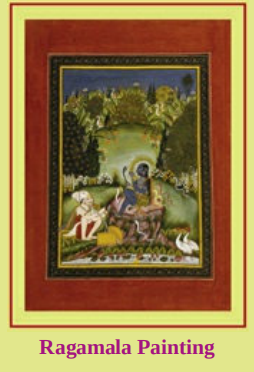
- Differece between Rajput style and Mughal Style painting
| Points of Difference |
Rajput Style |
Mughal Style |
| Type |
Initially based on mural and fresco forms. In the later period, the miniature painting form became dominant. |
It is based on the Persian miniature painting style. |
| Themes |
It is usually devotional or religious in nature. |
It usually depicts the Mughal emperor and his household. The royal pomp and show, the battles, and the hunting scenes are also very popular. |
| Peculiarity |
It uses Hindu symbols like the lotus, peacock, and swan very frequently. |
They focus either on the person in the picture or on trees, camels, and falcons. |
| Time Period |
17th-18th century was the major period. |
16th-18th century. |
- South Indian Miniature Paintings
- South India had a distinct painting tradition that included both miniature and larger mural styles. Unlike North Indian miniature schools, South Indian miniature paintings:
- Had a stronger religious focus rather than glorifying rulers.
- Frequently used gold leaf and embellishments, especially in Tanjore and Mysore styles.
- Developed alongside temple mural traditions, which influenced their themes and compositions.
- Vijayanagara & Nayaka Miniature Paintings (14th–17th Century)
- Predecessors to later South Indian miniature traditions
- Developed in manuscripts and temple murals
- Influence on later Tanjore and Mysore miniature styles
- Patronage: Vijayanagara kings and later the Nayakas of Tamil Nadu & Andhra Pradesh.
- Themes:
- Religious epics: Ramayana, Mahabharata, and Puranas.
- Narrative storytelling, often in manuscript illustrations.
- Features:
- Bright colors, flat compositions, and detailed costumes/jewelry.
- Miniatures in palm-leaf and paper manuscripts.
- Temple murals influenced later South Indian miniatures.
- Tanjore Miniature Paintings (17th–19th Century) - Gold-Coated Miniatures
- Developed as a distinct South Indian miniature style
- Evolved from Vijayanagara traditions
- Characterized by gold leaf, embossing, and bright colors
- Origin: Thanjavur (Tanjore), Tamil Nadu.
- Developed After:
- The fall of Vijayanagara Empire.
- Patronized by Maratha rulers in the 18th century.
- Unique Features:
- Miniature format but painted on wooden planks (Palagai Padam).
- Brilliant colors and liberal use of gold leaf.
- Embellishments with gemstones & cut glass.
- Themes:
- Primarily Hindu deities, especially Lord Krishna in various forms.
- Patronage:
- Flourished under Maharaja Serfoji II of the Maratha dynasty.
- Current Status:
- Still practiced today with themes expanded to birds, animals, and modern subjects.
- Recognized as a Geographical Indication (GI) by the Government of India.
-
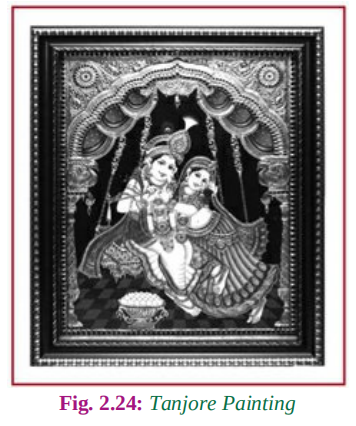
- Mysore Miniature Paintings (18th–19th Century) - Delicate & Detailed Style
- Evolved from Vijayanagara & Nayaka painting styles
- More delicate and refined than Tanjore miniatures
- Used gesso paste technique for a glossy effect
- Patronized by: Rulers of Mysore, continuing into British rule.
- Themes:
- Primarily Hindu gods and goddesses.
- Typically featured two or more figures, with one dominant figure in size and color.
- Unique Technique:
- Used “gesso paste” – a mix of white lead powder, gamboge, and glue.
- Created a shiny background, contrasting with muted figure colors.
- Connection with Tanjore Paintings:
- Both evolved from Vijayanagara & Nayaka traditions.
- Mysore paintings were finer and more intricate, while Tanjore paintings were bold and ornamental.
-
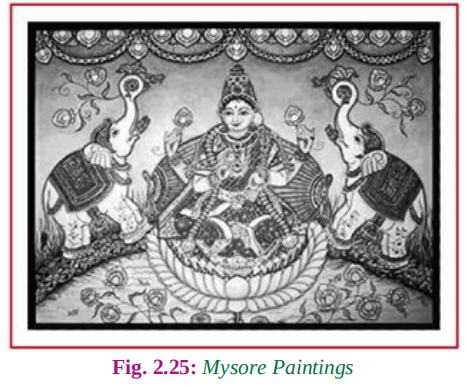
- Palm-Leaf & Manuscript Miniature Paintings
- Early form of South Indian miniatures
- Found in religious manuscripts and temple records
- Used intricate line work and natural pigments
- Medium: Palm leaves and paper.
- Themes: Hindu deities, epics, and regional folklore.
- Technique:
- Fine engraving and inking on palm leaves.
- Natural dyes and vegetable colors for illustrations.
- Ganjifa Cards (Hand-Painted Miniature Playing Cards - 16th Century Onward)
- A form of miniature painting with Mughal & South Indian variations
- Popular in royal courts as a decorative art form
- Origin: Popular in medieval India, especially in Mughal & South Indian courts.
- Features:
- Each suit had different colors and intricate miniature designs.
- Referenced in Baburnama (Mughal Emperor Babur’s autobiography).
- Mysore Ganjifa Cards:
- Recognized as a Geographical Indication (GI) in 2008 by the Government of India.
- Modern Indian Painting
- Miniature and Hybrid Painting Styles
- Company Paintings (Kampani Kalam)
- In the colonial period, a hybrid style of painting emerged that combined elements of Rajput, Mughal, and other Indian styles with European influences.
- This style evolved when British Company officers employed Indian-trained painters, leading to a fusion of their European tastes with Indian artistic traditions.
- Known as ‘Company Paintings,’ they were characterized by:
- The use of watercolors.
- Linear perspective and shading, influenced by European techniques.
- This style originated in Kolkata, Chennai, Delhi, Patna, Varanasi, and Thanjavur.
- Patrons: Mary Impey and Marquess Wellesley supported numerous painters, who depicted India’s exotic flora and fauna.
- Notable artists: Mazhar Ali Khan and Ghulam Ali Khan.
- This genre continued to flourish until the 20th century.
- Bazaar Paintings
- Also influenced by European encounters in India.
- Unlike Company Paintings, Bazaar Paintings did not blend Indian elements with European techniques. Instead, they adopted Greek and Roman influences.
- Key Features:
- Painters were made to copy Greek and Roman statues.
- Common in Bengal and Bihar.
- Depictions of Indian bazaars with a European background.
- Popular themes:
- Indian courtesans dancing before British officials.
- Religious themes, but figures with multiple arms or elephant faces (like Lord Ganesha) were prohibited, as they deviated from European notions of human form.
-
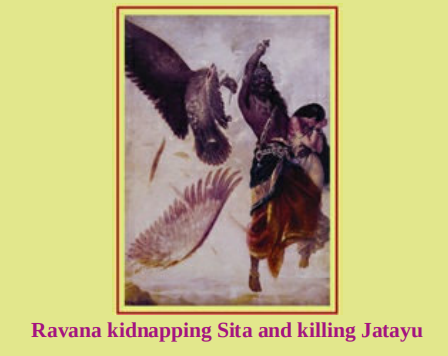
- Evolution of Modern Indian Painting
- Raja Ravi Varma (1848–1906)
- Considered the Father of Modern Indian Art.
- Contribution: Originated a modern school of painting that combined:
- South Indian painting styles.
- Western techniques of color and shading.
- Famous works:
- Ladies in the Moonlight.
- Shakuntala.
- Damayanti and Swan.
- Ravana Kidnapping Sita and Killing Jatayu (from the Ramayana).
- A film titled “Rang Rasiya” was made on his life.
- Bengal School of Art
- Emerged as a reaction to previous painting styles.
- Used simpler colors with an emphasis on Swadeshi values, reducing Western materialistic influences.
- Key Figures:
- Abanindranath Tagore: His Arabian Night series gained global recognition.
- Nandalal Bose:
- Developed Modern Indian Art further.
- Known for his white-on-black Gandhi sketch of the Dandi March.
- Illustrated the original Constitution of India.
-
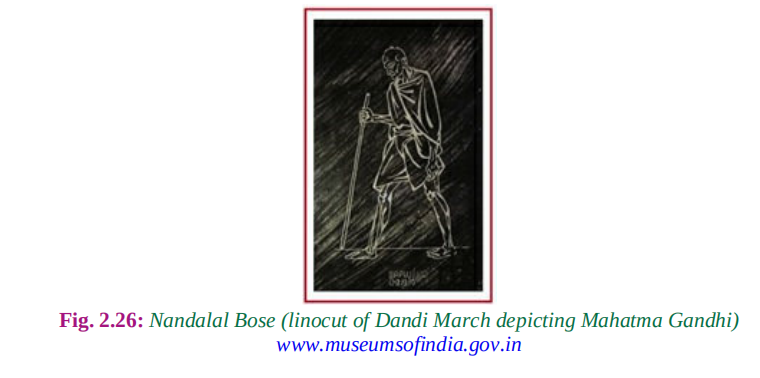
- Rabindranath Tagore:
- Used dominant black lines to make subjects prominent.
- Created small-sized paintings.
- Some historians believe his paintings were linked to his writings.
-
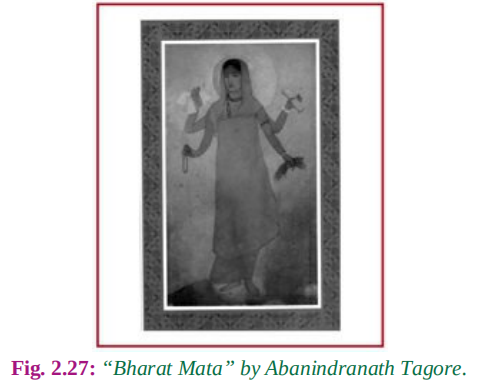
- Other notable painters:
- Asit Kumar Haldar, Manishi Dey, Mukul Dey, Sunayani Devi.
- Cubist Style of Painting in India
- Inspired by the European Cubist movement.
- Characteristics:
- Objects were broken, analyzed, and reassembled in abstract forms.
- Aimed to achieve balance between line and color.
- Prominent Artist: M.F. Husain
- Frequently used the horse motif to depict fluidity of motion.
-
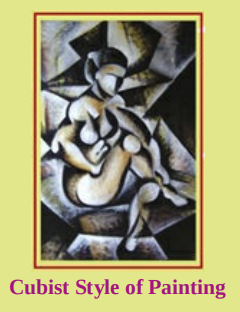
- Progressive and Folk Art Movements
- Progressive Artists Group (Post-1947)
- Gained attention for their progressive and bold themes.
- Incorporated abstract and modernist elements.
- Inspired by European Modernism.
- Founding Members:
- F.N. Souza
- S.H. Raza
- M.F. Husain
- K.H. Ara
- H.A. Gade
- S.K. Bakre
- Additional side information
- Folk Paintings
- Madhubani Paintings (Mithila Art, Bihar)
- Themes: Hindu religious motifs (Krishna, Rama, Durga, Lakshmi, Shiva).
- Symbolism: Fish (good luck, fertility).
- Traditionally made with rice paste and vegetable colors on cow dung-coated walls.
- No shading; two-dimensional.
- Recognized in 1970 when President of India honored Jagdamba Devi.
- Other famous artists: Baua Devi, Bharti Dayal, Ganga Devi, Mahasundari Devi, Sita Devi.
- Given GI (Geographical Indication) status.
-
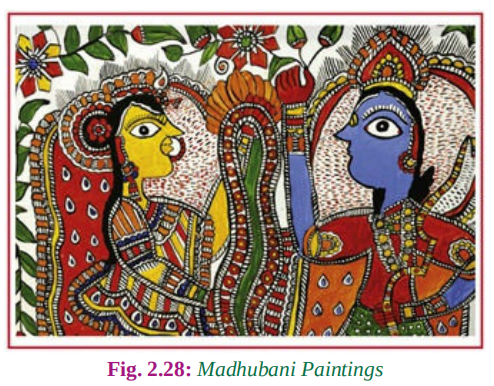
- Tikuli Art (Bihar)
- Name derived from “Bindi”, worn by women.
- Painted on hardboard, cut into shapes, coated with enamel for a polished finish.
- Incorporates Madhubani motifs.
-
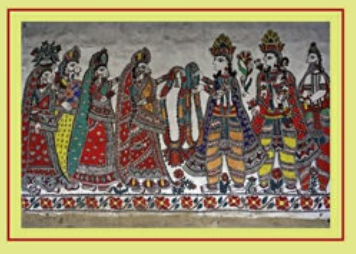
- Pattachitra Painting (Odisha)
- Traditional cloth-based painting.
- Themes: Jagannath, Vaishnava, Shakti, and Shaiva cults.
- Colors from natural sources (burnt coconut shells, hingula, ramaraja).
- No pencil or charcoal used; outlines drawn with a brush.
- Palm leaf variant: Talapattachitra.
-
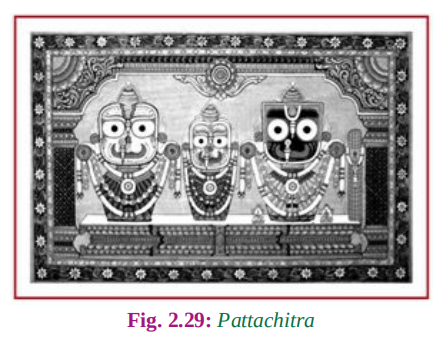
- Patua Art (Bengal)
- Originated around 1000 years ago.
- Scroll paintings (Pats) narrating Hindu mythological stories.
- Traditionally painted on cloth; modern versions on paper.
- Popular in Medinipur, Murshidabad, North & South 24 Parganas, Birbhum.
-
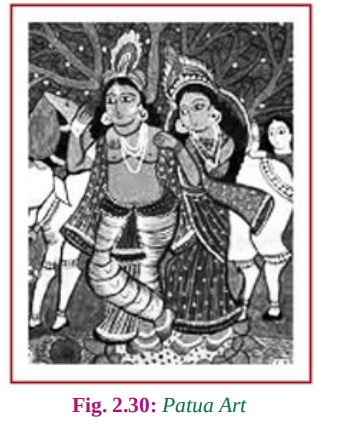
- Paitkar Painting (Jharkhand)
- Tribal scroll paintings.
- Common Theme: What happens to human life after death.
- Associated with Ma Mansa worship.
-
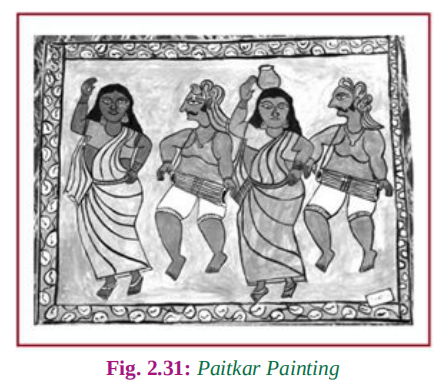
- Kalamkari Painting (Andhra Pradesh)
- Hand-painted textiles, drawn freehand using bamboo pens.
- Centers: Srikalahasti and Machilipatnam.
- Origin: Vijayanagara Empire.
- Given GI status.
-
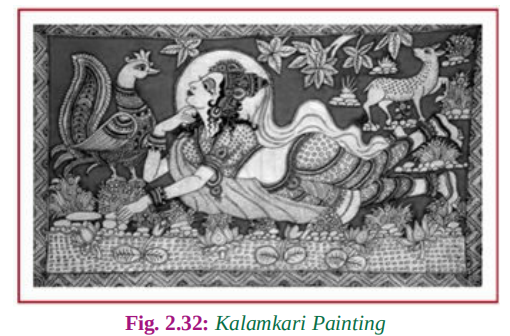
- Warli Painting (Maharashtra-Gujarat border)
- Tribal art resembling Bhimbetka murals.
- Geometric forms (triangles, circles, squares) used to depict humans and animals.
- White pigment made from gum and rice powder on a red ochre base.
- Traditionally painted for harvests and weddings.
-
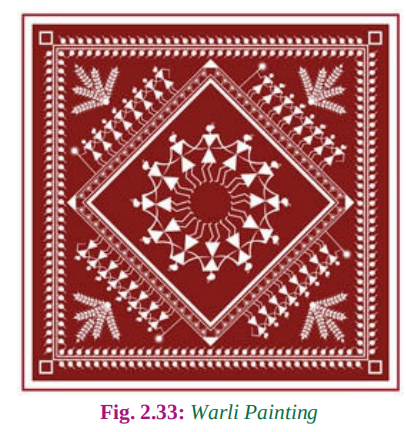
- Thangka Painting (Tibetan Buddhist Art)
- Practiced in Sikkim, Himachal Pradesh, Ladakh, Arunachal Pradesh.
- Used as Buddhist devotional art.
- Painted on cotton canvas with vegetable/mineral dyes.
- Colors hold meanings (e.g., red for passion, white for serenity, black for anger).
-
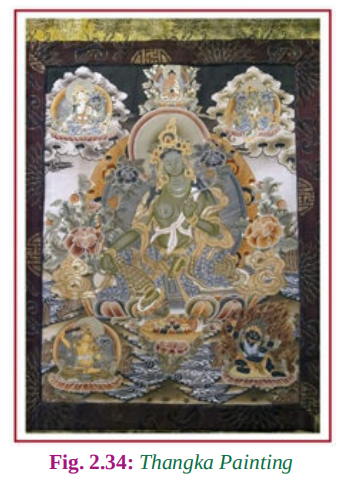
- Manjusha Painting (Bihar)
- Also called Angika Art.
- Always features snake motifs.
-
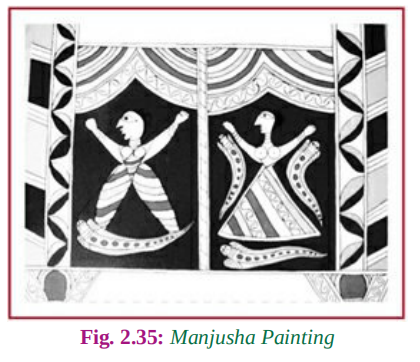
- Phad Painting (Rajasthan)
- Scroll-type religious paintings of deities Pabuji and Devnarayan.
- Painted with vegetable colors on long cloth (Phad).
-
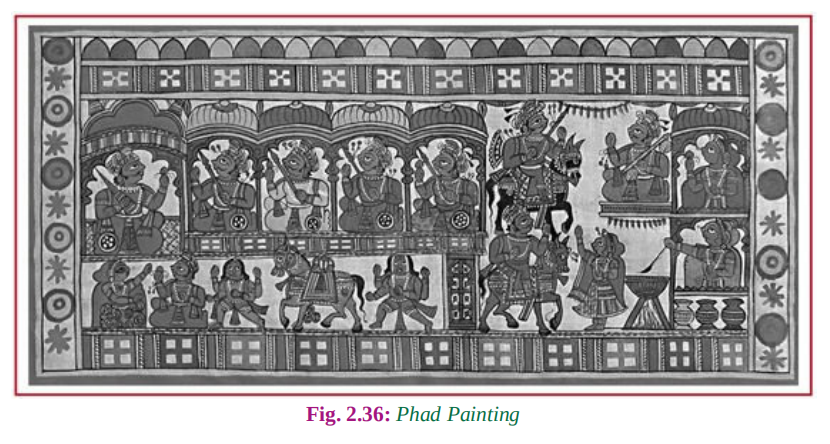
- Cheriyal Scroll Painting (Telangana)
- Nakashi art form.
- Narrates Hindu epics in comic-like scrolls.
- Granted GI status in 2007.
- Pithora Painting (Madhya Pradesh & Gujarat)
- Tribal religious paintings depicting horses.
-
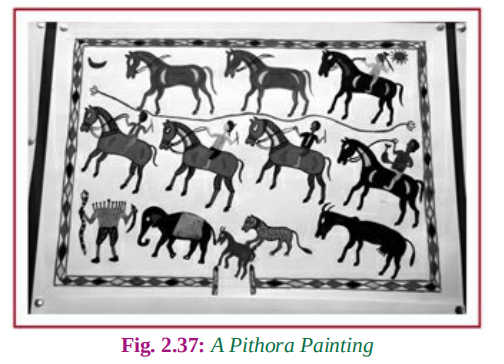
- Saura Painting (Odisha)
- Similar to Warli paintings.
- Dedicated to Idital, the Saura deity.
- Made with natural dyes.
-
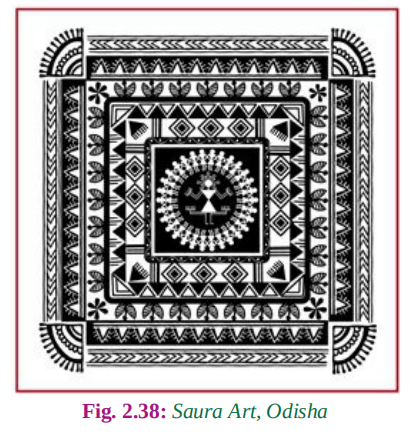
- INDIAN HANDICRAFTS
- Introduction
- Handicrafts are an amalgamation of all the things crafted by human hands.
- Many states in India have their own handicrafts, reflecting the skill and artistic proficiency of their artisans.
- These crafts can be either decorative or functional and are unique because they are solely handmade without the use of machines.
- In India, handicrafts are not only a means of livelihood but also a form of art preserved for future generations.
- They hold special significance for tribal and rural communities who depend on them for their sustenance.
- Some of the major handicrafts of India are:
- Glassware
-
- The art of glassmaking in India dates back to ancient times.
- Ancient References and Archaeological Evidence
- The first reference to glassmaking appears in the Indian epic Mahabharata.
- However, material evidence does not indicate the presence of glass beads in the early Harappan Civilization.
- The first physical evidence of glass beads comes from the Painted Grey Ware culture of the Ganges Valley (1000 BC).
- The Vedic text Satapatha Brahmana refers to glass as kanch or kaca.
- Glass Industry in Ancient and Medieval India
- Brahmapuri and Kolhapur (Maharashtra) (2nd century BC – 2nd century AD) had a thriving glass industry that specialized in lenticular beads.
- The Sanskrit text Vyasayogacharita mentions spectacles, suggesting the early development of optical lenses.
- In southern India, archaeological evidence of glass has been found at Maski (Chalcolithic site in the Deccan).
- Other sites yielding evidence of glass production include:
- Ahar (Rajasthan)
- Hastinapur and Ahichchhatra (Uttar Pradesh)
- Eran and Ujjain (Madhya Pradesh)
- During the medieval period, the Mughals patronized the art of glassware, using it for decoration in monuments such as the Sheesh Mahal.
- Mughal-era glass items included:
- Glass hukkas
- Perfume boxes (ittardans)
- Engraved glasses
- Glassware in Modern India
- The glass industry has evolved significantly, with many regional specializations:
- Glass bangles – Hyderabad produces the most exquisite ones, called “Churi ka jodas”.
- Glass chandeliers & decorative pieces – Firozabad, Uttar Pradesh.
- Glass toys (Panchkora) – Saharanpur, Uttar Pradesh.
- Decorative glass beads (Tikuli Art) – Patna, Bihar.
- Tikuli Art has almost disappeared due to industrialization, but it is still worn by the Santhal tribes of Bihar.
- Today, Tikuli Art is also made on glazed hardboards to adapt to modern artistic expressions and preserve the tradition.
- Cloth Handicrafts
-

- Cloth handicrafts in India involve various techniques like weaving, printing, and dyeing to create intricate patterns and textures.
- Artists often use wooden blocks or printed cloths to imprint designs on fabrics.
- One of the most well-known techniques is Tie and Dye, which produces stunning patterns on textiles.
- Tie and Dye
- The Tie and Dye technique, known as Bandhani or Bandhej, is an ancient Indian art form that remains popular today, particularly in Rajasthan and Gujarat.
- It is also practiced in Andhra Pradesh and Tamil Nadu.
- Tie and Dye Process
- This technique is a resist dyeing process, meaning that the tied portions of the fabric do not absorb the dye.
- The fabric is tied into a series of knots, dipped in dye, and then untied to reveal intricate patterns.
- Variations of Tie and Dye
- Laharia:
- Produces wave-like or ripple patterns on fabric.
- Mainly practiced in Jaipur and Jodhpur (Rajasthan).
- Ikat:
- Also known as resist dyeing, but the dyeing is done on the yarn before weaving.
- Major centers: Telangana, Odisha, Gujarat, and Andhra Pradesh.
-
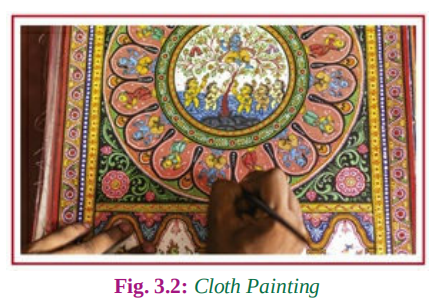
- Other Traditional Fabric Art Forms
- Kalamkari
- A form of hand-painting on fabric using vegetable dyes.
- Characterized by deep colors and intricate designs.
- Commonly practiced in Andhra Pradesh.
- Batik Art
- Involves wax-resist dyeing, where fabric is coated with molten wax, then dyed to create multicolored patterns.
- Mainly practiced in Madhya Pradesh and West Bengal.
- The art form originates from Indonesia.
- Influence of Foreign Techniques
- Some fabric techniques in India originated from trade routes and foreign influences:
- Tanchoi Silk Weaving:
- Inspired by Chinese silk weaving.
- Likely introduced through trading communities in Surat, Gujarat.
- Today, weavers from Varanasi are experts in crafting Tanchoi silk brocades, which resemble fine miniature paintings.
- Jamdani Weaving:
- An ancient art of muslin weaving practiced in West Bengal.
- Features opaque patterns woven on a transparent background in various styles.
- Other Tie and Dye, Cloth Painting and Cloth Printing varieties
| Name |
Produced mainly in |
Details |
| Paagadu Bandhu Tie and Dye |
Andhra Pradesh |
It is also known by an Indonesian name Ikat. In this tie-dye process, the fabric is woven first, resist bindings are then applied to the fabric which is then dyed. |
| Tehlia Rumal (Resist dyed Textiles) |
Andhra Pradesh |
It literally means ‘Oily handkerchief’ where alizarin dyes are used to make the cloth oily. |
| Ajrakh Printing |
Gujarat |
It is a block-printed textile that is resist-dyed using natural dyes, including indigo and madder. It is done mainly by Khatris Community in the Kutch region. |
| Mata Ni Pachedi (Ritual Cloth Painting) |
Gujarat |
It literally means ‘behind the mother goddess’. Red is the main colour used here. |
| Thigma – Tie Resist Dyeing |
Jammu and Kashmir |
Natural ingredients are used to colour the woollen cloth such as soot is used for grey and apple bars and onion peels for brown. |
| Jadu Patua Painting |
Jharkhand |
Patua means scroll on which the paintings are painted by the Jadu Community. |
| Pichhwai Paintings |
Rajasthan |
Portrait painting mainly themed around Lord Krishna on a cloth or paper. |
| Dabu printing |
Rajasthan |
It is an ancient mud resist hand block printing technique and is very unique. |
| Muthangi (Pearl Studded attire) |
Tamil Nadu |
This type of dress is mainly made for the idols. |
| Sungadi (Tie Resist Dyeing) |
Tamil Nadu |
Sungudi is the traditional tie and dye technique. |
| Dhalapathar Parda and Fabrics |
Odisha |
By Rangani Community of Odisha. |
| Kani Shawl (GI) |
Jammu and Kashmir |
It is made of delicate Pashmina wool collected from the underbelly of wild Tibetan and Ladakh mountain goats. |
| Kotpad Handloom Fabric (GI) |
Odisha |
Its designs are taken from the geometrical pattern of duck, hand fan, flower, palanquin, fish, animal, etc. |
| Tangaliya Shawl |
Gujarat |
It is a dotted hand woven textile. |
- Traditional Regional Sarees of India
| Name |
Produced mainly in |
Details |
| Pochampalli |
Andhra Pradesh |
Silk and cotton saree with intricate motifs and geometric ikat style of dyeing. Air India airlines crew wears this saree. |
| Patola |
Patan, Gujarat |
Rich handloom sarees. |
| Baluchari |
Murshidabad, West Bengal |
Depicts ancient stories on its border and pallu. Silk threads are extensively used. |
| Tanchoi Brocades |
Varanasi |
A kind of Banarasi saree where weaving technique involves a single or double warp and two to five colors on the weft on Silk fabric. |
| Chanderi |
Madhya Pradesh |
Silk, zari, and cotton woven together to make a fabric that is lighter than a feather. It is a see-through saree. |
| Ilkal |
Karnataka |
Use of Kasuti embroidery with chariot and elephant as common motifs. |
| Tant |
West Bengal |
Crisp cotton, printed saree. |
| Nauvari |
Maharashtra |
A single nine-yard sari also known as Kasta saree. |
| Bomkai |
Odisha |
Silk and cotton saree with ikat, embroidery, and intricate thread work. |
| Konrad |
Tamil Nadu |
Fabric usually has either stripes or checks and a wide border along with motifs of animals and natural elements. It is also called a temple saree. |
| Kosa |
Chhattisgarh |
A silk saree. |
| Paithani |
Maharashtra |
Silk saree embroidered with gold color thread and use of parrot as motif. |
| Kalamkari |
Andhra Pradesh |
Use of pen for painting designs. |
| Kasavu |
Kerala |
Saree characterized by thick golden border. |
| Dabu |
Chittorgarh, Rajasthan |
Dabu is an ancient mud resist hand block printing technique used on cotton fabric. |
| Jamawar |
Jammu and Kashmir |
Base used is generally wool with a little addition of cotton. The brocaded parts are woven in Silk or Pashmina. Intricate weaving of a Jamawar involves months of hard work. |
| Uppada Jamdani Saree (GI) |
Andhra Pradesh |
Finest silk along with pure zari are used as raw materials. Jamdani Sari is a Persian terminology, in which Jam means flower and Dani means Vase. |
| Jamdani |
West Bengal |
Finest muslin with opaque patterns woven on a transparent background. |
| Venkatagiri Saree (GI) |
Andhra Pradesh |
The saree is ornamented with zari in pallu and border. Jacquards are used to weave extra weft designs. Generally, soft and pastel colors are used in the saree. |
| Kotpad Saree (GI) |
Odisha |
Use of natural madder in dyeing of cotton yarn is the USP of Kotpad products. The design is mainly inspired by the surroundings like duck, hand fan, flower, palanquin, fish, animal, etc. |
- Embroidery Crafts
- Embroidery is a unique craft used on textiles, involving raised designs created with threads of gold, silver, silk, or cotton.
- These designs are stitched onto fabric using needles or applied through wooden blocks.
- India has a rich tradition of embroidery, with different regions developing distinct styles.
- Some important regional Embroidery Styles:
- Appliqué or Pipli Work (Odisha)
- Practiced in Pipli village, Odisha.
- A form of patchwork embroidery where colorful fabric pieces are sewn together to create a single decorative piece.
- Used to make lamps, wall hangings, and decorative items.
-
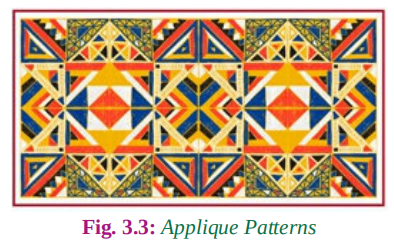
- Phulkari (Punjab, Haryana, Delhi)
- Phulkari means “flower making”.
- Uses darning techniques to create vibrant floral patterns on fabric.
- Bagh (Punjab)
- A medieval embroidery technique similar to Phulkari but with denser floral designs.
- Created using silk threads on green cloth.
- Gota and Karchobi Work (Rajasthan)
- Gota Work:
- Uses gold and silver threads to create appliqué-like patterns.
- Major centers: Jaipur and Khandela.
- Karchobi Work:
- A raised embroidery technique using flat stitches over cotton stuffing.
- Resembles metallic Zari embroidery.
- Chikankari (Lucknow, Uttar Pradesh)
- A delicate white-thread embroidery.
- Used on fabrics like cotton, mulmul, polyester, and voile.
- Defines the textile heritage of Lucknow.
- Kashida (Kashmir)
- Famous for its fine needlework.
- Typically embroidered on Cashmere shawls with floral and nature-inspired motifs.
-
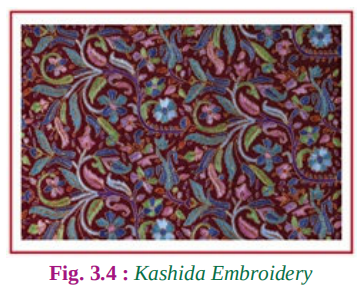
- Banaras Brocade (Varanasi, Uttar Pradesh)
- Known for gold and silver Zari embroidery on silk sarees.
- Features floral motifs.
- Takes two to eight weeks to complete a saree.
- Himroo (Aurangabad, Maharashtra)
- Used historically in royal dresses and shawls during the medieval period.
- Even today, Himroo shawls remain popular for their intricate weaving.
- Maheshwari Sarees (Madhya Pradesh)
- Made using a blend of cotton and silk yarns.
- Embellished with golden zari work.
- Feature reversible borders, allowing them to be worn on both sides.
- Chamba Rumals (Himachal Pradesh)
- Delicately embroidered handkerchiefs with themes from Krishna’s tales.
- Influenced by Chamba Pahari paintings.
- Commonly gifted during marriages.
- Designs include trees, flowers, and nature motifs.
- Shisha or Mirror Work (Kutch, Gujarat)
- Uses tiny mirrors sewn onto fabric with herringbone and satin stitches.
- A signature embroidery style of Kutch.
- Muga Silk Embroidery (Manipur)
- Features dark-colored muga silk thread embroidery.
- Seen on phaneks (traditional shawls worn by Manipuri women during auspicious occasions like weddings).
- Kasuti (Karnataka)
- A folk embroidery style that features geometrical motifs created using cross-stitch.
- Handmade and possibly dates back to the Chalukyan era.
- Hence, to sum up, a list of embroideries found at the various corners of India are given below:
| Name of Embroidery |
Produced mainly in |
Details |
| Chikankari |
Lucknow, Uttar Pradesh |
Delicate and artistic hand embroidery using white thread on muslin, cotton, silk, or chiffon fabrics. |
| Kantha |
West Bengal and Odisha |
The thread used for Kantha is generally drawn from the border threads of the used cloth and involves different motifs. |
| Phulkari |
Punjab |
Embroidery of flower motifs with contrast of bright colors on light-colored fabric. The stitches are embroidered on the reverse of the cloth. |
| Bagh |
Punjab |
Similar to Phulkari but has embroidery work throughout the whole surface of the fabric. |
| Zardozi |
Uttar Pradesh |
Uses a combination of gold, silver, or copper wire with silver or golden polish and silk threads. |
| Kashidakari |
Jammu and Kashmir |
Created by block printing patterns on the fabric first, followed by embroidery stitches along the pattern. The finished piece is later washed to remove traces of the prints. |
| Aari |
Gujarat |
Created in fine, concentric rings of chain stitch using a long hooked needle called the crewel and involves floral motifs. |
| Mirror work |
Rajasthan and Gujarat |
Use of small pieces of mirrors of various shapes and sizes, stitched in between colorful embroidery. |
| Dharaniya |
Gujarat |
Embroidered wall hangings used at homes. |
| Heer |
Gujarat |
Bold geometric patterns worked in silk. |
| Gota |
Rajasthan |
Small pieces of gold zari ribbon are applied onto the fabric with the edges sewn down to create elaborate patterns. |
| Akshida |
Bihar |
Similar to Bagh embroidery. |
| Kasuti |
Karnataka |
Done with a single thread and involves counting of each thread on the cloth. The patterns are stitched without knots, so that both sides of the cloth look alike. |
| Rabari |
Gujarat |
Embroidered animal decorations by the Rabari tribe of Gujarat. |
| Shamilami |
Manipur |
It mixes weaving and embroidery. |
| Phool Patti ka Kaam |
Aligarh, Uttar Pradesh |
Use of flower petals and leaves as motifs in the embroidery. |
| Toda |
Toda tribes of Tamil Nadu |
Similar to Kantha work. |
| Banni |
Gujarat |
Created by the Lohana Community, using silk floss for embroidery of geometrical motifs including glasswork. |
| Banjara |
Lambada tribes of Andhra Pradesh and Banjara tribes of Madhya Pradesh |
Mix of applique with mirrors and beadwork. |
| Mukesh |
Uttar Pradesh |
Involves twisting thin metallic threads to create patterns all over the fabric. |
| Karchobi |
Rajasthan |
Raised zari metallic thread embroidery created by sewing flat stitches on cotton padding. |
| Pipli |
Pipli village, Odisha |
Based on patchwork where brightly colored and patterned fabric pieces are sewn together on a plain background. |
| Khatwa Applique work (GI) |
Bihar |
This applique and patchwork is generally found in wall hangings, shamianas, saris, dupattas, cushion covers, etc. |
| Lambani (GI) |
Karnataka |
A unique needle craft done by women. |
| Sozni (or Suzani) (GI) |
Jammu and Kashmir |
Also called Dorukha embroidery. The motifs are created in satin stitch and worked equally on both sides but in different colors. |
| Sujni (GI) |
Bihar |
The base fabric used is generally red or white. Outlines of the main motif are highlighted with thick chain stitch. |
| Gara |
Gujarat |
This intricate work was introduced by Parsis who brought this technique from China. Gara involves drawing designs on paper first and then tracing the design on the fabric. |
| Kimkhab |
Varanasi (Uttar Pradesh) |
A type of heavy brocade woven with silk and gold threads. The gold thread is called Kalabattu. |
| Dongaria Kapragonda |
Odisha |
Women of the Dongaria Kondh tribe embroider a scarf called Kapragonda which they wear over a white sari with a red border. |
- Variety of weavings in India
| Name of the Weaving |
Produced mainly in |
Details |
| Pata Weaving |
Bastar, Chhattisgarh |
Sari of this kind is mainly used by tribal women. |
| Mashru Weaving |
Gujarat |
This is a handwoven mix of Silk and Cotton textiles. |
| Bohra Cap Weaving |
Gujarat and Madhya Pradesh |
It is made using an aluminum vessel as a base. The crochet is begun at the center and proceeds in a spiral form from the core to the outer edge. Both geometric and floral patterns are created. |
| Patku Weaving |
Gujarat |
Patku is a tie-dyed textile, woven on a pit loom. |
| Crochet Work |
Andhra Pradesh |
It is a process of creating fabric by interlocking loops of yarn, thread, or strands of other materials using a crochet hook. |
| Pattu Weaving |
Rajasthan |
It is mainly done on woolen textiles. Threads of Pattu are made of either camel or sheep wool. |
| Wangkhei Phee (traditional weaving) (GI) |
Manipur |
Very fine white cotton is used for this. The fabric is transparent with designs and patterns on it. |
| Shaphee Lanphee Weaving (GI) |
Manipur |
This traditional textile fabric is woven as a shawl. Meitei women are usually involved in making this type of shawl. |
- Durrie (Floor mat) Weaving
| Type |
Belongs to |
| Musallah Rug |
Andhra Pradesh |
| Namda Felted Rugs |
Gujarat |
| Kaleen : Knotted Carpets |
Jammu and Kashmir |
| Khabdan : Pile Carpets |
Jammu and Kashmir |
| Navalgund Durrie |
Karnataka |
| Panja Dhurrie |
Punjab, Rajasthan |
| Jamakalam (Bhavani Durrie) |
Tamil Nadu |
- Ivory Carving
- Basic info
- Practiced in India since the Vedic period, referred to as ‘danta’ (elephant tusk).
- Evidence of ivory exports from Harappan sites to Turkmenistan, Afghanistan, and the Persian Gulf.
- 2nd-century BC inscription from Sanchi mentions ivory workers from Vidisha.
- Ivory artifacts from the Mughal period include combs, dagger handles, and ornaments.
- Traditional Centers
- Delhi, Jaipur, Murshidabad – Famous for ivory caskets, palanquins, and Ambari Hathi.
- Kerala – Known for painting on ivory.
- Jodhpur – Famous for ivory bangles.
- Jaipur – Known for ivory jali work used in home décor and small art objects.
- Begram Ivories (Afghanistan, 1st–2nd century AD)
- Decorative plaques, small figures, and carvings made of ivory and bone.
- Associated with Kushan Art.
-
- Silver Crafts
- Filigree Work – Delicate silver wire designs used in jewelry and decorative pieces.
- Odisha – Famous for:
- Silver anklets (Painri and Paijam).
- Gunchi – Knitted silver ornaments.
- Bidri Work (Karnataka)
- Silver inlay work on dark metal backgrounds.
- Creates a striking contrast between silver and black.
- Recognized with GI (Geographical Indication) status.
- Clay and Pottery Work
- Basic info
- Called the “Lyric of Handicrafts” due to its artistic appeal.
- One of the oldest crafts, practiced since Neolithic times.
- Historical Evidence
- Mehrgarh (Pakistan, 6000 BC) – Earliest pottery evidence.
- Painted Grey Ware (1000–600 BC) – Common in the Vedic period.
- Red and Black Pottery (1500–300 BC) – Found in West Bengal.
- Northern Black Polished Ware (700–100 BC) – Associated with the Mauryan period.
- Roulette Pottery (200–100 BC) – Found in Arikamedu, near Puducherry.
- Later Developments
- Gupta period (4th century AD) – Introduction of embellishment, painting, and molding.
- Indo-Islamic period – Glazed pottery emerged.
- Present Day – Every region in India specializes in different types of clay crafts.
-
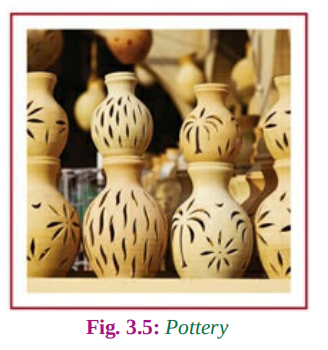
- A brief list would be:
| Name of Pottery |
Place of Origin |
Features |
| Khurja Pottery |
Uttar Pradesh |
Colourful and sturdy, used to make household items. |
| Black Pottery |
Azamgarh, Uttar Pradesh |
Special dark tint. |
| Blue Pottery |
Jaipur |
Made of Multani Mitti. |
| Kagzi Pottery |
Alwar, Rajasthan |
Delicate pottery, thin and slightly brittle. |
| Pokhran Pottery |
Pokhran, Rajasthan |
Used for household items. |
| Dalgate Pottery |
Jammu and Kashmir |
Uses special glaze. |
| Karigari Pottery |
Tamil Nadu |
Special centres in South Arcot. |
| Surai |
West Bengal |
Black Pottery. |
| Ukhrul Pottery |
Manipur |
Special black tint in the glaze. |
| Gopichandan Pottery |
Saurashtra |
Common jugware, art objects made of clay. |
- Bronze Crafts
- Ancient Usage
- Initially, metals were used for spears and arrows rather than art.
- Metal casting has been practiced for over 5000 years.
- The Dancing Girl of Mohenjo-daro (3500–3000 BC) is an early example of bronze work.
- Formation & Literary Evidence
- Bronze = Copper + Tin (one of the earliest non-ferrous alloys).
- Matsya Purana – Describes different bronze casting methods.
- Rasaratnakara – Mentions metal purity and zinc distillation.
- Major Bronze Craft Centers
- Uttar Pradesh (Etawah, Sitapur, Varanasi, Moradabad)
- Produces decorative items (flower pots, deity statues).
- Specializes in ritual objects (Tamrapatra, Kanchantal, Panchpatra).
- Tamil Nadu
- Renowned for bronze statues inspired by the Pallava, Chola, Pandyan, and Nayaka periods.
-
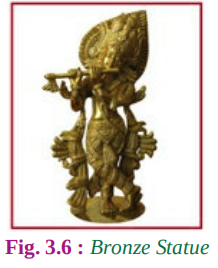
- Presently, important centres of Brass work across India are:
| Name |
Place of Origin |
Features |
| Gaja Tandava |
Kerala |
Shiva dancing in the Tandava position. |
| Rare Jain Imagery and Icons |
Karnataka |
Reflects the need of ancient Jain pilgrim centres in Karnataka. |
| Dokra Casting |
Odisha and West Bengal |
Used for ornaments made of brass. |
| Pahaldar Lamps |
Jaipur and parts of Uttar Pradesh |
Copper and brass lamps in different styles and shapes. |
| Pembarthi Craft |
Telangana |
Exquisite sheet metal (brass) art to adorn chariots and temples. |
- Other Metal Crafts
- Techniques Used
- Metal casting can be done in iron, copper, bell metal, etc.
- Ornamentation techniques include:
- Engraving – Scratching and cutting designs into metal.
- Embossing (Repoussé) – Creating raised relief designs.
- Damascening – Inlaying lighter metal on a darker base.
- Notable Metalwork Styles
- Marori Work (Rajasthan)
- Etching on base metal with black lac filling.
-
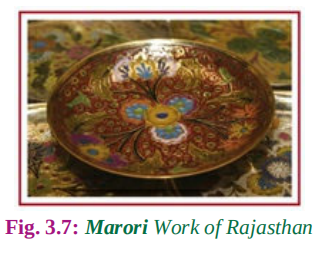
- Tarkashi (Rajasthan)
- Uses fine copper/brass wires to create intricate patterns.
-
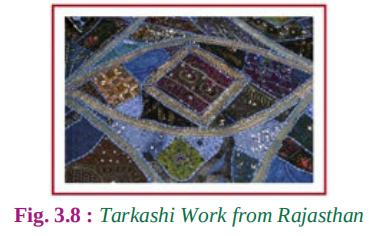
- Koftgiri (Jaipur & Alwar, Rajasthan)
- A type of damascening where light metal is inlaid on a dark base.
- Major Metal Craft Centers
- Marwar, Rajasthan
- Produces Badla pots (semi-circular pots made of zinc).
- Moradabad, Uttar Pradesh
- Specializes in Baarik Kaam (delicate metal engraving).
- Uses Nakkashi style (engraving technique) to create pots.
- Other varieties of famous metal crafts in India are given below:
| Name of the Metal Craft |
Produced Mainly In |
Details |
| Bidri Craft (GI) |
Karnataka |
Blackened alloy of zinc and copper is inlaid in thin sheets of silver to make items like hookahs, vases, earrings, showpieces, etc. It has a good export market. |
| Aranmula Kannadi (Metal Mirror) (GI) |
Kerala |
A rare handmade metal-alloy mirror, made in Aranmula. The alloy is polished for several days to create the mirror’s reflective surface. The composition of the alloy is a trade secret. |
| Netturpetti Jewellery Boxes |
Kerala |
An antique handicraft made using rosewood and brass curios. It has intricate patterns inspired by temple architecture and traditional art forms of Kerala. |
| Chandi Tarkashi (Silver Filigree) |
Odisha |
Alloy of 90 percent or more pure silver is used. Techniques such as granulation, snow glazing, and casting are used to make ornaments. |
| Swamimalai Bronze Icons (GI) |
Tamil Nadu |
Swamimalai is a traditional site where this craft has been practiced since the Chola Period. Idols of bronze and “panchaloha” (copper, brass, lead, silver, and gold) are made for religious purposes. |
- Leather Products
-
- Historical Background
- The art of leather tanning dates back to 3000 BC.
- Early tanned skins: Tiger and deer, later camel leather became popular.
- Rishis (sages) in ancient times used animal skins as mats.
- Leather was used during the Mughal period, but its degenerative nature makes archaeological evidence rare.
- Major Leather Craft Centers
- Rajasthan
- Camel leather is used to make bags in various shapes and sizes.
- Jaipur & Jodhpur – Famous for Mojaris (traditional leather footwear).
- Uttar Pradesh
- Kanpur – A major center for leather and tanned products, sustaining a large part of its economy.
- Maharashtra
- Known for Kolhapuri chappals, famous handcrafted leather footwear.
- Chennai & Kolkata
- Important hubs for leather bags and footwear.
- Punjab
- Punjabi Juttis – Embellished with appliqué work, making them highly decorative.
- Notable Leather Art
- Manoti Art (Bikaner, Rajasthan)
- Involves decorating articles with camel skin.
- Also called Usta Art, derived from the Persian word Ustad (Master).
- Various Regional Footwears in India
| Name |
Mainly Produced In |
Details |
| Konglan Stitched Boots |
West Bengal |
Made in the northern part of West Bengal. These boots have thick leather soles and high layered sides made from either leather or thick cloth. |
| Paabu Stitched Boots |
Jammu and Kashmir |
Traditional colourful knee-length boots from the Ladakh region. |
| Kolhapuri Chappal (GI) |
Karnataka and Maharashtra |
Handcrafted pure leather ethnic footwear mainly produced in the Kolhapur region of Maharashtra and some parts of Karnataka. |
| Katki Chappal |
Odisha |
Ethnic leather footwear. |
| Tilla Jutti (Traditional Footwear) |
Punjab |
Inspired by Indian Rajputana, it is traditionally made of leather and extensively embroidered using gold and silver thread. |
| Mojari (Leather Footwear) |
Rajasthan |
Traditionally made by artisans, mostly using tanned leather. |
| Multani Khussa |
Rajasthan and Punjab |
Made using vegetable-tanned leather and embroidered with brass nails, mirrors, ceramic beads, etc. |
- Wooden Work
- Wood as a Resource
- India has a large forest cover, making wood a major resource.
- Furniture is one of the biggest commodities made from wood.
- Commonly used woods: Sheesham, pinewood, walnut, deodar, etc.
- Major Wooden Craft Centers
- Kashmir
- Wooden craft flourished since the 11th century.
- Uses walnut and deodar wood extensively.
- Kashmiri artisans specialize in making wooden houses and houseboats, suited for the cold and wet climate.
- Famous Kashmiri lattice work styles:
- Acche-dar
- Khatamband
- Azli-pinjra
- Gujarat
- Noted for wooden latticework on windows and wooden doors.
- Himachal Pradesh
- Hilly areas with abundant wood excel in woodcarving techniques.
- Towns like Brahmour and Chattrahi are known for intricate woodwork in temples.
- Famous carving techniques:
- Naghbel
- Kutheriphool
- Jali
- Dori
- Other major centres in India for woodwork are:
| State |
Type of Wood |
Details |
| Karnataka |
Sandalwood |
Used for making various carved wood items. |
| Andhra Pradesh |
Raktachandan (Typical Red Sandalwood) |
Carved dolls and figurines. |
| Kerala |
Teakwood |
Used to make Tharavad houses, famous for their deep brown colour and intricate woodwork. |
| Nagaland |
Kumisyng Wood |
Local wood found in most parts of the North-Eastern states, noteworthy for huge log drums. |
| Rajasthan |
Rohida Wood |
Used for various woodcraft items. |
| Ratnagiri, Maharashtra |
Pandora Wood |
Used to make decorative items like sindoor boxes and turned bowls. Also used for lacquered imitation fruits. |
- Other famous wood crafts
| Name |
From |
Details |
| Nirmal Painting (made on wood) |
Telangana |
Originated during the Kakatiya dynasty. A precise painting on a wooden surface, finished with gold and varnished. |
| Kashtakari Wood Carving |
Goa |
Used in household products, churches, temples, houses, etc. |
| Santalum (Sandalwood Carving) |
Karnataka |
Mainly used for manufacturing idols and religious products. |
| Khatamband Woodcraft (GI) |
Jammu and Kashmir |
Uses wood pieces joined with three different types of joints. The designs originate from geometrical tessellating patterns of Islamic tradition. |
| Sikki Grass Craft |
Bihar |
Used to make ornaments, boxes, and containers for storing rice, grains, and lentils. |
| Shital Patti Grass Mat |
Assam |
Made from green patidai or long-stemmed knotless mohtra reeds, known for their cooling effect. |
| Khunda Bamboo Staves |
Punjab |
Used as an essential part of Bhangra dance, serving as a walking aid and weapon. |
| Kawad Mobile Shrines |
Rajasthan |
- A portable shrine with multiple folding doors, painted with representations of Hindu epics and myths.
- 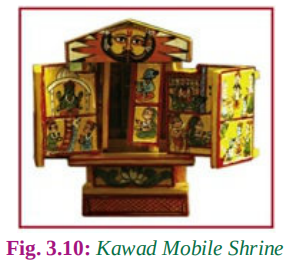
|
| Choktse Tables |
Sikkim |
A type of Tibetan small wooden foldable and portable table, carved with customary Buddhist symbols such as lotus, mandala, and fish. |
| Likhai (Wood Carving) |
Uttarakhand |
Wooden door borders adorned with Tibetan motifs like 3-flower, arch, dragons, swans, parrots, lotus, and creepers. |
| Sankheda Furniture (GI) |
Gujarat |
- Made of seasoned teakwood with abstract designs and floral paintings in shades of gold, silver, maroon, green, vermilion, and brown.
- 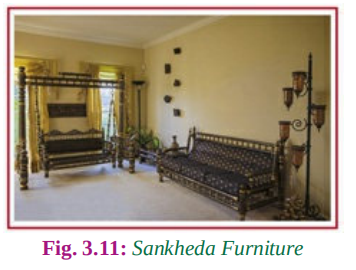
|
| Walnut Wood Carving (GI) |
Jammu and Kashmir |
Traditional carving technique featuring high relief and undercut styles. Best quality walnut wood sourced from Shopian and Anantnag. |
| Pethapur Printing Blocks (GI) |
Gujarat |
Preserved by artisans from Prajapati and Gajjar families, these blocks are used for printing on garments. |
- Various Types of Toys
-
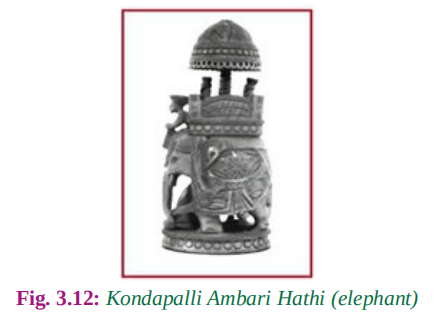
- Historical Evidence of Toy Making
- Harappan Civilization:
- Toy carts made of copper, bronze, and terracotta found in sites like:
- Alamgirpur, Ambkheri, Kalibangan, Lothal
- Early Historic Period:
- Similar cart models found in sites like:
- Atranjikhera, Nagarjunakonda, Sambhar, Sonapur, Ujjain, Brahmpuri
- Materials Used in Ancient and Medieval Period
- Clay, paper, papier-mâché, painted wood, lacquered wood
- Redwood dolls, e.g., Tirupati dolls (Andhra Pradesh)
- Major Toy-Making Centers
- Rajasthan:
- Famous for dolls and stuffed toys made of colorful cloth
- Assam:
- Traditional dolls made of pith (Indian cork)
- Southern India:
- Specializes in wooden toys
- Karnataka:
- Mysore and Channapatna:
- Known for lacquered wooden toys
- Andhra Pradesh:
- Kondapalli (Ponki wood):
- Famous for Ambari Hathi toy
- Famous varieties of Toys in India
| Name |
Produced In |
Details |
| Channapatna Toys (GI) |
Karnataka |
Traditionally made from ivory-wood. |
| Kondapalli Bommalu Toys (GI) |
Andhra Pradesh |
Made using soft wood. The wooden piece is heated to remove moisture, different parts are carved separately and then glued together. Example: Ambari Hathi. |
| Kinhal or Kinnal Toys (GI) |
Karnataka |
This unique wooden craft flourished under the royal patronage of the Vijayanagara Empire. |
- Stoneware
-
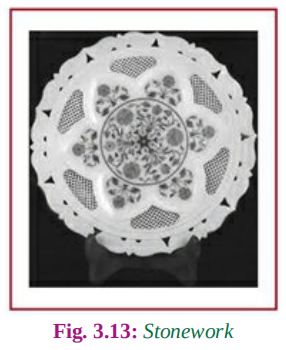
- Ancient Stone Crafting in India
- Stone masonry and carving have been prevalent in India due to its tropical and geographical landscape.
- Artisans used various stones such as soft-brittle sandstone, patchy red stone, and hard granite to create intricate monuments.
- Examples of Ancient Stone Art
- South Indian towns: Renowned for exquisite stone structures.
- Mauryan Period:
- Rock-cut caves of Ajanta and Ellora.
- Erotic sculptures of Khajuraho.
- Buddhist carvings of Sanchi and Bharhut.
- Hilly Regions:
- Masrur rock-cut temples (Kangra, Himachal Pradesh, 8th century AD) showcase monolithic carving.
- Mughal Period: Shift to Marble Work
- Introduction of Pietra Dura (inlay work with colorful stones on marble).
- Famous marble structures:
- Taj Mahal and Itmad-ud-Daulah’s tomb (white marble).
- Use of sandstone in many Mughal monuments.
- Major marble-producing regions:
- Rajasthan: Famous for Makrana marble (Sang-e-Marmar).
- Jhansi, Uttar Pradesh: Produces dark brown stone (Sang-e-Rathak).
- Floor Designs
- General Characteristics
- Found across many Indian states, made during religious and auspicious occasions.
- Usually drawn freehand, starting from a central dot, expanding into geometric shapes (circles, squares, triangles, straight lines, and curves).
- Made with natural materials that do not stain the floor and can be easily erased.
- White color: Dry white chalk, lime powder, powdered marble, or a mix of rice powder and lime.
- Regional Variants
- Chowk Purna (Punjab, Uttar Pradesh)
- Uses squares, circles, and triangles as motifs.
- Derived from “Chowki” (seat of Lakshmi, goddess of wealth and prosperity).
- Aipan (Himachal Pradesh)
- Similar in style to Chowk Purna.
- Mandana (Rajasthan, Madhya Pradesh)
- Literally means “decoration”.
- Patterns include squares, hexagons, triangles, and circles.
- Ground is first cleaned with cow dung and sometimes finished with crimson red (reti or red earth).
-
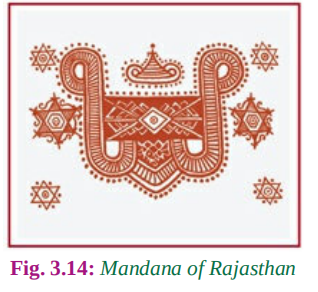
- Santhias (Gujarat)
- Made at the entrance of houses on important occasions.
-
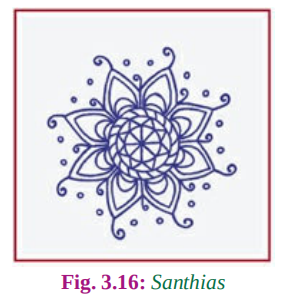
- Rangoli (Maharashtra)
- Features lotus, swastik, and elegant motifs.
-
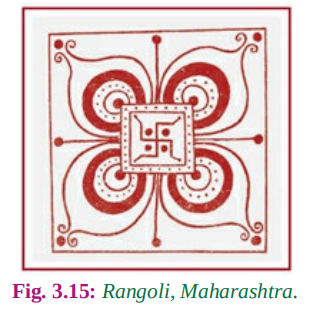
- Kolam (South India)
- Designs formed by connecting an array of dots in various combinations.
- Drawn with powdered rice or crushed stone powder on wet ground.
- Outlined with red geru.
- Known as Hase (Karnataka), Muggulu (Andhra Pradesh), and Golam (Kerala).
- Mandapa Kolam: Large designs made for weddings, drawn with wet rice paste.
- Graha Kolam: Drawn daily for home sanctification.
-
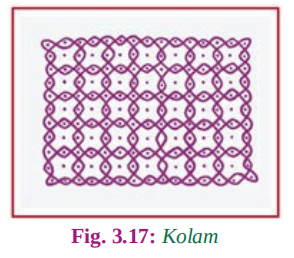
- Jhonti (Odisha) & Aripana (West Bengal, Assam)
- Highly stylized designs using motifs like conch shells, fish, serpents, flowers, etc.
- Made with chalk powder and filled with colored powder or rice paste.
- Red (Alta/Sindoor), Yellow (Turmeric).
- Customarily, a flower is placed before each Aripana design.
- Other Famous Handicrafts in India
| Name of the Handicraft |
State |
Details |
| Papier Mache (GI) |
Jammu and Kashmir, Bihar |
Made of paper pulp coarsely meshed and mixed with copper sulfate and rice flour, then molded into the desired shape. |
| Gambira Masks |
West Bengal |
The theme of the mask is the musk of Goddess Kali. |
| Chhau Mask (GI) |
West Bengal |
Used in Chhau dance. The mask consists of various mythological characters like Mahishasur-Mardini, Rama-Sita, etc. |
| Thongjao Pottery |
Manipur |
A terracotta pottery including pitchers, cooking vessels, plates, pot rings, lids, bowls, and pots, mostly made by women. |
| Sanjhi Paper Stencils |
Rajasthan |
An ancient craft of paper stenciling. These stencils were used to make rangoli patterns on walls and floors. |
| Bitti Chitra (Wall Painting) |
Rajasthan |
A mud wall painting. People decorate walls with bitti chitra to secure their house from evil spirits. |
| Suthai (Stucco Work) |
Tamil Nadu |
Practiced mainly by craftsmen from the Pilamar caste in Kakampudur. |
| Rambaans Natural Fiber Craft |
Uttarakhand |
Rambaans is a variety of the sisal plant. The fiber is bunched, rolled, and braided into toys, ropes, tables, mats, bags, hats, etc. |
| Molela Clay Ceramics (GI) |
Rajasthan |
A type of terracotta tiles and murals, literally meaning "baked earth." |
| Thewa Art Work (GI) |
Rajasthan |
Invented by Nathuni Sonewalla. Used in making objects like combs, hairbands, coat buttons, photo frames, and jewelry items. |
| Ganjifa Cards (GI) |
Karnataka (Mysore) |
A card game originating from Persia, popular during the Mughal Period. |
-
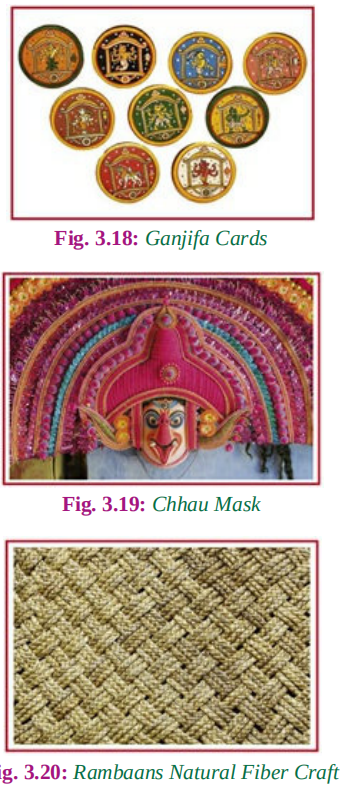
- UNESCO’S LIST OF WORLD HERITAGE SITES IN INDIA
- Criteria for Selection
- The nominated sites must be of “outstanding universal value” and should meet at least one of the ten criteria listed below.
- Criteria for Cultural Sites
- Represents a masterpiece of human creative genius.
- Exhibits an important interchange of human values over time or within a cultural area, influencing developments in architecture, technology, monumental art, town planning, or landscape design.
- Bears a unique or exceptional testimony to a cultural tradition or civilization, living or extinct.
- An outstanding example of a building type, architectural or technological ensemble, or landscape illustrating a significant stage in human history.
- An outstanding example of a traditional human settlement, land use, or sea use that represents a culture or human interaction with the environment, especially when threatened by irreversible change.
- Is directly or tangibly associated with events, living traditions, beliefs, or artistic and literary works of outstanding universal significance.
- Criteria for Natural Sites
- Contains superlative natural phenomena or areas of exceptional natural beauty and aesthetic importance.
- Represents major stages of Earth’s history, including the record of life, geological processes in landform development, or significant geomorphic/physiographic features.
- An outstanding example of ecological and biological processes in the evolution of terrestrial, freshwater, coastal, and marine ecosystems, and plant and animal communities.
- Contains the most important natural habitats for in-situ conservation of biodiversity, including those with threatened species of outstanding universal value.
- Legal Status of Designated Sites
- Once a site is declared a World Heritage Site by UNESCO, it is recognized as culturally sensitive and warrants legal protection under international law, including:
- The Geneva Convention
- The Hague Convention for the Protection of Cultural Property in Armed Conflict
- Other international treaties
- Article 53 of the Geneva Convention
- Protection of Cultural Objects and Places of Worship:
- It is prohibited to attack historic monuments, works of art, or places of worship that constitute cultural or spiritual heritage.
- These objects cannot be used for military purposes.
- They cannot be targeted as reprisals.
- UNESCO World Heritage Sites in India
- Cultural Sites
| Year |
UNESCO World Heritage Sites |
| 1983 |
- Ajanta Caves (Maharashtra)
- Taj Mahal (Uttar Pradesh)
- Ellora Caves (Maharashtra)
- Agra Fort (Uttar Pradesh)
|
| 1984 |
- Sun Temple, Konark (Odisha)
- Group of Monuments at Mahabalipuram (Tamil Nadu)
|
| 1986 |
- Churches and Convents of Goa
- Khajuraho Group of Monuments (Madhya Pradesh)
- Fatehpur Sikri (Uttar Pradesh)
- Group of Monuments at Hampi (Karnataka)
|
| 1987 |
- Elephanta Caves (Maharashtra)
- Group of Monuments at Pattadakal (Karnataka)
- Great Chola Temples (Tamil Nadu)
|
| 1989 |
- Buddhist Monuments at Sanchi (Madhya Pradesh)
|
| 1993 |
- Humayun’s Tomb (Delhi)
- Qutub Minar and its Monuments (Delhi)
|
| 1999 |
- Darjeeling Himalayan Railway (West Bengal)
|
| 2002 |
- Mahabodhi Temple Complex, Bodh Gaya (Bihar)
|
| 2003 |
- Rock Shelters of Bhimbetka (Madhya Pradesh)
|
| 2004 |
- Chhatrapati Shivaji Terminus (Mumbai)
- Champaner-Pavagadh Archaeological Park (Gujarat)
|
| 2005 |
- Nilgiri Mountain Railways
|
| 2007 |
- Red Fort Complex (Delhi)
|
| 2008 |
- Kalka-Shimla Railway (Himachal Pradesh)
|
| 2010 |
- Jantar Mantar, Jaipur (Rajasthan)
|
| 2013 |
- Six Hill Forts of Rajasthan:
- Chittorgarh
- Ranthambhore
- Kumbhalgarh
- Amber
- Jaisalmer
- Gagron
|
| 2014 |
- Rani Ki Vav (The Queen’s Stepwell), Gujarat
|
| 2016 |
- The Architectural Work of Le Corbusier (Chandigarh)
- Archaeological Site of Nalanda Mahavihara (Bihar)
|
| 2017 |
- Historic City of Ahmedabad
|
| 2018 |
- Victorian Gothic and Art Deco Ensembles of Mumbai
|
| 2019 |
- Jaipur City, Rajasthan
|
- Natural Sites
| Year |
UNESCO Natural Heritage Sites |
| 1985 |
- Manas Wildlife Sanctuary (Assam)
- Kaziranga National Park (Assam)
- Keoladeo National Park, Bharatpur (Rajasthan)
|
| 1987 |
- Sundarban National Park (West Bengal)
|
| 2005 |
- Nanda Devi National Park (1988) and Valley of Flowers (Uttarakhand)
|
| 2012 |
- Western Ghats (Sub-clusters include Agasthyamalai, Periyar, Anamalai, Nilgiri, Talakaveri, Kudremukh, and Sahyadri)
|
| 2014 |
- Great Himalayan National Park (Himachal Pradesh)
|
| 2016 |
- Khangchendzonga National Park (Sikkim)
- Khangchendzonga National Park is the only Indian site under the mixed category.
|
- Benefits of World Heritage Site Status
- International recognition for preservation and conservation needs.
- Boosts tourism, ensuring economic benefits.
- UNESCO funding for restoration, preservation, and training.
- Strengthens ties with the United Nations, offering prestige and support.
- Provides access to global project management resources.
- Facilitates partnerships between government, private sector, and NGOs.
- Legal protection under the Geneva Convention against destruction or misuse during wartime.
- SECTION B - PERFORMING ARTS
- INDIAN MUSIC
- Introduction
- Music is the soul of any culture, and India has a long tradition of musical ingenuity.
- Narada Muni is said to have introduced music to Earth, teaching about Nada Brahma, the sound that pervades the universe.
- Musicologists suggest that “Om” is the source of all ragas and notes.
- Panini (4th century BC) made the first proper reference to music-making.
- Bharata’s Natyashastra (200 BC–200 AD) was the first text discussing musical theory.
- History and Evolution of Indian Music
- Indian music dates back to the Indus Valley Civilization, where a seven-holed flute was found at excavation sites.
- The Ravanahatha, originating from Sri Lanka’s Hela Civilization, is one of the world’s oldest instruments.
- The first literary references appear 2,000 years ago in the Vedic period.
- The seven notes of raga Kharaharapriya appear in descending order in the Sama Veda.
- The science of music, Gandharva Veda, is an Upaveda of the Sama Veda.
- The Veena is mentioned in Aitareya Aranyaka, and Jaiminiya Brahmana speaks of dance and music together.
- Music evolved through devotional performances:
- In the later Vedic period, Sangama involved chanting verses to musical patterns.
- Epics were narrated with Jatigan music.
- Bharata’s Natyashastra identified the octave and its 22 shrutis (keys).
- Dattilam confirmed 22 shrutis per octave, suggesting they were the only ones a human could produce.
- Sarangadeva (13th century) supported this view in his Sangeet Ratnakara:
- Defined 264 ragas from both North Indian and Dravidian traditions.
- Classified microtones into different categories.
- Other medieval texts focused on specific aspects:
- Brihaddeshi (6th–8th century, Matanga) defined raga.
- Swaramela-Kalanidhi (16th century, Ramamatya) focused on ragas.
- Chaturdandi-Prakashika (17th century, Venkatamakhin) detailed Carnatic musicology.
- Persian influence reshaped North Indian music:
- Dhruvapad (devotional) transformed into Dhrupad by the 15th century.
- Khayal emerged by the 17th century.
- Many folk singing styles developed.
- Gurukul System in Music Education
- Also known as the Ashram or hermitage system.
- Followed the Guru-Shishya tradition, emphasizing close teacher-student relationships.
- Music education in ancient times:
- Teachers were sages.
- Students lived in the hermitage for 12 years, gaining knowledge by serving the master.
- Patronized by kings and wealthy individuals.
- Life in the hermitage was rigorous, reflective, and based on direct experience.
- All students, regardless of status, were treated equally, with no discrimination.
- Anatomy of Indian Music
- Before one delves into the different types and kinds of Indian music it is necessary to understand the anatomy of Indian classical music.
- There are three main pillars of Indian classical music:
- Swara
- In ancient times, “Swara” was associated with Vedic recitation. Over time, it came to define the note or scale degree in a composition.
- Bharata’s Natyashastra divided Swaras into a 22-note scale.
- The modern Hindustani notational system consists of: Sa, Re, Ga, Ma, Pa, Dha, Ni, collectively called Saptak or Sargam.
- Difference between Swara and Shruti:
- A Shruti is the smallest pitch gradation, representing frequency quality.
- There are 22 Shrutis, of which only 12 are audible (7 Suddha Swaras and 5 Vikrit Swaras).
- He listed each pitch using the following names:
| Name of the Pitch |
Function |
Abbreviation |
| Shadja |
Tonic |
Sa |
| Rishabha |
Supertonic |
Re |
| Gandhara |
Mediant |
Ga |
| Madhyama |
Sub-dominant |
Ma |
| Panchama |
Dominant |
Pa |
| Dhaivata |
Sub-mediant |
Dha |
| Nishada |
Subtonic |
Ni |
- Raga
- Basic info
- The term Raga comes from Sanskrit Ranj, meaning “to delight or satisfy.”
- Raga forms the basis of melody, while Tala governs rhythm.
- Each raga evokes a distinct personality, mood, and emotion.
- Types of Ragas (Jaatis) Based on Notes:
- Audav/Odava Raga
- Five-note (pentatonic) raga.
- Shadava Raga
- Six-note (hexatonic) raga.
- Sampurna Raga
– Seven-note (heptatonic) raga.
- Classification of Ragas (Raga Bhed):
- Shuddha Raag
– Even if extra notes are played, the nature of the raga remains unchanged.
- Chhayalag Raag
– If extra notes are played, the raga’s character changes.
- Sankeerna Raag
– A combination of two or more ragas.
-
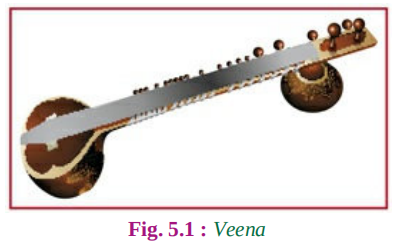
- Key Components of Raga:
- Vaadi (King)
– The principal note.
- Samvaadi (Queen)
– The second-most important note.
- Anuvaadi
– Supporting notes.
- Vivadi
– Notes absent in the composition.
- Movement of Notes:
- Aroha (Ascent):
- Notes arranged in increasing pitch (e.g., Sa Re Ga Ma Pa Dha Ni).
- Avaroha (Descent):
- Notes arranged in decreasing pitch (e.g., Ni Dha Pa Ma Ga Re Sa).
- Laya (Speed of Raga Performance):
- Vilambit
– Slow tempo.
- Madhya
– Medium tempo.
- Drut
– Fast tempo.
- Although there are 72 melas or parent scales on which ragas are based under carnatic music, there are six main ragas under Hindustani music repertoire and all of these are time and season specific and evoke a particular type of emotion (Rasa):
| Raga |
Time |
Season |
Mood (Rasa) |
| Bhairav |
Dawn |
Any season |
Peace |
| Hindol |
Morning |
Spring |
Evokes sweetness of a young couple |
| Deepak |
Night |
Summer |
Compassion |
| Megh |
Late Night |
Rainy |
Courage |
| Shree |
Evening |
Winter |
Gladness |
| Malkaush |
Midnight |
Winter |
Vir or Brave |
- RASA
- Ragas evoke emotional responses in performers and audiences.
- These emotions are called Rasas or “Aesthetic Delights.” Originally, eight rasas were identified, but later, Shanta Rasa (peace) was added, forming the Navarasas (Nine Rasas).
- These are:
| Type of Rasa |
Mood it Evokes |
| Shringara |
Love |
| Hasya |
Humour/Laughter |
| Karuna |
Pathos |
| Raudra |
Anger |
| Bhayanak |
Horror |
| Veer |
Bravery |
| Adbhuta |
Wonder |
| Bibhatsya |
Disgust |
| Shant |
Peace or calm |
- After the 15th century, Bhakti (devotion to God) was widely accepted as an additional rasa. Some argue that Bhakti and Shant Rasa are the same.
- Samay (Time Theory of Ragas)
- Each raga is performed at a specific time to enhance its effect.
- Time classification:
- 12 AM – 12 PM: Poorva Bhaag (Morning to Noon) → Poorva Raga
- 12 PM – 12 AM: Uttar Bhaag (Afternoon to Night) → Uttar Raga
- Saptak Shift by Time Period:
- Poorvang Period (Morning–Noon): Sa to Ma (Sa, Re, Ga, Ma).
- Uttarang Period (Afternoon–Night): Pa to Sa (Pa, Dha, Ni, Sa).
- Other Key Components of Raga Performance
- Alap
– A slow exposition of the raga, emphasizing Vaadi and Samvaadi.
- Sthayee/Mukhda
– The primary melody section, repeated frequently.
- Antara
– The secondary melody section.
- Taan
– Fast, intricate patterns of notes.
- Short, fast taans with 3-4 notes are called Murki.
- Alankar (Ornamentation)
– Pattern-based embellishment (e.g., Sa Re Ga, Ga Ma Pa).
- Tala (Rhythm in Indian Music)
-
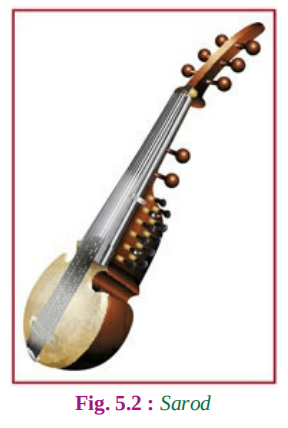
- Basic info
- Tala (or Taal) is the rhythmic structure that organizes beats into cycles.
- Talas range from 3 to 108 beats.
- Hindustani and Carnatic music follow different time measurement systems.
- Tempo (Laya) of tala determines uniformity:
- Slow (Vilambit)
- Medium (Madhya)
- Fast (Drut)
- Common Talas in Hindustani Music:
- Dadra
- Kaharba
- Rupak
- Ektal
- Jhaptal
- Teen-Taal (most used, 16 beats)
- Chautal
- Carnatic Tala System:
- Three components: Laghu, Dhrutam, and Anu Dhrutam.
- Originally 35 talas, each having 5 subtypes, leading to 175 talas.
- Aditala is the most prominent tala in Carnatic music.
- Thaat (Classification of Ragas)
- Thaat is a system of organizing ragas into 10 categories, developed by V.N. Bhatkhande.
- Unlike Raga, Thaat is not sung—it serves as a structural framework.
- Rules for Thaat:
- Must have 7 notes in ascending order (Aarohi).
- Based on the 12 Swaras (7 Suddha + 5 Vikrit Swaras).
10 Thaats in Hindustani Music:
- Bilawal
- Khamaj
- Kafi
- Asavari
- Bhairavi
- Bhairav
- Kalyan
- Marwa
- Poorvi
- Todi
| Basis of Difference |
Thaat |
Raga |
| Origin |
These are scales which are produced from 12 swara (notes). |
Ragas belong to the genre of thaats. |
| Number of Notes |
Thaat must have seven notes in it. |
Raga must have at least five notes in it. |
| Types of Notes |
It only has Aaroha or ascending notes. |
It has Aaroha and Avaroha notes. |
| Melody |
It is not necessary for thaat to be melodious as they are not sung. |
Ragas are sung and hence they are melodious. |
| Important Notes |
Thaats don’t have vaadi and samvaadi. |
Ragas have vaadi and samvaadi. |
| Naming |
Thaats are named after the popular ragas. |
Ragas are named after the emotion they evoke. |
- CLASSIFICATION OF INDIAN MUSIC
-
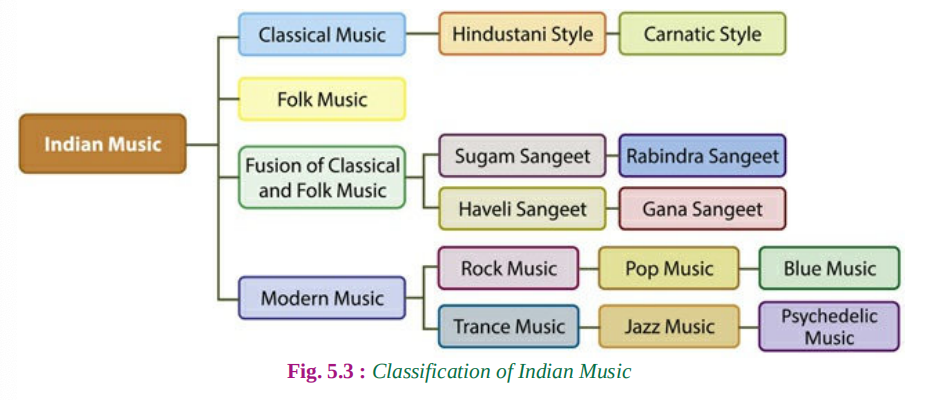
- There are many types of music prevalent in the Indian sub-continent that belongs to different categories. Some are closer to the classical bent and some are experimenting with the global music. Recently, there has been a trend to create a fusion of the classical heritage with newer musical strands like pop, jazz, etc. and this is garnering attention of the masses.
- The classification of Indian music is as follows:
- Classical Music
- Over time, two distinct schools of Indian classical music evolved:
- Hindustani Music
- Basic info
- Originates from Natyashastra.
- Separated from Carnatic music in the 14th century.
- Focuses on structure and improvisation.
- Uses Shudha Swara Saptaka (Octave of Natural Notes).
- Main styles:
- Dhrupad
- Basic infor
- One of the oldest & grandest forms of Hindustani music.
- Mentioned in Natyashastra (200 BC–200 AD).
- Derived from Prabhanda and Dhruvapada.
- Name comes from dhruva (fixed) + pada (verse).
- Became classical in the 13th century.
- Reached its peak in Akbar’s court.
- Patronage
- Akbar’s court musicians:
- Tansen (one of Navratnas)
- 16th-century musician in Akbar’s court.
- Title: Mian (learned man).
- Master of Dhrupad.
- Created several new ragas.
- Composed music on Hindu Gods, Goddesses, and Emperor Akbar.
- Tomb located in Gwalior.
-
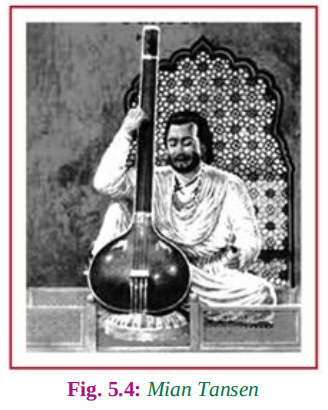
- Baba Gopal Das
- Swami Haridas
- Baiju Bawra possibly sang at Akbar’s court.
- Practiced in Gwalior under Raja Man Singh Tomar.
- Major form of singing in the medieval period.
- Declined in the 18th century.
- Performance Style
- Begins with Alap (slow, wordless melody).
- Alap sets the mood of the raga.
- Tempo gradually increases.
- Dhrupad starts after Alap, with Pakhawaj accompaniment.
- Dhrupad Characteristics
- Temple origin.
- Uses Sanskrit syllables.
- Compositions have 4-5 stanzas.
- Performed by two male vocalists.
- Tanpura and Pakhawaj accompany.
- Dhrupad Gharanas
- Dagari Gharana
- Dagar family sings Dagar Vani.
- Emphasizes Alap.
- Traditionally performed in pairs.
- Mostly Muslim singers but use Hindu texts.
- Famous duo: Gundecha Brothers.
- Darbhanga Gharana
- Sings Khandar Vani & Gauhar Vani.
- Strong raga alap with layakari improvisation.
- Leading family: Mallik family (Ram Chatur Mallik, Prem Kumar Mallik, Siyaram Tewari).
- Bettiah Gharana
- Performs Nauhar & Khandar Vani.
- Unique techniques only taught within families.
- Leading family: Mishra family.
- Connected with the Haveli style of Dhrupad.
- Talwandi Gharana
- Sings Khandar Vani.
- Based in Pakistan, making it difficult to sustain in Indian music.
- Gharana System
- Gharana = musical lineage & style.
- From ghar (house/family).
- Influences performance, teaching, and appreciation.
- Major gharanas:
- Agra
- Gwalior
- Indore
- Jaipur
- Kirana
- Patiala
- Khayal
- Basic info
- Derived from Persian Khyal = “idea” or “imagination”.
- Attributed to Amir Khusrau.
- More popular than Dhrupad due to improvisation flexibility.
- Short compositions (Bandish) of 2-8 lines.
- Patronized by Hussain Shah (Jaunpur Sultanate, 15th century).
- Frequent use of taans, less Alap than Dhrupad.
- Types of Khayal
- Bada Khayal – slow tempo.
- Bada Khayal is the main part of a performance.
- Chhota Khayal – fast tempo.
- Themes:
- Love, devotion, praise of kings/Gods.
- Famous compositions dedicated to Lord Krishna.
- Khayal Gharanas
- Gwalior Gharana
- Oldest & most elaborate Khayal Gharana.
- Balanced approach to melody & rhythm.
- Prefers simple ragas.
- Exponents: Nathu Khan, Vishnu Paluskar.
- Kirana Gharana
- Founded by Nayak Gopal, made popular by Abdul Karim Khan & Abdul Wahid Khan.
- Famous for slow tempo ragas.
- Focus on melody, pronunciation, & traditional ragas.
- Exponents: Bhimsen Joshi, Gangubai Hangal.
- Pandit Bhimsen Joshi
- Major Khayal exponent of Kirana Gharana.
- Received Bharat Ratna (2008).
- Famous ragas: Suddha Kalyan, Miyan ki Todi, Multani, Bhimpalasi.
- Recognized for Mile Sur Mera Tumhara (1988).
- Agra Gharana
- Established by Khudabuksh (19th century) or Haji Sujan Khan.
- Revived by Faiyyaz Khan, renamed Rangila Gharana.
- Blend of Khayal & Dhrupad-dhamar styles.
- Exponents: Mohsin Khan Niazi, Vijay Kichlu.
- Patiala Gharana
- Founded by Bade Fateh Ali Khan & Ali Baksh Khan (19th century).
- Sponsored by Maharaja of Patiala.
- Famous for ghazal, thumri, Khayal.
- Focus on emotion & intricate taans.
- Exponent: Bade Ghulam Ali Khan (Raga Darbari expert).
- Bhendibazaar Gharana
- Founded by Chhajju Khan, Nazir Khan, Khadim Hussain Khan (19th century).
- Unique long-breath singing technique.
- Incorporates Carnatic ragas.
- Tarana
- Rhythm-centric style.
- Short melody repeated with variations.
- Uses fast-paced syllables.
- Requires advanced rhythmic skills.
- Invented by Amir Khusrau (13th-14th century).
- Used by Guru Gobind Singh.
- Fastest Tarana Singer: Pandit Rattan Mohan Sharma (Mewati Gharana).
- Given the title “Tarana ke Baadshah” at Pandit Motiram Sangeet Samaroh (Hyderabad).
- Semi-Classical Styles of Hindustani Music
- Basic info
- Semi-classical music is based on swara (notes) but deviates slightly from the strict structure of a raga.
- It uses lighter versions of ragas like Bhoopali or Malkaush and employs madhyam or dhrut laya (faster tempo).
- Unlike classical music, it focuses more on bhava (expression) and lyrics rather than alap-jor-jhala.
- Prominent Semi-Classical Styles
- Thumri
- Based on mixed ragas and considered semi-classical.
- Compositions are romantic or devotional, often inspired by the Bhakti movement.
- Lyrics often depict a girl’s love for Krishna.
- Language: Braj Bhasha dialect of Hindi.
- Usually sung in a female voice and characterized by sensuality.
- Allows for improvisation with flexible raga usage.
- Linked to the classical dance Kathak.
- Other lighter forms: Dadra, Hori, Kajari, Saavan, Jhoola, Chaiti.
- Major gharanas: Varanasi & Lucknow.
- Famous exponents: Begum Akhtar, Girija Devi (Purab Ang of Benaras Gharana).
- Tappa
- Rhythm plays a crucial role.
- Characterized by fast, subtle, and knotty phrases.
- Originated from folk songs of camel riders in North-West India.
- Gained recognition in the Mughal court of Muhammad Shah.
- Popular among both elites and common classes.
- Baithaki style evolved in elite assembly halls (baithak khanas, jalsaghar).
- Now rare, few musicians practice it today.
- Famous exponents: Laxman Rao Pandit (Gwalior Gharana), Shanno Khurana.
- Ghazal
- A poetic form with rhyming couplets and a refrain.
- Expresses love, pain, and separation.
- Origin: Iran (10th century AD).
- Spread to South Asia in the 12th century, flourished in the Mughal period.
- Amir Khusrau (1253–1325) was one of the earliest exponents.
- Many ghazal poets were Sufis or influenced by Sufi philosophy.
- Themes: Love (divine or human), often open to interpretation.
- Modern ghazals use simplified language for a wider audience.
- Famous poets: Muhammad Iqbal, Mirza Ghalib, Rumi, Hafez, Kazi Nazrul Islam.
- Carnatic Music
- Basic info
- Carnatic music is played in the traditional octave and is kriti-based, focusing more on saahitya (lyrics).
- The kriti is a highly evolved musical song set to a specific raga and a fixed tala (rhythmic cycle).
- Purandara Dasa (1484-1564) is regarded as the Pitamaha (father/grandfather) of Carnatic music.
- Structure of a Carnatic Composition
- Pallavi:
- The first or second thematic line of the composition.
- Repeated in each stanza.
- Considered the highlight of Carnatic music, especially in Ragam Thanam Pallavi, allowing great improvisation.
- Anu Pallavi:
- Two lines that follow the Pallavi.
- Sung at the beginning and sometimes at the end.
- Not necessarily repeated after every stanza (Charanam).
- Charanam:
- The final and longest verse that concludes the song.
- Other Components
- Swara-Kalpana: Improvised section performed with the drummer in medium and fast paces.
- Tanam: A melodic improvisation in free rhythm with mridangam.
- Ragam: Similar to Tanam but without mridangam.
- Early Proponents of Carnatic Music
- Annamacharya (1408-1503)
- First known composer of Carnatic music.
- Composed sankirtanas in praise of Lord Venkateswara (a form of Lord Vishnu).
- Compositions were mainly in Telugu.
- Recognized as the Grandfather of Telugu Songwriting.
- Purandara Dasa (1484-1564)
- One of the founding proponents of Carnatic music.
- A devotee of Lord Krishna.
- Known as Pitamaha (father/grandfather) of Carnatic Music.
- Believed to be an avatar of Sage Narada.
- Famous compositions include Dasa Sahithya.
- Kshetrayya (1600-1680)
- Telugu poet and prominent composer.
- Composed Padams and Keertanas, mainly based on Lord Krishna.
- Traveled extensively.
- His Padams are still performed in Bharatanatyam and Kuchipudi.
- Bhadrachala Ramadasu (1620-1680)
- His compositions were mainly in praise of Lord Rama.
- Wrote primarily in Telugu.
- One of the famous Vaggeyakaras (composers who write lyrics and set them to music).
- Other famous Telugu Vaggeyakaras: Annamacharya, Tyagaraja, Syama Sastri.
- Trinity of Carnatic Music (All Born in Tiruvarur)
- Tyagaraja
- Composed mostly in Telugu, a few in Sanskrit, praising Lord Rama.
- Famous for Pancharatna Kritis.
- A crater on Mercury is named after him.
- Created several new ragas.
- Muthuswami Dikshitar
- Oldest among the Trinity.
- Compositions were mostly in Sanskrit, centered on Hindu gods and temples.
- Emphasized gamakas (ornamentations).
- Signature mudra (name): Guru-Guha.
- Skilled Veena player.
- Syama Sastri
- Composed mainly in Telugu, praising Goddess Kamakshi.
- Wrote fewer kritis compared to the other two.
- Signature mudra: Syama Krishna.
- Associated with the Svarajati musical genre.
| Points of Difference |
Hindustani Music |
Carnatic Music |
| Influence |
Arab, Persian and Afghan |
Indigenous. |
| Freedom |
Scope for artists to improvise. Hence scope for variations. |
Less scope of improvisation. |
| Sub-styles |
There are several sub-styles which lead to emergence of ‘Gharanas’. |
Only one particular prescribed style of singing. |
| Need for Instruments |
Instruments equally important as vocals. |
More emphasis on vocal music. |
| Ragas |
6 major ragas. |
72 melakartas, ragas and janya ragas. |
| Main emphasis on |
Mainly based on Ragas. |
Mainly based on Tala or Taal. |
| Major Instruments used |
Tabla, Sarangi, Sitar and Santoor. |
Veena, Mridangam and Mandolin. |
| Association to Parts of India |
North India. |
South India. |
| Commonality between the two |
Flute and Violin |
- Folk Music in India
- India’s geographical diversity is reflected in its rich folk music traditions, with each state having its own distinct style.
- Characteristics of Indian Folk Music
- Unlike classical music, which follows the Natyashastra and guru-shishya (student-mentor) tradition, folk music is the music of the people with no rigid rules.
- Based on diverse themes, often rhythmic and dance-oriented.
- Each state has its own folk music traditions, reflecting its culture and history.
- Folk Music by Region
- North India
- Wanawan (Jammu and Kashmir)
- Sung during wedding ceremonies.
- Considered auspicious.
- Alha (Madhya Pradesh)
- A heroic ballad with intricate lyrics.
- Sung in Braj, Awadhi, and Bhojpuri.
- Related to Mahabharata, glorifying heroes as reincarnations of the Pandavas.
- The five Pandavas are represented as Alha, Udal, Malkhan, Lakhan, and Deva.
- Pai Song (Madhya Pradesh)
- Sung during festivals, especially monsoon-related festivals.
- A prayer for good rainfall and harvest, sung by farmer communities.
- Often accompanied by the Saira dance.
- West India
- Lavani (Maharashtra)
- A famous folk music and dance form.
- Performed to the beats of Dholki (percussion instrument).
- Known for strong rhythm and energetic performances.
-
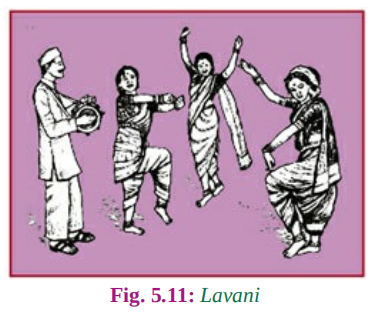
- Ovi (Maharashtra, Goa)
- Sung by women during household chores and leisure time.
- Short, four-line poetic songs.
- Themes include marriages, pregnancy, and lullabies.
- Powada (Maharashtra)
- Ballads narrating the heroic deeds of past warriors.
- Often sung in praise of Shivaji.
- Mando (Goa)
- A blend of Indian and Western musical traditions.
- Uses guitar, violin, and ghumot drum.
- East India
- Baul (West Bengal, Assam, Tripura)
- A Bengali religious sect as well as a musical tradition.
- Baul Sangeet is influenced by Hindu Bhakti and Sufi traditions.
- Represents mysticism through songs.
- Notable exponents: Yotin Das, Purno Chandra Das, Lalon Fakir, Naboni Das, Sanatan Das Thakur Baul.
-
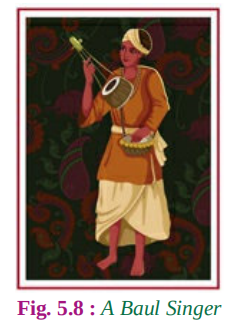
- South India
- Kolannalu / Kolattam (Andhra Pradesh)
- A music and dance combination, similar to Dandiya.
- Ancient stick dance involving rhythmic movements in two circles.
-
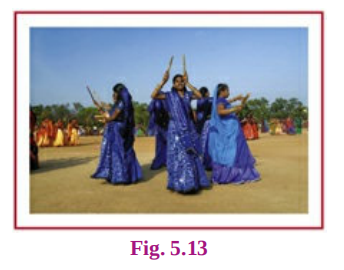
- Bhavageete (Karnataka, Maharashtra)
- Emotional songs, musically similar to Ghazals.
- Sung at a slower pitch.
- Themes include nature, love, and philosophy.
- Central & North-Eastern India
- Pandavani (Chhattisgarh)
- Based on the Mahabharata, focusing on Bhima as the hero.
- Includes gayan (singing) and vadan (playing instruments).
- Accompanied by tambura.
- Famous artist: Teejan Bai (Padma Shri 1987, Padma Bhushan 2003, Padma Vibhushan 2019).
- Khongjom Parba (Manipur)
- A ballad narrating the Battle of Khongjom (1891).
- Describes the struggle between British and Manipuri forces.
- Western India – Rajasthan & Gujarat
- Panihari (Rajasthan)
- Thematically related to water.
- Depicts women fetching water and village life.
- Sometimes romantic or about mother-in-law vs. daughter-in-law conflicts.
-
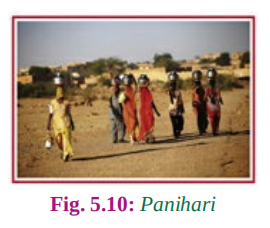
- Maand (Rajasthan)
- Developed in royal courts, also recognized in classical circles.
- Lies between Ragas and folk songs.
- Sung by bards praising Rajput rulers.
- Famous song: Kesariya Balam (in Maand style).
- Dandiya Raas (Gujarat)
- Associated with Holi and Krishna-Radha’s Lila in Vrindavan.
- Main dance of Navratri celebrations.
- In Dandiya Raas, men and women dance in two circles with sticks.
- Related form: Garba (Raas Garba).
-
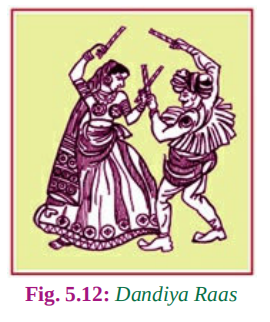
- Other major folk music traditions from the country are:
| Name of the Music |
State of Origin |
Major Themes |
| Sohar |
Bihar |
Sung during childbirth |
| Zikir |
Assam |
It embodies the teaching of Islam |
| Ja-jin-ja |
Arunachal Pradesh |
Sung during marriages |
| Nyioga |
Arunachal Pradesh |
Sung at the end of the marriage ceremony |
| Heliamleu |
Nagaland |
Dancing songs |
| Neuleu |
Nagaland |
Songs about legends and myths |
| Hereileu |
Nagaland |
War songs |
| Hekaileu |
Nagaland |
Songs about oneself |
| Dollu Kunitha (Drum Dance) |
Karnataka |
Named after Dollu-a percussion instrument and performed by folks of Kuruba Community |
| Naattupurapaattu |
Tamil Nadu |
Consists of village folk music and city folk music |
| Pala and Daskathia |
Odisha |
Ballads of religious nature |
| Manganiars |
North-west India |
Songs of Alexander, local kings and battles |
| Dhadi |
Punjab |
They sing ballads of bravery |
| Basant Geet |
Garhwal, Uttarakhand |
During Basant Panchami festival |
| Villu Pattu |
Tamil Nadu |
Religious; Conquest of good over evil |
| Sukar ke Biah |
Bihar |
Celebrating love between cosmological deities- Shukra and Brihaspati |
| Saikuti Zai |
Mizoram |
Praise of brave men, hunters, etc. |
| Lai Haraoba Ishei |
Manipur |
Sung by Meitei people during Lai Haraoba festival and is related to religion Sanamahism |
| Veeragase |
Karnataka |
During Dusshera procession |
| Chhakri |
Kashmir |
Fairy tales, love stories |
| Bhuta song |
Kerala |
Songs against evils and ghosts |
| Khubakeshei |
Manipur |
A song accompanied entirely by clapping |
| Jhumair |
Eastern States |
Quite famous among tea-tribes of Assam |
| Borgeet |
Assam |
Initially composed by Sankardeva and Madhavdeva in 15th–16th century and is associated with Ekasarana Dharma |
| Jhoori |
Himachal Pradesh |
This song celebrates the extra-marital romance |
- Fusion of Classical and Folk Music
- Basic info
- Over time, classical and folk music have intermingled, giving rise to new musical forms that incorporate elements from both traditions.
- Devotional music has played a major role in this fusion, as it was patronized by both royalty and commoners, leading to a blend of structured classical elements and free-flowing folk traditions.
- Major Forms of Classical-Folk Fusion Music
- Bhajan (North India)
- Originated from the Bhakti movement, where saints spread the message of God through hymns.
- Lyrics are set to simple melodies and sung in one or more ragas.
- Themes: Stories from the Mahabharata, Ramayana, and lives of deities.
- Instruments: Chimta, Dholak, Dafli, Manjira.
- Major composers: Mirabai, Tulsidas, Surdas, Kabir.
- Famous singers: Anup Jalota, Anuradha Paudwal.
- Shabad (Punjab, Sikh Tradition)
- Devotional songs sung in Gurudwaras, dedicated to Sikh Gurus.
- Developed by: Guru Nanak and his disciple Mardana.
- Types:
- Raga-based Shabad singing.
- Traditional Shabad (from Adi Granth).
- Lighter versions for general audiences.
- Guru Granth Sahib is organized into ragas, each containing multiple Shabads.
- Qawwali (Sufi Tradition)
- Devotional music in praise of Allah, Prophet Muhammad, or Sufi saints.
- Sung in Urdu, Punjabi, Hindi, with some Brajbhasha and Awadhi words.
- Performed in Sufi shrines, often with intense build-up leading to a transcendental state.
- Instruments: Tabla, Dholak, Harmonium.
- Notable Qawwals: Sabri Brothers, Nusrat Fateh Ali Khan, Aziz Warsi.
- Possible Originator: Amir Khusrau (disputed claim).
- Amir Khusrau’s Contribution
- Invented the Sehtar, a three-stringed instrument.
-
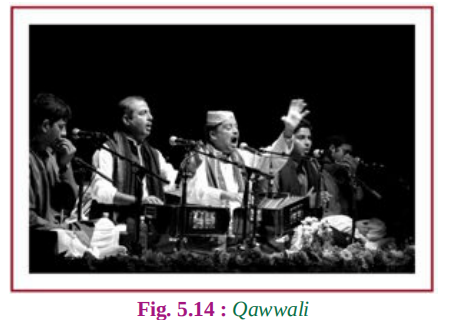
- Rabindra Sangeet (Bengal)
- Composed by Rabindranath Tagore.
- A blend of classical elements and Bengali folk strains.
- Themes: Worship, devotion to nature, beauty, love, life, and patriotism.
- More than 2,000 compositions are still performed today.
-
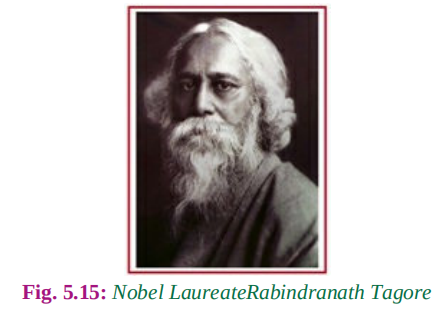
- Haveli Sangeet (Rajasthan, Gujarat)
- Originally performed inside temples but later moved to public performances.
- Practiced by Pushtimarg Sampradaya, a community believing in Pushtimarg as a path to salvation.
- Some other varieties of the fusion of Classical and Folk are:
| Name |
State of Origin |
Purpose |
| Abhanga |
Maharashtra |
In praise of Vithobha God. Songs composed and sung by Tukaram, Namdev, etc. |
| Bhatiali |
West Bengal |
About nature and daily life and sung by the boat drivers. |
| Tevaram |
Tamil Nadu |
Sung by the Shaivite Community like Oduyars. |
| Kirtan |
West Bengal |
Involves singing and dancing and takes inspiration from the Gita Govinda. |
| Sopana Sangeetham |
Kerala |
Originated in the temples, the theme is religious in nature. |
- Musical Instruments
- Music is created using various instruments, which can be classified into four major traditional categories based on their characteristics.
- Avanaddha Vadya (Membranophones)
-
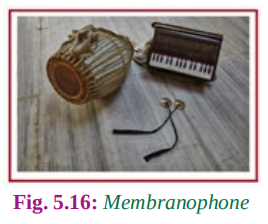
- These instruments have an outer membrane that is beaten to produce sound.
- They are also known as percussion instruments as they require striking to generate music.
- They usually have one or two faces covered with skin.
- The Bhumi Dundubhi (earth drum) is the most ancient instrument in this category.
- Common examples: Tabla, Drum, Dhol, Congo, Mridangam.
- Tabla is a key accompaniment in Hindustani classical music.
- Mridangam is used in Carnatic music performances.
- Sushira Vadya (Aerophones - Wind Instruments)
-
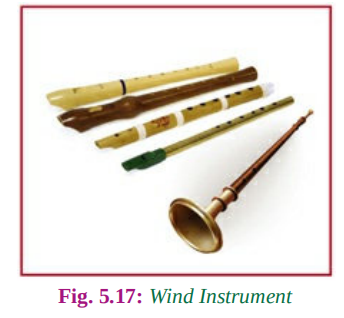
- These instruments produce sound through air vibration.
- Common examples: Bansuri (Flute), Shehnai, Pungi, Ninkirns.
- Shehnai is a double-reeded wind instrument.
- Ustad Bismillah Khan is considered the Shehnai King.
- Flute (Bansuri) is widely used and has been revered since the Vedic period.
- Lord Krishna’s flute is an iconic symbol in Hindu culture.
- Pandit Hariprasad Chaurasia is one of the most famous Indian flutists.
- Ghana Vadya (Idiophones - Percussion Without Membranes)
-
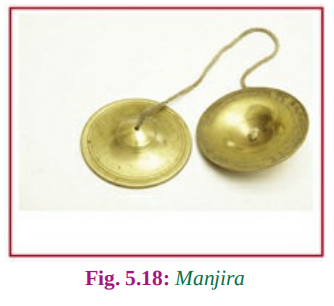
- These are non-drum percussion instruments that do not require tuning.
- Examples: Manjira, Jaltarang, Kanch-tarang, Ghungroo, Ghatam, Khartal.
- Manjira (Jhanj) is a small brass cymbal used in religious ceremonies.
- Harappan Civilization excavations show the use of Manjira in ancient India.
- These instruments are primarily used for keeping rhythm and time.
- Tata Vadya (Chordophones - String Instruments)
-
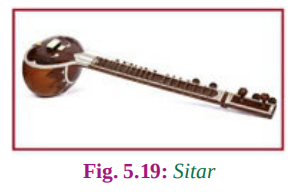
- These instruments produce sound through vibrating strings, modified by hand.
- Types of Tata Vadya:
- Bowed Instruments: Played using a bow.
- Examples: Sarangi, Esraj/Dilruba, Violin.
- Plectral Instruments: Strings are plucked using fingers or a plectrum.
- Examples: Sitar, Veena, Tanpura, Guitar.
- Struck Instruments: Played using small hammers or sticks.
- Examples: Gotuvadyam, Swaramandal.
- Additional information
- Sarod:
- The Bhangash family pioneered its 20th-century development.
- Sitar:
- Played across various gharanas (Jaipur, Varanasi, Etawah/Imaad Khani).
- Veena:
- One of the most ancient instruments, associated with Goddess Saraswati.
- Santoor
- A 100-string instrument, traditional to Jammu and Kashmir.
- Commonly used in Sufiana Kalam music.
- Folk Musical Instruments
- Apart from classical instruments, India has a rich tradition of folk instruments, categorized into four types:
- Chordophones (String Instruments)
- Tumbi – Played during Bhangra in Punjab.
- Ektara (Tun Tuna) – A one-stringed instrument played by wandering monks.
- Dotara – A two-stringed instrument used by Bauls of Bengal.
- Chikara – A bowed instrument used in Rajasthan, Uttar Pradesh, and Madhya Pradesh.
- Dilruba/Esraj – Used in Punjab and Rabindra Sangeet (Eastern India).
- Onavillu – A bamboo instrument from Kerala.
- Sarinda – A tribal instrument used by Santhals in Eastern India, Rajasthan, and Assam, similar to the Sarangi.
- Aerophones (Wind Instruments)
- Pungi (Been) – Used by snake charmers, made from a dried bottle gourd and bamboo.
- Algoza – A double flute, popular in North-West India, especially Punjab.
- Tangmuri – A folk instrument of the Khasi people in Meghalaya.
- Titti – A bagpipe-like instrument made from goat skin, used in Kerala and Andhra Pradesh.
- Mashak – A folk bagpipe used in Garhwal (Uttarakhand), Rajasthan, and Uttar Pradesh.
- Gogona – A bamboo instrument used in the Bihu festival of Assam.
- Membranophones (Drum-Based Instruments)
- Ghumot – A drum played during Ganesh festival in Goa.
- Idakka – A damru-like instrument from Kerala.
- Udukai – An hourglass-shaped instrument like damru, from Tamil Nadu.
- Sambal – A drum played with sticks in the Konkan region of Maharashtra.
- Tamak – A two-headed drum used by the Santhal tribe.
- Diggi – A folk drum from Ghariya village, Uttar Pradesh.
- Idiophones (Self-Sounding Percussion Instruments)
- Chimta – Evolved from fire tongs, used in Punjab.
- Gharha – Earthen pots, used in folk music of Punjab.
- Andelu – Used in Burra-Katha, made of hollow metal rings.
- Modern Developments in Music
- Basic info
- Music has been evolving continuously since its inception in the early historic period.
- The 21st century has seen significant advancements in the music industry, including the establishment of institutions that teach music academically and provide theoretical knowledge.
- Additionally, there has been a rise in organizations that showcase artists’ talent to the public through open performances.
- Key Developments
- Gandharva Mahavidyalaya
- Founded by V.D. Paluskar in 1901 to preserve and teach Indian classical music and dance.
- Originally established in Lahore, later shifted to Mumbai in 1915.
- Focuses on both Hindustani and Carnatic classical music.
- Prayag Sangeet Samiti
- Established in 1926 in Allahabad (now Prayagraj).
- Dedicated to imparting education in Hindustani classical music.
- Sangeet Natak Akademi
- Founded in 1952 as India’s first national academy for performing arts.
- Established by the Government of India to promote music, drama, and dance.
- Serves as the primary body for showcasing performing arts and preserving India’s intangible heritage.
- Marris College of Music (Bhatkhande Music Institute Deemed University)
- Founded in 1926 by legendary musicologist Vishnu Narayan Bhatkhande in Lucknow.
- One of India’s premier institutions for classical music.
- Focuses on both theory and practical training in singing and playing instruments.
- Later renamed Bhatkhande Music Institute Deemed University.
- SPIC MACAY (Society for Promotion of Indian Classical Music and Culture Amongst Youth)
- Founded in 1977 by Kiran Seth as a voluntary youth movement.
- Aims to revive interest in Indian classical music, dance, yoga, meditation, and cultural heritage.
- Organizes free-entry events to engage young audiences.
- Has expanded into a global organization with multiple chapters.
- Headquarters: Delhi.
-
- Chaturprahar Festival
- An annual Indian classical music festival held at the National Centre for Performing Arts (NCPA), Mumbai.
- Based on the concept of time association with ragas, where specific ragas are performed according to the time of the day.
- Communities related to music community
| State |
Details |
| Gujarat and Rajasthan |
Langha (Muslim Tribal Community) - Entertain Muslim Rajputs by praising them through songs. |
| Rajasthan |
Manganiar or Merasi (Muslim Community) - Use an instrument Kamaicha to sing classical folk music. |
| West Bengal |
Karta Bhajas - They have four classes and are indulged in chanting mantras leading to perfection as per their belief. |
| West Bengal |
Bauls - Mystic group of singers in the countryside. They are one of the classes of Kartabhaja. |
| Rajasthan |
Jogi |
| Rajasthan |
Bhopa |
| Gujarat |
Barot, Charan, Gadhvi |
| Chhattisgarh |
Muria tribes - Sing songs called Relo. |
| Chhattisgarh |
Kamar Community - Marriage song. |
| Madhya Pradesh |
Baghela - Semi-historical songs devoted to Hardaul deity. |
| Tamil Nadu |
Pulayar hill tribes - They perform melodies called Talams. |
| Arunachal Pradesh |
Idu Mishmis - Perform ritual dance and fertility dance. |
| Andaman and Nicobar |
Moken Tribe - They have no religion and perform only ancestor worship. They perform a ritual tribal dance. |
| Punjab |
Bazigar (Goaar) Community - They perform in festivals and occasions and display strength, balance, and courage. |
- INDIAN DANCE FORMS
- Background
- Natya Veda:
- Created by Lord Brahma as the fifth Veda, combining elements from the four Vedas:
- Pathya (words) – from the Rig Veda
- Abhinaya (gestures) – from the Yajur Veda
- Geet (music) – from the Sam Veda
- Rasa (emotions) – from the Atharva Veda
- Sacred Importance of Dance:
- Shiva’s Tandava symbolizes creation, preservation, and destruction.
- Parvati’s response represents grace and harmony.
- Dance is deeply rooted in Indian mythology.
- Historical Evidence:
- Bhimbetka cave paintings depict community dances.
- Bronze Dancing Girl (Harappan Civilization) highlights dance as a social activity.
- Natya Shastra (200 BCE – 200 CE):
- The first formal reference to Indian dance.
- A comprehensive treatise detailing:
- Postures, techniques, emotions, and expressions.
- Ornaments, costumes, stage setup, and audience engagement.
- Describes dance as the “complete art”, integrating music, sculpture, poetry, and drama.
- Aspects of Dance
- According to Natya Shastra, Indian classical dance has two fundamental aspects:
- Lasya
– Represents grace, bhava (expression), rasa (emotion), and abhinaya (acting).
- Symbolizes the feminine elements of dance.
- Tandava
– Focuses on rhythm and movement.
- Symbolizes the masculine aspects of dance.
- According to Abhinaya Darpan (5th–4th century BCE) by Nandikeshwara, a dance performance consists of three key elements:
- Nritta
– Pure rhythmic dance steps with no expression or storytelling.
- Natya
– Dramatic representation, where a story is conveyed through dance.
- Nritya
– Expressive dance involving sentiment and emotions through mudras (hand gestures) and facial expressions.
- Nayaka-Nayika Bhav
- The deity (Nayaka - hero) is the eternal subject of devotion.
- The devotee (Nayika - heroine) expresses love and surrender through dance.
- Nine Rasas (Emotions) Expressed in Dance
- Shringara – Love
- Roudra – Anger
- Bibhatsa – Disgust
- Veera – Heroism
- Shaant – Peace & Tranquility
- Haasya – Laughter & Comedy
- Karuna – Tragedy
- Bhayanak – Horror
- Adbhuta – Wonder
- Mudras (Hand Gestures & Postures)
- 108 fundamental mudras are used in various combinations to depict specific emotions and expressions in dance.
- Indina classical dance forms
- Evolution of Indian Dance Styles:
- Different regions of India have developed distinct dance styles, each with unique nuances.
- Despite variations, all dance forms follow the fundamental rules of the Natya Shastra.
- Guru-Shishya Parampara:
- True knowledge transfer occurs only through a guru.
- The guru imparts knowledge of different traditions (sampradayas) to the disciple.
- This tradition forms the core of Indian classical dance.
- Eight Classical Dance Forms (As per Sangeet Natak Akademi):
- Bharatanatyam
-
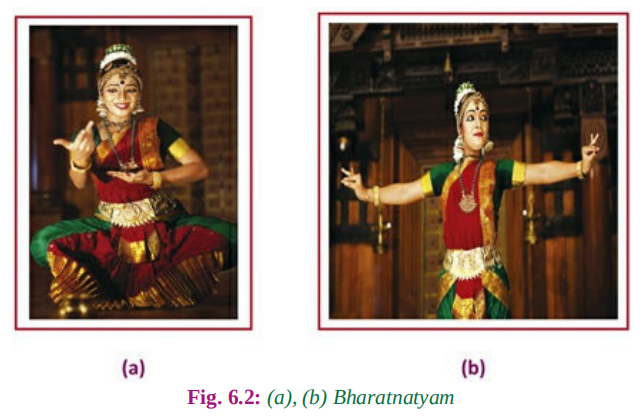
- Basic info
- Oldest among all classical dance forms.
- The name derives from Bharata Muni and Natyam (Tamil for dance).
- Some scholars attribute Bharata to:
- Bhava (expression)
- Raga (melody)
- Tala (rhythm)
- Origins and Revival:
- Evolved from Sadir, a solo dance performed by Devadasis in Tamil Nadu.
- Previously known as Dashiattam.
- Declined with the end of the Devadasi system.
- Revived by E. Krishna Iyer, a freedom fighter.
- Gained global recognition through Rukmini Devi Arundale.
- Originally performed by solo female dancers, now popular among male and group artists.
- Tanjore Quartet and the Bharatnatyam Recital:
- Four dance teachers from Thanjavur (Chinnaiah, Ponniah, Vadivelu, Shivanandam) structured the recital.
- Bharatnatyam is also called Tanjore Natyam in their honor.
- Elements of a Bharatnatyam Recital:
- Alarippu:
- Invocatory piece with rhythmic syllables, seeking divine blessings.
- Jatiswaram:
- Pure dance (Nritta), focusing on poses and movements without expressions.
- Shabdam:
- Expressive (Abhinaya) piece, usually in praise of God.
- Varnam:
- Combination of dance and emotions (Nritya), most important part of the performance.
- Padam:
- Mastery of Abhinaya (expressions) with a spiritual message.
- Jawali:
- Short love-lyrics performed at a fast tempo.
- Thillana:
- Concluding pure dance (Nritta) with intricate rhythmic variations.
- Distinct Features of Bharatnatyam:
- Known as the “fire dance”, movements resemble a dancing flame.
- Balances both Tandava (vigorous) and Lasya (graceful) aspects.
- Emphasizes Mudras (hand gestures), especially Katakamukha Hasta, symbolizing “Om”.
-
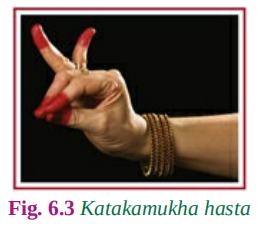
- Characterized by Ekacharya Lasyam, where one dancer plays multiple roles.
- Performed with bent knees and equal weight distribution on both feet.
- Famous Proponents:
- Yamini Krishnamurthy, Lakshmi Viswanathan, Padma Subramaniam, Mrinalini Sarabhai, Mallika Sarabhai, etc.
- Kuchipudi
-
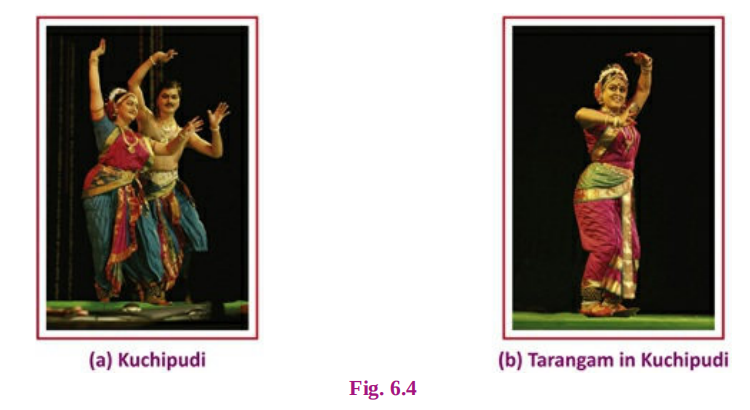
- Origin and Evolution
- Originated as a group performance by Kusselavas, traveling actors.
- Named after the village Kusselavapuri (or Kuchelapuram) in Andhra Pradesh.
- Systematized in the 17th century by Siddhendra Yogi, who authored Bhama Kalapam and other plays.z
- Historical Development:
- Influenced by Vaishnavism, became a male Brahmin monopoly and temple performance.
- Bhagavata Purana became the central theme, and performers were called Bhagavathalus.
- Flourished under Vijayanagara and Golconda rulers but remained confined to villages.
- Revived in the 20th century by Balasaraswati and Ragini Devi.
- Lakshminarayan Sastri introduced solo performances and female participation.
- Key Features of Kuchipudi:
- Involves intricate foot movements and is primarily a group performance.
- Recitals are based on Bhagavata Purana but often have secular themes, emphasizing Shringara Rasa.
- Each principal character introduces itself with a Daaru (a short dance-song composition).
- Incorporates all three classical dance elements:
- Nritta (pure dance)
- Natya (dramatic element)
- Nritya (expressive dance)
- Similar to Bharatanatyam but distinct in style.
- Elements of Performance:
- Sollakath (Patakshara): Nritta component, focusing on body movements.
- Kavutvams: Nritya component, involving acrobatics; sometimes performed as Nritta.
- Symbolizes the manifestation of earthly elements in the human body.
- Combines dance and drama, with dancers sometimes singing as well.
- Balances both Lasya (graceful) and Tandava (vigorous) elements.
- Solo Performance Elements:
- Manduk Shabdam: Story of a frog.
- Tarangam: Dancer performs on the edge of a brass plate while balancing a pot of water or lit lamps.
- Jala Chitra Nrityam: Dancer draws patterns on the floor with their toes while dancing.
- Music and Accompaniment:
- Performed with Carnatic music, mainly in Telugu.
- Principal instruments: Violin and Mridangam.
- Famous Proponents:
- Radha Reddy, Raja Reddy, Yamini Krishnamurthy, Indrani Rahman, etc.
- Kathakali
-
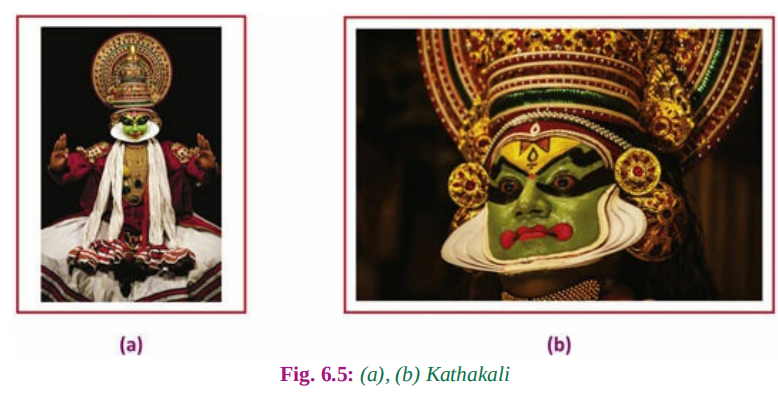
- Origins & Evolution:
- Developed from Ramanattam and Krishnattam, two dance-dramas of Kerala.
- Patronized by feudal lords, narrating episodes from Ramayana and Mahabharata.
- Closely linked to Koodiyattam (Sanskrit drama tradition) and ancient martial arts.
- Combination of music, dance, and drama.
- Declined with the fall of feudalism but revived in the 1930s by V. N. Menon under Mukunda Raja’s patronage.
- Key Features:
- Performed by an all-male troupe.
- Minimal props but elaborate facial makeup and headgear:
- Green: Nobility, divinity, virtue.
- Red patches near the nose: Royalty.
- Black: Evil, wickedness.
- Yellow: Saints, women.
- Completely red face: Evil.
- White beard: Higher consciousness, divinity.
- Intertwined dance and drama—not clearly separable.
- Represents the eternal conflict between good and evil, drawing from epics and puranas.
- Known as the Ballad of the East.
- Language: Manipravalam (a mix of Malayalam and Sanskrit).
- Music: Crucial for conveying drama; different compositions add depth.
- Gestures:
- Key feature of Navarasas (nine facial expressions) expressed through eye and eyebrow movements.
- Extensive hand gestures require rigorous training.
- Performance Setting:
- Open-air theatres or temple premises with lush greenery as the backdrop.
- Lighting: Traditional brass lamps.
- Symbolism: Represents the element of sky/ether.
- Performance begins and ends with drumbeats from Chhenda and Maddala.
- Famous Proponents:
- Guru Kunchu Kurup, Gopi Nath, Kottakal Sivaraman, Rita Ganguly, etc.
- Mohiniattam
-
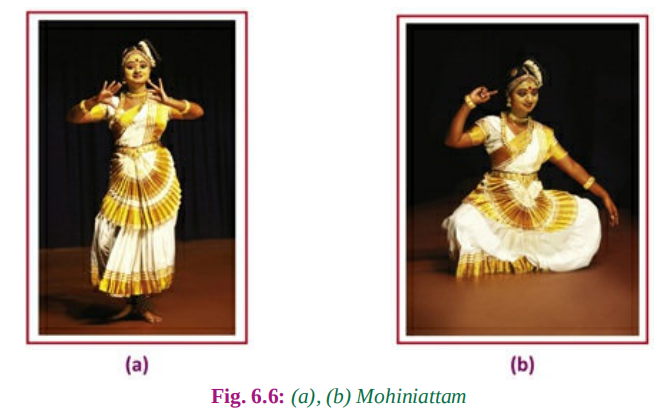
- Origins & Evolution:
- Mohini means beautiful woman and Attam means dance.
- Solo female dance form, further developed by Vadivelu in the 19th century.
- Gained prominence under Travancore rulers, especially Swathi Thirunal.
- Revived by V. N. Menon and Kalyani Amma.
- Key Features:
- Blends the grace of Bharatanatyam with the vigour of Kathakali.
- Gentle footwork, no forceful stamping.
- Narrates the feminine dance of Vishnu.
- Combines Nritta and Nritya like other classical dances.
- Dominated by Lasya (beauty & grace), making it primarily a female dance form.
- Accompanied by music & songs.
- Costume:
- White & off-white with gold brocade designs.
- No elaborate facial makeup.
- Ankle bells (Ghungroo) attached to a leather strap.
- Symbolism: Represents the element of air.
- Movements:
- Atavakul (Atavus): A collection of 40 basic movements.
- Musical Accompaniment:
- Instruments: Cymbals, Veena, Drums, Flute, etc.
- Famous Proponents:
- Sunanda Nair, Kalamandalam Kshemavathy, Madhuri Amma, Jayaprabha Menon, etc.
- Odissi
-
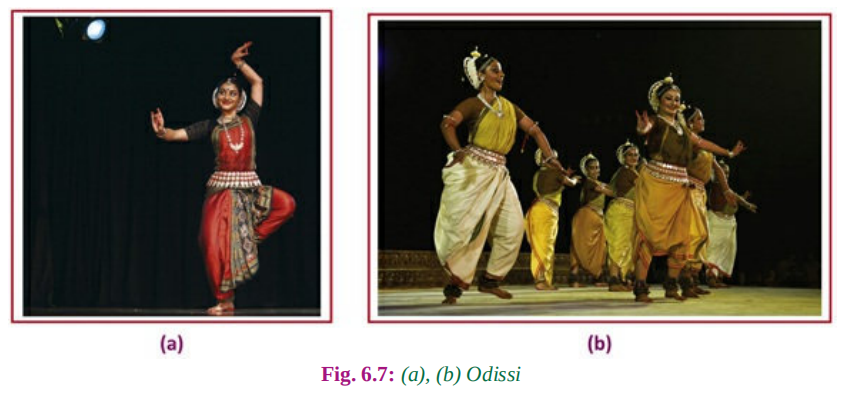
- Origins & Evolution:
- Oldest classical dance from Eastern India.
- Earliest evidence found in Udayagiri-Khandagiri caves.
- Mentioned in Natya Shastra as Odra Nritya.
- Practiced by Mahris (temple dancers), patronized by Jain King Kharavela.
- Vaishnavism led to the decline of the Mahari system; replaced by Gotipuas (young boys dressed as females).
- Nartala variant continued in royal courts.
- Gained international acclaim in the mid-20th century due to Charles Fabri and Indrani Rahman.
- Key Features:
- Similar to Bharatanatyam in using Mudras & postures for expression.
- Signature Postures:
- Tribhanga: Three-bent posture.
-
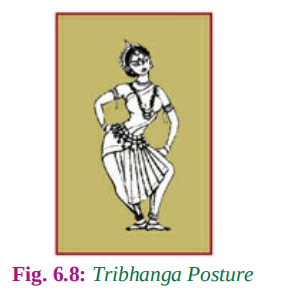
- Chowk: Squared stance, symbolizing masculinity.
- Movements:
- Lower body remains static, while torso moves gracefully.
- Hand gestures convey expressions in Nritya.
- Known as ‘Mobile Sculpture’ due to its intricate body shapes & patterns.
- Elements of Odissi:
- Mangalacharan: Begins with an offering of flowers to Mother Earth.
- Batu Nritya: Includes Tribhanga & Chowk postures.
- Pallavi: Expresses the essence of the song.
- Tharijham: A pure dance section before the conclusion.
- Two types of concluding sequences:
- Moksha: Joyful movements signifying liberation.
- Trikhanda Majura: Performer bids farewell to the gods, audience, and stage.
- Music & Accompaniment:
- Hindustani Classical Music.
- Instruments: Manjira (Cymbals), Pakhawaj (Drums), Sitar, Flute, etc.
- Lyrics: Gita Govinda by Jayadeva and compositions by local poets.
- Symbolism: Represents the element of water.
- Costume & Jewelry:
- Elaborate hairstyles, silver jewelry, long necklaces.
- Famous Proponents:
- Guru Pankaj Charan Das, Guru Kelu Charan Mohapatra, Sonal Mansingh, Sharon Lowen (USA), Anandini Dasi (Argentina).
- Manipuri
-
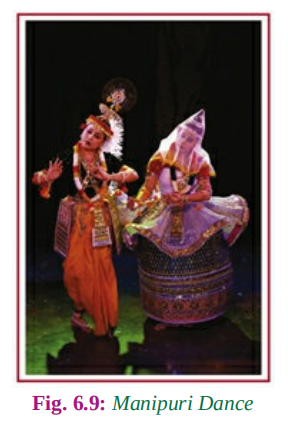
- Origins & Evolution
- Mythologically linked to the celestial dance of Shiva and Parvati in the valleys of Manipur, accompanied by the local Gandharvas.
- Gained prominence in the 15th century with the advent of Vaishnavism, making Krishna the central theme.
- Traditionally performed by females.
- 18th century: Raja Bhag Chandra attempted to revive the dance.
- Rabindranath Tagore reintroduced it to the national stage by incorporating it into Shantiniketan (West Bengal).
- Key Features
- Emphasizes devotion over sensuality.
- Thin veils cover the dancers’ faces; hand gestures and gentle foot movements hold greater importance than facial expressions.
- Incorporates both Tandava and Lasya, with greater emphasis on Lasya.
- Female dancers wear unique long skirts, focusing on slow, graceful hand and knee movements.
- Nagabandha mudra (body curved in an ‘8’ shape) is a key posture.
-
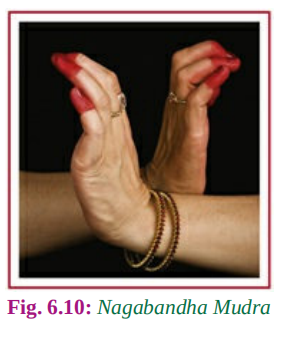
- Ras Leela (Radha-Krishna love story) is a recurring theme.
- Musical accompaniment includes Pung (drum), flute, Khartals (wood clappers), dhols, with compositions from Jayadeva and Chandidas.
- Influences can be seen in Thang-Ta and Sankirtana traditions.
- Famous Exponents
- Jhaveri Sisters (Nayana, Suverna, Ranjana, Darshana)
- Guru Bipin Singha
- N. Madhabi Devi
- Kathak
-
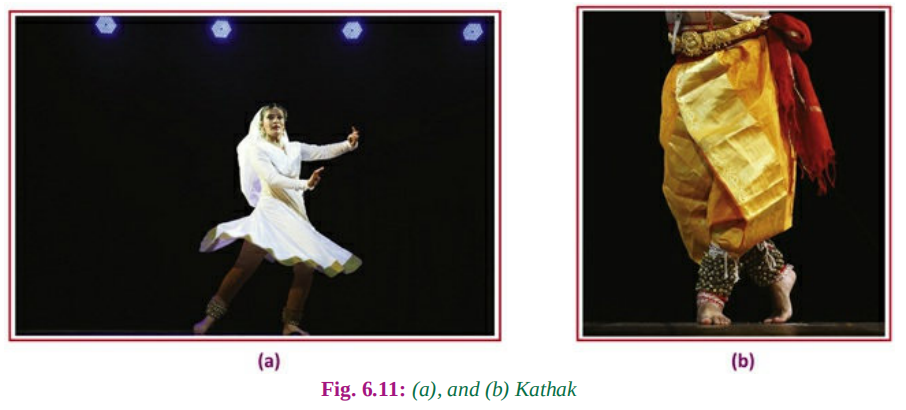
- Origins & Evolution
- Originated from the Ras Leela tradition of Brajbhoomi.
- Derives its name from Kathikas (storytellers) who narrated epics through gestures and music.
- Mughal Era:
- Shifted into a court dance with Persian influences.
- Became more lascivious in style.
- 20th century: Lady Leela Sokhey led efforts to revive the classical Kathak tradition.
- Key Features
- Developed into different gharanas within the Hindustani musical tradition:
- Lucknow: Flourished under Nawab Wajid Ali Shah, emphasizing expression and grace.
- Jaipur: Founded by Bhanuji, known for fluency, speed, and rhythmic complexity.
- Raigarh: Patronized by Raja Chakradhar Singh, focusing on percussion music.
- Banaras: Developed under Janakiprasad, emphasizing floor movements and symmetry.
- Characterized by intricate footwork and pirouettes.
- Elements of a Kathak Recital
- Ananda
– Introductory sequence, marking the dancer’s stage entry.
- Thaat
– Soft, varied movements.
- Todas & Tukdas
– Short, fast-paced rhythm sections.
- Jugalbandi
– A competitive interplay between dancer and tabla player.
- Padhant
– Dancer recites bols (syllabic rhythms) before demonstrating them.
- Tarana
– A rhythmic movement sequence similar to Thillana.
- Kramalaya
– Concluding intricate footwork segment.
- Gat Bhaav
– Storytelling through silent movements, without music or chanting.
- Music & Accompaniment
- Traditionally accompanied by Dhrupad music.
- Taranas, Thumris, and Ghazals were introduced during the Mughal period.
- Famous Exponents
- Birju Maharaj
- Lacchu Maharaj
- Sitara Devi
- Damayanti Joshi
- Sattriya
-
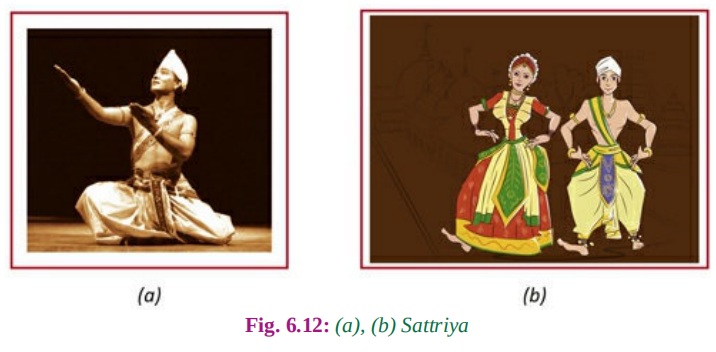
- Origins & Evolution
- Introduced in 15th century Assam by Vaishnava saint Sankaradeva.
- Originated in Vaishnava monasteries (Sattras), where it was primarily practiced.
- Finds mention in Natya Shastra by Bharat Muni.
- Inspired by the Bhakti Movement.
- Key Features
- Fusion of Assamese dance traditions, mainly Ojapali and Devdasi.
- Devotional in nature, narrating mythological stories of Vishnu.
- Comprises three main components:
- Nritta (pure dance)
- Nritya (expressive dance)
- Natya (dramatic representation)
- Traditionally performed in groups by male monks (Bhokots) as part of daily rituals and festivals.
- Strong emphasis on rhythmic syllables, dance postures, and intricate footwork.
- Combines both Lasya and Tandava elements.
- Strictly codified in terms of hand gestures and footwork.
- Music & Accompaniment
- Instruments used: Khol (drum), Cymbals (Manjira), Flute.
- Lyrics are mainly Borgeets (compositions of Sankaradeva).
- Costume & Jewelry
- Male dancers: Dhoti and Paguri (turban).
- Female dancers: Ghuri and Chador (made of Pat silk), with traditional Assamese jewelry.
- Waist cloth is worn by both genders.
- Modern Evolution
- Developed into two distinct styles:
- Gayan-Bhayanar Nach – Focuses on singing and dancing.
- Kharmanar Nach – A more stylized form.
- Ankia Naat:
- A play or musical-drama using Sattriya techniques.
- Originally written in an Assamese-Maithili hybrid called Brajavali.
- Bhaona is a related form based on Krishna’s stories.
- Recognition
- Sangeet Natak Akademi recognizes eight classical dance forms.
- Ministry of Culture acknowledges nine, including Chhau.
- Folk Dances of India
- Basic info
- India’s folk dances reflect its diverse cultural heritage, incorporating local songs, myths, and traditions.
- These dances are spontaneous and untrained, often specific to a region or community, passed down through generations.
- Major Folk Dances of India:
- Major Folk Dances of India
- Eastern India
- Chhau (Jharkhand, Odisha, West Bengal)
-
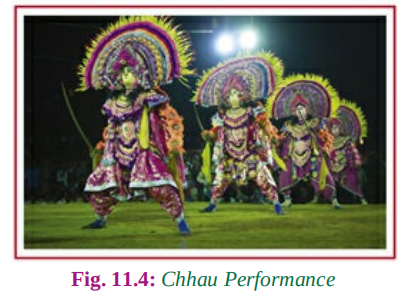
- Originates from ‘Chhaya’ (shadow).
- A martial mask dance narrating mythological and natural themes.
- Three styles:
- Saraikella Chhau (Jharkhand)
- Mayurbhanj Chhau (Odisha) – No masks.
- Purulia Chhau (West Bengal)
- Recognized by UNESCO (2010) as an Intangible Cultural Heritage.
- Jat-Jatin (Bihar, Mithila region)
- Depicts the love and quarrels of a married couple.
- Biraha / Bidesia (Bihar)
- Expresses women’s sorrow for absent partners.
- Performed only by males, who play female roles.
- Jhumair (Jharkhand, Odisha)
- A harvest dance, with two variations:
- Janani Jhumair (women)
- Mardana Jhumair (men)
- Danda-Jatra (Odisha)
- One of India’s oldest folk arts, blending dance, drama, and music.
- Themes revolve around Shiva, social harmony, and brotherhood.
- Paika (Odisha)
- A martial dance performed with wooden spears and shields.
- The word Paika signifies battle.
-
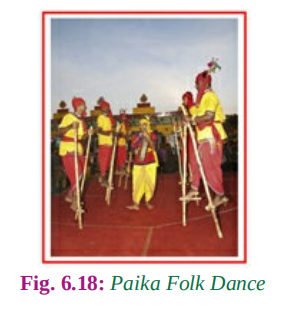
- Western India
- Garba (Gujarat)
-
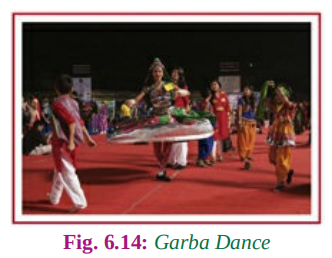
- Performed during Navratri.
- Revolves around a Garbha Deep (earthen lamp) placed inside a perforated pot.
- Dandiya Raas (Gujarat)
- A stick dance, symbolizing Durga’s battle with Mahishasura.
- Ghoomar (Rajasthan)
- Performed by Bhil women.
- Characterized by pirouetting movements and vibrant costumes.
- Kalbelia (Rajasthan)
-
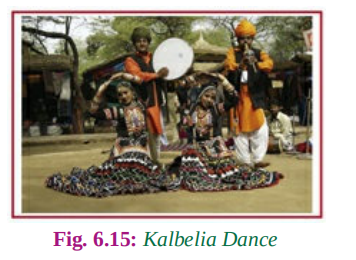
- A sensuous dance mimicking serpent movements.
- Uses Been (snake charmer’s flute).
- Recognized by UNESCO (2010) as an Intangible Cultural Heritage.
- Tera Tali (Rajasthan)
- Performed by the Kamar tribe.
- Women sit on the ground, playing cymbals (Manjiras) tied to their bodies.
-
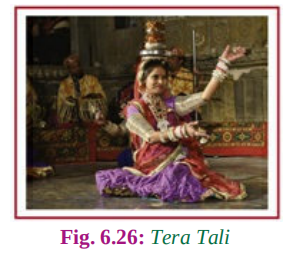
- Tippani (Gujarat, Saurashtra region)
- Performed exclusively by women, who beat floors with wooden sticks.
- Northern India
- Bhangra & Giddha (Punjab)
- Bhangra: A high-energy men’s dance, with drum beats.
- Giddha: The female counterpart of Bhangra.
-
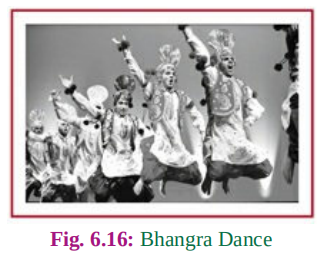
- Charba (Himachal Pradesh)
- A Dussehra festival dance.
- Jawara (Madhya Pradesh, Bundelkhand region)
- A harvest dance, performed with a basket of jawar (sorghum) on the head.
-
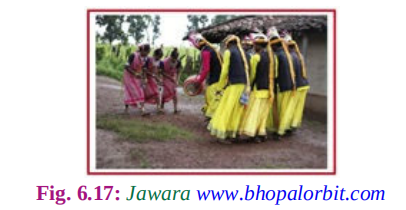
- Matki (Madhya Pradesh, Malwa region)
- Solo dance, performed by women balancing earthen pots.
- Variants: Aada and Khada Nach.
- Dumhal (Jammu & Kashmir)
- Performed by the Wattal tribe.
- Features tall conical hats and colorful costumes.
-
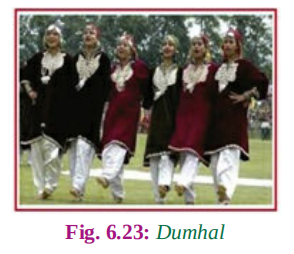
- Southern India
- Kolattam-Parichakali (Kerala, Lakshadweep)
- A martial dance using wooden sticks and shields.
- Kaikottikali (Kerala)
- A temple dance, performed during Onam.
- Padayani (Kerala)
- A martial dance honoring Goddess Kali.
- Dancers wear large masks (Kolams).
-
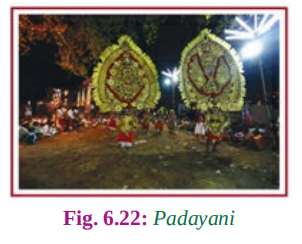
- Kummi (Tamil Nadu, Kerala)
- A women’s dance, performed in a circle with rhythmic clapping.
- Mayilattam (Tamil Nadu, Kerala)
- Peacock dance, where young girls dress as peacocks.
-
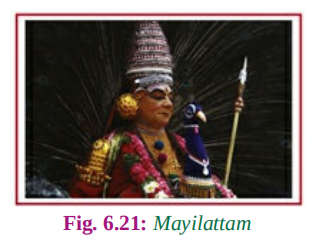
- Butta Bommalu (Andhra Pradesh, West Godavari district)
- Dancers wear mask-like costumes, resembling toy figures.
- Pata Kunitha (Karnataka, Mysore region)
- A religious dance, where men carry bamboo poles decorated with ribbons.
- Hulivesha (Coastal Karnataka)
- Men dress as tigers, dancing to honor Goddess Durga.
-
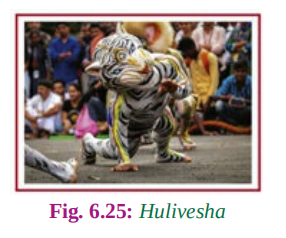
- Northeastern India
- Bagurumba (Assam, Bodo tribe)
- Related to nature and the environment.
- Bihu (Assam)
- A lively group dance, performed in colorful attire.
-
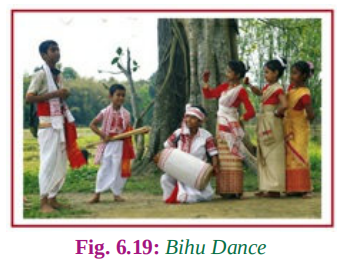
- Thang Ta (Manipur)
- A martial arts dance, enacting mock fight sequences.
- Rangma (Nagaland)
- A war dance, depicting tribal battles.
- Singhi Chham (Sikkim)
- A lion mask dance, symbolizing Kanchenjunga Peak.
-
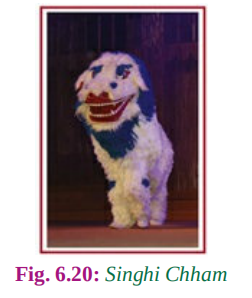
- Cheraw (Mizoram)
- Bamboo dance, performed by women stepping through rhythmic bamboo movements.
-
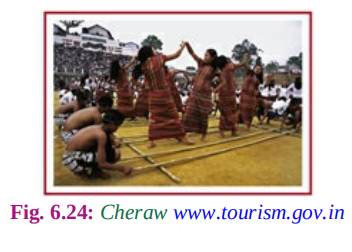
- Hojagiri (Tripura)
- A Lakshmi Puja dance, performed by 4-6 women balancing earthen pitchers.
- Central India
- Gaur Muria (Chhattisgarh, Bastar region)
- A bison-horn dance, performed in groups.
- Raut Naach (Chhattisgarh)
- Performed by the Yadav community during Diwali.
- Karma Naach (Chhattisgarh, Chota Nagpur Plateau)
- A tribal dance, performed in a circle with linked arms.
- Other Unique Folk Dances
- Alkap (Jharkhand, West Bengal – Rajmahal Hills, Murshidabad, Malda)
- A dance-drama performed by troops of 10-12 people.
- Features comedic sketches (Kap).
- Associated with Shiva’s Gajan festival.
- Garadi (Puducherry)
- Monkey dance, celebrating Rama’s victory over Ravana.
- Dancers wear iron rings (Anjalis) on their legs.
- Dalkhai (Odisha)
- A tribal Dussehra dance, based on stories from Ramayana & Mahabharata.
- INDIAN THEATRE
- Ancient Indian Theatre
- Oldest Amphitheatres
- The ruins at Sitabena and Jogimara caves are believed to be the world’s oldest amphitheatres, showcasing India’s long theatrical tradition.
- Natya Shastra
- Written by Bharat Muni between 200 BC and 200 AD, it is the first formal treatise on dramaturgy.
- Describes Natya Veda, created by Lord Brahma, combining elements from the four Vedas.
- Defines ten types of plays, ranging from one-act to ten-act performances.
- Covers all aspects of classical Sanskrit literature and performance arts.
- Classical Sanskrit Theatre
-
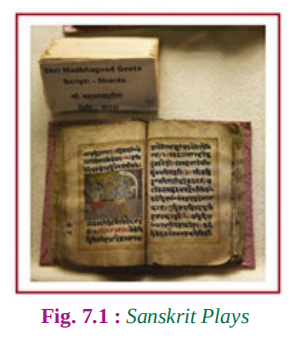
- Origins and Characteristics
- Theatre in India began as a narrative art form, blending music, dance, and acting.
- Recitation, dance, and music were integral to performances.
- The Sanskrit word Nataka comes from Nata, meaning a dancer.
- Other terms for drama: Rupaka, Drishyakavya, and Preksakavya.
- Types of Plays
- Lokadharmi: Realistic depictions of daily life.
- Natyadharmi: Stylized performances with overt symbolism.
- Prominent Playwrights and Works
- Sariputraprakarana by Ashvaghosha (first known Sanskrit drama, a nine-act play).
- Bhasa (3rd-4th century AD) – composed 13 plays.
- Sudraka – introduced conflict in Mricchakatika, featuring an antagonist.
- Kalidasa – famous for Malavikagnimitram, Vikramorvashi, and Shakuntalam, portraying the conflict between desire and duty.
- Other notable works:
- Uttaramacharita and Mahaviracharita by Bhavabhuti.
- Mudrarakshasa by Visakhadatta.
- Ratnavali by Harshavardhana.
- Categories of Sanskrit Plays
- Plays were classified into ten types: Anka, Bhana, Dima, Ihamgra, Nataka, Prahasana, Prakarana, Svakarna, Vithi, and Vyayog.
- Natya Shastra describes only two: Nataka and Prakarana.
- Conventions of Classical Sanskrit Plays
- Typically had four to seven acts.
- Always ended happily, with the hero achieving his goal (tragedies were rare).
- The protagonist was always male.
- Well-structured with a defined opening, progression, development, pause, and conclusion.
- Ritualistic Progression of a Play
- Pre-play rituals (Purva-raga) performed behind the curtain.
- The Sutradhar (stage manager/director) entered, worshipped the deity, and introduced the playwright.
- The leading lady was summoned, and the setting was announced.
- Theatres could accommodate around 400 people.
- Two-storeyed stages:
- Upper level represented the celestial sphere.
- Lower level represented the terrestrial sphere.
- Curtains were used for dramatic effect; masks were not used.
- Character Types
- Nayaka (Hero): Male lead, classified as Lalita (kind-hearted), Shanta (calm), Uddhata (arrogant), etc. Could also be an antagonist (Pratinayaka) like Ravana or Duryodhana.
- Nayika (Heroine): Played by queens, friends, courtesans (Ganika), or divine ladies (Divya).
- Vidusaka (Clown): A noble, good-hearted comic character, often the hero’s friend. Used satire to challenge social norms. Spoke in Prakrit while others spoke in Sanskrit.
- Decline of Sanskrit Theatre
- Shift towards poetry led to a decline in dramatic works.
- Strict conventions limited creative freedom, pushing writers towards other forms.
- Sanskrit became overly embellished and lost popularity among common people.
- Muslim rule reduced patronage for Sanskrit theatre, favoring dance and music instead.
- Additional side information
- Koothiyattam (Koodiyattam)
- India’s oldest surviving theatre tradition, dating back to the 10th century AD in Kerala.
- Adheres to Natya Shastra rules and performed by the Chakyar and Nambiar castes.
- Uses Sanskrit, Prakrit, and Malayalam, with Mizhavu and Edakka as background instruments.
- Begins with Nirvahana (recollection of past events), followed by slow unfolding with social, philosophical, and political commentary.
- Margi Madhu Chakyar is a leading exponent of this art form.
- Folk theatre
-
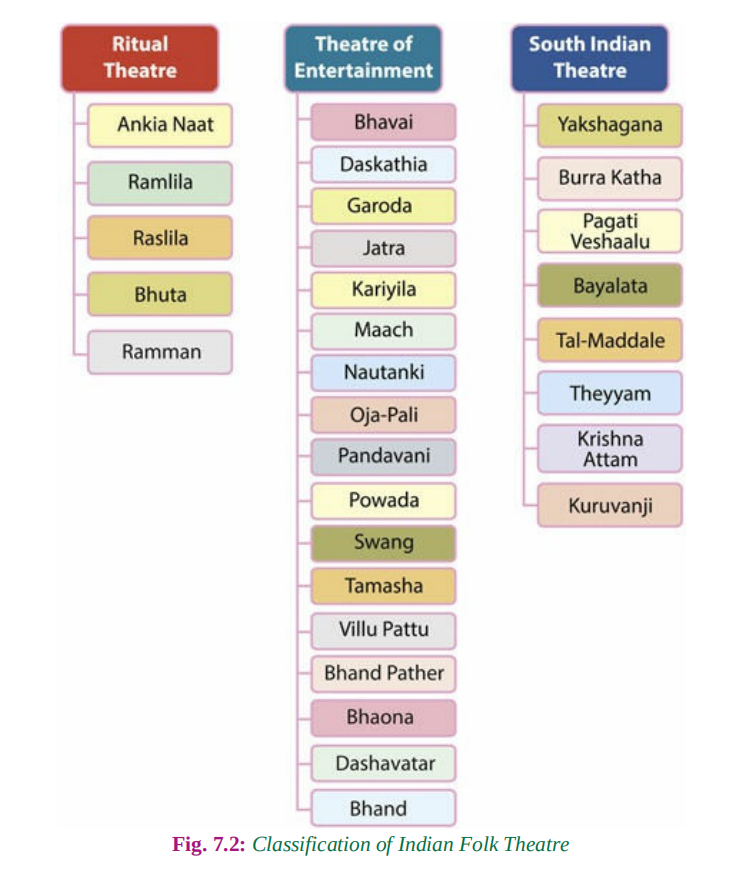
- Basic info
• Rich tradition across India, reflecting local lifestyles, beliefs, and customs.
• Sanskrit theatre was urban and refined, while folk theatre had rural roots.
• Evolved from devotional themes (15th-16th century AD) to include love ballads and heroic tales.
• Post-independence, it became a medium for social awareness.
- Categories of Folk Theatre
- Ritual Theatre
• Emerged during the Bhakti movement to express devotion.
• Important examples:
- Ankia Naat (Assam)
• One-act play started by Sankaradeva & Madhavdev.
• Opera-style performance on Lord Krishna’s life.
• Features masks, mixed Assamese-Maithili language (Brajavali).
- Ramlila (Uttar Pradesh)
• Theatrical enactment of Ramayana before Dussehra.
• Performed by male actors, including the role of Sita.
- Raslila (Gujarat, North India)
• Dance-drama of Krishna and Radha’s love stories.
- Bhuta Aradhana (Karnataka)
• Spirit worship theatre (Bhuta Kola).
- Ramman (Uttarakhand)
• Ritual theatre of Garhwal, dedicated to Bhumiyal Devta.
• Recognized by UNESCO.
- Theatres of Entertainment (North, West & East India)
- Basic info
• More secular, focused on love, valor, and socio-cultural themes.
• Primarily for entertainment.
- Important examples:
- Bhavai (Rajasthan)
• Dance-based theatre with romantic themes.
• Performers balance pots on their heads.
• Sutradhar (narrator) is called Nayaka.
- Daskathia (Odisha)
• Dual-narrator: Gayaka (lead) & Palia (co-narrator).
• Wooden musical instrument Kathia used.
• Variant: Chhaiti Ghoda.
-
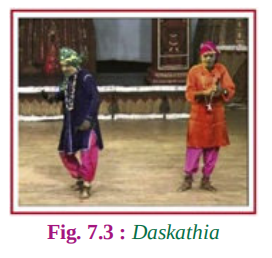
- Garoda (Gujarat)
• Storytelling using painted pictures by Garoda Brahmins.
- Jatra (Eastern India)
• Open-air theatre started by Chaitanya Mahaprabhu.
• Originally religious, later included secular, historical, patriotic themes.
• Variants: Rama Jatra, Shiv Jatra, Chandi Jatra.
• Odisha’s street theatre: Sahi Jatra.
- Kariyila (Himachal Pradesh)
• Open-air theatre performed during village fairs.
- Maach (Madhya Pradesh)
• Folk theatre of Malwa.
• Mythological & romantic folk tales.
• Uses poetic couplets (Rangat Dohas).
- Nautanki (North India)
• Musical theatre mentioned in Ain-i-Akbari.
• Nagada drum used.
• Kanpur & Lucknow schools.
- Ojapali (Assam)
• Narrative theatre linked to Manasha festival.
• Three parts: Baniya Khanda, Bhatiyali Khanda, Deva Khanda.
• Lead: Oja, chorus: Palis.
-
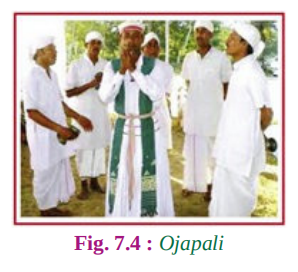
- Powada (Maharashtra)
• Ballads of valor, popular after Shivaji’s victory over Afzal Khan.
- Swang (Rajasthan & Haryana)
• Musical dramas using Ektara, Harmonium, Sarangi, Dholak.
- Tamasha (Maharashtra)
• Humorous theatre featuring Lavani songs.
• Unique for female actors playing male roles.
- Bhand Pather (Jammu & Kashmir)
• Social satire & mythical stories.
• Performed by Muslim artists but secular in nature.
- Bhaona (Assam)
• Religious theatre promoting moral values.
• Features Sutradhar (narrator) & Vaishnavite themes.
- Dashavatar (Maharashtra & Goa)
• Drama honoring the ten incarnations of Vishnu.
• Two parts: Poorva-ranga (intro) & Uttar-ranga (main act).
- Naqal / Bhand (Punjab & Uttar Pradesh)
• Mimicry-based theatre with social & political satire.
• Performed by the Muslim Bhand Community.
- Theatres of South India
- Basic info
• Gained popularity after Sanskrit theatre declined in North India (~8th century AD).
• Dance-focused traditions.
- Important examples:
- Villu Paatu (Kerala & Tamil Nadu)
• Bow-song musical theatre.
• Narrates Ramayana using bow-shaped instruments.
- Yakshagana (Karnataka & Kerala)
• Originated in Vijayanagara empire.
• Descriptive dance-drama influenced by Vaishnava Bhakti movement.
-
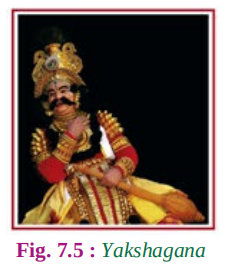
- Burra Katha (Andhra Pradesh)
• Storytelling using Burra (percussion instrument).
• Lead narrator with two co-artists for rhythm & chorus.
- Pagati Veshaalu (Telangana & Andhra Pradesh)
• Role-playing theatre with Vesham (disguise) as the main character.
- Bayalata (Karnataka)
• Open-air theatre performed during deity worship.
• Stories of Radha-Krishna.
- Tal-Maddale (Karnataka & Kerala)
• Predecessor of Yakshagana.
• Performed sitting, without costumes, dance, or acting.
• Narrator: Bhagavata, aided by Arthadharis.
- Theyyam (Kerala)
• Similar to Bhuta Kola (Karnataka).
• Open-air performance in front of temples.
• Actors wear elaborate headgear & costumes.
-
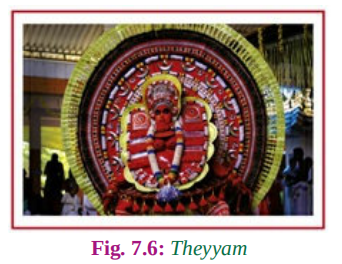
- Krishnanattam (Kerala)
• Dance-drama from the 17th century.
• Based on Krishna Geethi, narrating Krishna’s life over 8 nights.
- Kuruvanji (Tamil Nadu)
• Originated 300 years ago.
• Dance-ballet form based on Bharatanatyam.
• Features a fortune-teller predicting a heroine’s fate.
- Modern Indian Theatre
- Colonial Influence & Emergence of Proscenium Theatre
• Modern Indian theatre developed during the colonial era, influenced by both Sanskrit classics and Western literature.
• Adaptations of works by Gotthold Ephraim Lessing and Shakespeare became common.
• The rise of cities like Calcutta (Kolkata) and Madras (Chennai) created a demand for new entertainment forms.
• This led to the emergence of the Western Proscenium Style of Theatre in the 18th and 19th centuries.
• Many theatres were built in Calcutta in the 19th century, such as:
- Belgachia Natyashala
- Shobhabazar Natyashala
- Indigenous Adaptations & Commercialization
• Indians developed a unique hybrid theatrical style, blending Western and Indian traditions.
• Unlike ancient theatre, which was open to all, modern theatre became commercialized with ticketed audiences.
• Common themes included:
- Social evils (dowry, caste system, religious hypocrisy)
- Political affairs
• Due to its growing influence, the British Government imposed the Dramatic Performances Act (1876) to curb political awareness.
- Major Theatrical Movements & Personalities
- Parsi Theatre (1850s-1920s)
• Flourished in Western India, especially in Gujarati and Marathi.
• Known for:
- Colorful backdrops
- Musical elements
- Themes: Romance, humor, melodrama
• Declined with the advent of cinema in the 1930s, as many Parsi producers moved into filmmaking.
- Bengali Theatre
• Rabindranath Tagore
– A celebrated playwright who wrote his first play, Valmiki Pratibha, at age 20.
• Famous works:
- Raktakarabi (Red Oleanders)
- Chitrangada
- Post-Office
• Themes: Nationalism, spirituality, socio-political issues.
• Other prominent Bengali playwrights:
- Prasanna Kumar Thakur
- Girishchandra Ghosh
- Dinabandhu Mitra (Nildarpan, a play exposing British exploitation of indigo farmers).
- Indian People’s Theatre Association (IPTA) – 1943
• Established as the cultural wing of the Communist Party.
• Although disbanded in 1947, it played a crucial role in theatre development.
• Focused on social issues like the Bengal Famine.
• Notable members:
- Balraj Sahni
- Prithviraj Kapoor
- Bijon Bhattacharya
- Ritwik Ghatak
- Utpal Dutt
• IPTA still operates in Chhattisgarh, Punjab, and West Bengal.
- Prithvi Theatre – 1944
• Founded by Prithviraj Kapoor as a traveling theatre group with 150 artists.
• Performed over 2000 plays across India.
• A permanent theatre was later established in Mumbai in 1978, which still exists today.
- Institutional Support & Growth
• Sangeet Natak Akademi (1952)
– Established to promote performing arts, including theatre.
• National School of Drama (NSD)
– Played a key role in developing modern theatre talent.
- Regional Theatre & Institutions
• Kalakshetra Manipur
– Founded by Heisnam Kanhailal in 1969 to preserve traditional Manipuri theatre.
• Chorus Repertory Theatre (1976)
– Established by Ratan Thiyam.
- INDIAN PUPPETRY
- Introduction
• Puppetry is one of the oldest forms of entertainment.
• It captivates audiences due to the element of control by a puppeteer.
• It is cost-effective, making it popular among freelance artists.
• Artists enjoy unrestricted creative freedom in design, color, and movement, making puppetry a highly ingenious art form.
- Indian Origins of Puppetry
-
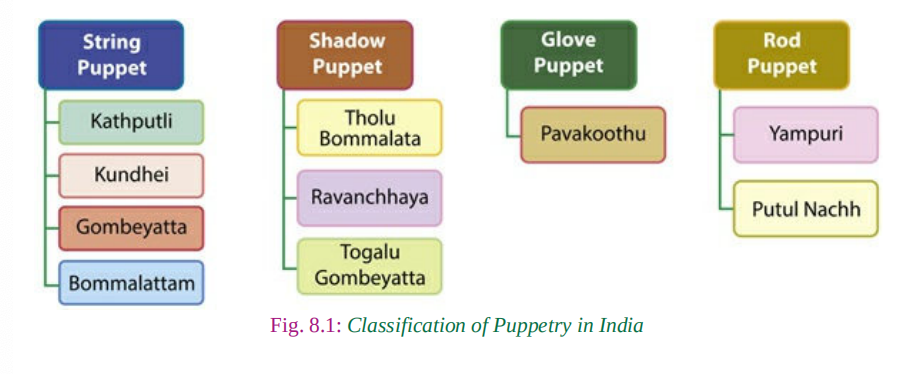
• Puppetry in India has served both entertainment and educational purposes.
• Excavations at Harappa and Mohenjo-Daro suggest the existence of puppetry as early as the Indus Valley Civilization.
• References in Ancient Texts:
- 500 BC – Early mentions of marionette theatre.
- Tamil classic Silappadikaram (1st–2nd century BC) mentions puppetry.
- Mahabharata also refers to puppetry.
• Philosophical Importance:
- In Bhagavad Gita, God is described as a puppeteer, controlling the universe with three strings: Satta, Raja, and Tama.
- In Indian theatre, the narrator is called Sutradhar (meaning “holder of strings”).
• Development across India
• Various forms of regional puppetry developed across India.
• Themes: Mythology, folklore, and local legends.
• Puppetry combines painting, sculpture, music, dance, and drama, making it a unique form of artistic expression.
- Decline in Modern Times
• Challenges:
- Lack of devoted audience.
- Financial struggles have led to a decline in this art form.
- Types of Puppetry in India
- String Puppets (Marionettes)
• Prominent in Indian cultural traditions.
• Key Features:
- Made of wood, typically 8–9 inches in size.
- Painted using oil paint, with detailed facial features.
- Wooden limbs are covered in colorful miniature costumes.
- Jewelry and accessories give them a lifelike feel.
- Strings attached to hands, head, and back for manipulation.
- Notable String Puppetry Forms
- Kathputli (Rajasthan)
- Name derived from ‘kath’ (wood) + ‘putli’ (doll).
- Brightly dressed Rajasthani-style puppets.
- No legs – controlled by strings attached to the puppeteer’s fingers.
- Accompanied by dramatic folk music.
-
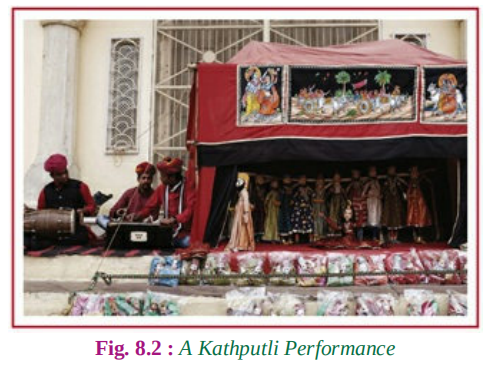
- Kundhei (Odisha)
- Made of light wood and dressed in long skirts.
- More joints provide better flexibility.
- Strings attached to a triangular prop.
- Influence of Odissi dance in performances.
-
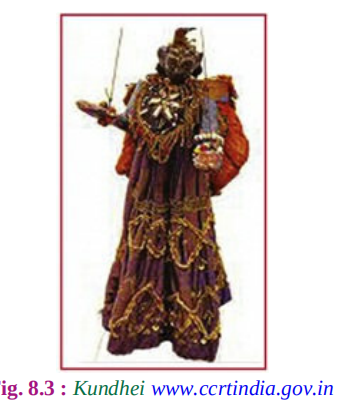
- Gombeyatta (Karnataka)
- Inspired by Yakshagana Theatre.
- Requires multiple puppeteers to manipulate a single puppet.
-
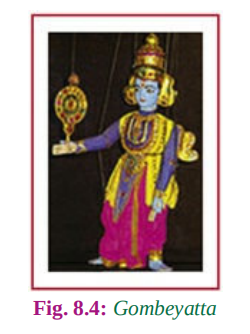
- Bommalattam (Tamil Nadu)
- Blends rod and string puppetry.
- Strings attached to an iron ring worn on the puppeteer’s head.
- Largest & heaviest marionettes in India (up to 4.5 ft, 10 kg).
- Has four distinct performance stages: Vinayak Puja, Komali, Amanattam, Pusenkanattam.
-
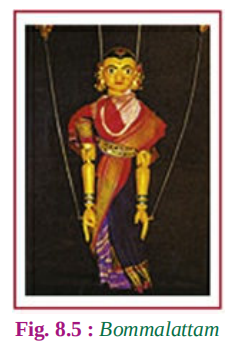
- Shadow Puppets
• A rich tradition in India, still surviving today.
• Key Features:
- Flat figures made of leather.
- Painted identically on both sides.
- Placed against a white screen, with light from behind creating shadows.
- Puppeteers manipulate the figures to create storytelling imagery.
- Notable Shadow Puppetry Forms
- Togalu Gombeyatta (Karnataka)
- Size varies based on social status of the character:
- Larger puppets for kings/religious figures.
- Smaller puppets for common people/servants.
-
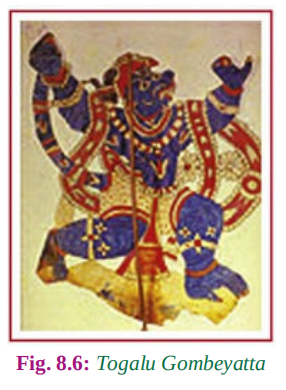
- Ravanchhaya (Odisha)
- Known for its theatrical style and bold, dramatic postures.
- Puppets made of deer skin, no joints, making movement complex.
- Includes non-human figures (trees, animals).
- Artists are highly trained, creating lyrical narrations.
-
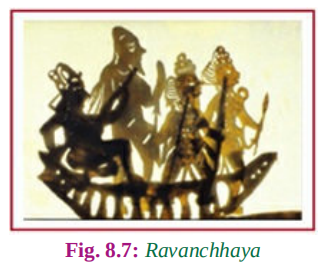
- Tholu Bommalata (Andhra Pradesh)
- Accompanied by classical musical background.
- Themes: Mythology, Epics, and Puranas.
- Larger puppets painted on both sides.
-
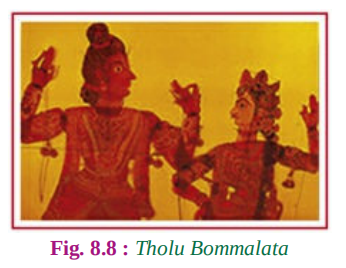
- Glove Puppets (Hand Puppets)
• Also called sleeve, hand, or palm puppets.
• Key Features:
- Small figures with head & arms wearing flowing costumes.
- Made of cloth or wood.
- Puppeteer wears the puppet like a glove, using fingers to control movements.
- Usually performed with dholak (drum) beats.
- Notable Glove Puppetry Forms
- Pavakoothu (Kerala)
- Originated in 18th century AD.
- Influenced by Kathakali dance, seen in its headgear, feathers, and face paint.
- Themes: Narratives from Ramayana & Mahabharata.
-
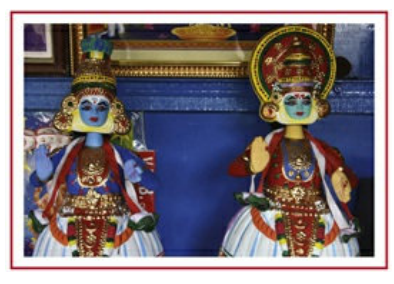
- Rod Puppets
• Larger than glove puppets, controlled by rods from behind a screen.
• Popular in Eastern India.
- Notable Rod Puppetry Forms
- Yampuri (Bihar)
- Made of wood, with no joints.
- Carved from a single piece of wood.
- Painted & dressed in bright colors.
-
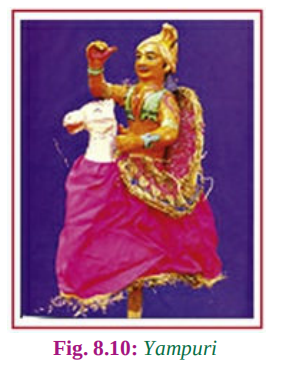
- Putul Nachh (Bengal-Odisha-Assam Region)
- Figures are 3–4 ft tall.
- Costumes resemble characters from Jatra (folk theatre).
- Have three joints: neck and shoulders.
- Controlled by a rod attached to the puppeteer’s waist.
- Puppeteers move behind a curtain, mimicking puppet movements.
- Accompanied by a musical troupe (harmonium, cymbals, tabla).
- INDIAN CIRCUS
- Introduction
- India has a long tradition of street performers and traveling artists.
- However, the circus industry is relatively new, with the first Indian circus emerging around 1880 (as noted by Philip Astley, an English circus master).
- The Great Indian Circus
- Founder: Prof. Vishnupant Chatre, an equestrian and singer.
- Patron: Raja of Kurduvadi (Chatre worked as a stable master).
- First Performance: 1880, followed by extensive tours in India, Ceylon, and Southeast Asia.
- Challenges: Failed to compete with North American circuses due to size and grandeur.
- Legacy: Chatre is recognized as the Father of Indian Circus.
- Major Circus Companies in India
- Three Ring Circus
- Founder: K. Damodaran (1930s).
- Evolution: Grew from a two-pole setup to Asia’s only six-pole three-ring circus.
- Great Royal Circus
- Founded: 1909, originally Madhuskar’s Circus.
- Later owned by: N.R. Walawalkar, renamed Great Royal Circus.
- Tours: Performed in Africa, the Middle East, and Southeast Asia.
- Great Bombay Circus
- Founded: 1920 as Grand Bombay Circus (by Baburao Kadam).
- Merger (1947): K. M. Kunhikannan (Keeleri Kunhikannan’s nephew) merged his circus, renaming it Great Bombay Circus.
- Size: One of India’s largest, with 300 performers and 60 animals.
- Gemini Circus
- Founded: 1951, in Bilimora, Gujarat by M. V. Shankaran (ex-army man, master aerialist).
- First Indian Circus at International Festival (1964):
- Performed in Moscow, Sochi, Yalta (USSR).
- Cultural Impact: Featured in Indian films, including Raj Kapoor’s ‘Mera Naam Joker’.
- Jumbo Circus
- Founded: 1977 in Bihar, later acquired by the Shankaran family.
- Largest modern Indian circus, featuring Russian acrobats & performers.
- Notable Personality: Damoo Dhotre
- Born: Pune, 1902 (poor family background).
- Career:
- Joined Isako’s Russian Circus as a proprietor.
- 1939: Moved to France with Bertram Mills Circus.
- Performed with Ringling Brothers and Barnum & Bailey Circus (USA), known as “The Greatest Show on Earth.”
- Served in the U.S. Army (1943-1946).
- Title: “Wild Animal Man.”
- Legacy:
- Gained U.S. citizenship (1960) but returned to Pune, passing away in 1973 after 40 years in the circus industry.
- Circus: A Marginal Industry
- Decline Since 1990s:
- 1990: 300 active Indian circuses.
- 2017: Only 30 remain.
- Reasons for Decline
- Secrecy & Limited Management:
- Circus companies are family-run, preventing outsiders from entering and modernizing management.
- Child Labor Ban (2011):
- Circus acrobatics require early training.
- Supreme Court banned hiring children under 14, shrinking the talent pool.
- Animal Ban (1997):
- Government of India prohibited the use of wild animals for entertainment, removing a key attraction.
- Perceived as Dangerous:
- Circus is seen as risky, discouraging new generations from joining.
- Competition from Modern Entertainment:
- Young audiences now prefer gymnastics, digital media, and global entertainment options.
- Possible Remedies for Revival
- Safety Regulations:
- Strengthening safety laws would improve public perception of circus as a profession.
- Cultural Integration:
- Circus can preserve dying arts and increase audience engagement.
- Government Support:
- Security and retirement benefits for circus artists (most retire by 40, later working as manual laborers).
- Policy Shift:
- Currently under Department of Sports & Youth Affairs.
- Moving it to Ministry of Culture could help recognize circus as an art form and create better revival strategies.
- MARTIAL ARTS IN INDIA
- Introduction
- India, a land of diverse cultures and ethnicities, has a rich tradition of martial arts that date back to ancient times.
- Initially used for warfare, these art forms are now practiced for demonstration, rituals, physical fitness, and self-defense. The term “martial arts” literally means “arts associated with waging war.”
- Many Indian martial arts have deep connections with dance, yoga, and performing arts.
- Some, such as Kalaripayattu and Silambam, were banned during British rule but resurfaced and gained popularity post-independence.
- Some of the popular martial arts in India are discussed below:
- Kalaripayattu (Kerala, 3rd Century BC)
-
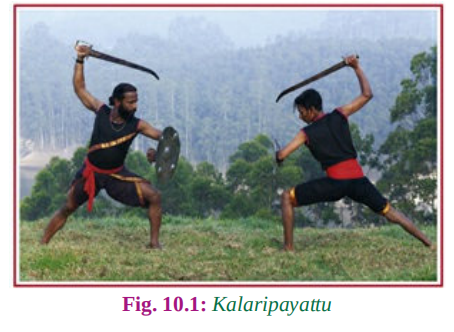
- One of India’s oldest martial arts, Kalaripayattu originated in Kerala and is practiced across Southern India.
- Kalari (Malayalam) refers to the training hall/gymnasium.
- Includes mock duels, physical exercises, and unarmed combat.
- No drumming or songs accompany the training; footwork, kicks, strikes, and weapons are key.
- Women also practice this art.
- Key Techniques in Kalaripayattu
- Uzhichil – Gingli oil massage.
- Otta – Fighting with an S-shaped stick.
- Maipayattu – Body exercises.
- Puliyankam – Sword fight.
- Verumkai – Bare-handed combat.
- Angathari – Use of metal weapons and wooden sticks (Kolthari).
- Silambam (Tamil Nadu, 2nd Century AD)
- A staff-fencing martial art, Silambam was patronized by the Pandyas, Cholas, and Cheras.
- Mentioned in Silappadikaram (2nd Century AD).
- Traded with Rome, Greece, and Egypt for its unique bamboo staves.
- Spread to Malaysia, where it is a popular sport and self-defense technique.
- Key Techniques in Silambam
- Swift footwork.
- Using both hands to wield the staff.
- Thrust, cut, chop, and sweep moves.
- Specific strokes (Snake, Monkey, Hawk) for controlling mobs.
- Defensive techniques for deflecting thrown objects.
- Thang-ta and Sarit Sarak (Manipur, 17th Century)
-
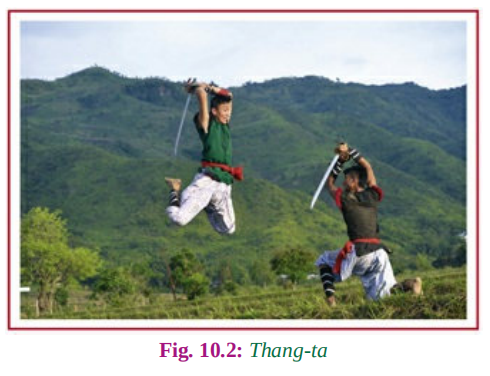
- Developed by the Meitei people of Manipur.
- Thang-ta – Armed combat using swords (“Thang”) and spears (“Ta”).
- Sarit Sarak – Unarmed hand-to-hand combat.
- Used by Manipuri kings to fight the British.
- Banned during British rule, revived post-independence.
- Together, these form “Huyen Langlon.”
- Cheibi Gad-ga (Manipur, Ancient)
- A traditional sword and shield combat.
- Now uses a stick covered in soft leather instead of a sword.
- Shield: About 1 meter in diameter.
- Battlefield: A 7-meter diameter circle with two inner lines (2 meters apart).
- Victory: Based on points scored for skill and force.
- Pari-khanda (Bihar, Rajput Tradition)
- A Rajput martial art using swords and shields.
- Still practiced in Bihar.
- Influence on Chhau dance, using similar steps and techniques.
- Name: “Pari” (shield) + “Khanda” (sword).
- Thoda (Himachal Pradesh, Mahabharata Era)
- A mix of martial arts, sport, and cultural ritual, performed during Baisakhi (April).
- Believed to originate from Mahabharata-era archery.
- Two teams: Pashis and Saathis (descendants of Pandavas & Kauravas).
- Objective: Archers aim for the opponent’s leg (below the knee) to score points.
- Negative points for striking other body parts.
- Gatka (Punjab, Sikh Martial Art)
-
- A weapon-based martial art performed by Sikhs.
- Weapons used: Sticks, Kirpan (dagger), Talwar (sword), and Kataar (punch dagger).
- Footwork and attack/defense vary by weapon type.
- Displayed at fairs and Sikh celebrations.
- Mardani Khel (Maharashtra, Shivaji Era)
- A traditional Maharashtrian armed combat form, developed in Kolhapur.
- Focused on weaponry skills, swift movements, and low stances.
- Uses:
- Indian Patta (sword).
- Vita (corded lance).
- Famous practitioners: Shivaji.
- Lathi (Punjab & Bengal, Ancient)
-
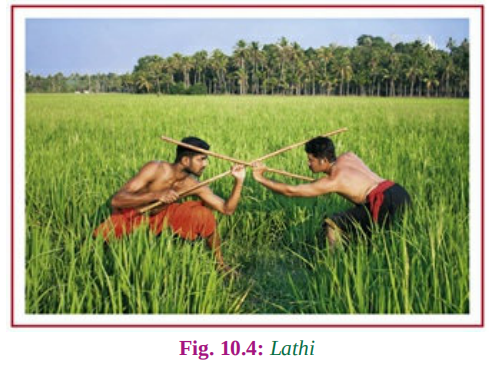
- A stick-fighting martial art using 6-8 ft cane sticks, sometimes metal-tipped.
- One of the world’s oldest martial arts weapons.
- Still used by Indian police for crowd control.
- Popular in village sports.
- Inbuan Wrestling (Mizoram, 1750 AD)
- A strictly rule-based Mizo wrestling style.
- No stepping out of the circle.
- No kicking or knee-bending.
- Victory: Opponent must be lifted off the ground.
- Grip: Wrestlers hold a belt tied around their waist.
- Kuttu Varisai (Tamil Nadu, 1st-2nd Century BC)
- An unarmed martial art known as “Empty-Hand Silambam.”
- Mentioned in Sangam literature.
- Practiced in Tamil Nadu, Sri Lanka, and Malaysia.
- Techniques:
- Grappling, striking, and locking.
- Yoga, gymnastics, and breathing exercises.
- Animal-based movements (Snake, Eagle, Tiger, Elephant, Monkey).
- Considered the unarmed component of Silambam.
- Musti Yuddha (Varanasi, Ancient, Resembling Boxing)
- A bare-handed combat martial art, resembling boxing.
- Focuses on: Punches, kicks, knee and elbow strikes.
- Popular in the 1960s, now rarely seen.
- Four Fighting Styles (Named After Hindu Gods)
- Jambuvanti – Locking and submission techniques.
- Hanumanti – Technical superiority in combat.
- Bhimaseni – Power and sheer strength.
- Jarasandhi – Breaking limbs and joints.
- Some other prominent martial arts of India
| Name of the Martial Art |
Place of Origin |
Description |
| Paika Akhada |
Odisha |
A combination of dance and combat. Earlier used by warriors, now practiced as a performing art. |
| Sqay |
Kashmir |
Use of swords and shields. |
| Kathi Samu |
Andhra Pradesh |
Ancient skill mastered by royal armies of the state. |
| Bandesh |
India |
Ancient unarmed art that uses various lock holds against an armed opponent without killing them. |
| Malla Yuddha |
South India |
Traditional combat wrestling related to other Southeast Asian wrestling styles, including Naban. Famous practitioners included Siddhartha Gautama, Krishna Deva Raya, etc. |
| Malla Khamb |
12th century, Maharashtra |
Use of pole, rope, and requires great concentration. |
| Insu Knawr |
Mizoram |
Players use a round wooden rod to play this game within a circle. |
| Kirip, Saldu |
Nicobar |
Also known as Nicobarese wrestling. |
| Varma Ati |
Tamil Nadu |
Attacks are aimed at the body's vital spots. |
- UNESCO’S LIST OF INTANGIBLE CULTURAL HERITAGE
- Introduction
- Cultural heritage is not limited to monuments and collections of objects.
- It also includes living traditions and expressions passed down from ancestors to future generations. These include:
- Oral traditions
- Performing arts
- Social practices, rituals, and festive events
- Knowledge and practices related to nature and the universe
- Traditional craftsmanship and associated skills
- To safeguard and promote awareness of such heritage, UNESCO established its Lists of Intangible Cultural Heritage.
- This initiative aims to protect important intangible cultural heritage worldwide and highlight its significance.
- What is Intangible Cultural Heritage?
- Intangible Cultural Heritage refers to:
- Practices, representations, and expressions
- Knowledge and skills
- Instruments, objects, and artifacts
- These are recognized by communities, groups, or individuals as part of their cultural heritage.
- UNESCO’s Intangible Cultural Heritage Lists
- UNESCO has compiled two key lists to categorize and safeguard intangible heritage:
- Representative List of the Intangible Cultural Heritage of Humanity
- Showcases cultural practices and expressions that illustrate heritage diversity.
- Aims to raise awareness about their importance.
- List of Intangible Cultural Heritage in Need of Urgent Safeguarding
- Includes cultural elements that are vulnerable and at risk of disappearing.
- Highlights traditions that require immediate preservation efforts.
- Note: The Representative List is particularly important for exam preparation.
- Representative List of the Intangible Cultural Heritage of Humanity (India)
- India has 13 items included in UNESCO’s Representative List of the Intangible Cultural Heritage of Humanity:
- Koodiyattam (Sanskrit Theatre) – 2008
-
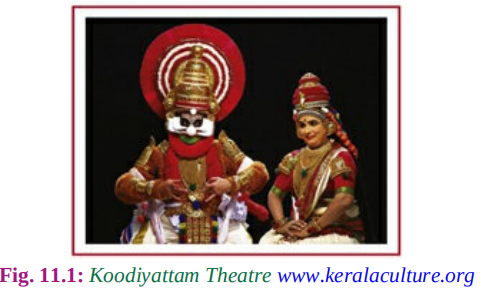
- A classical dance-drama from Kerala performed by the Chakyars (male roles) and Ambalavasi Nambiar women (female roles).
- Takes place inside temples and lasts 6 to 20 days.
- Based on Hindu mythology, with Sanskrit dialogues and a Malayalam narration by the “Vidushaka” character.
- Major musical instrument: Mizhavu.
- Ramlila – 2008
- A folk theatre tradition of Uttar Pradesh, enacting the Ramayana through songs, dances, and dialogues.
- Performed during Sharad Navaratras, leading up to Dussehra.
- Traditionally performed by males, including the role of Sita.
- Unique variation: In Bakshi Ka Talab (Lucknow), Muslim youths have played key roles since 1972.
- Adapted into a radio play, Us Gaon Ki Ramlila, to promote communal harmony.
- The Tradition of Vedic Chanting – 2008
- The oral tradition of the Vedas, featuring ancient recitation techniques.
- Considered one of the oldest unbroken oral traditions from the early Iron Age.
- Recognized by UNESCO as a Masterpiece of the Oral and Intangible Heritage of Humanity.
- Ramman – 2009
- A religious festival and ritual theatre of the Garhwal region in Uttarakhand.
- Celebrated by Hindu villagers in Saloor-Dungra, offering prayers to Bhumiyal Devta.
- Unique to this village, featuring Jagar, a musical narration of local legends.
- Mudiyettu – 2010
-
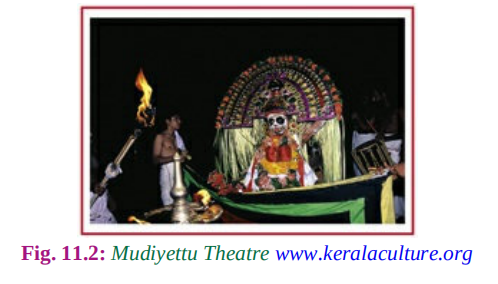
- A ritual theatre dance from Kerala, depicting the mythological battle between Goddess Kali and the demon Darika.
- Performed in Bhagavati Kavus (village temples) after the harvest season (February–May).
- Features elaborate makeup, costumes, and supernatural-themed facial paintings.
- Floor designs (Kalam) of Goddess Kali are drawn and worshipped before the performance.
- Kalbelia – 2010
-
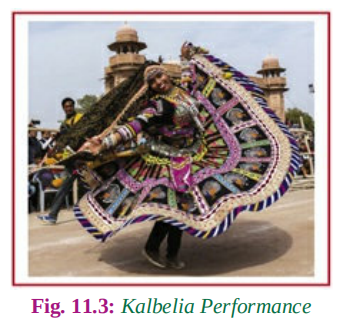
- A folk dance of the Kalbelia tribe in Rajasthan, with serpent-like movements.
- Involves spontaneous composition of lyrics and improvisation.
- Musical instruments used: Poongi, Chang, Cymbals.
- Chhau – 2010
-
- A tribal martial art dance from Odisha, Jharkhand, and West Bengal.
- Three subgenres:
- Purulia Chhau (West Bengal)
- Seraikella Chhau (Jharkhand)
- Mayurbhanj Chhau (Odisha)
- Performed at night during spring festivals using mock combat techniques.
- Themes based on Hindu mythology, with masks worn except in Mayurbhanj Chhau.
- Buddhist Chanting of Ladakh – 2012
- Sacred Buddhist recitations from Ladakh, Jammu & Kashmir.
- Associated with Mahayana and Vajrayana traditions.
- Performed indoors and in monastery courtyards.
- Sankirtana – 2013
- A ritual art form from Manipur, involving singing, drumming, and dancing.
- Originated in 15th century AD, performed mainly in Vaishnavite temples.
- Narrates the life and deeds of Lord Krishna through music and dance.
- Features two drummers and 10 singer-dancers in a courtyard setting.
- Main instruments used: Cymbals, Drums.
- Traditional Brass and Copper Craft of Utensil Making (Thathera Community, Punjab) – 2014
-
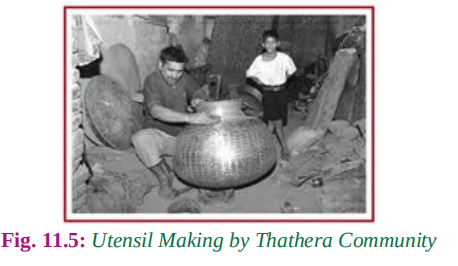
- A metalworking craft tradition passed down through generations.
- Involves shaping brass, copper, and Kansa (an alloy of zinc, tin, and copper) into utensils.
- Used for both functional and ritualistic purposes, recommended in Ayurvedic texts.
- Patronized by Maharaja Ranjit Singh in the 19th century.
- Crafted utensils are commonly used in households and Sikh Gurudwara langars.
- Nowrouz – 2016
- Marks the New Year for Parsis and Spring Festival for the Kashmiri Community.
- Associated with Zoroastrian environmental respect.
- Traditional Nowrouz table includes:
- A copy of the Gathas (sacred text)
- Lit lamp or candle
- Sprouted wheat/beans in a ceramic plate
- Silver coin in a bowl
- Flowers, painted eggs, sweets, and a goldfish bowl
- Symbolizes prosperity, wealth, color, and happiness.
- Yoga – 2016
- A practice involving poses, meditation, controlled breathing, word chanting, and self-discipline techniques.
- Traditionally passed down through the Guru-Shishya parampara.
- Kumbh Mela – 2017
- A mass Hindu pilgrimage where devotees bathe in sacred rivers.
- Held at four locations:
- Prayagraj
- Haridwar
- Nashik (Simhastha Kumbh Mela)
- Ujjain (Simhastha Kumbh Mela)
- Occurrence:
- Every 12 years at each location.
- Ardha Kumbh Mela (half-Kumbh) held every 6 years at Prayagraj and Haridwar.
- Prayagraj Kumbh Mela occurs 3 years after Haridwar and 3 years before Nashik/Ujjain.
- Nashik and Ujjain Kumbh Melas are often held in the same year or one year apart.
- SECTION C - CULTURE OF INDIA
- Languages in India
- Introduction
- Throughout history, writings have reflected culture, lifestyle, society, and polity.
- Each culture evolved its own language, creating a rich literary base.
- This literary base provides insight into the evolution of languages and cultures over centuries.
- Key Concepts
- Language: A system of communication through speech, using sounds with shared meanings.
- Language Family: A group of related languages that originated from a common ancestor before recorded history.
- Dialect: A regional variant of a language; multiple dialects can emerge from one language.
- Languages in India
- India has diverse language families, with most belonging to the Indo-Aryan Group.
- The Indo-Aryan Group is a branch of the Indo-European Family.
- Some languages in India are indigenous and do not belong to the Indo-European Family.
- Classification of Indian Languages
-
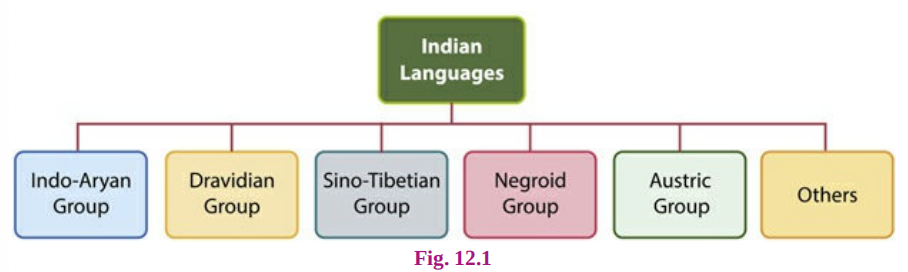
- Indo-Aryan Group of Languages
- A branch of the Indo-European Family, introduced to India with the Aryans.
- It is India’s largest language group, spoken by 74% of the population.
- Divided into three subgroups based on their historical development:
- Old Indo-Aryan Group (1500 BC – 300 BC)
- Sanskrit emerged from this group, forming the basis of Vedic texts (Vedas, Upanishads, Puranas, Dharmasutras).
- Sanskrit is the mother of many Indian languages and one of the 22 scheduled languages in the Constitution.
- Classical Sanskrit as a Vehicle of Indian Culture
- Panini (400 BC) developed Sanskrit grammar in Ashtadhyayi.
- Buddhist literature, such as Mahavastu (Hinayana) and Lalitavistara (Mahayana), were written in Sanskrit.
- Sanskrit transcended regional barriers, influencing all parts of India.
- The refined form of Sanskrit appeared between 300–200 BC, with the first Sanskrit inscriptions by Rudradaman (Junagarh, Gujarat).
- The Gupta period saw extensive Sanskrit literature, including Mahakavyas (epics), Khandakavyas (semi-epics), and dramas.
- Plays used Sanskrit for upper varnas and Prakrit for women and Shudras.
- Middle Indo-Aryan Group (600 BC – 1000 AD)
- Characterized by the development of Prakrit, a more natural and unstructured language.
- Prakrit languages were spoken by common people, while Sanskrit was used by elites.
- Jain ‘Agamas’ were written in Prakrit.
- Transition between languages was gradual, without strict chronological shifts.
- Major Prakrit Languages
- Pali (5th–1st century BC)
- Spoken in Magadha, related to Sanskrit.
- Used in Buddhist Tripitaka, written in Brahmi script.
- The lingua franca of Theravada Buddhism.
- Magadhi Prakrit (Ardha-Magadhi)
- Most important Prakrit language, spoken by Buddha and Mahavira.
- Mauryan dynasty’s court language.
- Ashoka’s Rock Edicts and Jain texts were written in Ardha-Magadhi.
- Evolved into Bengali, Assamese, Odia, Maithili, Bhojpuri, etc.
- Shauraseni
- Used in medieval dramas, also called Dramatic Prakrit.
- Predecessor of Northern Indian languages.
- Jain monks wrote extensively in Shauraseni (Shatkhandgama).
- Maharashtri Prakrit
- Spoken until 9th century AD, precursor of Marathi and Konkani.
- Official language of Satavahana Dynasty.
- Used in dramas like Gaha Kosha and Gaudavaho.
- Elu
- Ancient form of modern Sinhala (Sri Lanka), similar to Pali.
- Paishachi (Bhuta-Bhasa)
- Considered a dead language.
- Brihatkatha by Gunadhya was written in Paishachi.
- Apabhramsa (6th–7th Century AD Onwards)
-
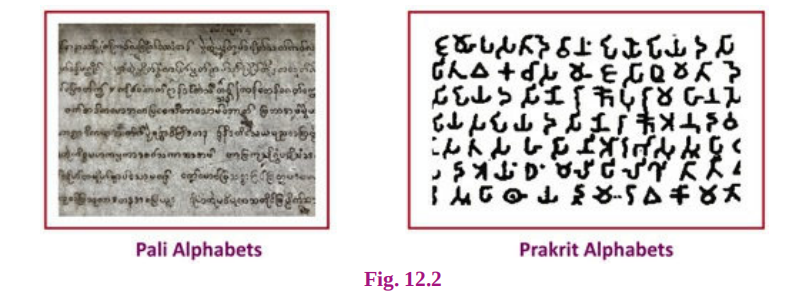
- Represents the transition from Middle to Modern Indo-Aryan languages.
- Bhamaha (6th–7th century AD) classified Sanskrit, Prakrit, and Apabhramsa separately.
- Dandin called Apabhramsa the dialect of the common folk.
- Jain monks contributed significantly to its literature.
- Major texts: Mahapurana (Pushpadanta), Bhavisayattakaha (Dhanapala).
- Modern Indo-Aryan Group (Post-1000 AD)
- Languages include Hindi, Assamese, Bengali, Gujarati, Marathi, Punjabi, Rajasthani, Sindhi, Odia, Urdu, etc.
- Predominantly spoken in northern, western, and eastern India.
- Dravidian Group of Languages
- Spoken in southern India, covering 25% of the population.
- Proto-Dravidian evolved into 21 Dravidian languages.
- Divided into three groups:
- Northern Group
- Includes Brahui (Baluchistan), Malto (Bengal, Odisha), Kurukh (Bengal, Odisha, Bihar, Madhya Pradesh).
- Central Group
- Includes Gondi, Khond, Kui, Manda, Parji, Gadaba, Kolami, Pengo, Naiki, Kuvi, Telugu.
- Only Telugu developed into a civilized language (Andhra Pradesh, Telangana).
- Southern Group
- Includes Kannada, Tamil, Malayalam, Tulu, Kodagu, Toda, Kota.
- Tamil is the oldest Dravidian language.
- The four major Dravidian languages are:
- Telugu (largest)
- Tamil (oldest, purest)
- Kannada
- Malayalam (youngest, smallest)
- Difference between Indo-Aryan Group and the Dravidian Group of Languages:
- The root words in the two language families are different.
- There is a different grammatical structure in the two groups.
- Grammatical structure of Dravidian Family is agglutinative, i.e. the combinations in which root words are united results in little or no change of form or loss of words.
- The grammatical structure of Indo-Aryan Group is inflected, i.e. a word’s ending or its spelling changes according to its grammatical function in a sentence.
- Sino-Tibetan Group
- Belongs to the Mongoloid family, spoken in Himalayan regions, North Bihar, North Bengal, Assam, and Northeast India.
- Considered older than Indo-Aryan languages, referred to as Kiratas in Sanskrit texts.
- Spoken by 0.6% of the Indian population.
- Tibeto-Burman (Four Subgroups)
- Tibetan: Sikkimese, Bhutia, Balti, Sherpa, Lahuli, Ladakhi
- Himalayan: Kinnauri, Limbu
- North Assam: Abor, Miri, Aka, Dafla, Mishmi
- Kuki-Chin-Naga: Kuki, Garo, Bodo, Mikir, Naga, Meitei (spoken in Manipur)
- Siamese-Chinese
- Ahom belonged to this group but is now extinct in India.
- Austric (Austro-Asiatic) Group
- Includes Munda and Mon-Khmer languages, spoken in Central, Eastern, and Northeastern India.
- Existed before Aryan migration, referred to as Nisadas in Sanskrit literature.
- Santhali (Jharkhand, Bihar, Bengal) is the most prominent language.
- Except for Santhali and Khasi, most Austro-Asiatic languages are endangered.
- Other Languages
- Includes tribal Dravidian languages like Gondi, Oraon, Praji, which do not fit into the major groups.
- Official languages of India
- Constitutional Provisions
- Article 343(1) of the Indian Constitution states that “The official language of the Union Government shall be Hindi in Devanagari Script.”
- Unless Parliament decided otherwise, English was to cease as an official language 15 years after the Constitution came into effect (i.e., by 26 January 1965).
- This implied that over a period of 15 years, Hindi would replace English as the official language, though Parliament had the power to allow English to continue as an official language.
- Protests and the Official Languages Act, 1963
- The decision to replace English with Hindi led to nationwide protests, especially by non-Hindi-speaking communities.
- In response, the Official Languages Act, 1963 was enacted, which:
- Declared Hindi in Devanagari script as the official language of the Union.
- Gave English the status of a subsidiary official language.
- The Constitution also allows each Indian state to choose its own official language for state-level communication.
- Languages in the Eighth Schedule
- The Eighth Schedule of the Constitution lists languages that may be used by states for official purposes.
- Initially, 14 languages were included:
- Assamese, Hindi, Malayalam, Punjabi, Telugu, Bengali, Kannada, Marathi, Sanskrit, Urdu, Gujarati, Kashmiri, Odia, Tamil.
- Later additions:
- Sindhi (15th language) – 21st Amendment Act, 1967.
- Konkani, Manipuri, Nepali – 71st Amendment Act, 1992.
- Bodo, Maithili, Dogri, Santhali – 92nd Amendment Act, 2003.
- Total languages in the Eighth Schedule today: 22.
- Additional Information on National and Official Languages
- India does not have a national language. Hindi is not the national language, as neither the Constitution nor any Act defines the term ‘national language’.
- States can choose their own official language for conducting official functions.
- The language adopted by a state does not necessarily have to be from the Eighth Schedule.
- Examples of states with non-scheduled official languages:
- Tripura – Kokborok (Sino-Tibetan family).
- Puducherry – French.
- Mizoram – Mizo.
- English is not in the list of 22 scheduled languages under the Eighth Schedule.
- Arunachal Pradesh and Nagaland are the only two states where English is the sole official language.
- Status of classical language in India
- Introduction
- In 2004, the Government of India introduced the concept of Classical Language status for languages that meet specific criteria.
- Criteria for Classical Language Status
- A language must fulfill the following conditions to be recognized as a Classical Language:
- High antiquity of early texts or recorded history spanning over 1,500–2,000 years.
- A significant body of ancient literature or texts considered a valuable heritage by generations of speakers.
- A unique literary tradition that is not borrowed from another speech community.
- The classical language and literature must be distinct from modern forms, and there may be a discontinuity between the classical language and its later developments or offshoots.
- Languages Recognized as Classical
- The following languages have been accorded Classical Language status:
- Tamil (2004)
- Sanskrit (2005)
- Kannada (2008)
- Telugu (2008)
- Malayalam (2013)
- Odia (2014)
- Criticism:
- The government has been criticized for not including Pali as a Classical Language, despite arguments that it meets all the specified criteria.
- Benefits of Classical Language Status
- Once a language is declared Classical, the Government of India provides the following benefits:
- Two major international awards annually for scholars of eminence in Classical Indian Languages.
- Establishment of a Centre of Excellence for studies in that language.
- The University Grants Commission (UGC) is requested to create Professional Chairs for Classical Languages in Central Universities to promote scholarly research.
- National Translation Mission (NTM)
- The National Translation Mission (NTM) is a Government of India initiative aimed at making higher education knowledge texts accessible in Indian languages through translation.
- Objectives of NTM
- Disseminate knowledge in all 22 languages listed in the Eighth Schedule of the Constitution through translation.
- Train and orient translators to enhance the quality of translated works.
- Encourage publishers to publish translations.
- Maintain databases of published translations from, into, and between Indian languages.
- Act as a clearing house of information on translation to help establish translation as an industry in India.
- Facilitate the modernization of languages by developing new terminologies and discourse styles.
- Currently, NTM focuses on translating higher education materials into 22 Indian languages.
- Lingua Franca
- A lingua franca (also known as a bridge language, common language, trade language, or vehicular language) is a language systematically used for communication between people who do not share a native language.
- Characteristics and Importance
- Lingua franca languages have emerged throughout history for trade, diplomacy, religion, culture, and scientific exchange.
- Often, they are distinct from the native languages of the speakers using them.
- English is the most widely recognized modern example of a global lingua franca.
- Linguistic Diversity Index (LDI)
- The Linguistic Diversity Index (LDI) measures the probability that two randomly selected people from a given population have different mother tongues.
- It ranges from 0 (if everyone has the same mother tongue) to 1 (if every individual has a different mother tongue).
- The Index of Linguistic Diversity (ILD) tracks changes in linguistic diversity over time.
- A global ILD of 0.8 indicates a 20% loss of linguistic diversity since 1970.
- In some regions, ILD ratios above 1 have been recorded.
- Ancient scripts of India
- Introduction
- A script, also known as a writing system or orthography, is a standardized method of representing spoken language through specific marks on a medium (e.g., paper, rocks, birchbark).
- Ancient scripts
- Indus Script
- The Indus Script consists of symbols produced by the Indus Valley Civilization.
- Most inscriptions are very short, and it remains uncertain whether these symbols form a complete script representing a language.
- Brahmi Script
-
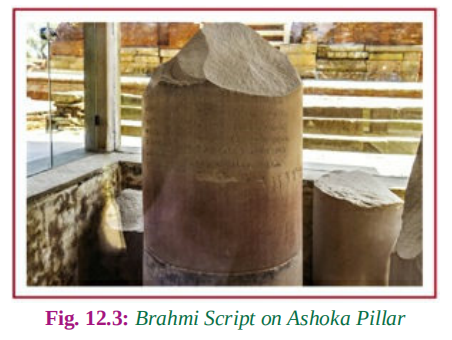
- The oldest known writing system used in the Indian subcontinent and Central Asia, from the final centuries BC to the early centuries AD.
- Thought to have been derived from the Semitic Script or the Indus Script.
- All surviving Indic scripts in South and Southeast Asia trace their origin to Brahmi.
- Famous Brahmi inscriptions include the rock-cut edicts of Emperor Ashoka (250–232 BC).
- Deciphered in 1837 by James Prinsep.
- Written left to right and classified as an abugida (each unit is based on a consonant with secondary vowel notation).
- Descendant Scripts of Brahmi:
- Gupta Script
- Originated during the Gupta Empire for writing Sanskrit.
- Evolved into Nagari, Sarada, and Siddham Scripts, which later led to major modern Indian scripts like Devanagari, Gurmukhi, Assamese, Bengali, and Tibetan.
- Vatteluttu Script
-
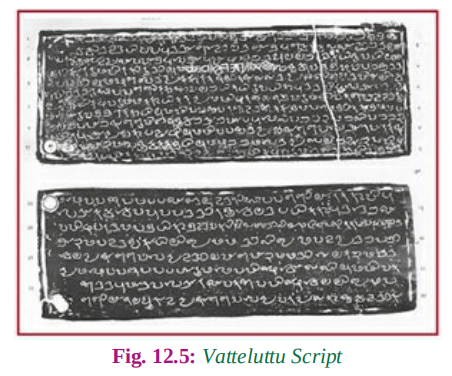
- Developed from Tamil-Brahmi.
- One of the three major Tamil writing systems, used for Tamil Script.
- Kadamba Script
-
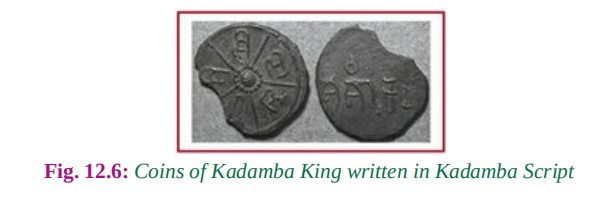
- The first script dedicated to writing Kannada.
- Developed during the Kadamba Dynasty (4th–6th century AD).
- Evolved into the Kannada-Telugu Script.
- Grantha Script
-
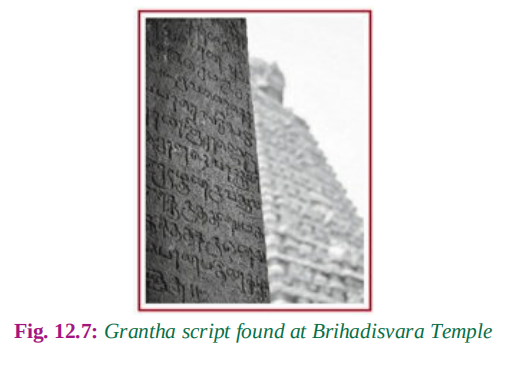
- Used between the 6th and 20th centuries AD in Tamil Nadu and Kerala.
- Used to write Sanskrit and the classical language Manipravalam.
- Malayalam Script evolved from Grantha, along with Tigalari and Sinhala alphabets.
- Sarada Script
-
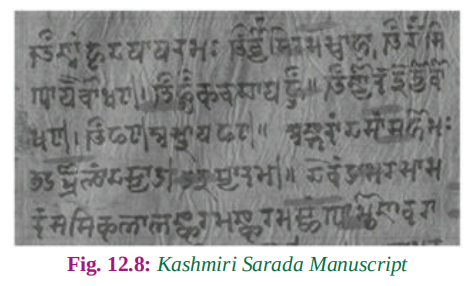
- Originated around the 8th century AD.
- Used for writing Sanskrit and Kashmiri.
- Now rarely used except for ceremonial purposes by the Kashmiri Pandit community.
- Gurmukhi Script
- Derived from Sarada Script and standardized by Guru Angad in the 16th century AD.
- The Guru Granth Sahib (Sikh holy text) is written in Gurmukhi.
- Used mainly for Punjabi language.
- Devanagari Script
- A widely used abugida writing system of India and Nepal.
- Written left to right.
- Used for over 120 languages, including Hindi, Marathi, Nepali, Pali, Konkani, Bodo, Sindhi, Maithili, and Sanskrit.
- One of the most widely used scripts in the world.
- Modi Script
-
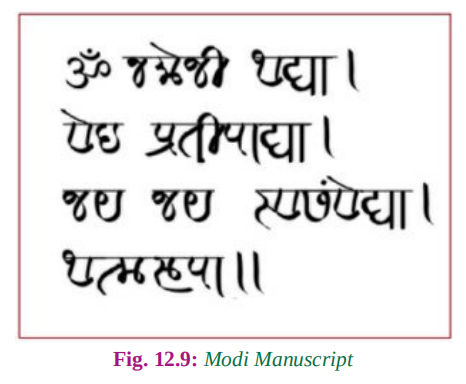
- Used for writing Marathi until the 20th century, before being replaced by Devanagari.
- Primarily used for official records but also adapted for Urdu, Kannada, Gujarati, Hindi, and Tamil.
- Kharosthi Script
-
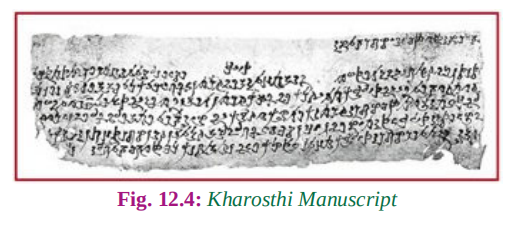
- Used between the 3rd century BC – 3rd century AD in Gandhara (present-day Afghanistan and Pakistan).
- Used for Gandhari Prakrit and Sanskrit.
- A sister script of Brahmi, deciphered by James Prinsep.
- Also an abugida, but written right to left (some inscriptions show left-to-right variations).
- Contains numerals similar to Roman numerals (e.g., I, X, etc.).
- Urdu Script
- Derived from the Persian alphabet, which in turn originates from Arabic script.
- Developed around the 13th century AD.
- Written right to left.
- The extended form of the Urdu script is called Shahmukhi, used for Punjabi and Saraiki in Pakistan.
- Impact of Ancient Indian Scripts
- Indian scripts evolved over time, influenced by Buddhism, trade, and foreign invasions.
- The spread of Buddhism led to the adoption of Indian scripts in Sri Lanka, Tibet, and Southeast Asia.
- The arrival of Islam introduced Perso-Arabic scripts (e.g., Urdu).
- Today, globalization and the dominance of English as a lingua franca are influencing the survival and evolution of Indian scripts.
- RELIGION IN INDIA
- Introduction
- The Indian subcontinent has a diverse range of religions that shape the morality and ethics of its followers.
- Multiple religious communities coexist, contributing to India’s religious diversity.
- Swami Vivekananda (1893, World Parliament of Religions, Chicago):
“I am proud to belong to a religion which has taught the world tolerance and universal acceptance. We believe not only in universal toleration, but we accept all religions as true.”
- Spirituality in each religion is reflected in sacred texts and places of worship.
- Religion is a powerful tool that can be used to strengthen or divide communal ties.
- India has historically experienced more religious harmony than communal tensions.
- Major religions practised in India are:
- Hinduism
- Hinduism is one of the largest religions in India, encompassing various sects and traditions.
- The term “Hindu” originates from the geographical reference to people living around the Indus River.
- Its foundational principles stem from pre-Vedic and Vedic philosophies.
- According to Hindu traditions, Kama (pleasure) and Artha (prosperity) are important goals, but ultimately, one must strive for Dharma (righteousness).
- The Upanishads describe four life stages:
- Brahmachari (celibate student) → Grihasta (householder) → Vanaprastha (hermit) → Sanyasi (ascetic).
- The final goal is Moksha (salvation).
- Major Sects of Hinduism
- Vaishnavism
- Followers worship Vishnu as the Supreme Lord.
- Origins trace back to the 1st millennium BCE, evolving as Bhagavatism or Krishnaism.
- Several Sampradayas (sub-schools) exist within Vaishnavism:
- Varkari Sampradaya
- Devotees of Vithoba (a form of Vishnu).
- Centered around Pandharpur Temple (Maharashtra).
- Notable saints: Jnaneshwar (1275-1296), Namdev (1270-1350), Eknath (1533-1599), Tukaram (1598-1650).
- Rituals include Vari pilgrimage, Ringan, and Dhava.
- Ramanandi Sampradaya
- Founded by Ramananda.
- Worship Rama (incarnation of Vishnu).
- Largest monastic group in Hinduism.
- Two sub-groups: Tyagi and Naga.
- Brahma Sampradaya
- Founded by Madhvacharya.
- Associated with Gaudiya Vaishnavism (Chaitanya Mahaprabhu).
- ISKCON (International Society for Krishna Consciousness) belongs to this tradition.
- Pushti Marg Sampradaya
- Founded by Vallabhacharya (1500 AD).
- Focuses on pure devotion to Krishna.
- Nimbarka Sampradaya
- Also called Hamsa Sampradaya or Kumara Sampradaya.
- Worship Radha-Krishna.
- Shaivism
- Worships Shiva as the Supreme Lord.
- Traces its origins to the 2nd millennium BCE as Rudra in Vedic texts.
- Major Shaivite traditions:
- Nathpanthi
- Founded by Gorakhnath and Matsyendranath.
- Use Hatha Yoga for spiritual awakening.
- Ascetics wander and cover themselves with ash.
- Lingayatism (Veerashaivism)
- Founded by Basava (12th century AD).
- Rejects Vedas and caste system.
- Worship Shiva as Linga.
- Dashanami Sanyasis
- Followers of Adi Shankaracharya.
- Divided into ten monastic orders.
- Aghoris
- Worship Shiva as Bhairava.
- Perform extreme rituals in cremation grounds.
- Aim to transcend worldly attachments.
- Siddhars
- Tamil mystics practicing alchemy, medicine, and meditation.
- Developed the Varmam martial art.
- Believed to possess eight supernatural powers.
- Shaktism
- Worships the Goddess (Devi) as Supreme.
- Associated with Tantric practices.
- Smartism
- Based on Puranic teachings.
- Worships five deities: Shiva, Shakti, Vishnu, Ganesh, and Surya.
- Recognizes both Saguna Brahman (with attributes) and Nirguna Brahman (without attributes).
- Other Hindu Traditions
- Shrautism
- Practiced by Nambudiri Brahmins of Kerala.
- Follows Purva-Mimamsa philosophy.
- Focuses on Vedic sacrifices (Yajna).
- Bhakti Movement (Medieval Period)
- Translated Sanskrit texts into vernacular languages.
- North India: Saints spread Bhakti (devotion).
- South India:
- Vaishnavite Alvars → Devotees of Vishnu.
- Shaivite Nayanars → Devotees of Shiva.
- Reform Movements (Modern Period)
- Addressed social evils (caste system, Sati, child marriage, etc.).
- Inspired by Western ideals of equality.
- Major movements: Brahmo Samaj, Arya Samaj.
- Shramana Schools
- Parallel to Vedic religion, emphasizing asceticism.
- Belong to Nastika (Heterodox) philosophy.
- Major Shramana Traditions:
- Jainism (discussed in Chapter 14)
- Buddhism (discussed in Chapter 14)
- Ajivikas
- Ajnanas
- Charvakas (discussed in Chapter 16)
- Ajivikas
- Founded by Makkhali Gosala (5th century BCE).
- Believed in Niyati (Fate) → No free will, everything is preordained.
- Atomistic philosophy: Everything is composed of atoms.
- Rejection of Karma doctrine (unlike Jainism & Buddhism).
- Atheistic but believed in materialistic souls.
- Bindusara (4th century BCE) was a follower.
- Savathi (Uttar Pradesh) was the center of Ajivikas.
- Ashoka’s edicts mention Ajivikas, but the sect is now extinct.
- Ajnanas
- Advocated radical skepticism.
- Believed that knowledge of nature is impossible and useless for salvation.
- Opposed Jainism and Buddhism.
- Considered ignorance as the best approach.
- Islam
- Origins
- Founded in the 7th century AD in the Arabian Peninsula.
- The word “Islam” means submission to God.
- Prophet Muhammad is the last messenger of God.
- Islam shares Abraham as a common ancestor with Christianity and Judaism.
- Life of Prophet Muhammad
- Received revelations from an angel on a mountain.
- Initially faced opposition in Mecca.
- Migrated to Medina (Hijrah) due to persecution.
- Returned to Mecca after gaining followers.
- This journey back to Mecca became the basis for Hajj (pilgrimage).
- Sacred Texts
- Quran – Holy book, revealed to Prophet Muhammad, compiled before his death.
- Hadith – Collection of sayings and teachings of the Prophet.
- Sunnah – Actions and practices of the Prophet, forming the basis of Sharia (Islamic law).
- Five Pillars of Islam
1. Shahada (Faith) – Belief in one God (Allah) and Muhammad as His messenger.
2. Salah (Prayer) – Five daily prayers, with Friday congregational prayer (Juma Namaz).
3. Zakat (Charity) – Giving a portion of one’s earnings to the needy.
4. Sawm (Fasting) – Fasting from sunrise to sunset during Ramzan (Ramadan), ending with Eid.
5. Hajj (Pilgrimage) – Mandatory pilgrimage to Mecca, once in a lifetime.
- Major Schools of Islamic Law in India
- Hanafi
- Shafei
- Maliki
- Hambali
- Major Sects of Islam
- Sunni Islam
- Majority sect, follows Sunnah (practices) of the Prophet.
- Believes Prophet’s successor should be chosen from his closest followers (Abu Bakr).
- Shia Islam
- Believes leadership should remain within Prophet Muhammad’s bloodline.
- Supports Ali (Prophet’s son-in-law) as the rightful successor.
- Prominent during Muharram, commemorating the martyrdom of Imam Hussain.
- Islamic Movements in India
- Various movements influenced the evolution of Islam in the Indian subcontinent.
- These movements shaped religious and cultural practices over time.
- Some of the major movements are:
| Movement |
Founder |
Reasons |
| Faraizi Movement (early 19th century) |
Haji Shariatullah (Prominent leaders: Naya Miyan and Dudu Miyan) |
He called for the revival of pure Islam and urged Muslims to perform the obligatory duties of Islam (Faraiz). It aimed to eliminate un-Islamic practices and protect the rights of tenants. |
| Ahmadiyya Movement (late 19th century) |
Mirza Ghulam Ahmad (called himself a Mahdi or guide) |
It started in Punjab to create a community that would uphold true Islamic values. |
| Tariqah-i-Muhammadiya Movement (19th century) |
Sayyid Ahmad Barelwi |
It was essentially an armed movement against the British to establish a proper Islamic state. |
| Aligarh Movement (late 19th century) |
Sir Syed Ahmad Khan |
He promoted modern education for Muslims to enable them to work with the British, which in turn would lead to their progress. |
- Christianity
- Origins & Spread
- Founded by Jesus Christ in Jerusalem.
- After his crucifixion and resurrection (on the third day), his followers increased.
- Became the state religion of the Roman Empire and spread rapidly.
- Vatican City became the center of Roman Catholic Christianity.
- Reform movements led to the rise of sects like Protestants, Methodists, etc.
- Core Beliefs
- Belief in one God, the creator of the Universe.
- Jesus Christ was a messenger and savior of humanity.
- Holy Trinity:
- God the Father (Creator)
- God the Son (Jesus Christ)
- God the Holy Spirit (God’s presence on Earth)
- Sacred Text
- Bible – Holy book of Christians, divided into:
- Old Testament – Derived from Jewish scriptures.
- New Testament – Defined by the Roman Catholic Church, headed by the Pope.
- Religious Practices & Celebrations
- Christmas – Celebrates the birth of Jesus Christ.
- Church – Holy place of worship.
- Baptism – Ritual marking entry into the Church.
- Eucharist – Breaking bread and wine to symbolize unity with God.
- Christianity in India
- Medieval Period (1st Century AD)
- Some historians believe St. Thomas, an apostle of Jesus, reached India in 52 AD.
- Preached in Kerala and Tamil Nadu, leading to conversions.
- Believed to be buried in Mylapore, Chennai (Cathedral of St. Thomas).
- Portuguese missionaries arrived with their explorers.
- Emperor Akbar and Jahangir allowed Christian missionaries to preach.
- 18th Century Missionary Work
- British-era missionaries focused on spreading Christianity.
- Promoted modern (English) education and provided medical aid.
- Organizations like YMCA (Young Men’s Christian Association) and YWCA continue missionary work.
- Focus on tribal communities, offering education and healthcare.
- Christian Denominations in India
- Syrian Christians of Kerala.
- Protestant groups.
- Several smaller Christian communities actively practicing their faith.
- Sikhism
- Origins & Teachings of Guru Nanak (1469–1539)
- Criticized the religious and social order of his time.
- Introduced:
- Congregational worship (Sangat) in Dharamsalas.
- Community dining (Langar) to break caste barriers.
- Rejected:
- Idol worship and priestly mediation.
- Renunciation as a path to salvation.
- Emphasized:
- Salvation through right belief, right worship, and right conduct.
- Honest labor as a spiritual duty (“They who eat the fruit of their labor, Nanak, recognize the right way.”).
- Sikh Worship & Practices
- Worship places: Gurudwara / Dharamsala.
- Kirtan: Singing hymns in praise of God.
- Balance between spiritual life and household duties.
- No asceticism—an ideal Sikh should live a family life.
- Rise of Sikh Militancy
- Early Mughal-Sikh Relations
- Initially cordial but worsened after Guru Arjan Dev’s execution (Jahangir’s orders).
- Marked as the “First Martyrdom of the Sikhs” (Khushwant Singh).
- Guru Hargobind (1595–1644)
- Organized the first Sikh army at Ramdaspur.
- Introduced the Two Swords Doctrine:
- Piri (Spiritual authority).
- Miri (Temporal power).
- Established:
- Akal Takht – Seat of Sikh temporal authority.
- Lohagarh Fort – For Sikh defense.
- Later Sikh Gurus & Mughal Conflict
- Guru Har Rai & Guru Har Krishan: Detained by Aurangzeb.
- Guru Tegh Bahadur:
- Opposed Aurangzeb’s policies.
- Executed in Delhi (1675).
- Guru Gobind Singh & Foundation of Khalsa (1699)
- Last physical Guru—ended the system of personal Guruship.
- Transferred authority to:
- Guru Granth Sahib (Adi Granth) – Sikh holy scripture.
- Guru Panth – The collective Sikh community.
- Founded the Khalsa warrior community.
- Initiated the first five Sikhs (“Panj Pyare”) into Khalsa.
- Declared:
- All baptized Sikh men to take the name “Singh”.
- All baptized Sikh women to take the name “Kaur”.
- Khalsa & Sikh Identity
- Introduced distinct Sikh identity through dress and symbols.
- Five Ks of Khalsa (Panj Kakar):
1. Kesh – Uncut hair.
2. Kangha – Wooden comb.
3. Kara – Iron bracelet.
4. Kirpan – Dagger/sword.
5. Kachcha – Cotton undergarment.
- Distinction between:
- Khalsa Sikhs – Baptized warriors of Guru Gobind Singh.
- Non-Khalsa Sikhs (Sahajdhari Sikhs, Nanak-Panthis, Bhallas, Udasis) – Followed Sikh principles but not Khalsa initiation.
- Zoroastrianism
- Origins & Beliefs
- Founded by Prophet Zarathushtra in 7th century BC in Persia.
- Monotheistic religion – Worships Ahura Mazda, the epitome of justice and goodness.
- Eternal struggle between:
- Ahura Mazda (good).
- Angra Mainyu (evil).
- End of times belief: One day, good will triumph over evil.
- Zoroastrians in India
- Arrived in India between 8th–10th century AD, fleeing Islamic invasions in Iran.
- Two major communities:
- Parsis – Larger group, settled in Mumbai, Goa, Ahmedabad.
- Iranis – A smaller, more recent group in India.
- One of the smallest and rapidly shrinking communities in India.
- Sacred Texts: Zend Avesta
- Written in Old Avestan.
- Consists of 17 sacred songs (Gathas) and Athuna Vairyo (sacred chant).
- Translations & glossaries of these texts are called Zend.
- Divided into five parts:
- Yasna – Worship with ceremony and offerings.
- Vendidad – Laws against demons and evil spirits.
- Yashts – Worship through praise.
- Khordeh Avesta – Common prayer book.
- Gathas – A part of Yasna, further divided into:
- Ahunavaiti
- Ushtavaiti
- Spenta-Mainyu
- Vohu-Khshathra
- Vahishto-Ishti
- Worship & Rituals
- Fire Worship: Fire is sacred, along with earth.
- Temple Worship:
- Temples called Atash Bahram.
- Only eight exist in India (details in Chapter 1).
- Death Rituals:
- Dead bodies are considered corrupting.
- Traditionally placed in Dakhma (Towers of Silence) to be consumed by vultures (Dakhma Nashini).
-
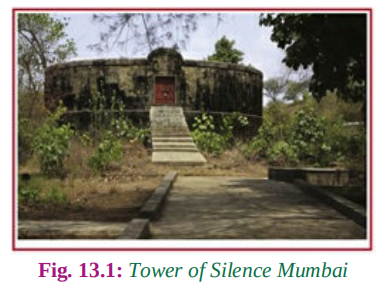
- Only active Towers of Silence in Mumbai.
- Due to the Indian vulture crisis, some have started burying their dead.
- Qissa-i Sanjan
- It is an account of the migration of Zoroastrians (Parsis) and their settlement in the Indian Sub-continent.
- Its first chapter ends with establishment of fire temple at Sanjan (Gujarat).
- There are three major calendar forms among the Parsis:
| Type |
Description |
| Shahenshahi (Majority) |
Calculates their calendar from the last Sassanian king, Yazdegerd III. |
| Qadimi |
Claims to have the oldest calendar. |
| Fasli |
Claimed to be the most accurate religious calendar and the most recent one. |
- Judaism
- Origins & Beliefs
- One of the oldest religions but has faced significant persecution.
- Monotheistic – Worships Yahweh, the one true God instituted by Abraham.
- Predates Christianity and Islam, which have borrowed from Judaic philosophies.
- Day of Judgment belief:
- A Messiah will come.
- The pious will go to heaven.
- The evil will be relegated to hell.
- Sacred Texts
- Torah – The primary religious text, also the first five books of Tanakh.
- Talmud – A compilation of legal, ethical, and historical Jewish writings.
- Major Figures in Judaism
- Abraham – Ancestor of all Jews, blessed by God for following His injunctions.
- Isaac & Jacob (Israel) – Sons of Abraham, continued the covenant with God.
- Moses – Received the Ten Commandments (Sefer Torah) at Mount Sinai, guiding how Israelites (descendants of Jacob/Israel) should live.
- Jacob’s 12 Sons – Ancestors of the 12 Tribes of Israel.
- Religious Practices
- Place of Worship: Synagogues.
- Religious Services: Eliyahu-hanavi (Thanksgiving to Elijah the Prophet).
- Prayer Rituals:
- Male Jews wear a tsisith (prayer shawl) during prayers.
- Jewish Communities in India
- First Jewish settlers arrived on the Western coast of India.
- Though numerically small, India has five major Jewish communities:
- Cochin Jews – Malayalam-speaking Jews in Kerala.
- Bene Israel – Marathi-speaking Jews (Largest Jewish community in India).
- Baghdadi Jews – Traders from West Asia, settled in Surat, now mainly in Mumbai & Kolkata.
- Bnei Menashe – Claim descent from the lost Menasseh Tribe:
- Live in Manipur & Mizoram (India-Myanmar border).
- Descendants of Mizo, Kuki, and Chin tribes.
- Believe they were enslaved by Assyrians, escaped to China, and then migrated to India.
- Call themselves “Children of Menasseh.”
- Bene Ephraim – Telugu-speaking Jews, converted to Judaism in the 1990s.
- Prominent synagogues in India
| Name |
Located at |
Affiliated to |
| Magen David Synagogue |
Kolkata |
Baghdadi Jews |
| Paradesi Synagogue |
Cochin |
Cochin Jews |
| Ohel David Synagogue (Largest in India, also called Lal Deval) |
Pune |
Baghdadi Jews |
| Knesset Eliyahoo Synagogue |
Mumbai |
Baghdadi Jews |
| Nariman House |
Mumbai |
It was one of the targets of the 2008 Mumbai attack. |
- Other prominent religions in India
- Sanamahism
- Practiced mainly by the Meitei people of Manipur.
- Involves shamanistic worship of:
- Ancestors
- Almighty God
- Sky
- Elements
- Forests
- Sacred Text: Puya
- Major Festival: Lai Haraoba (worship of traditional deities and ancestors).
- Sanamahi: A household deity, generally kept at the southwestern corner of homes.
- Note: This religion is not considered a part of Hinduism.
- Ayyavazhi
- Considered a part of Hinduism and followed in Tamil Nadu and Kerala.
- Centered on the life and teachings of Ayya Vaikundar.
- Sacred Texts:
- Akilathirattu Ammanai
- Arul Nool
- Important Observance:
- Ayya Vaikunda Avataram (incarnation day of Vaikundar) is a state holiday in Tamil Nadu and Kerala.
- Unique Worship Practice:
- Instead of a deity, worship centers place:
- Flame-shaped copper structure
- Saffron cloth
- Garlands of rudraksha and flowers
- This setup represents Elunetru, signifying a formless God.
- Sarnaism (Adi Dharam)
- Indigenous tribal religion followed by:
- Munda, Ho, Bhumij, Santal, Baiga, and Khuruk communities.
- Found in Jharkhand, Odisha, West Bengal, Bihar, Madhya Pradesh, Maharashtra, and Chhattisgarh.
- Nature Worship:
- Centered on the worship of trees, especially the Sal Tree.
- Place of Worship: Jaher Than (Sarna temples).
- Bahai Faith
- Originated in Persia (19th century).
- Founder: Bahaullah, who claimed to be a prophet sent by God.
- Core Beliefs:
- Monotheism – Belief in a single, all-powerful God.
- Goal of a unified world order ensuring prosperity for all races, creeds, and classes.
- Three Central Principles:
- Unity of God
- Unity of Religion
- Unity of Humanity
- Major Worship Site in India: Lotus Temple (Delhi).
-
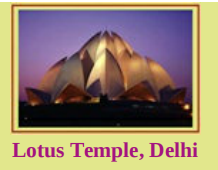
- Unique Calendar:
- Bahai Year consists of 19 months, each with 19 days.
- Global Presence: Considered one of the fastest-growing religions in the world.
- Busshism and Jainism
- Buddhism
- Origins:
- One of the major world religions, originating in the Indian subcontinent.
- Has spread widely across South-East Asia.
- Founded on the teachings, traditions, and beliefs of Siddhartha Gautama, who came to be known as Buddha.
- Global Presence:
- Fourth-largest religion in the world after Christianity, Islam, and Hinduism.
- Followed by approximately 7% of the world’s population.
- Buddhism in India:
- 0.7% of India’s population (~8.4 million individuals) identify as Buddhists.
- Maharashtra has the largest Buddhist population in India.
- Basics About Buddha
-
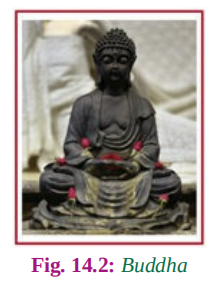
- Birth and Early Life:
- Born as Siddhartha Gautama in 563 BC at Lumbini (present-day Nepal).
- Parents: King Suddhodana (Sakyan Kingdom, Kshatriya Clan) and Queen Maya.
- Born on the auspicious day of Vaishakhi Purnima.
- Married Princess Yashodhara and had a son named Rahul.
- The Great Renunciation:
- At 29 years old, he left his palace on his horse Kanthaka, accompanied by Charioteer Channa, to seek the truth of life.
- Wandered as an ascetic for six years.
- Enlightenment (Nirvana):
- At 35 years old, on the same day as his birth, he attained enlightenment under a pipal tree in Bodh Gaya (Bihar).
- Became Buddha, the Enlightened One.
- First Sermon & Establishment of Sangha:
- After attaining Nirvana, he gave his first sermon at Deer Park, Sarnath (near Varanasi).
- This event is known as Dharma-Chakra-Pravartana (Turning the Wheel of Law).
- His first five disciples (companions at Sarnath):
1. Kaudinya
2. Bhadrika
3. Vashpa
4. Mahanaman
5. Ashvajit
- Together, they formed the Sangha (monastic order).
- The Three Jewels (Triratna) of Buddhism:
1. Buddha – The Enlightened One.
2. Dhamma – The Teachings of Buddha (doctrine).
3. Sangha – The Monastic Order (established during the first sermon).
- Final Years & Mahaparinirvana:
- Attained Mahaparinirvana at Kushinagar (Malla Mahajanapada, Uttar Pradesh) at the age of 80 (c. 483 BC).
- Contemporary of King Bimbisara (for most of his life) and Ajatashatru (Haryanka Dynasty, last few years).
- Titles & Successors:
- Also known as Tathagata and Sakyamuni in Buddhist texts.
- Predecessor: Kassapa Buddha.
- Successor: Maitreya (Future Buddha).
- Early Buddhist Schools
- After the passing of Buddha, the original Sangha is believed to have split into two major early schools between 383 BC and 250 BC:
- Sthavira Nikaya
- Sub-sects:
- Mahisasaka
- Sarvastivada
- Sankrantika
- Sautrantika
- Dharmaguptaka
- Vatsiputriya
- Dharmottariya
- Bhadrayaniya
- Sannagarika
- Sammitiya
- Mahasamghika
- Sub-sects:
- Gokulika
- Prajnaptivada
- Bahusrutiya
- Ekavyaharikas
- Caitika
- Other Early Buddhist Sub-sects
- Some sub-sects that did not fall under the two main schools:
- Hemavatika
- Rajagiriya
- Siddhatthaka
- Pubbaseliya
- Aparaseliya
- Apararajagirika
- Later Buddhist Schools
- Theravada
- Mahayana
- Vajrayana
- Concepts and Philosophy in Buddhism
- Buddhism is based on fundamental principles that explain the nature of suffering and the path to liberation.
- The Four Noble Truths
1. Dukkha (The Truth of Suffering) – Life is full of suffering.
2. Samudaya (The Truth of the Origin of Suffering) – Suffering arises from desires and attachments.
3. Nirodha (The Truth of the Cessation of Suffering) – By eliminating desires, suffering can be ended.
4. Marga (The Truth of the Path to the Cessation of Suffering) – Liberation can be attained by following the Noble Eightfold Path.
- The Noble Eightfold Path
1. Right Speech – Speak truthfully and kindly.
2. Right Action – Act honestly and peacefully.
3. Right Livelihood – Engage in a profession that does not cause harm.
4. Right Effort – Develop self-control and discipline.
5. Right Mindfulness – Be aware of thoughts and actions.
6. Right Meditation – Concentrate on the true meaning of life.
7. Right Thought – Cultivate sincerity and intelligence.
8. Right Understanding – Avoid superstition and seek wisdom.
- Middle Path (Madhyam Marg)
- Buddha emphasized the Middle Way, a balanced approach between extreme indulgence and severe asceticism. It serves as the foundation of the Noble Eightfold Path and leads to liberation.
- Buddhism and Other Beliefs
- Rejects the Vedas as authoritative scriptures.
- Denies the existence of a permanent soul (atman), unlike Jainism.
- Buddhist Councils and Tripitaka
- After Buddha attained Mahaparinirvana at Kushinagar in 483 BC, efforts were made to preserve his teachings.
- Over 500 years, four Buddhist Councils were held, leading to the compilation of scriptures into three major texts, collectively called the Tripitaka, all written in Pali:
- Vinaya Pitaka – Rules for monastic discipline.
- Sutta Pitaka – Buddha’s discourses.
- Abhidhamma Pitaka – Philosophical and doctrinal analysis.
- Major Schools of Buddhism
- During the Fourth Buddhist Council under King Kanishka, Buddhism split into two major sects:
- Hinayana Buddhism – Focused on self-discipline and personal enlightenment.
- Mahayana Buddhism – Emphasized compassion and the worship of Bodhisattvas.
- Later, two additional schools emerged:
- Theravada Buddhism – The oldest surviving form, focusing on strict adherence to Buddha’s original teachings and attaining Nirvana by practicing the Noble Eightfold Path.
- Vajrayana Buddhism – Incorporates esoteric rituals and meditation techniques.
- Practices in Buddhism
- Buddhist practice includes:
- Taking refuge in the Buddha, Dhamma, and Sangha.
- Studying scriptures and following moral precepts.
- Renouncing craving and attachment.
- Practicing meditation and cultivating wisdom, loving-kindness, and compassion.
- Bodhicitta (Mahayana) – The aspiration to attain Buddhahood for the benefit of all beings.
- Generation & Completion Stages (Vajrayana) – Advanced meditation practices.
- Goals of Different Buddhist Schools
- Theravada Buddhism
– Seeks Nirvana, the cessation of suffering and rebirth.
- Mahayana Buddhism
– Aspires for Buddhahood through the Bodhisattva Path, where enlightened beings remain in the cycle of rebirth to help others attain awakening.
- Four Buddhist Councils
| Buddhist Council |
Place and Year |
Patronage by and Chairman |
Details |
| First Buddhist Council |
At Rajgir (around 483 BC) |
Under the patronage of King Ajatashatru. Chairman – Mahakasyapa |
- It was held at the Saptaparni cave immediately after the death of the Buddha.
- Upali recited Vinaya Pitaka, which contains the rules of the Buddhist order.
- Anand recited Sutta Pitaka, containing Buddha’s sermons on doctrine and ethics.
|
| Second Buddhist Council |
At Vaishali (383 BC) |
Under the patronage of King Kalasoka. Chairman – Sabakami |
- Held approximately 100 years after Buddha’s death.
- Mainly focused on 10 disputed points under the Vinaya Pitaka.
|
| Third Buddhist Council |
At Pataliputra (250 BC) |
Under the patronage of King Ashoka. Chairman – Moggaliputta-Tissa |
- Compilation of Abhidhamma Pitaka took place.
|
| Fourth Buddhist Council |
At Kundalvana, Kashmir (72 AD) |
Under the patronage of King Kanishka. Chairman – Vasumitra |
- Resulted in the division of Buddhism into Hinayana and Mahayana.
- Asvaghosha (deputy of Vasumitra) participated.
- Deliberations were made in Sanskrit.
- Another Fourth Buddhist Council was held in Sri Lanka.
|
- The Four Schools of Buddhism
- Buddhism evolved into four major schools over time, each with distinct beliefs and practices.
- Hinayana Buddhism
- Meaning: “Lesser Vehicle”
- Beliefs:
- Followers adhere to Buddha’s original teachings and maintain an orthodox approach.
- No idol worship; they do not believe in representing Buddha in physical form.
- Emphasizes individual salvation through self-discipline and meditation.
- The ultimate goal is Nirvana, achieved through personal effort.
- Sub-sect: Sthaviravada (Theravada)
- Language: Pali
- Historical Patronage: Emperor Ashoka supported Hinayana, as Mahayana developed much later.
- Current Status: The original form of Hinayana no longer exists.
- Mahayana Buddhism
- Meaning: “Greater Vehicle”
- Beliefs:
- More liberal than Hinayana, emphasizing compassion and the divinity of Buddha and Bodhisattvas.
- Idol worship of Buddha and Bodhisattvas is accepted.
- Goal: Spiritual upliftment and the universal liberation of all beings from suffering.
- Introduces the concept of the Bodhisattva, one who delays Nirvana to help others attain enlightenment.
- Also called Bodhisattvayana or the Bodhisattva Vehicle.
- Sacred Texts: Lotus Sutra, Mahavamsa
- The Six Perfections (Paramitas) in Mahayana Buddhism:
1. Dana – Generosity
2. Sila – Morality and proper conduct
3. Ksanti – Patience and tolerance
4. Virya – Energy and effort
5. Dhyana – Concentration
6. Prajna – Wisdom and insight
- Sub-sect: Vajrayana Buddhism (developed later)
- Language: Sanskrit
- Historical Patronage: Emperor Kanishka (Kushana Dynasty, 1st century AD)
- Current Status: Majority of Buddhists (53.2% as of 2010) follow Mahayana.
- Countries Practicing Mahayana: Nepal, Bangladesh, Japan, Vietnam, Indonesia, Malaysia, Singapore, Mongolia, China, Bhutan, Tibet, etc.
- Madhyamaka School (Sub-sect of Mahayana)
- Founder: Nagarjuna (2nd-3rd century AD)
- Belief: Based on Sunyata (emptiness) Doctrine, which teaches that all things are empty of inherent nature.
- Key Scholar: Chandrakirti
- Theravada Buddhism
- Meaning: “School of Elder Monks”
- Sacred Texts: Pali Canon (the only complete Buddhist canon).
- Beliefs:
- The goal is to attain Nirvana by practicing the Noble Eightfold Path.
- Emphasizes Samatha (calmness) and Vipassana (insight) as essential meditation techniques.
- Three Marks of Existence: Impermanence, suffering, and non-self.
- Doctrine of Vibhajjavada (Teaching of Analysis).
- Major Text: Visuddhimagga (Path of Purification), written by Buddhaghosa in 5th century AD.
- Language: Pali
- Relation to Hinayana: Theravada is considered a successor of Hinayana.
- Current Status: Around 35.8% of Buddhists follow Theravada.
- Countries Practicing Theravada: Sri Lanka, Cambodia, Laos, Thailand, Myanmar.
- Vajrayana Buddhism (Tantric Buddhism)
- Origin: Developed as a fusion of Buddhism and Shaivism under royal patronage.
- Main Deity: Tara (a female deity).
- Beliefs:
- Based on Mahayana philosophy.
- Incorporates Tantras, Mantras, and Yantras for a faster path to liberation.
- Mantras are considered a shortcut to Buddhahood compared to the Six Perfections (Paramitas) of Mahayana.
- Current Status: 5.7% of Buddhists follow Vajrayana.
- Countries Practicing Vajrayana: Tibet, Bhutan, Mongolia, Kalmykia.
- Bodhisattva in Buddhism
- A Bodhisattva is one who develops Bodhicitta, the compassionate desire to attain Buddhahood for the benefit of all beings.
- Buddha himself, in his previous births (as per Jataka tales), was a Bodhisattva.
- Path to Buddhahood: A Bodhisattva passes through 10 Bhumis (stages), including Great Joy, Radiant, Immovable, and Cloud of Dharma, before achieving enlightenment.
- Famous Bodhisattvas
- Avalokitesvara – Bodhisattva of compassion, depicted with a lotus flower (Padmapani). Revered in Ajanta Caves and worshipped in Theravada Buddhism (Cambodia). Also considered an incarnation of the Dalai Lama.
- Vajrapani – Represents Buddha’s power and is associated with the Five Tathagatas.
- Manjusri – Symbol of wisdom, depicted with a sword.
-
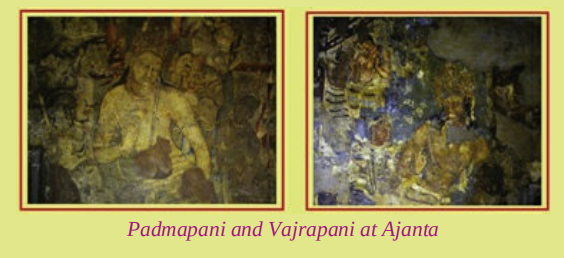
- Samantabhadra – Associated with meditation and practice.
- Ksitigarbha – Took a vow not to attain Buddhahood until all hell beings are freed.
- Maitreya – The Future Buddha, believed to bring a pure Dharma era. Laughing Buddha is considered an incarnation of Maitreya.
- Akasagarbha – Associated with space.
- Tara – Central to Vajrayana Buddhism, representing success and achievements.
- Vasudhara – Associated with wealth and prosperity, worshipped in Nepal.
- Skanda – Guardian of Buddhist monasteries and teachings.
- Sitatapatra – Protector against supernatural dangers, worshipped in both Mahayana and Vajrayana.
- Dipankara Buddha
- A past Buddha who attained enlightenment before Gautama Buddha.
- Recognized in Mahayana, Vajrayana, and Theravada traditions.
- Maitreya is considered the next Buddha after Gautama.
- Places Visited by Buddha
- Buddha traveled extensively during his lifetime, primarily visiting regions within two major kingdoms: Kosala and Magadha.
- Kosala Kingdom
- Capital: Shravasti
- Notable Places Visited:
- Kapilavastu (Buddha’s birthplace)
- Shravasti (capital of Kosala)
- Kosambi
- Saket
- Magadha Kingdom
- Capital: Rajgriha
- Notable Places Visited:
- Rajgriha
- Vaishali
- Gaya
- Bodh Gaya (Buddha attained enlightenment)
- Nalanda
- Champapuri
- Other Significant Places
- Sarnath (Buddha’s first sermon)
- Kushinagar (Buddha’s Mahaparinirvana)
- Mathura
- Varanasi
- Prominent Disciples of Buddha in the Ancient Period
- Chief Disciples
- Sariputta
– One of Buddha’s chief disciples, known for his deep wisdom.
- Mahamoggallana
– Another chief disciple, renowned for his mastery of supernatural powers.
- Close Disciples and Followers
- Ananda
– Buddha’s attendant and the disciple who listened to his teachings the most.
- Mahakasyapa
– Led the First Buddhist Council after Buddha’s Mahaparinirvana.
- Purna Maitrayani-putra
– A prominent preacher of Buddha’s teachings.
- Anuruddha
– Known for his divine vision and meditation skills.
- Rahul
– Buddha’s son who became a monk.
- Katyayana
– Known for his expertise in explaining the Buddha’s teachings.
- Upali
– A former barber who became an expert in monastic discipline (Vinaya).
- Anathapindika
– A wealthy merchant and one of the most generous lay disciples.
- Subhuti
– Known for his mastery of emptiness (Sunyata) doctrine.
- Jivaka
– A renowned physician who treated Buddha and his disciples.
'16 Arhats' of Buddha
- Definition and Interpretation
- In Theravada Buddhism, an Arhat is someone who has gained insight into the true nature of existence and has achieved nirvana.
- In Mahayana Buddhism, an Arhat is a person who has advanced far on the path to nirvana but has not yet attained it.
- Key Figures Among the 16 Arhats
- Nagasena
– A Sarvastivadan Buddhist scholar from the 2nd century BC, known for his dialogues in the Milindapanha.
- Rahul
– Gautam Buddha’s son, also considered one of the 16 Arhats.
- Comparison: Arhat vs. Bodhisattva (Mahayana Perspective)
- Arhat – Achieves peace and enlightenment for oneself but does not stay to help others.
- Bodhisattva – An awakened being who chooses to remain in Samsara (cycle of rebirth) to assist others in reaching enlightenment.
- Mahayana Buddhism favors the Bodhisattva path over the Arhat ideal, emphasizing compassion and selfless service.
- Other Prominent Personalities associated with Buddhism
- Nagasena:
- He answered to questions about Buddhism posed by Menander I (or Milinda), the Indo-Greek king, and the conversation is recorded in the book Milinda Panho around 150 BC.
- Nagarjuna:
lived around 150-250 AD and founder of the Madhyamaka School of Mahayana Buddhism.
- Vasubandhu:
- A proponent of Mahayana Buddhism in 4th-5th century AD from Gandhara and wrote from the perspectives of the Sarvastivada and Sautrantika schools.
- Bodhidharma:
lived around 5th or 6th century AD and transmitted Buddhism to China.
- Buddhaghosa:
- A 5th century Indian Theravada Buddhist commentator and scholar famous for his work Visuddhimagga (Path of Purification).
- Padmasambhava:
- An 8th century monk and is contemplated as ‘Second Buddha’ across Tibet, Nepal, Bhutan, and the Himalayan States of India.
- Atisa:
- A Buddhist Bengali religious leader and master, and is one of the major figures in the spread of 11th century Mahayana and Vajrayana Buddhism in Asia. He inspired Buddhist thought from Tibet to Sumatra.
- Dalai Lama:
- They are modern spiritual leaders of the Yellow Hat School of Tibetan Buddhism.
- Navayana Buddhism
- Navayana (New Vehicle) Buddhism is a modern interpretation of Buddhism, propounded by Dr. B.R. Ambedkar in the 20th century.
- It is distinct from Theravada, Mahayana, and Vajrayana and rejects their traditional doctrines.
- Key Differences from Traditional Buddhism:
- Discards concepts like monasticism, karma, rebirth, samsara, meditation, enlightenment, and the Four Noble Truths.
- Radically reinterprets Buddha’s teachings to focus on class struggle and social equality.
- It became a key movement for Dalit empowerment in India.
- Jainism
- Jain Teachings and Philosophy
-
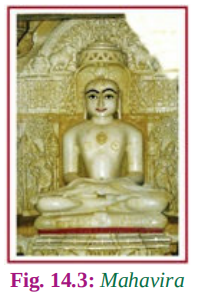
- Mahavira taught the right path (Dharma), emphasizing renunciation, strict asceticism, and moral cultivation.
- Jains are morally bound by their faith to live in a way that does not harm any living being.
- Key Philosophical Concepts in Jainism
- Anekantavada (Non-Absolutism)
- The fundamental doctrine of Jainism states that truth and reality are complex and have multiple aspects.
- No single statement can fully describe the nature of existence or the absolute truth.
- Three Jewels (Ratnatraya) of Jainism
- The path to liberation from karma and rebirth lies in following:
- Right belief (Samyak Darshana)
- Right knowledge (Samyak Gyana)
- Right conduct (Samyak Charitra)
- Five Major Vows (Mahavratas) of Jainism
- Jains must adhere to these five ethical principles in life:
1. Ahimsa (Non-violence)
– Avoid harming any living being.
2. Satya (Truthfulness)
– Speak only the truth.
3. Asteya (Non-stealing)
– Do not take anything that is not given.
4. Aparigraha (Non-possessiveness)
– Limit material possessions.
5. Brahmacharya (Chaste living)
– Maintain celibacy or marital fidelity.
- The fifth tenet (Brahmacharya) was introduced by Mahavira.
- Ashtamangala (Eight Auspicious Symbols in Jainism)
| Symbol |
Meaning |
| Swastika |
It signifies peace and well-being of humans. |
| Nandavarta |
- A large swastika with nine endpoints.
- One of the eight auspicious symbols of the Svetambara sect in Jainism.
- An ashtamangala used for worship.
- Has four arms with compulsory nine corners/turns.
- Associated with the 18th Tirthankara, Aranatha.
|
| Bhadrasana |
A throne sanctified by the Jaina’s feet. |
| Shrivatsa (Endless Knot) |
A mark on the chest of the Tirthankara image, signifying his pure soul. |
| Darpana |
The mirror that reflects the inner self. |
| Minayugala |
A pair of fish signifying conquest over sexual urges. |
| Vardhamanaka |
A shallow dish used as a lamp, representing an increase in wealth, virtue, and merit. |
| Kalasha |
A pot filled with pure water, signifying purity. |
- Special Symbol in Jainism
-
- The hand with a wheel (Ahimsa Chakra) symbolizes non-violence (Ahimsa).
- The word “Ahimsa” is written in the center of the wheel.
- Two Major Schools (Sects) of Jainism
- Jainism is divided into two major schools: Digambara and Svetambara, each with distinct beliefs and practices.
- Digambara School
- Monastic Practice:
- Monks of the Digambara sect do not wear clothes, as they believe in complete nudity as a form of renunciation.
- Female monks, known as Aryikas, wear unstiched plain white sarees.
- Religious Beliefs:
- Digambaras strictly follow all five constraints (Ahimsa, Satya, Asteya, Aparigraha, and Brahmacharya), unlike Svetambaras.
- They believe women cannot be Tirthankaras, and they assert that Malli (the 19th Tirthankara) was a man.
- Monastic rules in Digambara tradition are more rigid.
- Historical Background:
- Bhadrabahu, an exponent of the Digambara sect, migrated to Karnataka with his disciples after predicting a long famine.
- The earliest record of Digambara beliefs is found in the Prakrit Suttapahuda of Kundakunda.
- Sub-sects of Digambara:
- Mula Sangh – The original Digambara monastic community.
- Bispanthi, Terapanthi, and Taranpanthi – Modern sub-sects.
- Differences Between Digambara Terapanthis & Bispanthis:
- Bispanthis:
- Worship Tirthankaras along with Yaksha and Yakshini (e.g., Bhairava, Kshetrapala).
- Perform aarti and make offerings of flowers, fruits, and prasad.
- Their religious leaders, Bhattarakas, are mainly found in Rajasthan and Gujarat.
- Terapanthis:
- Worship only Tirthankaras, rejecting Bhattarakas.
- Use ashta-dravya for worship but replace flowers and fruits with dry substitutes.
- Svetambara School
- Monastic Practice:
- Monks wear simple white clothing and are allowed to have a begging bowl, books, writing materials, and a brush to remove insects from their path.
- Religious Beliefs:
- Svetambaras follow the teachings of Parshvanatha, who prescribed only four constraints, omitting Brahmacharya.
- They believe the 23rd (Parshvanatha) and 24th (Mahavira) Tirthankaras were married, which Digambaras deny.
- Unlike Digambaras, Svetambaras accept that Malli was a woman and began life as a princess.
- They believe in five eternal substances:
- Soul (Jiva)
- Matter (Pudgala)
- Space (Akasha)
- Motion (Dharma)
- Rest (Adharma)
- In contrast, Digambaras add a sixth eternal substance: Time (Kala).
- Historical Background:
- Sthulabhadra, a major exponent of this sect, remained in Magadha, while Bhadrabahu moved to Karnataka.
- Sub-sects of Svetambara:
- Sthanakavasi:
- Reject idol worship and pray to saints instead.
- Their saints wear a muhapatti (mouth-covering cloth), unlike Murtipujakas.
- Murtipujaka (Deravasi):
- Keep idols of Tirthankaras in their temples and worship them.
- Their saints do not wear a muhapatti.
- Terapanthi:
- Similar to Sthanakavasi, they pray to saints rather than idols.
- Their saints wear a muhapatti.
- Popular Practices in Jainism
- Sallekhana
- A religious practice of voluntary fasting to death by gradually reducing food and liquid intake.
- Jain scholars do not consider it suicide, as it is not driven by passion and does not involve poisons or weapons.
- It can be undertaken by both Jain ascetics and householders.
- Legal Status in India:
- In 2015, the Rajasthan High Court banned Sallekhana, considering it a form of suicide.
- Later in 2015, the Supreme Court of India stayed the decision, lifting the ban.
- Pratikraman
- A spiritual practice of repentance, where Jains reflect on their daily sins and resolve not to repeat them.
- It serves as a way to purify one’s thoughts and actions.
- Types of Pratikraman:
- Devasi Pratikraman – Performed daily.
- Rai Pakhi Pratikraman – Performed fortnightly.
- Chaumasi Pratikraman – Performed quarterly.
- Samvatsari Pratikraman – Performed annually on Samvatsari (Jain forgiveness day).
- Siddhachakra: A Mystical Jain Yantra
-
- A sacred diagram used for worship in Jainism.
- Known as Navapada in the Svetambara tradition.
- Known as Navadevta in the Digambara tradition.
- Jain flag
-
- The Jain flag consists of five colors:
- Red, Yellow, White, Green, and Dark Blue.
- These five colors represent the Pancha-Parameṣṭhi, the five-fold hierarchy of religious authorities in Jainism.
- Each of the 24 Tirthankaras is associated with one of these colors.
| Color |
Representation |
| Red |
Represents Arihant (one who has attained Kevala Jnana). |
| Yellow |
Represents Siddha. |
| White |
Represents Acharya. |
| Green |
Represents Upadhyay. |
| Dark Blue |
Represents Sadhu. |
- The Swastika in the middle of the flag symbolizes the embodiment of the soul in one of the four forms:
- Deities
- Human beings
- Animals, birds, insects, and plants
- Hell beings
- The movement of the soul between these forms depends on Karma. The ultimate goal of the soul is to attain liberation from these four stages and eventually become an Arihant or Siddha.
- Above the Swastika:
- The three dots represent the Ratnatraya (Three Jewels) of Jainism:
- Right Faith
- Right Knowledge
- Right Conduct
- The curve above the three dots symbolizes Siddhashila, the eternal realm at the top of the Universe where Arihants and Siddhas reside.
- Indian Literature
- Introduction:
- The term Literature is derived from the Latin word litteratura, meaning “writing formed with letters.”
- It refers to any form of writing that possesses literary merit.
- Classifications of Literature:
- Broadly categorized into:
- Fiction
- Non-fiction
- Further divided into:
- Poetry
- Prose
- Within these categories, different forms include:
- Novels
- Short stories
- Drama
- Novellas
- Historical Background:
- In Greco-Roman times, epics were predominantly oral before being compiled into written form as languages advanced.
- Advancements in Literature Distribution:
- 18th century:
- Print technology revolutionized the accessibility of literature.
- Enabled a larger audience to read and appreciate literary works.
- Modern Era:
- Electronic literature has taken center stage.
- Digital platforms facilitate wider readership and engagement.
- Difference between Didactic and Narrative Text
| Points of Difference |
Didactic |
Narrative |
| Type of Text |
Also known as Directive texts, it tries to influence the reasoning, thinking, and conduct of the reader. |
Provides essential information about the topic to explain or enhance the narration, making it clear and engaging for the reader. |
| Objective |
The writer aims to persuade, coax, and compel the reader into thinking a particular way. |
The writer intends to sustain the interest and inquisitiveness of the reader about the topic. |
| Commonly Used For |
Typically used in writings on political or moral issues, such as sermons and religious treatises. |
The most common type of prose, widely used in storytelling and novels. |
- In India, four major speech groups are followed, i.e. the Austric, Dravidian, Sino-Tibetan and Indo-European.
- Hindu Literature In Ancient India
- Ancient Indian Literature:
- Contrary to popular belief, it was not limited to sacred texts like the Vedas and Upanishads.
- Prakrit literature:
- Rich in realism and moral values.
- Lacks religious connotations.
- Prominent Works of the Ancient Period:
- Vedas:
- Sacred texts used in religious rituals and daily life.
- Other Literary Forms:
- Includes epics and lyrical compositions.
- Written in major ancient languages:
- Sanskrit
- Prakrit
- Pali
- Ardhamagadhi
- Vedas
- Derived from the word ‘Veda’ meaning knowledge.
- Written in poetic style using symbols and myths.
- Initially passed down orally before being compiled (1500-1000 BC).
- Considered sacred divine revelations guiding human life.
- Promotes Vasudhaiva Kutumbakam (universal family concept).
- Composed by Vedic seers (Rishis) in Sanskrit poetry.
- Emphasizes yagna (sacrifice) and has accompanying texts:
- Brahmanas
- Upanishads
- Aranyakas
- Four Major Vedas:
- Rig Veda
- Oldest Veda with 1028 Sanskrit hymns.
- Organized into 10 books (Mandalas), further divided into Suktas (hymns).
- Focuses on worldly prosperity and natural beauty.
- Dedicated to Lord Indra and other deities:
- Agni (fire), Varuna (water), Rudra (wind/storm).
- Aditya (sun), Vayu (air), Ashwini twins.
- Female deities: Usha (dawn), Prithvi (earth), Vak (speech).
- Yajur Veda
- ‘Yajus’ means sacrifice, focuses on rituals and mantras.
- Two major recensions (Samhitas):
- Shukla (Vajasaneyi Samhita) – pure/white.
- Krishna (Taittiriya Samhita) – dark/black.
- Acts as a guidebook for priests conducting rituals.
- Sama Veda
- Named after ‘Saman’ (melody), focuses on chants and music.
- Contains 1875 hymns (only 75 original, others from Rig Veda).
- Includes 16,000 raga (musical notes) and raginis.
- Referred to as the ‘Book of Chants’, highlights Vedic music.
- Atharva Veda
- Also known as Brahma Veda, attributed to Rishis Atharvan & Angiras.
- Focuses on human well-being, societal harmony, and healing.
- Prescribes treatments for 99 diseases.
- Contains black and white magic and everyday life guidance.
- Two major recensions (Shakhas): Paippalada & Saunakiya.
- Vedangas (Limbs of the Veda)
- Supplementary texts to help understand the Vedas:
- Siksha – Education
- Nirukta – Etymology (word origins)
- Chhanda – Sanskrit metrics
- Jyotisha – Astronomy
- Vyakarana – Grammar
- Later developed into Sutras (treatises), e.g., Panini’s Ashtadhyayi (Sanskrit grammar).
- Brahmanas
- Part of Sruti (revealed knowledge) literature.
- Attached to each Veda, serving as commentaries.
- Mixture of legends, facts, philosophy, and Vedic ritual explanations.
- Guides sacrificial rituals and explains their symbolic significance.
- Composed between 900-700 BC.
- Brahmanas by Veda:
| Veda |
Brahmana |
| Rig Veda |
Aitareya Brahmana, Kaushitaki Brahmana |
| Sama Veda |
Tandya Mahabrahmana, Sadvimsha Brahmana |
| Yajur Veda |
Taittiriya Brahmana, Shatapatha Brahmana |
| Atharva Veda |
Gopatha Brahmana |
- Aranyakas
- Philosophical texts attached to the Vedas.
- Focuses on rituals, birth & death cycles, and the soul’s complexity.
- Taught by Munis (sages) living in forests.
- Each Veda has an accompanying Aranyaka.
- Upanishads
- Derived from ‘Upa’ (near), ‘Ni’ (down), ‘Shad’ (to sit) – Sitting near the teacher.
- Passed down orally in the guru-shishya (teacher-student) tradition.
- More than 200 Upanishads, written in Sanskrit.
- Vedanta (end of the Vedas) – deals with spiritual & philosophical questions.
- Discusses moksha (liberation), human existence, and the universe’s origin.
- Muktika Canon (108 Upanishads) considered the most significant.
- Distinction between Upanishads & Aranyakas:
| Text |
Section |
Focus |
| Upanishad |
Jnana-kanda |
Knowledge / Spirituality |
| Aranyaka |
Karma-kanda |
Ritualistic Actions / Sacrifice |
- Mahakavya (Great Epics): The Mahabharata & The Ramayana
- Part of collective Hindu memory, expanded over centuries.
- Ramayana
- Composed by Valmiki (Adikavi – First Poet).
- Adikavya (First poetry composition).
- Estimated dating ~1500 BC.
- Centers on Rama, the ideal man.
- Consists of 24,000 verses, divided into seven Khandas (books).
- Describes Rama’s battle with Ravana (Lanka war).
- Symbolizes victory of good over evil.
- Teaches the four Purusharthas (life goals):
| Concept |
Meaning |
| Dharma |
Religion or righteousness |
| Artha |
Achievements in the worldly sphere (monetary) |
| Kama |
Fulfilling worldly desires |
| Moksha |
Liberation from these desires |
- Mahabharata
- Authored by Ved Vyas, originally called ‘Jaya’ (Victory Story).
- Expanded from 8,800 verses → 24,000 verses (Bharata) → 100,000 verses.
- Divided into 10 Parvas (chapters).
- Centers on the Kaurava-Pandava conflict for Hastinapur’s throne.
- Bhagavad Gita, a core text within, presents Hindu philosophical dilemmas.
- Themes:
- Violence vs. Non-violence
- Action vs. Inaction
- Dharma (Duty & Morality)
- Nishkama Karma (Selfless Duty) – Lord Krishna’s central teaching.
- Puranas
- Meaning ‘that which renews the old’.
- Mythological texts narrating the creation, history, and destruction of the universe.
- Stories of kings, sages, deities, especially the Hindu Trinity (Brahma, Vishnu, Shiva).
- 18 Major Puranas (Mahapuranas): Bhagavata, Brahma, Vayu, Agni, Garuda, Vishnu, etc.
- Translated into regional languages, making them widely popular.
- Panchtantra (by Vishnu Sharma) – Animal-based fables teaching worldly wisdom.
- Hitopadesha (by Narayan Pandit) – Similar collection of didactic stories.
- Uses Parables & Fables to convey messages:
| Parables vs Fables |
Description |
| Parable |
Short stories in prose or verse that illustrate a spiritual, moral, or religious lesson. It usually features a human character. |
| Fable |
Short stories in prose or verse that illustrate a ‘moral’ through a pithy maxim or clever story. It features animals, inanimate objects, mythical creatures, or plants with human-like qualities. |
- Upa-Puranas (Minor Puranas)
- The Puranas were so popular with the masses that they gave rise to another sub-genre called Upa-Puranas or minor Puranas.
- There are about 19 minor Puranas and are based on five major subjects as dictated by the Sanskrit lexicographer from the Gupta period, Amarasimha:
| Term |
Description |
| Sarga |
The creation of the universe |
| Pratisarga |
The periodic cycle of destruction and re-creation |
| Manvantra |
The periods of Manu’s lifetime |
| Vansa (Chandra and Surya) |
Genealogies of solar and lunar dynasties of Gods and sages |
| Vanshanucharita |
Dynastic histories of kings |
- Classical Sanskrit Literature
- Sanskrit literature is divided into Vedic and Classical categories.
- The two epics, Mahabharata and Ramayana, belong to the Classical category but are discussed separately due to their religious significance.
- These epics also served as precursors to:
- Sanskrit Kavya (epic poetry)
- Nataka (classical drama)
- Other treatises on medicine, statecraft, grammar, astronomy, and mathematics
- Most Classical Sanskrit literature followed strict grammatical rules codified in Panini’s Ashtadhyayi.
- Sanskrit Drama
- One of the most popular genres of Sanskrit literature.
- Included romantic tales written in the form of stories or elaborate dramas.
- Aimed at entertaining the public (Lokaranjana).
- Performance, acting, gestures, and stage directions were governed by Bharata’s Natyashastra.
- Major Dramas and Playwrights
- Kalidasa (Three Major Plays)
- Malavikagnimitra – Love story of Malavika (a maiden of the Queen) and Agnimitra (son of Pushyamitra Shunga).
- Vikramorvasiya – Love story of Vikram and Urvasi.
- Abhigyana Shakuntalam – The Recognition of Shakuntala.
- Sudraka
- Mricchakatika (The Little Clay Cart) – Love affair of young Brahmin Charudatta with a wealthy courtesan.
- Vishakhadutta
- Mudrarakshasa – Political drama narrating the ascent of King Chandragupta Maurya.
- Devi Chandraguptam – Another political drama.
- Bhavabhuti
- Uttara Ramacharitam – The later life of Rama (written in 700 AD).
- Bhasa
- Swapnavasavadatta – Vasavadatta in a dream.
- Pancharatra – A classic Sanskrit drama.
- Urubhanga – Story of Duryodhana before and after his battle with Bhima.
- Harshavardhana (Three Sanskrit Plays)
- Ratnavali
– Love story of Princess Ratnavali and King Udayana.
- First known mention of Holi celebrations.
- Nagananda
– Story of Prince Jimutavahana sacrificing himself to stop serpent sacrifices.
- Features an invocation to Lord Buddha in the Nandi verse.
- Priyadarsika
– Union of Udayana and Priyadarsika (daughter of King Dridhavarman).
- Sanskrit Poetry
- Also known as Kavya (poetry).
- Focused on form, style, and figures of speech, unlike dramas that emphasized storytelling.
- One of the greatest Sanskrit poets: Kalidasa.
- Works of Kalidasa
- Kumarasambhava – Birth of Kumar (Kartikeya, son of Shiva and Parvati).
- Raghuvamsa – Chronicles the Raghu dynasty.
- Meghaduta – The Cloud Messenger.
- Ritusamhara – Medley of seasons.
- Other Major Poets
- Harisena (Gupta Period)
- Wrote poems praising Samudra Gupta.
- His works were inscribed on the Allahabad pillar.
- Jayadeva (12th Century)
- Gita Govinda – Explores Krishna’s life, his love for Radha, and devotion.
- Other Notable Poets
- Bharavi (6th Century) – Kiratarjuniya (Kirat, the hunter, and Arjuna).
- Magha (7th Century) – Sishupalavadha (The killing of Shishupal).
- Other Major Sanskrit Texts
- Many Sanskrit texts covered sciences and governance.
- Between 500-200 BC, major books on law were compiled:
- Dharamsutras – Guidelines on property, crime, and justice.
- Dharamshastras – Basis of Hindu kingdom laws.
- Manusmriti (200 BC - 200 AD) – Defines social roles and conduct.
- Kautilya’s Arthashastra (Mauryan Period)
- Treatise on statecraft, economy, and military strategy.
- Written by Kautilya (Vishnugupta), believed to be Chanakya.
- Sanskrit flourished in the Gupta Period, becoming the language of the elite.
- Scientific Texts in Sanskrit
| Name |
Work |
Subject |
| Pingala |
Chandasastra |
Book on Mathematics |
| Charak |
Charak Samhita |
Book on Medicine |
| Sushruta |
Sushruta Samhita |
Book on Surgery |
| Madhava |
Madhava Nidana |
Book on Pathology |
| Varahamihira |
Pancha-Siddhantika, Brihat Samhita |
Book on Mathematical Astronomy, Wide-ranging subjects (planetary movements, geology, architecture, etc.) |
| Aryabhata |
Aryabhatiya |
Book on Astronomy and Mathematics |
| Lagadha |
Vedanga Jyotisha |
Book on Astronomy |
- Sanskrit Literature in the Medieval Period
- Declined in popularity but some excellent works emerged.
- Notable works from medieval Kashmir:
- Kalhana’s Rajatarangini – A detailed history of Kashmir’s kings.
- Somadeva’s Katha-sarit-sagar – A poetic collection of stories.
- Literature in Pali and Prakrit
- During the post-Vedic period, literature was composed not only in Sanskrit but also in Prakrit and Pali.
- Prakrit refers to languages that deviated from classical Sanskrit.
- These languages gained prominence through the religious literature of Buddhists and Jains.
- Prakrit Poetry
- Some Prakrit poetry contains elements of erotica.
- Gatha Saptasati (700 Verses) – A notable Prakrit poetic work by Hala.
- Hala contributed only 44 verses, while the rest were written by female poets.
- Prominent female poets: Pahai, Roha, Sasippaha, Mahavi, and Reva.
- Considered the opposite extreme of the Kamasutra.
- Buddhist Literature
- Canonical Literature – The Tripitaka
- The Tripitaka (“Three Baskets of Knowledge”) is the sacred text of Buddhism, written in Pali. It consists of:
- Vinaya Pitaka – Rules and regulations for Buddhist monks.
- Sutta Pitaka – Dialogues and speeches of the Buddha on morality and righteous dharma.
- Abhidhamma Pitaka – Philosophical and metaphysical discussions, covering ethics, knowledge, and psychology.
- Non-Canonical Literature
- Jatakas
- Stories about the previous births of Buddha.
- Also include Bodhisattva tales (stories of the would-be Buddha).
- Written in both Sanskrit and Pali.
- Buddha was believed to have passed through 550 births before being born as Gautam.
- Reflect popular tales, mythology, and socio-political conditions of North India.
- Other Buddhist literary texts:
• Dipavamsa:
- It was probably composed in 3rd-4th centuries AD in Anuradhapura (Sri Lanka).
- It literally means “Chronicle of the Island”. It mentions about the visit of Buddha to Sri Lanka and the arrival of tooth relic of Buddha.
• Milinda Panho:
- It contains a dialogue between King Meander (or Milinda) and Buddhist monk Nagasena. It means “Questions of Milinda”.
- These are one of the highest philosophical enquiries.
• Mahavamsa:
- It is an epic poem similar to Dipavamsa and is written in Pali language.
- It dates back to 5th century AD and has account of Buddha’s visit to Ceylon (Srilanka), Chronicles of Kings of Ceylon, etc.
• Mahavastu:
- It contains Jakata and Avadana tales. It is written in mixed Sanskrit, Pali and Prakrit.
- It is said to be compiled between 2nd century BC and 4th century AD.
• Lalitavistara Sutra:
- Meaning “The play in full”, is an important Mahayana text.
- It contains various stories associated with the life of Buddha till his first sermon at Sarnath.
• Udana:
- It is one of the oldest Theravada (Old School) Buddhist text. It contains the famous story of “Blind Men and the Elephant”.
• Bodhi Vamsa:
- It was prose-poem, written in 12th century in Sri Lanka.
- It was translated from a Sinhalese version. It was written by Upatissa in Sanskritised Pali.
• Mahavibhasa Shastra:
- It is said to be written around 150 AD. It contains discussions about other non-Buddhist philosophies also.
- It is essentially a Mahayan text.
• Visuddhimagga:
- It was written by Buddhaghosa in 5th century in Sri Lanka. It is a text of Theravada doctrine.
- It contains discussions on various teachings of Buddha.
- Jain Literature
- Languages Used
- Jain monks wrote in multiple languages based on era, region, and patronage.
- Languages include:
- Prakrit and Ardha-Magadhi (primary religious texts).
- Tamil (Sangam Age, South India).
- Sanskrit, Shauraseni, Gujarati, and Marathi.
- Categories of Jain Literature
- Canonical (Religious) Texts – Jain Agamas.
- Non-Canonical Literary Works – Various texts on philosophy, logic, ethics, and literature.
- Jain Agamas
- Sacred texts containing teachings of the Jain Tirthankaras.
- Originally compiled by the Ganadharas (chief disciples of Mahavira).
- Recompiled in 5th century AD by the Svetambara sect at Vallabhi (Gujarat).
- Digambara sect rejects these Agamas, believing that the original teachings were lost.
- Written in Ardha-Magadhi Prakrit.
- Promote non-violence, asceticism, vegetarianism, and compassion.
- Structure of Agamas (46 Texts)
- 12 Angas
- 12 Upangas
- 10 Prakirnakasutras
- 4 Mulasutras
- 6 Chedasutras
- 2 Culikasutras
- Digambara Sacred Texts
- Shatkhandagama (Karmaprabhrita) – Discussion on Karma.
- Kashayaprabhrita – Another sacred Digambara text.
- Important Jain Works & Authors
- Early Jain Scholars
- Bhadrabahu (3rd century BC)
- Teacher of Chandragupta Maurya.
- Wrote Uvasaggaharam Stotra and Kalpa Sutra (Biographies of Jain Tirthankaras).
- Pioneer of the Digambara sect.
- Acharya Kundkund
- Wrote Samayasara and Niyamasara on Jain philosophy.
- Samanta Bhadra (2nd century AD)
- Wrote Ratna Karanda Sravakachara (Life of a Jain householder).
- Wrote Aptamimansa, an important Jain text.
- Tamil Jain Literature
- Ilango Adigal (2nd century AD)
- Wrote Silappadikaram, one of the greatest Tamil epics.
- A moralistic discourse revolving around Kannagi’s revenge on the Pandyan kingdom.
- Tirutakkatevar
- Wrote Civaka Cintamani, another Tamil Jain epic.
- Nalatiyar
- An ancient Tamil text composed by Jain monks.
- Jain Texts in Sanskrit
- Umaswati (2nd-5th century AD)
- Wrote Tattvartha Sutra, a key Jain text on logic, epistemology, ethics, and astronomy.
- Accepted by both Digambara and Svetambara sects.
- Jinasena (8th-9th centuries AD)
- Revered Digambara monk.
- Wrote Mahapurana and Adipurana.
- Disciple of famous Jain monk Virasena.
- Haribhadra Suri (6th century AD)
- A Svetambara Jain scholar.
- Wrote extensively in Sanskrit.
- Hemachandra Suri (12th century AD)
- Famous Jain scholar, known for Sanskrit and Prakrit grammars, poetry, and prosody.
- Awarded the title Kalikalasarvajna (“The all-knowing of the Kaliyuga”).
- Siddharasi (906 AD)
- Wrote Upamitibhava Prapancha Katha, a Jain text in Sanskrit.
- Shantinatha Charitra
- A Sanskrit text on the 16th Tirthankara, Shantinatha.
- Declared a global treasure by UNESCO.
- Centers of Jain Learning
- Vallabhi and Kalinga Universities were major centers of Jain learning.
- Jain monks wrote extensively in Kannada between the 9th-12th centuries.
- Decline of Jain literature after the 12th-13th century due to:
- Hindu revivalism.
- Spread of Lingayatism in Karnataka.
- Zoroastrian Literature
- Zoroastrianism is a Persian religion founded by Zoroaster (Zarathushtra).
- It influenced Persian culture, art, and other religions. It introduced concepts like angels, judgment day, a demonic figure, and the battle between good and evil.
- Avesta (Sacred Text)
- The Avesta is the most important Zoroastrian text, compiled over time.
- Written in Avestan language (now extinct, similar to Sanskrit).
- Final compilation likely in the 4th century AD during Sassanian rule.
- Key Sections in Avesta
- Yasna:
- A collection of 72 chapters.
- Includes Gathas (5 chapters, 17 hymns), believed to be written by Zoroaster himself.
- Most important ceremony of the faith.
- Other Important Zoroastrian Texts
- Denkard (10th century AD)
- Collection of books covering various aspects of the faith.
- Regarded as the Encyclopedia of Zoroastrianism (not divine scripture).
- Bundahishn (8th-9th centuries AD)
- Meaning “Primal Creations”.
- Describes the creation theory, astronomy, and battles between Ahura Mazda & Angra Mainyu.
- Sikh Literature
- Sikhism was founded in the 15th century by Guru Nanak.
- The teachings are recorded in Guru Granth Sahib, composed of Gurbani (hymns of Sikh Gurus).
- Important Sikh Texts
- Adi Granth (1604)
- Compiled by Bhai Gurdas under Guru Arjan Dev (5th Guru).
- Predecessor to Guru Granth Sahib.
- Includes teachings of Sikh Gurus & 15 Bhagats from Bhakti & Sufi traditions.
- Guru Granth Sahib (1678)
- Expanded version of Adi Granth, compiled under Guru Gobind Singh (10th Guru).
- Considered the final (11th) spiritual authority of Sikhs.
- Written in Gurmukhi script using Sant Bhasha (a mix of Punjabi, Apabhramsa, Hindi, Braj Bhasha, Sanskrit, Khadiboli, and Persian).
- Includes teachings of Bhakti saints (Bhagats) like Ramananda, Namdev, Ravidas, and two Muslim Bhagats—Kabir & Baba Farid.
- Dasam Granth
- Believed to contain hymns written by Guru Gobind Singh, though its authenticity is debated.
- Includes fables and Puranic stories.
- Some hymns are part of daily prayers (Nitnem).
- Janamsakhis
- Mythological and exaggerated biographies of Guru Nanak.
- Notable versions:
- Bhai Bala Janamsakhi (most popular).
- Miharban Janam Sakhi.
- Adi Janam Sakhi.
- Ardas (Prayer)
- Set of prayers performed in Gurudwaras.
- Offered during opening/closing of Guru Granth Sahib.
- Composed of three parts, the first detailing virtues of the 10 Sikh Gurus.
- Dravidian Literature
- Dravidian literature includes works from the four major Dravidian languages: Tamil, Kannada, Telugu, and Malayalam.
- Among them, Tamil is considered the oldest and shares similarities with Sanskrit, especially in grammar and vocabulary.
- Tamil Literature
- Tamil Sangam Literature
- Sangam means fraternity, and this literature was popular among the masses.
- It is a collection of 2381 poems attributed to 473 poets, with 102 poets remaining anonymous.
- The poets belonged to different social classes, including men and women.
- Composed between 300 BC and 300 AD, this period is called the Sangam period.
- Major Schools of Sangam Literature
- Aham (Agam) – The inner field, focusing on love, relationships, and emotions.
- Puram – The outer field, covering social life, ethics, valor, and customs.
- Sangam Assemblies
- The Pandya Kingdom organized three Sangams over 600-700 years, where poets and scholars gathered.
- The first two Sangams are largely mythical, with historical records mostly from the third Sangam.
| Sangam |
Kingdom |
Place Organised |
Chairman |
Books |
| First or Head Sangam |
Pandya |
Madurai |
Agastya or Shiva |
No book has survived. Used Agattiyam as grammar. |
| Second or Middle Sangam |
Pandya |
Kapatapuram |
Initially Agastya, then his disciple Tolkappiyar |
- Around 2,000 poems were collected and compiled into Tolkappiyam.
- Tolkappiyam is a textbook on Tamil grammar, covering inflection and syntax of words and sentences,
as well as classification of habitats, animals, plants, and human beings.
|
| Third Sangam |
Pandya |
Madurai |
Nakkirar |
Most of the existing corpus of Sangam literature was written. |
- Key Works & Poets
- Ettuthogai (Eight Anthologies) – A collection of 30,000 lines of poetry.
- Tirukkural – Written by Saint Thiruvalluvar, it has been translated into several languages and covers ethics, governance, and love.
- Avvaiyar – A female saint who contributed significantly to Tamil literature.
- Post-Sangam Tamil Literature
- Tolkappiyam – Detailed Tamil grammar and poetry.
- Silappadikaram (Tale of an Anklet) – Written by Ilango-Adigal (6th century AD).
- Manimekalai (The Story of Manimekalai) – Written by Satthanar (6th century AD), discussing Tamil society, economy, and politics.
- Medieval Bhakti Literature (7th-12th Century)
- Alvars – 12 Vaishnava saint poets, devoted to Vishnu/Krishna. Andal was the only female Alvar.
- Nayanars – Devotees who sang praises of Shaivism.
- Periya Puranam & Kambaramayanam – Major works of secular Tamil literature.
- Malayalam Literature
- Predominantly spoken in Kerala and surrounding regions.
- Ramacharitam (12th century) by Cheeraman – An epic poem.
- Kokasandisan & Bhasa Kautilya (a commentary on Arthashastra).
- Ezhuthachan, a major Bhakti poet, is known as the Father of Malayalam Literature.
- Champu Style
- A literary style blending poetry and prose, used in Telugu, Odia, Kannada, and Sanskrit literature.
- Telugu Literature
- Nannayya (11th century AD) – The first known Telugu poet.
- Reached its peak during the Vijayanagara period, known as the Golden Age of Telugu Literature.
- Uttaraharivamsam – Composed by Nachana Somanatha, a court poet of King Bukka I.
- Krishnadevaraya (1509-1529) – A scholar-king who composed Amuktamalyada.
- Krishnadevaraya’s Contributions
- Patronized Telugu, Kannada, Tamil, and Sanskrit literature.
- Patronized the Ashtadiggajas, with Allasani Peddana being the most important.
- Promoted Kannada poets like Mallanarya, Chatu Vittalanatha, and Thimmana.
- Rajaguru was Vyasatirtha, a Kannada saint.
- Authored Krishna Deva Rayana Dinachari (Kannada).
- Wrote Sanskrit works: Madalasa Charita, Satyavadu Parinaya, Rasamanjari, and Jambavati Kalyana.
- Patronized Tamil poet Haridasa.
- Ashtadiggajas – The Eight Poets of Krishnadevaraya’s Court
| Poet |
Name of the Work |
| Allasani Peddana (also known as Andhra Kavita Pitamahudu) |
Manu Charitra |
| Nandi Thimmana |
Parijatapaharanamu |
| Tenali Ramakrishna (Court jester and poet. He is said to have been a duo with the king, and the stories of Tenali Raman have been circulated even in modern times.) |
Panduranga Mahatmayam |
| Ramaraja Bhushanudu (also known as Bhattumurti) |
Vasucharitram, Narasabhupaleeyamu, Harishchandra, Nalopakhyanamu |
| Madayyagari Mallana |
Rajasekaracharitra (About the love and war of the King Rajasekara of the kingdom of Avanti) |
| Ayyalaraju Ramabhadrudu |
Ramabhudayamu |
- Kannada Literature
- Early Kannada Literature (Jain Influence)
- Dharmanathapurana – Written by Madhava (Life of the 15th Tirthankara).
- Dharma Parikshe – Written by Uritta Vilasa, covering Jain teachings.
- Kavirajamarga (9th century) – First recorded Kannada text by Amoghavarsha I, a Rashtrakuta king.
- The Three Gems of Kannada Literature
• Pampa (9th-10th century AD),
- Pampa (Father of Kannada Literature) was attached to the court of Chalukya Arikesari.
• Ponna (9th-10th century AD) and
• Ranna (10th-11th century AD).
- Ponna & Ranna were associated with Rashtrakuta King Krishna III.
- Medieval & Bhakti Kannada Literature
- Shabdamanidarpana – A major Kannada grammar book by Keshiraja.
- Torave Ramayana – First Kannada retelling of Ramayana by Narahari.
- Jaimini Bharata – Written by Lakshmisha.
- Sarvajna (16th century) – Famous for Tripadi (Three-lined poems).
- Honnamma – First notable Kannada female poet, author of Hadibadeya Dharma (Duty of a Devout Wife).
- Medieval Literature
- Persian
- Brought by Turks & Mongols in the 12th century.
- Court language of Delhi Sultanate & Mughals.
- Major Writers:
- Amir Khusrau – Nuh Sipihr, Duval Rani-Khizr Khan.
- Ziauddin Barani – Tarikh-e-Firoz Shahi.
- Minhaj-i-Siraj – Historian.
- Ibn Battuta – Travel accounts.
- Mughal Period Works:
- Babur – Baburnama (Turkish).
- Jahangir – Tuzuk-i-Jahangiri (autobiography).
- Gulbadan Begum – Humayun-namah.
- Abul Fazl – Ain-e Akbari, Akbarnama.
- Badauni – Translated Mahabharata (Razmnama).
- Malik Muhammad Jayasi – Padmavat (1540).
- Faizi – Persian poet, one of Akbar’s Navaratnas.
- Later Works:
- Inayat Khan – Shahjahannama.
- Jafar Zatalli – Satirical poetry.
- Abdul Hamid Lahori – Padshahnama (Shah Jahan’s reign).
- Zeb-un-Nissa (Aurangzeb’s daughter) – Diwan-i-Makhfi.
- Urdu
- Developed from Persian & Hindi, used in Bahmani states.
- Major Writers:
- Amir Khusrau – Early Urdu works.
- Mirza Ghalib – Diwan (Urdu poetry).
- Sauda, Dard, Mir Taqi Mir – Urdu poets.
- Iqbal – Bang-e-Dara, wrote Saare Jahan Se Achcha.
- Bahadur Shah Zafar – Last Mughal emperor, Urdu poet.
- Sir Syed Ahmad Khan – Modern Urdu literature.
- Hindi & Its Dialects
- Evolved (7th–14th century) from Apabhramsa → Prakrit.
- Grew with the Bhakti movement, replacing Sanskrit.
- Major Works & Poets:
- Prithviraj Raso – First Hindi epic (Prithviraj Chauhan’s life).
- Kabir – Dohas (couplets).
- Tulsidas – Ramcharitmanas.
- Surdas – Sur Sagar (Lord Krishna’s life).
- Rahim, Bhushan, Raskhan – Devotional poets.
- Mirabai – Bhakti poetry for Lord Krishna.
- Bihari – Satsai (Hindi poetry).
- Modern Literature
- Hindi Literature
- Marked by British influence, focus shifted to prose, nationalism, and revival of Sanskrit classics.
- Key Writers:
- Bharatendu Harishchandra – Andher Nagari (1881), Bharat Durdasha (Father of Modern Hindi Literature).
- Mahavir Prasad Dwivedi – Led an era of Hindi writing.
- Munshi Premchand – Godan, Karmabhoomi.
- Suryakant Tripathi ‘Nirala’, Maithili Sharan Gupt, Sumitranandan Pant, Ramdhari Singh ‘Dinkar’.
- Harivansh Rai Bachchan – Madhushala.
- Mahadevi Verma – Leading 20th-century female writer.
- Jaishankar Prasad – Kamayani (1936), masterpiece of Chhayavaad.
- Periods of Modern Hindi Literature:
- Bhartendu Yug (1868-1893)
- Dwivedi Yug (1893-1918)
- Chhayavad Yug (1918-1937)
- Contemporary Period (1937-today)
- Swami Dayanand promoted Hindi as a national language (Satyartha Prakash, 1875).
- Bengali, Odia, and Assamese Literature
- Bengali Literature:
- Spread through Baptist Mission Press (Serampore, 1800).
- Raja Ram Mohan Roy, Ishwar Chandra Vidyasagar, Akshay Kumar Dutta – Early writers.
- Bankimchandra Chatterjee – Anandamath (Vande Mataram originated).
- Rabindranath Tagore – Geetanjali (Nobel Prize, 1913).
- Sharat Chandra Chatterjee, Qazi Nazrul Islam, R.C. Dutt.
- Assamese Literature:
- Medieval period – Buranjis (court chronicles), devotional poetry by Sankardev.
- Modern period – Padmanath Gohain Baruah, Lakshminath Bezbaroa.
- Odia Literature:
- Sarala Das (15th century), Upendra Bhanja (18th century).
- Modern era – Radhanath Ray, Fakir Mohan Senapati.
- Gujarati, Rajasthani, and Sindhi Literature
- Gujarati Literature:
- Bhakti movement influence – Narsinh Mehta (15th century).
- Narmad (poetry, 19th century), Govardhan Ram (Saraswati Chandra).
- Dr. K.M. Munshi – Prithivivallabh (1928).
- Rajasthani Literature:
- Oral traditions – Dingal & Pingal forms, Dhola Maru tale.
- Mirabai (Braj poetry), victory songs (virkavya).
- Sindhi Literature:
- Influences from Rajasthan, Gujarat, Islam, and Sufism.
- Notable writers – Dewan Kauramal, Mirza Kalich Beg (18th-19th century).
- Kashmiri Literature
- Early Texts: Kalhana’s Rajatarangani (12th century, Sanskrit).
- Medieval Era: Lal Ded (Shaivite mystic, first female poetess).
- Sufi Influence: Sufi Ghulam Mohammad, Zinda Kaul, Mahjoor.
- Other Notable Writers: Noor Din (Nund Rishi) – Combined Hindi & Islamic elements.
- Modern Decline: Dogri overshadowed Kashmiri under Dogra rule (1846).
- Punjabi Literature
- Religious Works:
- Adi Granth (Sikh scripture, in Gurmukhi & Persian).
- Guru Gobind Singh – Savaiye (poetry).
- Love Stories & Epics:
- Sohni-Mahiwal, Sassi-Punnu, Heer-Ranjha (Waris Shah).
- Sufi Influence: Baba Farid, Bulley Shah (Kafi songs).
- Modern Era:
- Nationalist works – Bhagat Singh (Rang de Basanti Chola).
- Bhai Vir Singh – Rana Surat Singh.
- Contemporary Writers: Dr. Mohan Singh, Puran Singh.
- Marathi Literature
- Early Works:
- Saint Jnaneshwar (13th century) – Bhagavad Gita commentary.
- Bhakti poets – Namdev, Sena, Gora.
- Janabai (13th-14th century, first female poet).
- Medieval Saints:
- Eknath (16th century) – Commentaries on Bhagavata Purana, Ramayana.
- Tukaram (17th century), Ramdas (17th century).
- Modern Nationalist Influence:
- Bal Gangadhar Tilak – Kesari (Marathi newspaper).
- Hari Narayan Apte, V.S. Chiplunkar, Kesavasut.
- Contemporary Writers: M.G. Ranade, G.T. Madkholkar, K.T. Telang.
- Schools of Philosophy
- Introduction
- Indian philosophy has a long tradition. Philosophers explored life, death, and beyond. Many ideas overlapped with religion.
- Differences became clear as the state and varna-based order grew.
- Major Goals of Life
| Goals for Life |
Meaning |
Treatise on the Goal |
| Artha |
Economic means or wealth |
Matters related to the economy were discussed in Arthashastra. |
| Dharma |
Regulation of social orders |
Matters related to the State were discussed in the Dharamsastra. |
| Kama |
Physical pleasures or love |
The Kamasastra/Kamasutra were written to elaborate on sexual pleasure. |
| Moksha |
Salvation |
There are several texts on Darshana or philosophy that deal with salvation. |
- All agreed on these goals, but moksha was the ultimate aim. Over time, views on achieving it differed. By the Christian Era, two major schools emerged.
- These schools were:
- Orthodox School
- This school upheld the Vedas as the ultimate scriptures and did not question their authority. It had six sub-schools, known as Shada Darshana:
- Samkhya School
- Oldest school, founded by Kapil Muni (Samkhya Sutra).
-
- “Samkhya” means “count.”
- Two phases of development:
- This school went through two phases of development that were:
| Original Samkhya View |
New Samkhya View |
| This view is considered to be the early Samkhya philosophy and dates around 1st century AD. |
This view emerged when newer elements merged with the older Samkhya view during the 4th century AD. |
| They believed that the presence of any divine agency was not necessary for the creation of the Universe. |
They argued that along with the element of nature, Purusha or spirit was necessary for the creation of the Universe. |
| They propounded a rational and scientific view of the creation of the Universe. |
They propounded a spiritual view of the creation of the Universe. |
| They also argued that the world owed its existence to nature or Prakriti. |
They argued that the coming together of nature and spiritual elements created the world. |
| This view is considered to be a materialistic school of philosophy. |
This view is considered to be belonging to a more spiritual school of philosophy. |
- Salvation is attained through knowledge.
- Believed in dualism (dvaitavada): Soul & matter are separate.
- Three sources of knowledge: Perception (Pratyaksha), Inference (Anumana), Hearing (Shabda).
- Prakriti = Thought, movement, transformation (female-like).
- Purusha = Consciousness (male-like).
- Yoga School
-
- Means union of mind & body.
- Founded by Patanjali (Yogasutra, 2nd century BC).
- Salvation through meditation & yogic techniques (release of Purusha from Prakriti).
- Key practices:
| Means of Achieving Freedom |
Meanings/Ways of Achieving It |
| Yama |
Practicing self-control |
| Niyama |
Observation of the rules governing one’s life |
| Pratyahara |
Choosing an object |
| Dharna |
Fixing the mind (over the chosen object) |
| Dhyana |
Concentrating on the (above-mentioned) chosen object |
| Samadhi |
It is the merging of the mind and the object and that leads to the final dissolution of the self |
- Helps control mind, body, and senses.
- God is a guide & mentor to attain salvation.
- Nyaya School
- Founded by Gautama (Nyaya Sutra).
- Believed in logical reasoning to attain salvation.
- Life, death & salvation are mysteries solved through logic & analysis.
- Truth is verified through Inference, Hearing, and Analogy.
- God creates, sustains, and destroys the Universe.
- Vaisheshika School
- Founded by Kanada.
-
- Focused on realism & physical Universe.
- Universe created from five elements: Fire, Air, Water, Earth, Ether (Dravya).
- Developed atomic theory: Universe is made of atoms & molecules.
- God guides the Universe but is also bound by laws of Karma.
- Salvation is linked to creation & destruction of the Universe (cyclic process).
- Mimamsa School
-
- “Mimamsa” means reasoning & interpretation.
- Focused on Vedic rituals to attain salvation.
- Key text: Sutras of Jaimini (3rd century BC).
- Proponents: Sabar Swami, Kumarila Bhatta.
- Performing Vedic rituals leads to heaven & salvation.
- Brahmins used this philosophy to maintain social hierarchy.
- Vedanta School
- “Vedanta” = End of the Vedas.
- Based on Upanishads, Brahmasutra (Badrayana).
- Core belief: Brahm is real; everything else is Maya (illusion).
- Atma (soul) = Brahm (universal reality).
- Salvation through self-knowledge.
- Evolved in 9th century AD under Shankaracharya (commentaries on Upanishads, Bhagavad Gita).
- Later developed into Advaita Vedanta.
- Ramanujan (12th century AD) modified it, creating differences:
| Shankaracharya’s View |
Ramanujan’s View |
| He considers Brahm to be without any attributes. |
He considers Brahm to possess certain attributes. |
| He considers Knowledge or Jnana/Gyan to be the main means of attaining salvation. |
He considers loving faith and practicing devotion as the path to attain salvation. |
- Vedanta also supports Karma theory & rebirth (Punarjanma).
- One suffers in this life due to past karma.
- Salvation comes through realization of Brahm.
- Heterodox School
- This school rejects the authority of the Vedas and questions the existence of God. It is divided into three sub-schools:
- Buddhist Philosophy (explained in Chapter 14)
- Jain Philosophy (explained in Chapter 14)
- Charvaka (Lokayata) Philosophy
-
- Founded by Brihaspati.
- One of the earliest philosophical schools, mentioned in the Vedas and Brihadaranyaka Upanishad.
- Materialistic philosophy focused on the physical world.
- Called Lokayata, meaning “derived from the common people.”
- Core Beliefs:
- No supernatural or divine being controls human actions.
- No need for salvation, no Brahm or God.
- Only what can be touched and experienced by the senses is real.
- Main Teachings:
- Against Gods & priests: Believed priests fabricate rituals to receive gifts (dakshina).
- Man-centered philosophy: Life’s goal is pleasure; enjoy all earthly goods & sensual pleasures.
- Universe consists of four elements (fire, earth, water, air); rejected ether as it cannot be perceived.
- No afterlife: Death is the end of existence, so one should “eat, drink, and be merry.”
- Indian Cinema
- Introduction
- India has one of the largest film industries in Asia and produces the highest number of films globally.
- Films are made in multiple languages, including Hindi, Telugu, Tamil, and Bhojpuri.
- 2014 survey: India produced nearly 3000 celluloid films, including 1000 short films and 1969 feature films.
- Foreign Investment:
- Full FDI allowed in the film sector.
- International media houses like 20th Century Fox and Warner Bros. invested in Indian cinema.
- Foreign directors have begun exploring Indian socio-cultural issues in their films.
- Importance of Indian Cinema
- Identity & Representation:
- Post-independence films have shaped national and individual identity.
- Socioeconomic & Political Reflection:
- Films portray and analyze India’s changing social, economic, and political landscape.
- Psychological Impact:
- Studies show films deeply influence people’s psyche.
- Audiences connect with actors and empathize with their characters.
- Beyond Entertainment:
- Cinema is not just three hours of entertainment; it creates lasting experiences.
- Types of Cinema:
- Mainstream Cinema: Focuses on entertainment.
- Parallel Cinema: Showcases real-life issues.
- Widespread Reach:
- Cinema has expanded beyond urban metros to rural areas and smaller cities.
- History of Indian Cinema
- Early Beginnings (1896-1916)
- Lumiere Brothers introduced motion pictures to India in 1896, showcasing six silent short films in Bombay.
- The first film shot in India, Coconut Fair and Our Indian Empire, was recorded in 1897 by an unknown photographer.
- Colorello and Cornaglia started exhibitions in tents at Azad Maidan, Bombay (1898).
- Indian filmmakers entered the scene:
- Harishchandra Bhatavdekar (Save Dada) made India’s first two short films (1899).
- F.B. Thanawalla produced Taboot Procession (1900).
- Hiralal Sen made Indian Life and Scenes (1903).
- Growth of the industry led to permanent cinema houses:
- Major Warwick established India’s first cinema house in Madras (1900).
- Jamshedjee Madan set up Elphinstone Picture House in Calcutta (1907).
- Universal Studios set up India’s first Hollywood-based agency in 1916.
- Era of Silent Films (1910-1920s)
- Silent films were not truly silent; screenings included live music (sarangi, tabla, harmonium, violin).
- Pundalik (1912): First Indo-British silent film by N.G. Chitre & R.G. Torney.
- Raja Harishchandra (1913):
- First indigenous Indian silent film by Dadasaheb Phalke.
- Phalke, known as the Father of Indian Cinema, also made Lanka Dahan (1917), India’s first box office hit.
- Film Companies Established (1918):
- Kohinoor Film Company
- Dadasaheb Phalke’s Hindustan Cinema Films Company
- Censorship and Controversies:
- Bhakta Vidur (1921) was banned in Madras for political reasons.
- Women in Cinema:
- Fatma Begum became India’s first woman director with Bulbul-e-Paristan (1926).
- The Talkies and Colour Films (1930s)
- Alam Ara (1931):
-
- First Indian talkie directed by Ardeshir Irani.
- First song in Indian cinema: De de khuda ke naam par by W.M. Khan.
- Rise of Studio System (1930s):
- Major studios: Bombay Talkies, New Theatres, Prabhat.
- First film using the studio system: Devdas (1935) by P.C. Barua.
- Early Colour Films:
- Sairandhri (1933) – First colour film (processed in Germany).
- Kisan Kanya (1937) – First indigenously processed colour film by Ardeshir Irani.
- Notable Films of the 1930s:
- Hunterwali (1935) – First Indian stunt film featuring Fearless Nadia.
- Premsagar (1939) – First South Indian film and first songless film.
- War Ravaged 1940s
- Indian politics influenced films, with independence fervor reflected in:
- Dharti ke Lal
- Do Aankhen Baarah Haath
- Historical and tragic love stories gained popularity:
- Chandralekha, Laila Majnu, Sikander, Chitralekha.
- Coming of Age - 1950s
- Central Board of Film Certification (CBFC) established to regulate film content.
- Rise of film stars: Dilip Kumar, Dev Anand, Raj Kapoor.
- First Technicolor film (1953): Jhansi Ki Rani by Sohrab Modi.
- Global Recognition:
- First International Film Festival of India (IFFI) – Bombay (1952).
- Do Bigha Zameen (Bimal Roy) – First Indian film to win at Cannes.
- Pather Panchali (Satyajit Ray) – Won awards at Cannes.
- Mother India (1957) – First Indian film nominated for an Oscar.
- National Film Awards introduced:
- First winner: Shyamchi Aai.
- President’s Gold Medal (1954): Mirza Ghalib by Sohrab Modi.
- The Golden Era - 1960s
- Music became a crucial element in films:
- Jis Desh Mein Ganga Behti Hai, Guide, Waqt.
- Impact of Wars (1962, 1965):
- Nationalistic films: Haqeeqat, Aradhana, Sangam.
- Film and Television Institute of India (FTII) established in Pune (1960).
-
- Dadasaheb Phalke Award for Lifetime Achievement introduced in 1969.
- The ‘Angry Young Man’ Era - 1970s-1980s
- Films reflected urban struggles, featuring rags-to-riches stories.
- Amitabh Bachchan became the symbol of this era with hits like Zanjeer, Agneepath, Amar Akbar Anthony.
- Sholay (1975):
- First Indian film on 70mm.
- Longest-running film till the 1990s.
- Romantic Cinema - 1980-2000
- Rise of social issues, romance, and family dramas:
- Tezaab, Ram Lakhan, Hum, Phool aur Kaante.
- Anti-hero trend started with:
- Baazigar, Darr (launched Shah Rukh Khan’s stardom).
- Technological Advances (1990s):
- Liberalization (LPG policy) allowed advanced filmmaking.
- First 3D movie: My Dear Kuttichatan (Malayalam).
- Dolby Sound System introduced in India.
- Parallel Cinema
- Emerged in the late 1940s, focusing on realism and artistic excellence.
- Key Factors for Growth:
- Post-WWII neorealism influenced Indian films.
- Film study institutions like National Film Archive of India (1964).
- Global exposure through film festivals.
- Pioneers:
- Satyajit Ray: The Apu Trilogy – Pather Panchali, Apur Sansar, Aparajito.
- Ritwik Ghatak: Nagarik, Ajantrik, Meghe Dhaka Tara.
-

- Women Filmmakers (1980s):
- Sai Paranjpye (Chashme Buddoor, Sparsh).
- Kalpana Lajmi (Ek Pal).
- Aparna Sen (36 Chowringhee Lane).
- Mira Nair (Salaam Bombay!) – won at Cannes (1989).
- Changing Role of Women in Indian Cinema
- Silent Era: Films depicted restrictions on women.
- 1920s-40s: Directors like V. Shantaram, Dhiren Ganguli tackled women’s emancipation (child marriage, sati abolition).
- 1950s-70s: Films glorified motherhood, fidelity, sacrifice.
- Parallel Cinema: Showed strong female leads, challenging stereotypes.
- Modern Era: Portrays career-oriented, independent women balancing work and life.
- South Indian Cinema
- South Indian cinema includes five industries: Tamil, Telugu, Kannada, Malayalam, and Tulu. Telugu and Tamil are the largest.
- Mythological Films :
- Telugu cinema is known for mythological stories from Ramayana and Mahabharata. N.T.
- Rama Rao was famous for roles like Krishna, Rama, and Shiva. Kannada and Tamil films also depict such themes.
- Social Issues :
- Films address topics like corruption, dowry, unemployment, remarriage, and violence against women.
- From the 1940s-1960s, many had political messages.
- Notable Actors :
- M.G. Ramachandran, N.T. Rama Rao, Shivaji Ganesan, Gemini Ganesan, Rajkumar, Vishnuvardhan, Rajinikanth, Mohan Lal, Kamal Haasan, Mammootty, Ajith Kumar, Chiranjeevi, Mahesh Babu, Vijay.
- Notable Actresses :
- Savitri, Jayasudha, Lakshmi, Suhasini, Sridevi, Revathy, Shobana, Soundarya, Padmini, Jayalalitha, Anjali Devi.
- Recent Film Controversies
- Several films faced bans or protests.
- Censorship Issues –
- Bandit Queen (1994) was banned for nudity.
- Water was banned for showing widow struggles in the 1930s.
- Fire (1996) was banned for depicting a lesbian relationship.
- Political & Religious Sensitivities –
- Madras Cafe was banned in Sri Lanka and parts of the UK.
- Anurag Kashyap’s Paanch was banned due to drug abuse and violence.
- Black Friday was initially banned but later released.
- Messenger of God (2014) sparked violence in North India.
- Vishwaroopam faced protests in Tamil Nadu but was later cleared.
- Indian Cinematograph Act, 1952
- The Act regulates film certification and censorship in India.
- Key Features –
- Established the CBFC (Censor Board).
- CBFC has a Chairman and 12-25 members, appointed by the government.
- Reviews films for concerns related to religion, politics, and public sentiment.
- Can suggest modifications or refuse certification.
- Film Certification Categories –
- U – Universal exhibition.
- A – Adults only.
- UA – Parental guidance for children under 12.
- S – Restricted to specific audiences (e.g., doctors, engineers).
- Central Board of Film Certification (CBFC)
-

- Created in 1950, renamed under the 1952 Act.
- Works under the Ministry of Information & Broadcasting.
- Head office in Mumbai; regional offices across India.
- All films, including foreign and dubbed films, need CBFC certification.
- Exceptions – Doordarshan films do not need CBFC approval.
- Shyam Benegal Committee (2016) suggested:
- CBFC should only certify films, not censor them.
- Online application process for film certification.
- New age-based categories – UA12+, UA15+, A, AC (Adult with Caution).
- Need for a National Film Policy
- India is the world’s largest film producer.
- Government controls content but not industry growth.
- Regional cinema needs more recognition.
- More film schools should be established.
- Policies should promote Indian cinema globally.
- Digitization and anti-piracy laws are essential.
- Censorship laws should adapt to changing times.
- Science and Technology Through the Ages
- Introduction
- India has a rich history of both spiritual and material contributions to the world.
- While Indian religions such as Buddhism, Jainism, and Hinduism influenced many invaders like Greeks, Persians, Huns, and Mongols, India’s scientific advancements also left a global impact.
- Key contributions include:
- Distillation of perfumes
- Dye-making techniques
- Sugar extraction
- Cotton weaving
- Algebra and algorithm development
- Concept of zero
- Surgical techniques
- Atomic and relativity concepts
- Herbal medicine
- Alchemy
- Metal smelting
- Chess, martial arts, and karate
- Mathematics (Ganita)
- Mathematics in ancient India was classified into five major branches:
- Arithmetic (Pattin Ganita/Anka Ganita)
- Algebra (Bija Ganita)
- Geometry (Rekha Ganita)
- Astronomy (Khagolshastra)
- Astrology (Jyotisa)
- Between 1000 BC and 1000 AD, Indian mathematicians authored numerous treatises covering these topics.
- Early Developments
- The Harappan town planning shows knowledge of measurement and geometry.
- Geometric patterns appear in temples as motifs.
- Bijaganita (Algebra) means “the other mathematics,” implying an advanced system beyond conventional computation.
- Shulbasutra (6th century BC by Baudhayana) mentions:
- Square root of 2
- Concepts similar to Pythagoras’ Theorem
- Fire altar construction involving geometry
- Apastamba (2nd century BC) introduced acute, obtuse, and right angles, aiding altar construction.
- Aryabhata (499 AD)
-
- Wrote Aryabhatiya, covering:
- Large time units
- Number theory, geometry, trigonometry, and algebra
- Astronomy (Jyotisa)
- First to state:
- The Earth is round and rotates on its own axis.
- Pi’s value more accurately than Greeks.
- Lunar and solar eclipses are caused by shadows, not mythological demons.
- Arabs called mathematics Hindisat (Indian Art).
- Concept of Zero
- Derived from Shunya (void), a Hindu philosophical concept.
- Linked to Buddhist Nirvana (salvation through merging into eternity).
- The concept of zero was developed in India by the mathematician Brahmagupta in the 7th century.
- Brahmagupta (7th century AD)
- Wrote Brahmasputa Siddhanta, defining zero as a number.
- Introduced negative numbers (debts) and positive numbers (fortunes).
- First clear description of the quadratic formula.
- Bhaskara I (7th century AD)
- Wrote Aryabhatiyabhasya, dealing with mathematics and astronomy.
- Honored by ISRO with Bhaskara I satellite (1979).
- Bhaskaracharya (Bhaskara II, 12th century AD)
- Wrote Siddhanta Shiromani, divided into:
- Lilavati (Arithmetic)
- Bijganita (Algebra)
- Goladhyaya (Spheres)
- Grahaganita (Planetary Mathematics)
- Introduced Chakrawat (Cyclic) method for solving algebraic equations.
- Lilavati was translated into Persian by Faizi (court of Akbar) and later by James Taylor in the 19th century.
- Later Contributions
- Narayan Pandit (Medieval period) wrote:
- Ganitakaumudi
- Bijaganitavatamsa
- Nilakantha Somayaji wrote Tantrasamgraha (astronomy and trigonometry).
- Feroz Shah Tughlaq and Feroz Shah Bahamani established observatories in Delhi and Daulatabad.
- Mahendra Suri (court astronomer of Bahamani) invented Yantaraja (astronomical instrument).
- Sawai Jai Singh built five observatories in Delhi, Jaipur, Varanasi, Ujjain, and Mathura.
- Medicine
- Vedic Medicine
- Ashwini Kumars were considered divine healers.
- Dhanvantari was regarded as the God of Ayurveda.
- Atharva Veda (first medical text) attributed diseases to demons and spirits, prescribing charms and spells as cures.
- Classical Period (600 BC Onwards)
- Takshila and Varanasi emerged as medical education centers.
- Charak Samhita (Father of Ayurveda, Charak) emphasized:
- Prevention over cure.
- Digestion, metabolism, and immunity.
- Three Doshas (Bile, Phlegm, Wind) and their balance.
- Sushruta Samhita (Father of Surgery, Sushruta) covered:
-
- Plastic surgery (Rhinoplasty)
- Cataract surgery (Ophthalmology)
- Detailed surgical procedures.
- Medieval Period
- Sarangdhara Samhita (13th century) discussed opium in medicine and urine-based diagnostics.
- Rasachikitsa introduced mineral-based medicine.
- Unani Medicine entered India via Firdous-al-Hikmah (Ali-ibn-Rabban).
- Physics and Chemistry
- Atomic Theory
- Kanada and Pakudha Katyayana (6th century BC) introduced the concept of Parmanu (atoms).
- They suggested that indivisible particles form matter, a precursor to modern atomic theory.
- Chemistry
- Known as Rasayan Shastra, Rasatantra, Rasa Vidya, or Rasakriya.
- Key applications:
- Metallurgy (smelting of metals)
- Perfume distillation
- Dye-making
- Sugar extraction
- Gunpowder production
- Paper manufacturing
- Metallurgy
- Iron Pillar of Mehrauli (Delhi) and Buddha idol (Sultanganj, Bihar) exhibit rust-resistant metallurgy.
- Nagarjuna (931 AD), a renowned alchemist, attempted to transform base metals into gold.
-
- Rasaratnakara described mercury-based experiments.
- Rasarnava (12th century) discussed alchemy and Tantrism.
- Ain-i-Akbari documented Akbar’s perfume regulation office.
- Geology, Hydrology, and Ecology
- Varahamihira (Gupta Period) predicted earthquakes, underground water sources, and plant indicators of water.
- Shipbuilding and Navigation
- Yukti Kalpa Taru (Sanskrit treatise) describes shipbuilding techniques, materials, and classifications:
- Samanya (Ordinary Class) – for sea voyages
- Vishesha (Special Class) – advanced design
- Ship types:
- Dirgha (long, narrow hull)
- Unnata (higher hull)
- Ship terminology:
- Anchor – Nava Bandhan Kilaha
- Sail – Vata Vastra
- Compass – Machayantra (Fish Machine)
- Ancient Indian Sports
- Kalaripayattu (Kerala) – Influenced Chinese martial arts, leading to Judo and Karate.
- Chess (Chaturanga) – Played with dice and counters, mentioned in Mahabharata.
- Calendar and Timekeeping Systems in India
- Calendar
- A calendar is a system for organizing days for social, religious, commercial, or administrative purposes.
- It assigns names to periods such as days, weeks, months, and years. A date refers to a specific day within this system.
- A calendar can also be a physical record (often on paper) of this system.
- About Calendars in India
- In India, different systems have emerged over time to mark the beginning of a new year.
- These calendar systems fall into three main categories:
- Solar System
- Lunar System
- Luni-Solar System
- These systems are based on astronomical calculations that track the movement of celestial bodies.
- Types of Years in Indian Calendars
- Solar Year
- Represents the time taken by the Earth to complete one revolution around the Sun.
- Includes 365 days, 5 hours, 48 minutes, and 46 seconds.
- Corresponds closely to seasonal cycles.
- Divided into 12 months.
- Lunar Year
- Consists of 12 lunations (lunar months).
- Each month is measured between two successive full moons or new moons.
- A lunar year has 354 days, making it 11 days shorter than the solar year.
- To align with the solar year, an extra month (Adhik Masa) is added every 2 years and 6 months.
- Luni-Solar Year
- Months are based on the lunar cycle, but the year follows the solar cycle.
- Adjustments are made through intercalation (adding days or months) and suppression.
- Months in the Indian Calendar Systems
- Solar Month
-
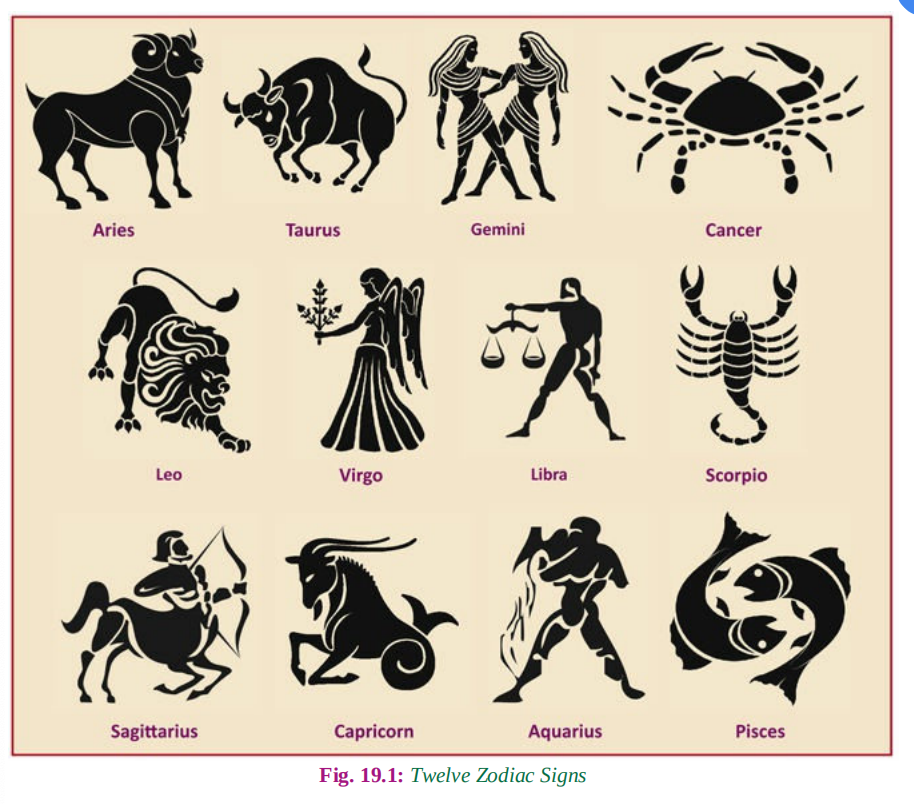
- The solar year has 12 months, named after the zodiac signs (Rashis), which are:
- Mesha (Aries)
- Vrishabha (Taurus)
- Mithuna (Gemini)
- Karka (Cancer)
- Simha (Leo)
- Kanya (Virgo)
- Tula (Libra)
- Vrischika (Scorpio)
- Dhanus (Sagittarius)
- Makara (Capricorn)
- Kumbha (Aquarius)
- Meena (Pisces)
- Lunar Month
- A lunar month ends with either a new moon (Amavasya) or a full moon (Purnima).
- Two methods determine when a lunar month starts:
- Amasanta: Starts with the bright fortnight (Bright Half).
- Purnimanta: Starts with the dark fortnight (Dark Half).
- The lunar month system is widely followed in most regions of India.
- Adhik Masa (Intercalary Month)
- Since the lunar year is shorter than the solar year, an extra month (Adhik Masa or Mal Masa) is added every 2 years and 6 months to synchronize the two.
- The Sun moves through one rashi (zodiac sign) per month, but its motion is not uniform.
- Sankranti marks the entry of the Sun into a new zodiac sign and occurs 12 times a year.
- If a lunar month lacks a sankranti, an Adhik Masa is added.
- If two sankrantis occur in one month, that month is Kshaya Masa (a deleted month).
- Divisions of Time in the Indian Calendar
- Pakshas (Fortnights) in the Lunar Calendar
- Shukla Paksha – Bright half, starting after the new moon.
- Krishna Paksha – Dark half, starting after the full moon.
- Days in the Calendar
- Lunar Day (Tithi or Vasara)
- A tithi (lunar day) is shorter than a solar day, lasting about 23 hours and 37 minutes (23 minutes less than a solar day).
- Solar Day (Divasa)
- Further Divisions of Time
- 1 Divasa (day and night) = 24 hours = 60 Ghatikas
- 1 Ghatika = 60 Palas = 24 minutes
- 1 Pala = 60 Vipalas = 24 seconds
- 2 Ghatikas = 1 Muhurta = 48 minutes
- 2.5 Muhurtas = 2 hours
- Hindu Calendar (Panchanga)
- The Panchanga (Hindu calendar) is based on five elements:
1. Tithi (Lunar Day)
2. Vaara (Weekday)
3. Nakshatra (Lunar Mansion)
4. Yoga (Astronomical Combination)
5. Karana (Half-Tithi)
- The twelve zodiac signs (Rashis) are linked to Nakshatras (constellations). There are 28 Nakshatras, each consisting of a different number of stars.
- The Hindu solar year is divided into two halves:
- Uttarayana (God’s Day) – From Makara Sankranti to Karka Sankranti (January to June).
- Dakshinayana (God’s Night) – From July to December.
- One solar year equals one day and night of the gods.
- The Four Yugas (Eras in Hindu Timekeeping)
- According to Hindu beliefs, time is divided into four Yugas (ages), forming a repeating cycle:
1. Satya Yuga (Krita Yuga) – The golden age of truth and perfection.
- No suffering, agriculture, or mining.
- Humans were virtuous and saintly.
- Lifespan: Extremely long.
2. Treta Yuga – The rise of emperors and wars.
- Weather became extreme.
- Agriculture and labor began.
- Lifespan: 1,000-10,000 years.
3. Dvapara Yuga – The decline of virtue.
- Diseases and conflicts increased.
- Humans became weaker.
- Lifespan: A few centuries.
4. Kali Yuga – The current age of darkness and ignorance.
- Moral and physical decline.
- People are driven by greed and passions.
- Lifespan: 100 years (expected to decrease to 20 years by the end of the Yuga).
- The current era is Kali Yuga, which began in 3102 BCE.
- Brahma’s Timekeeping
- One Mahayuga = 4.32 million years
- 1,000 Mahayugas = One Day of Brahma (4.32 billion years)
- A Mahakalpa (Brahma’s lifespan) = 100 Brahma years
- Classification of Indian Calendar Forms
- Vikram Samvat
- Origin: Started in 56 BCE.
- Founder: Attributed to King Vikramaditya of Ujjain.
- Type: Luni-solar calendar, 56.7 years ahead of the Gregorian calendar.
- New Year: Begins after the new moon in Chaitra (March–April).
- Months: 12 lunar months – Chaitra, Vaisakha, Jyeshtha, Ashadha, Sravana, Bhadrapada, Ashwina, Kartika, Margashirsha, Pausha, Magha, Phalguna.
- Adjustment: Adhik Masa (extra month) added every 3 years.
- Saka Samvat
- Origin: Began in 78 CE.
- Founder: King Shalivahan.
- Type: Luni-solar calendar.
- New Year: Starts on March 22 (March 21 in leap years).
- Months: Same as Vikram Samvat, but start differently.
- Days in a Year: 365 days.
- Zero Year: 78 CE.
- Hijri Calendar
- Origin: Based on Prophet Muhammad’s migration in 622 CE.
- Type: Lunar calendar, 354 days in a year.
- Months: Muharram, Safar, Rabi-al-Awwal, Rabi-ath-Thani, Jumada-al-Ula, Jumada-al-Akhirah, Rajab, Shaban, Ramadan, Shawwal, Dhu-al-Qadah, Dhu-al-Hijjah.
- Sacred Months: 1st, 7th, 11th, and 12th.
- Difference: Falls one year short every 33 years compared to the Gregorian calendar.
- Gregorian Calendar
- Origin: Based on the birth of Jesus Christ.
- Type: Solar calendar.
- Year Length: 365 days, 5 hours, 48 minutes, 46 seconds.
- Leap Year: Adds one extra day to February every 4 years.
- Use: Official civil calendar worldwide.
- Zoroastrian Calendar
- Origin: Began in 632 CE.
- Type: Solar calendar.
- Nowruz: New Year on March 20/21/22.
- Variants:
- Shahenshahi Calendar (used by Parsis in India).
- Qadimi Calendar (used by Iranians).
- National Calendar of India
- Official Name: Saka Calendar.
- Adopted: 1957 by the Government of India.
- Implementation Date: March 22, 1957 (Chaitra 1, 1879 Saka Era).
- Purpose: To unify 30 different calendars used in India.
- Usage:
- Government documents.
- News broadcasts (All India Radio).
- Religious calculations in Hinduism.
- Fairs and festivals of India
- Introduction
- Festivals and fairs are an integral part of Indian culture.
- They serve as an expression of beliefs and emotions.
- India, being a secular country, observes holidays for festivals from different religions and communities.
- Some festivals fall under the “restricted list”, meaning employers can choose whether to declare a holiday or not.
- Festivals are an important way to understand Indian culture, and many tourists include them in their travel plans.
- National Festivals
- Celebrated to mark historical events of national significance.
- Instill patriotism in the hearts of Indians.
- India has three National Festivals:
- Republic day (26th January)
- Independence day (15th August)
- Gandhi Jayanti (2nd October)
- Religios festivals
- Religious festivals are celebrated by specific communities based on their beliefs. However, in a secular country like India, people from different religions also participate.
- For example, Holi, a Hindu festival, is enjoyed by non-Hindus as well.
- Hindu Festivals
| Name |
Details |
| Diwali or Deepawali |
It is the festival of lights celebrated on the new moon (Amavasya) day in the month of Kartik, which generally falls in October and November. The day before the festival is called Naraka Chaturdashi. |
| Dev Deepawali |
Celebrated in Varanasi (Uttar Pradesh), it falls on the full moon of the Hindu month of Kartika (November-December), 15 days after Diwali. People light lamps on the ghats of River Ganga. It is also observed as Tripura Purnima Snan. |
| Holi |
It is the festival of colors, celebrated across religions in the month of Phalguna (February-March). It signifies the victory of good over evil, i.e., the burning of Holika and the saving of Bhakt Prahlad. In West Bengal and parts of Assam, it is known as Dol Jatra. |
| Makara Sankranti |
Dedicated to the Sun God, it celebrates the transition of the Sun in the Northern Hemisphere. Celebrated in January, lakhs of people pilgrimage to Gangasagar (West Bengal) and Prayagraj for a holy dip. It is also celebrated as the Kite Flying Festival in some parts of India. |
| Janamasthami |
Celebrates the birth anniversary of Lord Krishna and generally falls in August. |
| Dussehra |
Also known as Bijaya Dashmi, it is celebrated across India to honor the victory of Lord Rama over Ravana. Ravana Dahan (burning of Ravana effigies) is a common feature, especially in North India. |
| Durga Puja |
Majorly celebrated in Eastern India (especially West Bengal), it marks Goddess Durga’s triumph over demon Mahisasura. |
| Ganesh Chaturthi |
Celebrates the birth anniversary of Lord Ganesha. It is widely celebrated across India, with Maharashtra hosting the grandest festivities. |
| Rath Yatra (Chariot Festival) |
The biggest festival of Odisha, dedicated to Lord Jagannath, Balabhadra (his brother), and Subhadra (his sister). The chariot festival of Puri is the largest and most famous. |
| Chhath Puja |
The main festival of Bihar and Jharkhand, celebrated to honor the Sun Goddess. It involves rigorous fasting, holy baths, and offerings to the Sun Goddess. Thekua (a sweet dish) is a special offering. |
| Nabakalebar Festival |
Observed at Shri Jagannath Temple, Puri (Odisha) after every 8 to 19 years. Nabakalebar means "new body," where the idols of Lord Jagannath, Balabhadra, Subhadra, and Sudarshan are replaced with new ones made from selected neem trees. In March 2018, the President of India released Rs 1000 and Rs 10 commemorative coins for this festival. |
- Muslim Festivals
- Eid-ul-Fitr
- Celebrated worldwide by the Muslim community, marking the end of the holy month of Ramadan (ninth month of the Islamic calendar).
- During Ramadan, Muslims fast from sunrise to sunset as ordained in Sharia law.
- The festival is observed on the first day of Shawwal, following the sighting of the moon at the end of Ramadan.
- According to Islamic traditions, the Holy Quran was revealed on one of the odd nights during the last ten days of Ramadan, often calculated as the 27th night.
- Ramadan is historically significant as:
- The Prophet Muhammad achieved victory in the Battle of Badr, leading to the conquest of Mecca.
- The martyrdom of Ali (the Prophet’s son-in-law) occurred on the 21st day of Ramadan.
- Eid-ul-Zuha (Eid-al-Adha / Bakr-Eid)
- Celebrated on the 10th day of Dhu-al-Hijjah (12th month of the Islamic calendar).
- Honors the devotion of Prophet Ibrahim, who was willing to sacrifice his son as an act of obedience to Allah.
- Instead, Allah replaced the sacrifice with a goat, and in remembrance, Muslims sacrifice a goat on this day.
- The meat is distributed as follows:
- One-third for family
- One-third for relatives and neighbors
- One-third for the poor
- This Eid also marks the beginning of Hajj, the sacred pilgrimage to Mecca.
- Milad-un-Nabi (Barah-wafat)
- Commemorates the birth anniversary of Prophet Muhammad, observed on the 12th day of Rabi-al-Awwal (3rd month of the Islamic calendar).
- The day is believed to also mark the Prophet’s passing, making the celebrations subdued.
- A national holiday in many countries, observed with solemnity and reverence.
- Celebrations include:
- Quran recitations in mosques
- Recital of Qasida al-Burda Sharif, a sacred 13th-century poem by Sufi poet Busiri
- Singing Nats (poems praising the Prophet)
- Known as Barah (12) wafat (death), symbolizing the 12 days of illness before the Prophet’s passing.
- Holds special significance in Kashmir, where the Prophet’s relics are displayed at Hazratbal Shrine in Srinagar, drawing thousands of devotees.
- Muharram
- A solemn occasion marking the martyrdom of Hussain, the grandson of Prophet Muhammad.
- Falls in the first month of the Islamic calendar, which also marks the Islamic New Year.
- The 10th day, Yaum-al-Ashura, is a day of mourning, particularly for Shia Muslims.
- Observed in memory of Hussain Bin Ali’s martyrdom in the Battle of Karbala (61 Hijri / 680 AD).
- Traditions in India:
- Processions (Tajia)
- Self-flagellation with chains (by some Shia mourners) to replicate Hussain’s suffering
- Wearing black clothing as a sign of mourning
- Distribution of sherbet or juice
- Shab-e-Barat (Night of Emancipation)
- Observed on the night between the 14th and 15th of Shaban (8th month of the Islamic calendar).
- Believed to be the night when people’s destinies are determined.
- Among Shia Muslims, the 15th of Shaban is celebrated as the birth anniversary of Imam Muhammad Al-Mahdi, the 12th Imam, revered for his role in eliminating oppression and injustice.
- Shab-e-Miraj (Night of Ascent)
- Observed on the 27th day of Rajab (7th month of the Islamic calendar), two years before Hijra.
- Commemorates Prophet Muhammad’s miraculous journey through the heavens, where he reached near Almighty.
- It was on this journey that five daily prayers were made obligatory for Muslims.
- Observances include:
- Mosques decorated with lights and candles
- Recitations of hymns and praises for the Prophet
- Narration of spiritual stories of the Holy Prophet
- Acts of charity, including food distribution to the poor
- Devotees spending the entire night in prayer and remembrance of God.
- Christian Festivals
- Christmas
- Celebrated worldwide on December 25 to mark the birth of Jesus Christ.
- Festivities begin with midnight mass held in churches on the night of December 24–25, signifying Christ’s birth at midnight.
- People attend church services, which include special programs in remembrance of Christ’s teachings.
- Traditions associated with Christmas:
- Christmas Tree: Decorated with lights and ornaments in homes.
- Santa Claus: A mythical figure who brings gifts to children.
- Carol Singing: People sing religious hymns and distribute sweets and cakes.
- Exchange of gifts and visiting loved ones.
- Easter and Good Friday
- Easter: Celebrates the resurrection of Jesus Christ, three days after his crucifixion.
- Signifies the victory of life over death and is one of the most important Christian festivals.
- In early Christianity, Jewish Christians observed Easter on Nisan 14, while others celebrated it on the Sunday closest to Nisan 14.
- The Council of Nicaea (325 AD) fixed Easter’s date as the first Sunday after the first full moon following the vernal equinox (around March 21).
- Good Friday:
- Commemorates the crucifixion of Jesus Christ and falls in April each year.
- Considered necessary for Jesus’s resurrection, symbolizing hope and love for humanity.
- Special masses are held in churches worldwide.
- Sikh Festivals
- Gurpurab
- Celebrated by Sikhs worldwide to mark the birth anniversaries of the 10 Sikh Gurus.
- The most significant Gurpurabs honor Guru Nanak and Guru Gobind Singh.
- Other Gurpurabs commemorate the martyrdom of Guru Arjan Dev and Guru Tegh Bahadur, who sacrificed their lives resisting Mughal persecution.
- Celebrations include:
- Akhand Path (continuous reading of Guru Granth Sahib).
- Prabhat Pheris (early morning processions with hymn singing).
- Langar (community meals at Gurudwaras).
- A grand procession with Guru Granth Sahib placed on a floral float, led by Panj Pyare (five beloved ones of Guru Gobind Singh) carrying Sikh flags (Nishan Sahib).
- Parkash Utsav Dasveh Patshah
- Celebrates the birth of Guru Gobind Singh, the 10th Sikh Guru.
- Also called the Birth Celebration of the 10th Divine Light.
- Observed annually on January 31.
- Maghi
- An annual Sikh gathering celebrated in Muktsar.
- Honors the 40 Sikh martyrs (Chali Mukte) who fought against the Mughals.
- The 10th Guru, Guru Gobind Singh, died in battle against Wazir Khan in 1705.
- Devotees take a procession to the battlefield and bathe in the sacred waters of Muktsar.
- Observed on January 14 each year.
- Hola Mohalla
- A grand Sikh festival held annually in Anandpur Sahib in March.
- Started by Guru Gobind Singh as an event for mock battles and military drills.
- Includes displays of horse riding, swordsmanship, kirtan, and poetry competitions.
- Often referred to as the “Sikh Olympics” for its martial arts competitions.
- Vaisakhi/Baisakhi
- Celebrated on April 13 or 14, marking the Sikh New Year and the founding of Khalsa Panth.
- Also a spring harvest festival.
- Observances include:
- Gurudwaras decorated with kirtans (hymns).
- Sikhs taking a ritual bath in sacred rivers.
- Visiting temples, meeting friends, and celebrating with festive food.
- Lohri
- Celebrated on January 13, a day before Makar Sankranti.
- Marks fertility and the spark of life.
- Observances:
- People gather around bonfires, throw sweets, puffed rice, and popcorn into the flames.
- Singing of folk songs and exchanging greetings.
- Symbolizes the victory of light over darkness.
- Sodal Mela
- One of the major fairs of Punjab, held in Jalandhar in September (month of Bhadon).
- Organized in homage to Baba Sodal, a revered spiritual figure.
- Celebrations include:
- The Samadhi of Baba Sodal is adorned with rosaries and flowers.
- Devotees take a holy dip in Sodal ka Sarovar (a sacred tank).
- Offerings are made at the Samadhi, and prayers are conducted.
- Jain Festivals
- Mahavir Jayanti
- Celebrates the birth anniversary of Lord Mahavira, the 24th Tirthankara of Jainism.
- Observed on the 13th day of Chaitra’s waxing moon.
- Jain temples are decorated with saffron flags.
- The idol of Mahavira is given a ceremonial bath (abhishek) and taken in a procession.
- Paryushana
- An annual Jain festival lasting 8 days for Svetambaras and 10 days for Digambaras in Bhadrapada (August/September).
- Marks the monsoon retreat of Jain monks.
- Rituals include temple visits, listening to Kalpa Sutra discourses, and Pratikraman (meditation kriya).
- Concludes with Kshamavani (Forgiveness Day), where people seek forgiveness by saying “Micchami Dukkadam”.
- Mahamastakabhisheka
- Held once every 12 years in Shravanabelagola, Karnataka.
- A holy bathing ceremony of the 57-ft high statue of Siddha Bahubali, son of Rishabhdev.
- The statue is bathed with milk, sugarcane juice, saffron paste, and powders of sandalwood, turmeric, and vermilion.
- Devotees offer flower petals, gold and silver coins, and precious stones.
- Gyana Panchami
- Celebrated on the fifth day of Kartika as Knowledge Day.
- Holy scriptures are displayed and worshipped.
- Varshi Tapa (Akshay Tritiya Tapa)
- Honors Rishabhdev, the first Jain Tirthankara, who fasted for 13 months and 13 days.
- The fast ended on the third day of Vaishakh’s bright fortnight in the Jain calendar.
- Observers of this fasting are called Varshi Tapa.
- Maun-Agiyara
- Celebrated on the 11th day of Magshar (October/November).
- Observers maintain complete silence and fast for the entire day.
- Meditation is a key part of the observance.
- Navapad Oli
- A nine-day semi-fasting festival.
- Observers eat only one plain meal per day.
- Occurs twice a year: March/April and September/October.
- Buddhist Festivals
- Buddha Purnima (Buddha Jayanti)
- Celebrates the birth anniversary of Lord Buddha in April/May.
- Known as Saga Dawa (Dasa) in Sikkim and Vishakha Puja in Theravada tradition.
- Major celebrations in Sarnath (Uttar Pradesh) and Bodh Gaya (Bihar).
- Rituals include prayers, sermons on Buddha’s life, chanting scriptures, worshipping Buddha’s idol and the Bodhi tree, and meditation.
- Different sects celebrate differently:
- Mahayana Buddhists: Organize large processions with musical instruments like gyalings and read Kangyur texts.
- Theravada Buddhists: Focus on offering ceremonial prayers to Buddha’s idols.
- Songkran
- A spring cleaning festival held in mid-April.
- People clean houses, wash clothes, and sprinkle perfumed water on monks.
- Ploughing Festival
- Celebrates Buddha’s first enlightenment experience at the age of seven.
- Held in May, marking the occasion when Buddha watched a ploughing event with his father.
- Ritual reenactment includes two white oxen pulling a gold-painted plough, followed by four girls dressed in white scattering rice seeds.
- Ulambana (Ancestor Day)
- Observed from the 1st to the 15th day of the 8th lunar month.
- Based on the belief that Hell’s gates open, allowing ghosts to visit the world for 15 days.
- Food offerings are made to ease the suffering of wandering spirits.
- On the 15th day, people visit cemeteries and make offerings to ancestors.
- Hemis Gompa Festival
- Held at Hemis Gompa Monastery (Ladakh) in honor of Guru Padmasambhava (Rinpoche), the founder of Tibetan Buddhism.
- Celebrates the victory of good over evil.
- Main attraction: Mask dance performed by Lamas, accompanied by traditional music using cymbals, large-pan drums, small trumpets, and wind instruments.
- Sindhi Festivals
- Chaliho Sahib
- A 40-day fast observed in July-August.
- Devotees pray to Lord Jhulelal for 40 days.
- The festival ends with Thanksgiving Day celebrations.
- The festival originates from the time when Mirkshah Badshah, a Muslim invader of Sindh, persecuted the people of Thatta.
- The people prayed to Varun Devta (Water God) by fasting for 40 days along the riverbanks.
- On the 40th day, Jhulelal appeared as an answer to their prayers.
- Cheti Chand (Sindhi New Year)
- Celebrated worldwide on Chaitra’s first day.
- Honors the birth anniversary of Jhulelal, the patron saint of Sindhis.
- Celebrated with pomp and joy.
- Sindhis take Baharana Sahib (a ceremonial offering) to a nearby river. It consists of:
- Jyot (sacred flame)
- Misiri (crystals of sugar)
- Phota (cardamom)
- Fal (fruits)
- Akha (rice grains)
- A Jhulelal idol is carried in procession as part of the celebrations.
- Parsi (Zoroastrian) Festivals
- Jamshedi Navroz
- Celebrates the New Year for the Parsi community.
- Falls on Roj Hormuzd, the first day of Mah Frawardin in the Shehanshahi calendar.
- Marks the end of winter and the beginning of the New Year, symbolizing the Universal Dawn.
- Parsis pay respect to Khorshed and Meher Yazads, divine beings associated with the Sun.
- People visit each other and the Fire Temple to offer prayers.
- Other Parsi Festivals
| Name of the Festival |
Falls on the Day |
Occasion |
Rituals Observed |
| Zarthost No Deeso |
On the 11th day of the 10th month (Khorshedroz, Daemah) |
Death anniversary of Prophet Zoroaster |
Parsis or Zoroastrians go to the Fire Temple, offer prayers, and listen to the life and works of the Prophet. |
| Khordad Sal |
On the sixth day of the Parsi month of Farvardin (August/September) |
Birth anniversary of Prophet |
Parsis offer prayers and hold special grand feasts. |
| Pateti |
On the last Gatha day of the Parsi calendar |
To offer repentance for crimes committed during the year |
Parsis offer prayers, give alms to the poor, and make feasts at home. |
- Secular Festivals
- Khajuraho Dance Festival
- Instituted in 1975 by the Government of India in collaboration with the Madhya Pradesh Kala Parishad.
- Promotes tourism in the state and highlights the beauty and eroticism of Khajuraho temples.
- Reflects the spirit of eternal glory, perseverance of dance, and architectural heritage.
- New Year
- Marks the beginning of a new Hindu calendar, believed to be the day when Lord Brahma began the creation of the world.
- Celebrated under different names across India:
| Festival Name |
Region |
| Ugadi or Chaitra Shudhdha Paadyami |
Andhra Pradesh and Karnataka |
| Gudi Padwa or Gudi Padvo |
Maharashtra |
| Samvatsar Padvo |
Goa |
| Naba Barsha (Poila Boisakh) |
West Bengal |
| Puthandu |
Tamil Nadu |
| Vishu |
Kerala |
- Sair-e-Gul Faroshan (Phool Walon Ki Sair)
- Annual three-day festival of flowers in Delhi, symbolizing communal harmony.
- A procession of decorated palm leaf fans (pankhas) is taken from the tomb of Khwaja Bakhtiyar Kaki (Mehrauli) to the Yogmaya Temple.
- Initially patronized by Mughal Emperor Akbar II, banned by the British, and reinstated in 1962 by J. L. Nehru.
- Tyagaraja Aradhana
- Commemorates the ‘Samadhi’ day of the famous Telugu Saint and composer Tyagaraja.
- Held in Andhra Pradesh and Tamil Nadu, primarily at Thiruvaiyaru.
- Attended by leading exponents of Carnatic music who pay tribute to Tyagaraja.
- Tyagaraja, along with Muthuswami Dikshitar and Syama Sastri, forms the Trinity of Carnatic music.
- Onam
- State festival of Kerala, celebrated in the first month of the Malayalam calendar (Chingam).
- A harvest festival that also marks the homecoming of King Mahabali.
- Celebrations include feasts, dances, floral arrangements, boat races, and elephant processions.
- The highlight is the Vallam Kali (Snake Boat Race) at Punnamada Lake, with winners awarded the Nehru Boat Race Trophy.
- Pongal
- Four-day Tamil harvest festival in January, marking the beginning of Uttarayan (northward journey of the Sun).
- The word ‘Pongal’ means ‘to boil’ in Tamil, signifying the ritual of boiling the first rice of the season.
- Held in the month of Thai when crops like rice, sugarcane, and turmeric are harvested.
- Dedicated to Sun God, celebrating the life cycle of grain.
- Sarhul
- Tribal New Year festival in Jharkhand, Odisha, and West Bengal, mainly celebrated by Munda, Oraon, and Ho tribes.
- ‘Sarhul’ means ‘Worship of Sal’ (Sal tree is revered in Sarnaism).
- Celebrated in the spring season (Phalgun month in Hindu calendar).
- Tribals worship Mother Earth and perform the traditional Sarhul dance.
- FESTIVALS OF NORTH-EAST INDIA
- Saga Dawa (Triple Blessed Festival) – Sikkim
- Celebrated by Buddhist communities on the full moon day of the Tibetan lunar month Saga Dawa (May-June).
- Commemorates Buddha’s birth, enlightenment, and parinirvana (death).
- People visit monasteries, offer incense, chant mantras, recite religious texts, and turn prayer wheels.
- Observes three Buddhist principles: generosity (dana), morality (sila), and meditation (bhavana).
- Losoong Festival – Sikkim
- Sikkimese New Year, mainly celebrated by the Bhutia tribe, also observed by Lepchas.
- Harvest festival marked by traditional dances like Cham Dance and Black Hat Dance at monasteries.
- Festivities include drinking locally brewed wine (Chaang) and archery competitions.
- Bihu Festival – Assam
-
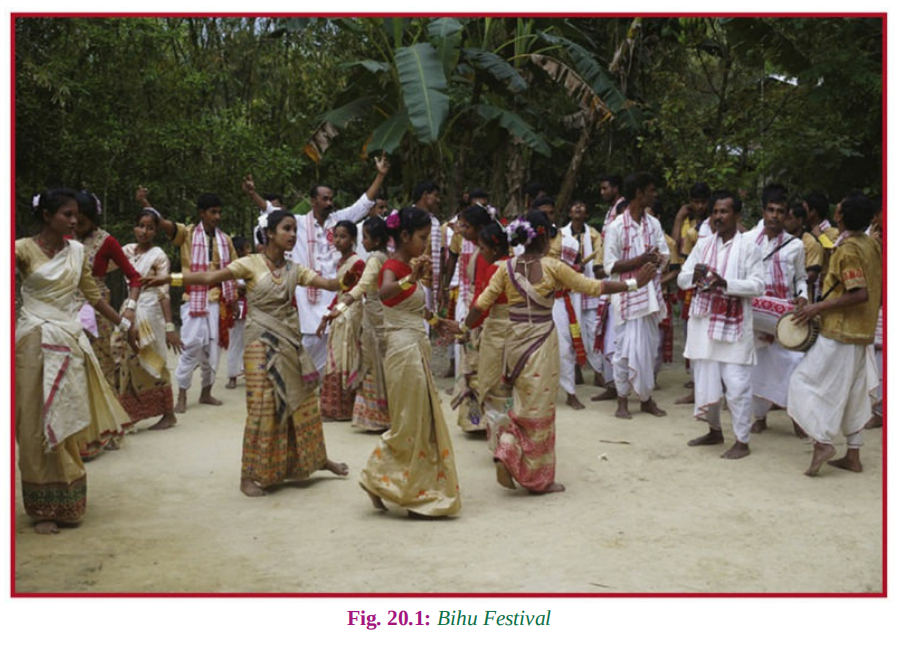
- Set of three non-religious Assamese festivals:
- Bohag Bihu (Rongali Bihu) – Assamese New Year (April)
- Kongali Bihu (Kati Bihu) – October
- Bhogali Bihu (Maagh Bihu) – January
- Bohag Bihu is the most important, celebrated for many days (starting April 14).
- Includes traditional Assamese songs, dances, and community feasts.
- Rituals: bathing cows (Gora Bihu), exchanging Gamosa (woven cotton towels), and preparing Pitha (rice-based sweets).
- Hornbill Festival – Nagaland
- 10-day festival starting on December 1 at Kisama Heritage Village.
- Showcases Naga tribes’ cultures, including costumes, weapons, headgears, and traditional performances.
- Moatsu Mong Festival – Nagaland
- Celebrated by the Ao tribe in May after sowing is done.
- A period of recreation and entertainment marked by songs, dances, and the lighting of a bonfire (Sangpangtu).
- Yemshe Festival – Nagaland
- Harvest festival of the Pochuri tribe, celebrated in September.
- Unique custom: catching frogs is prohibited during the festival.
- Kharchi Puja – Tripura
-
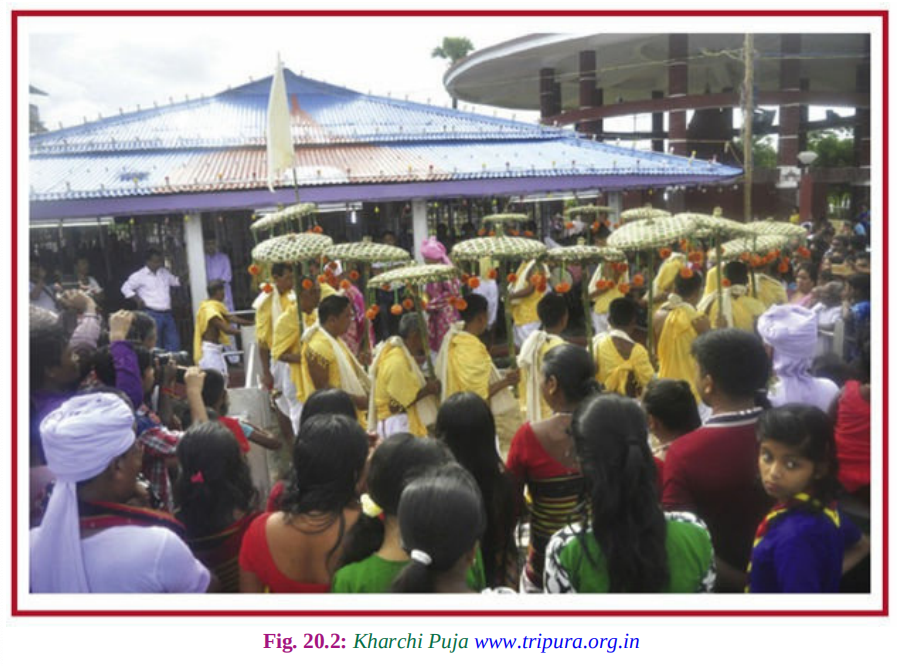
- Hindu festival originally celebrated by the royal family, now widely observed.
- Held in July over a week to worship Earth and 14 other deities.
- Thousands of devotees visit the temple in Agartala.
- Cheiraoba Festival – Manipur
- Manipuri New Year, celebrated in April.
- Associated with Sanamahi, the domestic deity of the Meitei tribe.
- Households clean and buy new utensils and clothes.
- Wangala Festival (100 Drums Festival) – Meghalaya
-
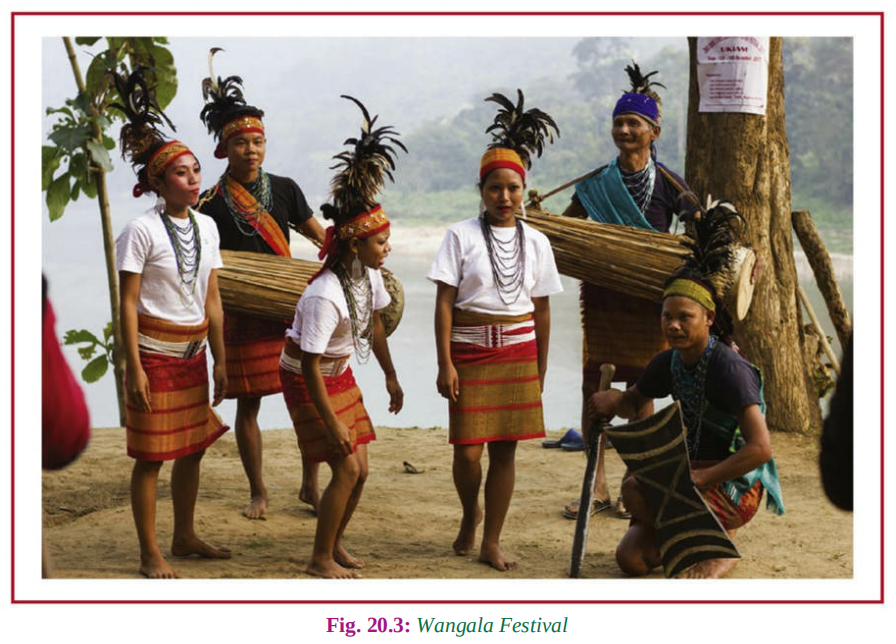
- Celebrated by the Garo tribe to mark the end of the harvest season.
- A thanksgiving festival for the deity ‘Misi Saljong’.
- Features drum performances, feathered headgear, and traditional dances.
- Kang Chingba (Ratha Yatra of Manipur)
- Major Hindu festival similar to Puri’s Jagannath Rath Yatra.
- Celebrated for 10 days in July, with chariots (Kang) carrying deities from Sri Govindajee Temple in Imphal.
- Ambubachi Mela – Assam
-
- Held in June at Kamakhya Temple (Guwahati), known as the ‘Mahakumbh of the East’.
- Associated with fertility rituals; devotees seek blessings for childbirth.
- Temple remains closed for three days, as the goddess is believed to undergo her annual menstrual cycle.
- Other North-East Festivals:
- Sekrenyi Festival (Purification festival of Angami tribe, Nagaland, February).
- Majuli Festival (Assam, November, cultural event in Majuli).
- Lui-Ngai-Ni Festival (Nagaland & Manipur, seed-sowing festival).
- Dree Festival (Apatani tribe, Arunachal Pradesh, harvest festival).
- Losar Festival (Monpa tribe, Arunachal Pradesh, Tibetan New Year).
- Khan Festival (Miji tribe, Arunachal Pradesh, religious festival).
- Fairs of India
- A fair is a temporary gathering of people for various activities, including religious, entertainment, and commercial purposes.
- India hosts numerous fairs across different regions, each with unique cultural and historical significance.
- Religious and Cultural Fairs
- Kumbh Mela
- The largest religious gathering in the world, where millions of people take a dip in the holy river.
- Held at four Hindu pilgrimage sites: Prayagraj, Haridwar, Nashik-Trimbak, and Ujjain.
- Based on Hindu mythology, linked to the churning of the ocean (‘Samudra Manthan’) and the divine nectar (‘Amrit’).
- Held every 12 years at each location, with Ardh-Kumbh Mela at Prayagraj and Haridwar every six years.
- UNESCO recognized it as an intangible cultural heritage in 2017.
- Kumbh Mela Locations:
| Place |
River |
| Prayagraj (Uttar Pradesh) |
At the confluence of the Ganga, Yamuna, and the mythical Saraswati |
| Haridwar (Uttarakhand) |
Ganga |
| Nashik-Trimbak (Maharashtra) |
Godavari |
| Ujjain (Madhya Pradesh) |
Shipra |
- Sonepur Mela (Bihar)
- One of the largest cattle fairs in Asia, held at the confluence of the Ganga and Gandak rivers.
- Takes place in November on Kartik Poornima.
- Historically, Chandragupta Maurya is said to have bought elephants and horses here.
- Chitra Vichitra Fair (Gujarat)
- Largest tribal fair in Gujarat, celebrated by the ‘Garasia’ and ‘Bhil’ tribes.
- Tribal women mourn for their departed loved ones on ‘Amavasya’ after Holi, followed by festivities.
- Features traditional dance, handicrafts, and silver jewelry, attracting many tourists.
- Shamlaji Fair (Gujarat)
- Held in honor of Lord Shamlaji, believed to be an incarnation of Krishna or Vishnu.
- Bhil tribes deeply revere Shamlaji, calling him ‘Kaliyo Dev’.
- Devotees take a holy bath in the Meshwo River.
- Celebrated in November for about three weeks, with Kartik Poornima as the main day.
- Gangasagar Mela (West Bengal)
- Held in January-February at the mouth of the Hooghly River.
- Pilgrims take a holy dip in the Ganges on Makar Sankranti.
- Naga Sadhus play a prominent role in the fair’s spiritual identity.
- Livestock and Trade Fairs
- Pushkar Fair (Rajasthan)
- One of the world’s largest camel and cattle fairs, held annually in Pushkar.
- Begins on Kartik Poornima and lasts for a week.
- Features events like camel races, moustache competitions, turban tying, and cultural performances.
- A major attraction for foreign tourists.
- Kolayat Fair (Kapil Muni Fair, Rajasthan)
- Held in Bikaner on Kartik Poornima.
- Devotees take a dip in Kolayat Lake to cleanse their sins.
- Named after sage Kapil Muni, known for intense meditation.
- Includes a large cattle fair and showcases Rajasthani culture.
- Cultural and Entertainment Festivals
- Desert Festival (Rajasthan)
- A three-day event in Jaisalmer, usually in February.
- Highlights Rajasthani culture with folk dances, camel rides, sand dune trips, and competitions.
- Concludes with a folk music performance under the moonlit sky.
- Surajkund Crafts Fair (Haryana)
- An international crafts fair held annually in February near Faridabad.
- Features traditional Indian crafts, pottery, weaving, sculpture, embroidery, and metalwork.
- Includes cultural performances and regional cuisine.
- Goa Carnival
- Introduced by the Portuguese, celebrated 40 days before Lent.
- Involves feasting, masked parades, street parties, and live performances.
- Showcases Goan heritage and Portuguese cultural influence.
- Attracts thousands of tourists annually.
- Awards and Honours
- Introduction
- Awards and honours recognize outstanding achievements.
- The Government of India grants several awards annually.
- Awards Given by the Government of India
- Bharat Ratna
-
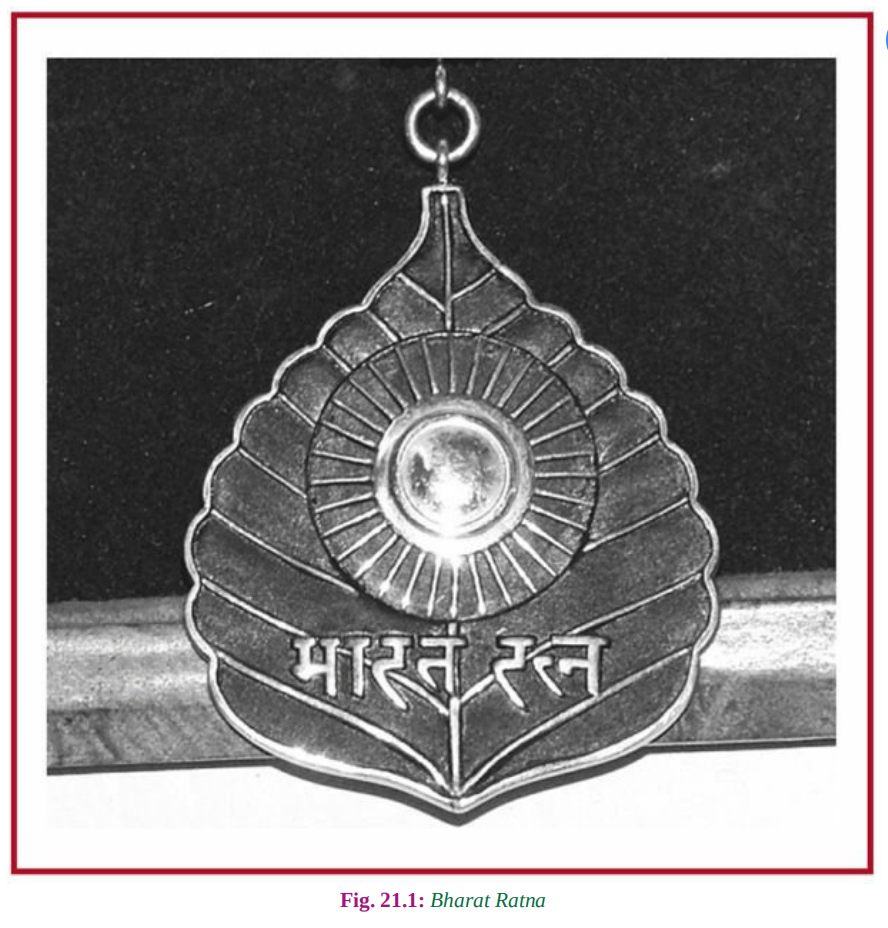
- Highest civilian award in India.
- Instituted in 1954.
- Originally for art, science, literature, and public service.
- Expanded in 2011 to include all fields.
- Recommended by the Prime Minister, approved by the President.
- Maximum of three awardees per year.
- No monetary reward, only a medal and certificate.
- Ranked seventh in the Indian Order of Precedence.
- Cannot be used as a prefix or suffix.
- Notable Recipients
| Year |
Name of the Awardee |
About the Awardee |
| 1954 (First Awardees) |
C. Rajagopalachari |
Freedom fighter and last Governor-General of India |
|
Dr. C.V Raman |
Physicist |
| 1955 |
Dr. S. Radhakrishnan |
Philosopher, first Vice President and second President of India |
|
Jawaharlal Nehru |
Freedom fighter, writer and first Prime Minister of India |
|
Bhagwan Das |
Freedom fighter, philosopher and educationist |
|
M. Visvesvaraya |
Civil Engineer, Statesman, Diwan of Mysore |
| 1957 |
Govind Ballabh Pant |
Freedom fighter, Chief Minister of Uttar Pradesh and Home Minister of India |
| 1958 |
Dhondo Keshav Karve |
Social reformer and educator |
| 1961 |
Bidhan Chandra Roy |
Physician, politician and social worker |
|
Purushottam Das Tandon |
Titled as “Rajarshi”, independence activist and politician |
| 1962 |
Rajendra Prasad |
Jurist, freedom fighter and first President of India |
| 1966 (First Posthumous awardee) |
Lal Bahadur Shastri |
Freedom fighter and second Prime Minister of India |
| 1971 |
Indira Gandhi |
Third Prime Minister of India |
| 1980 |
Mother Teresa |
Social worker, founder of Missionaries of Charity and a Catholic nun |
| 1987 |
Khan Abdul Ghaffar Khan |
Known as Frontier Gandhi |
| 1990 |
B.R Ambedkar |
Crusader against untouchability, Chief Architect of Indian Constitution |
|
Nelson Mandela |
Gandhi of South Africa |
| 1997 |
Dr. A.P.J Abdul Kalam |
Scientist and 11th President of India |
| 1999 |
Prof. Amartya Sen |
Economist |
| 2014 |
Sachin Tendulkar |
Cricketer |
|
C.N.R Rao |
Chemist and Scientist |
| 2015 |
Madan Mohan Malviya |
Scholar and Educational Reformer |
|
Atal Bihari Vajpayee |
Prime Minister of India for three terms |
| 2019 |
Pranab Mukherjee |
13th President of India |
|
Bhupen Hazarika |
Singer, lyricist, musician, etc. from Assam |
|
Nanaji Deshmukh |
Social activist |
- Padma Awards
- Instituted in 1954.
- Given for exceptional service in various fields.
- Announced annually on Republic Day.
- Not awarded in 1977, 1980, and 1993–1997.
- Rules
- Higher degrees of the award can be given after five years.
- Rarely given posthumously, except in exceptional cases.
- Must include an element of public service.
- Government servants (except doctors & scientists) are ineligible.
- Categories
- Padma Vibhushan: 2nd highest civilian award.
-
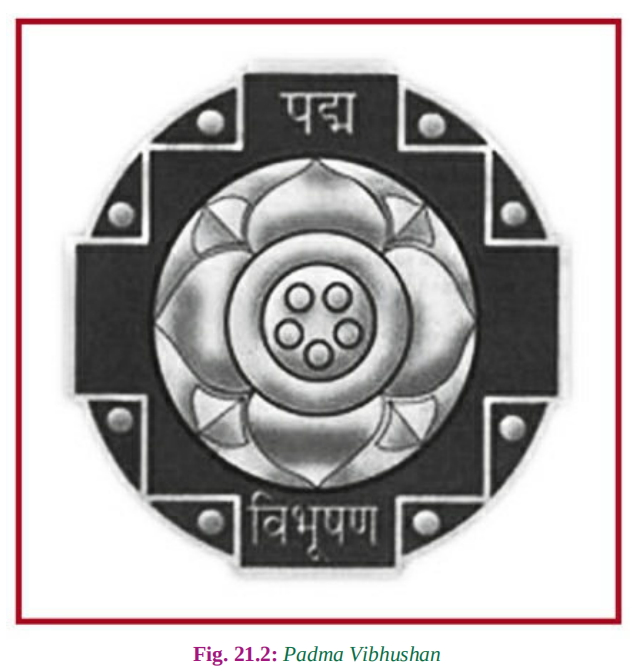
- Padma Bhushan: 3rd highest civilian award.
-
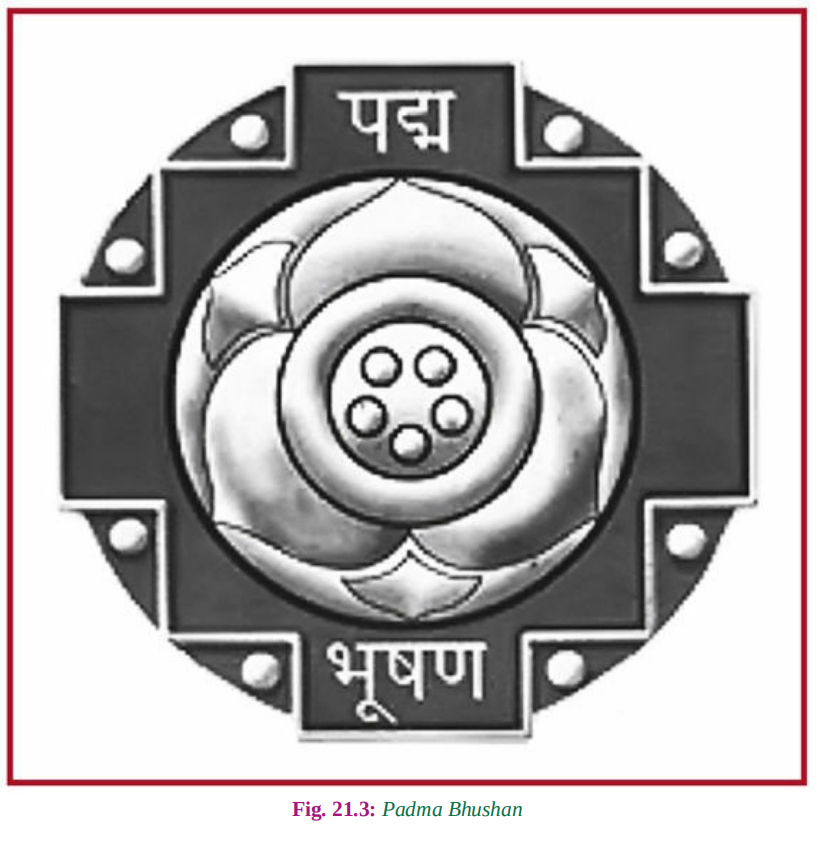
- Padma Shri: 4th highest civilian award.
-
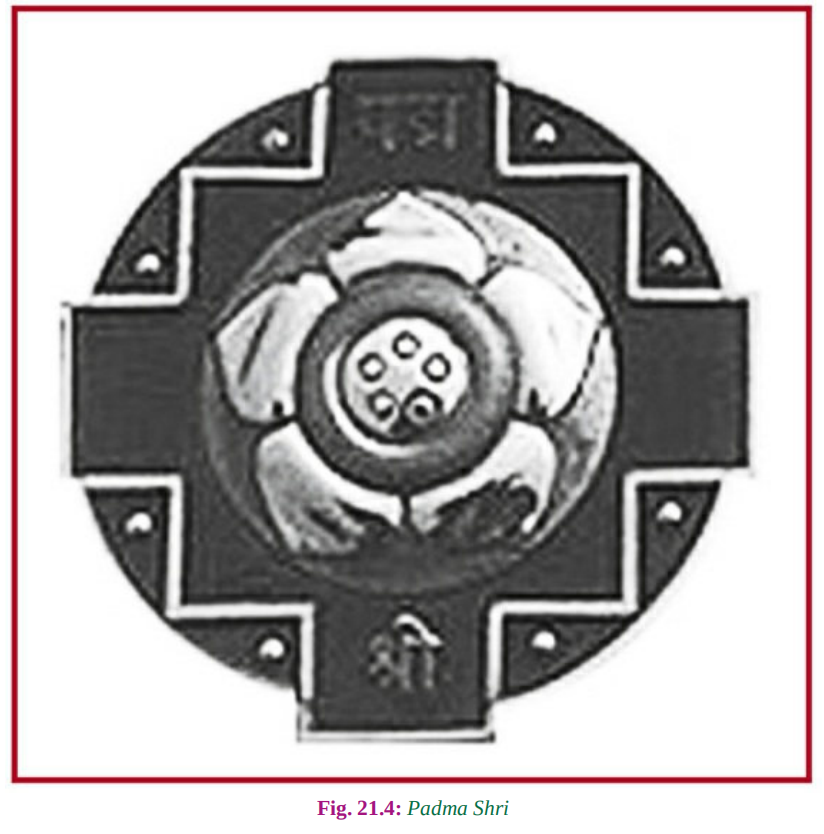
- National Film Awards
- Started in 1954.
- Organized by the Directorate of Film Festivals since 1973.
- Winners chosen by a national selection panel.
- Awarded by the President of India.
- Includes Bollywood and regional films.
- Major Categories
| Award Category |
Details |
| Swarna Kamal (Golden Lotus Award) |
Best Feature Film (five categories) |
| Best Direction |
- |
| Best Children's Film |
- |
| Best Popular Film Providing Wholesome Entertainment |
- |
| Indira Gandhi Award for Best Debutant Director |
- |
| Rajat Kamal (Silver Lotus Award) |
It has 25 major categories like Best Feature Film, etc. |
| Best Feature Film in the languages specified in Schedule VIII of the Constitution |
12 Categories including Hindi, Bengali, etc. |
| Best Feature Film in languages other than those specified in Schedule VIII of the Constitution |
Five categories including English, Bhojpuri, Kokborok, Monpa, and Tulu |
- Dadasaheb Phalke Lifetime Achievement Award
- Introduced in 1969.
- India’s highest film award.
- Given by the Directorate of Film Festivals.
- Recognizes outstanding contributions to Indian cinema.
- Includes a Swarna Kamal (Golden Lotus) medallion and ₹10 lakh prize.
- Sahitya Akademi Award
- Instituted in 1954.
- Given by the Sahitya Akademi (National Academy of Letters).
- Awarded annually for outstanding literary work in 24 languages.
- Includes a ₹1 lakh cash prize and a plaque.
- Plaque designed by filmmaker Satyajit Ray.
- Other Literary Honours
- Sahitya Akademi Fellowship:
- Highest honour by Sahitya Akademi.
- Bhasha Samman:
- For contribution to Indian languages not covered by the Sahitya Akademi Award. ₹1 lakh prize.
- Translation Awards:
- For translating major works into 24 major languages. ₹50,000 prize.
- Jnanpith Award:
- Given for excellence in literature. ₹11 lakh prize and Saraswati statue.
-
- Saraswati Samman:
- Instituted in 1991 by the K.K. Birla Foundation. ₹15 lakh prize.
- Vyas Samman:
- Instituted in 1991 by the K.K. Birla Foundation. ₹2.5 lakh prize.
- The Fukuoka Prize
- Established by the city of Fukuoka, Japan.
- Recognizes contributions to Asian culture.
- Three categories: Grand Prize, Academic Prize, Arts & Culture Prize.
- Notable Indian Recipients
- 1997: Romila Thapar (Historian).
- 2004: Amjad Ali Khan (Musician).
- 2015: Ramachandra Guha (Historian).
- 2016: A.R. Rahman (Music Composer).
- 2018: Teejan Bai (Folk Singer).
- Law and Culture
- Introduction
- The Constitution of India has three sections specifically designated for the preservation of Indian culture.
- The Government and the Constitution focus on preservation because history, fine arts, and literary artifacts create lasting impressions on the world about our nation’s heritage.
- Below are the related constitutional provisions and Acts.
- Constitutional Provisions
- Article 29: Protection of Interests of Minorities
- Focuses on safeguarding the culture of minority communities.
- States:
“Any section of the citizens residing in the territory of India or any part thereof having a distinct language, script or culture of its own shall have the right to conserve the same.”
- Ensures communities like the tribal populations of Chhattisgarh, Rajasthan, North-East, Odisha, and small groups like Parsis can preserve their culture, language, and literature.
- Guarantees state assistance for cultural preservation.
- No citizen shall be denied state-funded institutional aid based on religion, caste, language, or race.
- Article 49: Protection of Monuments and Places and Objects of National Value
- Ensures the protection of India’s heritage sites and objects.
- Obligates the State to protect artistic and historic monuments.
- Prohibits spoilation, disfigurement, destruction, removal, disposal, or export of any monument declared of national importance by Parliament.
- Article 51A(f): Value and Preserve the Rich Heritage of Indian Culture
- Part of Fundamental Duties.
- Commands citizens to preserve both tangible and intangible heritage.
- Highlights the link between culture, societal evolution, and legal preservation.
- Acts for Cultural Preservation
- Indian Treasure Trove Act, 1878
- Instituted by the British to protect discovered treasures.
- Key Provisions:
- Discoveries must be reported to the District Collector or Government treasury.
- Failure to report or attempts to alter the treasure incur fines or imprisonment.
- Landowners must share a portion of discovered treasures with the Government.
- Ancient Monuments Preservation Act, 1904
- Established by the British to safeguard privately owned historical monuments.
- Requires a conservation agreement between the Central Government and monument owners.
- Prevents alteration, demolition, or sale of protected monuments.
- Later amendments:
- 1932: Introduced the Ancient Monuments Preservation (Amendment) Act.
- 1958: Expanded scope under “The Ancient Monuments and Archaeological Site and Remains Act.”
- 2010: Further refined as “The Ancient Monuments and Archaeological Sites and Remains (Amendment and Validation) Act.”
- The Antiquities (Export Control) Act, 1947
- Enacted to regulate the export of antiquities after Independence.
- Major provisions:
- Export requires a license from the Director General of ASI.
- ASI Director General has the authority to determine whether an object is an antiquity.
- Ancient and Historical Monuments and Archaeological Sites and Remains (Declaration of National Importance) Act, 1951
- Reaffirmed monuments and sites from the 1904 Act as nationally significant.
- Expanded the list of protected sites to 450.
- Later amendments:
- 1958: Broadened protection for sculptures and carvings.
- 2010: Further strengthened preservation measures.
- Key provisions:
- The Central Government can declare any monument of ancient or medieval times as nationally significant.
- The Director General is authorized to acquire, maintain, and protect such sites.
- Allows acquisition and preservation of antiquities, with penalties for damage.
- Antiquities and Art Treasures Act, 1972
- Enacted to regulate trade and prevent smuggling of cultural artifacts.
- Key provisions:
- Defines antiquities as objects over 100 years old, including sculptures, manuscripts, and paintings.
- Exporting antiquities without government authorization is illegal.
- Dealers must obtain a license and register with the Government.
- Unauthorized export results in imprisonment (3 months to 3 years) and fines.
- Public Records Act, 1993
- Enacted for the permanent preservation of public records.
- Key provisions:
- Covers government documents, manuscripts, microfilms, and other records.
- Each government agency must appoint a “Records Officer” and maintain a “Record Room.”
- Records must be appraised every 25 years in consultation with the National Archives.
- Unauthorized removal, destruction, or alteration of records is punishable.
- Conclusion
- The Indian Constitution and government laws ensure the preservation of cultural heritage through various provisions and Acts.
- These evolving legal measures reflect the dynamic relationship between law and culture, adapting to societal changes while safeguarding India’s rich legacy.
- Cultural institutions in India
- Introduction
• The Constitution of India assigns the Government the duty to preserve, conserve, and promote Indian culture.
• Various government and non-government organizations work to safeguard India’s cultural heritage.
- Some of these prominent institutions are:
- The Archaeological Survey of India (ASI)
-
- Operates under the Ministry of Culture.
- India’s primary institution for archaeological research.
- Focuses on preserving tangible heritage in ancient monuments and archaeological sites.
- Governed by:
- Ancient Monuments and Archaeological Sites and Remains Act, 1958.
- Antiquities and Art Treasure Act, 1972 (prevents illegal export of Indian antiquities).
- Employs:
- Archaeologists, architects, conservators, epigraphists.
- Functions through specialized branches:
- Museums.
- Excavation branches.
- Epigraphy branches.
- Building Survey Projects.
- Horticulture branch.
- Temple Survey Projects.
- Underwater Archaeology Wing (unique project).
- Offers diplomas and degrees in archaeology through the Institute of Archaeology, New Delhi.
- Crafts Council of India (CCI)
- Non-profit organization promoting India’s handicraft industry.
- Founded in 1976 by Kamala Devi Chattopadhyay.
- Purpose:
- Support craftspersons with work and recognition.
- Headquarters: Chennai.
- Structure:
- 10 State Councils affiliated with the parent organization.
- Affiliation:
- World Crafts Council (gained a global platform).
- Activities:
- Safeguards craft traditions.
- Protects artisans’ interests.
- Operates craft shops named Kamala to display and sell supported arts and crafts.
- Indira Gandhi National Centre for the Arts (IGNCA)
- Established in 1985 as an autonomous institution.
- Focuses on:
- Research, conservation, display, and dissemination of arts.
- Promotion of critical and creative literature.
- Functional Units:
- Kala Nidhi – Multi-form library.
- Kala Kosa – Studies and publishes fundamental Indian texts.
- Janapada Sampada – Conducts lifestyle studies.
- Cultural Informatics – Uses technology for cultural preservation and propagation.
- Sutradhara – Administrative section supporting all activities.
- Kala Darsana – Executes exhibitions based on IGNCA research.
- Objective:
- To be a major resource center for oral and visual art forms in India.
- All India Radio (AIR)
-
- Premier public service radio broadcaster under the Ministry of Information and Broadcasting.
- Motto: Bahujan Hitaya: Bahujan Sukhaya (“For the welfare and happiness of the masses”).
- Coverage: Reaches 99.19% of India’s population.
- Responsibilities:
- Inform citizens on matters of public interest with a balanced flow of information.
- Languages: Produces content in 23 languages.
- Governed by:
- Prasar Bharati Act (amended in 1990).
- Objectives under the Act:
- Promote national integration and constitutional values.
- Disseminate education and literacy, covering environment, health, family welfare, agriculture, and rural development.
- Highlight issues concerning women, children, disabled persons, minorities, and tribal communities.
- Conduct research and develop new broadcasting technology.
- Showcase India’s cultural diversity and promote youth activities, including sports.
- Nehru Memorial Museum and Library (NMML)
- Built in 1929–30 as part of Lutyens’ Delhi.
- Originally the Teen Murti House, former residence of:
- British Commander-in-Chief (pre-Independence).
- India’s first Prime Minister, Jawaharlal Nehru (1947–1964).
- Converted into a museum and library in 1964 after Nehru’s death.
- Library expansion:
- An exclusive library was built in 1974 due to extensive data collection.
- Purpose of Museum:
- Exhibit memorabilia, personal items, and objects related to Nehru and India’s freedom struggle.
- Activities:
- Organizes lectures, seminars, conferences, and symposiums on Indian history and Nehru’s legacy.
- Centre for Cultural Resources and Training (CCRT)
-
- Established in 1979 under the Ministry of Culture.
- Founded by Dr. Kapila Vatsyayan and Kamala Devi Chattopadhyay.
- Headquarters: New Delhi.
- Regional Centers:
- Udaipur (West).
- Hyderabad (South).
- Guwahati (North-East).
- Purpose:
- Strengthen national identity by integrating culture into education.
- Focus Areas:
- Not just students, but also teachers, principals, and administrative staff.
- Promote awareness of India’s cultural and linguistic diversity.
- Suggested Teaching Methods:
- Conduct workshops to train teachers in traditional Indian crafts.
- Develop curriculum on Indian art and culture for educators.
- Establish a library with scripts, digital photographs, and audio-visual educational materials.
- Government Support:
- Provides scholarships for students, teachers, and artists.
- Offers Young Artists, Junior, and Senior Fellowships for research.
- Runs Cultural Heritage Young Leadership Programme to promote social values and community participation.
- National Archives of India (NAI)
- Established: 1891 as Imperial Records Department (IRD) in Calcutta (now Kolkata).
- Shift to New Delhi: 1911, following the capital shift.
- Renaming & Reorganization: After Independence, renamed National Archives of India (NAI), with a Director heading the institution.
- Public Access: Opened for research in 1939.
- Major Developments
- Conservation Research Laboratory (CRL) (1940): Focuses on document preservation.
- Expansion of Responsibilities:
- Acquisition of public records and private collections.
- Research and reference programs.
- Formal training for conservation.
- Establishment of regional centers in Jaipur, Bhubaneswar, and Puducherry.
- Objectives
- Preserve India’s documentary heritage and ensure future generations have access.
- Collect and scientifically manage archival documents.
- Strengthen national and international archival collaboration.
- Develop scientific awareness among archivists and users.
- Indian Council for Cultural Relations (ICCR)
-
- Established: 1950 by Maulana Abul Kalam Azad.
- Ministry: Under the Ministry of Culture.
- Functions
- Formulates and implements policies for international cultural exchange.
- Funds visual and performing arts programs, e.g., Jazz Festival (Delhi), North-East Music Festival (Guwahati).
- Collaborates with international cultural organizations.
- Objectives
- Promote cultural exchange and international friendship.
- Blend traditional and contemporary Indian culture.
- Foster global appreciation of Indian arts.
- Directorate of Film Festivals (DFF)
- Established: 1973 by the Government of India.
- Ministry: Under the Ministry of Information and Broadcasting.
- Functions
- Organizes National and International Film Festivals in India.
- Promotes Indian cinema on global platforms.
- Organizes the National Film Awards.
- Manages Indian Panorama film selections.
- Hosts Dadasaheb Phalke Award functions.
- Conducts Cultural Exchange Programs via Indian film screenings abroad.
- Maintains a Print Collection and Documentation Centre for film studies.
- Indian Council of Historical Research (ICHR)
- Established: 1972 under Societies Registration Act.
- Funding: University Grants Commission (UGC).
- Objectives
- Provide an objective and scientific platform for historical research.
- Focus on neglected areas (Borders, Northeast, Women’s History, etc.).
- Ensure balanced research efforts across India.
- Offer funding and academic support to historical research.
- Disseminate research through journals like:
- Indian Historical Review (English).
- Itihas (Hindi).
- Activities
- Organizes seminars, conferences, and academic discussions.
- Provides fellowships and financial aid to historians.
- Maintains a library and documentation center for historical research.
- National Mission for Manuscripts (NMM)
- Established: 2003 on recommendations from Archaeological Survey of India & National Archives of India.
- Executing Agency: Indira Gandhi National Centre for the Arts (IGNCA).
- Ministry: Under Ministry of Culture, Government of India.
- Key Tasks
- Develop National Electronic Database with 1M+ manuscripts.
- Use modern & indigenous methods for manuscript conservation.
- Train conservators through diploma & degree courses.
- Provide linguistic, script, and critical editing training.
- Catalog and digitize rare and endangered manuscripts.
- Engage scholars via lectures, seminars, and publication of critical editions.
- Indian National Trust for Art and Cultural Heritage (INTACH)
-
- Established: 1984, New Delhi.
- Type: Non-profit NGO.
- Structure: 170+ Chapters across Indian & international cities.
- Key Functions
- Heritage Conservation: Restoration and management of monuments.
- Public Awareness:
- Heritage walks in historic cities.
- School awareness programs and workshops.
- Focus Areas:
- Monuments outside Archaeological Survey of India’s purview.
- Collaboration with local authorities for preservation.
- International Collaborations
- INTACH UK Trust (1987) – Funds heritage projects in India.
- Partnerships for integrating tourism & monument conservation.
- Sahitya Akademi
- Established: 1954 by the Government of India.
- Purpose: Promote and coordinate literature in Indian languages.
- Languages Covered:
- 22 constitutional languages + English & Rajasthani (24 total).
- Key Activities
- Organizes literary gatherings (Samvad, Meet the Author, Kathasandi, Asmita).
- Preserves oral & tribal literature.
- Publishes books and research materials.
- Awards & Fellowships
- Bhasha Samman
- Recognizes contributions to non-recognized languages, Ancient & Medieval literature.
- Dr. Anand Coomaraswamy Fellowship
- For work in Ancient Indian Art.
- Premchand Fellowship
- Honors contributions to Hindi literature
- Sangeet Natak Akademi (SNA)
- Established: 1952 as India’s first National Academy for Performing Arts.
- Inaugurated by: Dr. Rajendra Prasad.
- Key Responsibilities
- Promote music, dance, and drama across India.
- Preserve intangible cultural heritage through arts.
- Collaborate with State & Union Territories for cultural projects.
- Supervises institutions like:
- National School of Drama (NSD) (1959, independent since 1975).
- Works with UNESCO for global cultural conservation.
- Objectives
- Encourage regional theatre, acting, and stagecraft education.
- Publish research literature on Indian performing arts.
- Revive and sustain folk dance, music, and drama.
- Establish cultural ties with international performing arts communities.
- Lalit Kala Akademi
-
- Established: 1954 as National Academy of Art.
- Ministry: Under Ministry of Culture.
- Primary Focus: Promotion & preservation of fine arts in India.
- Key Activities
- Organizes national & international exhibitions (e.g., National Exhibition of Art, International Triennale India).
- Maintains visual art archives for modern & contemporary Indian art.
- Operates regional centers:
- Chennai, Kolkata, Lucknow, Shimla, Shillong, Bhubaneswar.
- Offers scholarships & grants to artists.
- Runs art conservation laboratory.
- Coins in Ancient and Medieval India
- Origins of Coins
- The word “coin” comes from the Latin word Cuneus.
- First recorded use of coins:
- China & Greece: Around 700 BC.
- India: 6th century BC.
- The study of coins and medallions is known as Numismatics.
- Other Forms of Exchange
- Cowrie Shells
-
- Used as an early medium of exchange.
- Common among the masses for small-scale transactions.
- Held definite market value similar to coins.
- Punch marked coins
- Features
- Earliest coins were casted and die-struck on one side only.
- Incused with one to five symbols—hence called Punch Marked Coins.
- Mentioned in Panini’s Ashtadhyayi as metallic pieces stamped with symbols.
- Weight unit: Ratti (0.11 grams).
- Circulated between 6th and 2nd century BC.
- Classifications
- Punch Marked Coins of Mahajanapadas (6th Century BC)
- First punch-marked coins were called Puranas, Karshapanas, or Pana.
- Minted by various Janapadas and Mahajanapadas of the Indo-Gangetic Plain.
- Made of silver, with different symbols:
- Saurashtra: Humped bull.
- Dakshin Panchala: Swastika.
- Magadha: Five symbols.
- Magadhan punch-marked coins became the most circulated in South Asia.
-
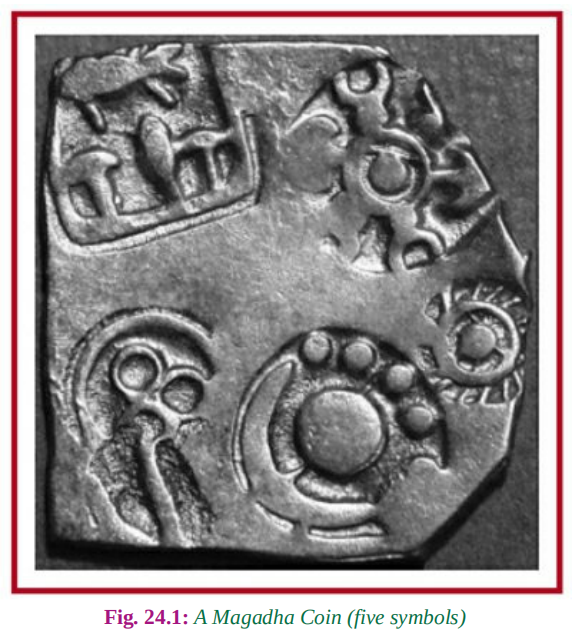
- Mentioned in Manusmriti and Buddhist Jataka tales.
- Punch Marked Coins during Mauryan Period (322–185 BC)
-
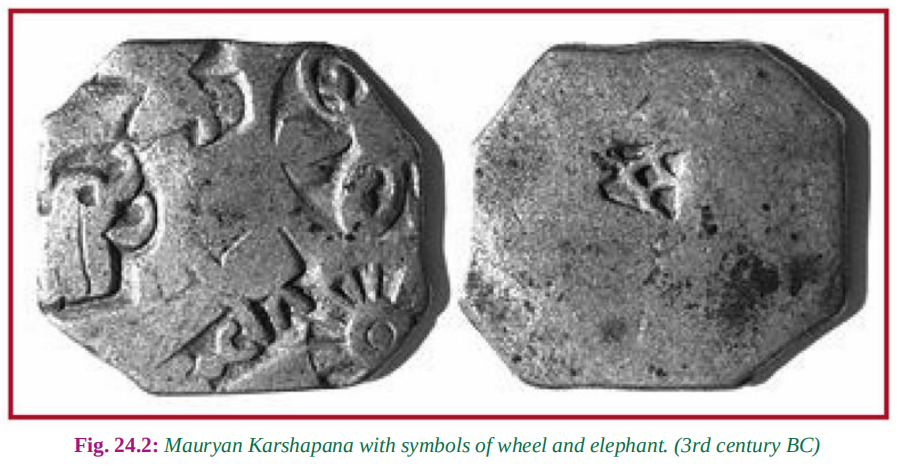
- Chanakya’s Arthashastra mentions various types:
- Rupyarupa (Silver).
- Suvarnarupa (Gold).
- Tamrarupa (Copper).
- Sisarupa (Lead).
- Most consistent symbols: Sun and six-armed wheel.
- Weight: 50–54 grains of silver (~32 rattis).
- Known as Karshapanas.
- Indo-Greek coins
- Reign Period: 180 BC – 10 AD.
- Significance
- Introduced ruler’s bust or head on coins.
- Bilingual legends:
- Greek on one side.
- Kharosthi on the other.
- Initially depicted Greek gods/goddesses (Zeus, Hercules, Apollo, Pallas Athene).
- Later, included Indian deities.
- Material & Features
- Made of silver, copper, nickel, and lead.
- Provided detailed information about the monarch, year of issue, and sometimes the reigning king’s image.
- Kushan Kings introduced the portrait-head style:
-
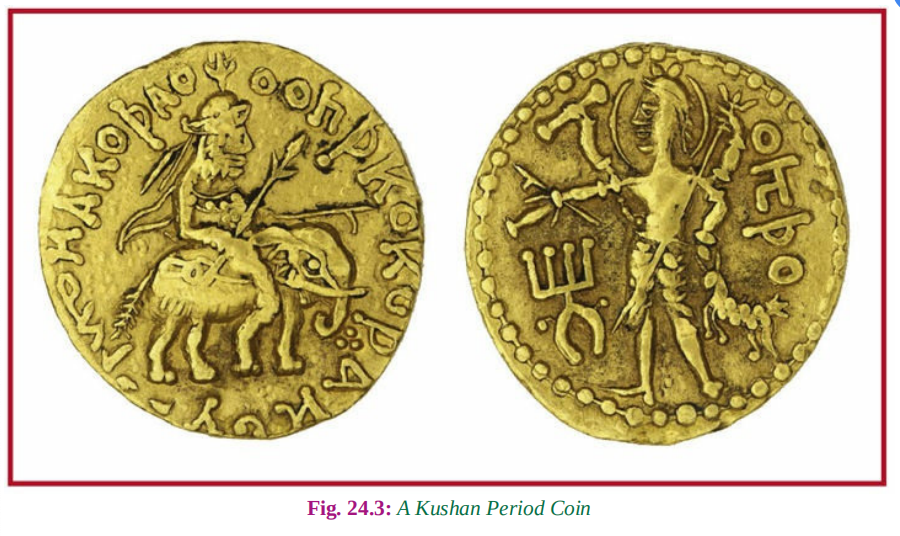
- Helmeted bust of the king on one side.
- The king’s favorite deity on the reverse.
- Kanishka’s coins had Greek inscriptions only.
- Coins by Satavahanas (232 BC - 227 AD)
-
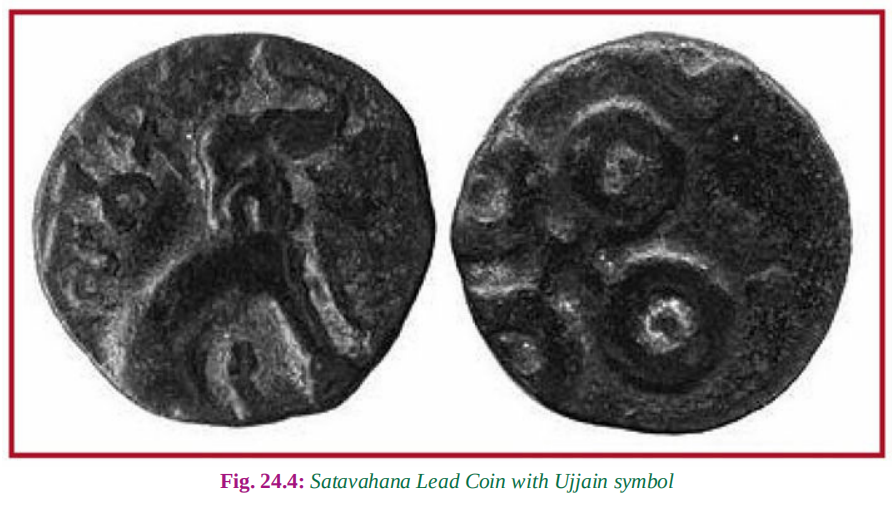
- Material Used
- Mostly lead (primary metal).
- Rarely silver.
- Potin (alloy of silver and copper) also used.
- Copper coins were common.
- Design & Features
- Lacked artistic beauty but were historically significant.
- Common symbols:
- Elephant, horse, lion, or Chaitya on one side.
- Ujjain symbol (cross with four circles at the ends) on the other.
- Inscriptions in Prakrit.
- Coins of the Western Satraps (35–405 AD)
-
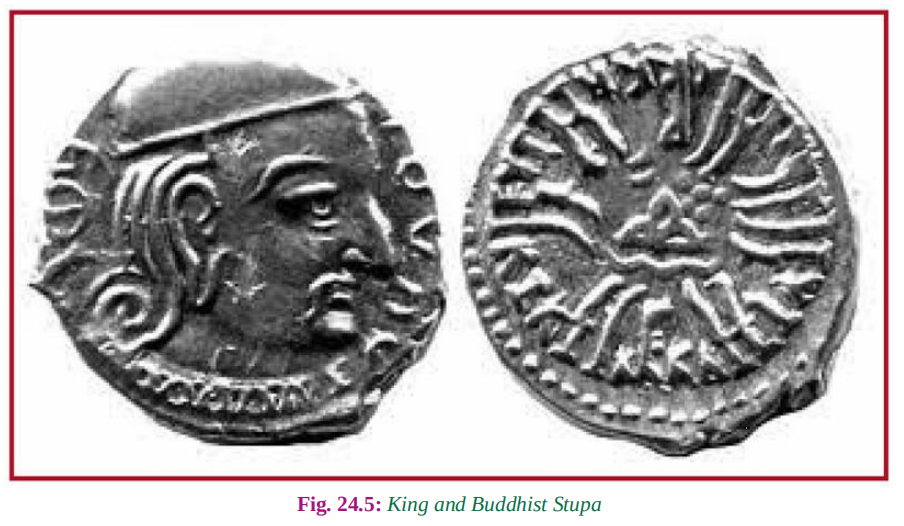
- Regions Controlled: Malwa, Gujarat, Kathiawar.
- Significance
- First to use Saka era dates (starting from 78 AD) on coins.
- Coins depicted:
- King’s head on one side.
- Buddhist Chaitya or Stupa on the other (influenced by Satavahanas).
- Inscriptions in Prakrit, written in various scripts.
- Coins Issued in the Gupta age (319–550 AD)
-
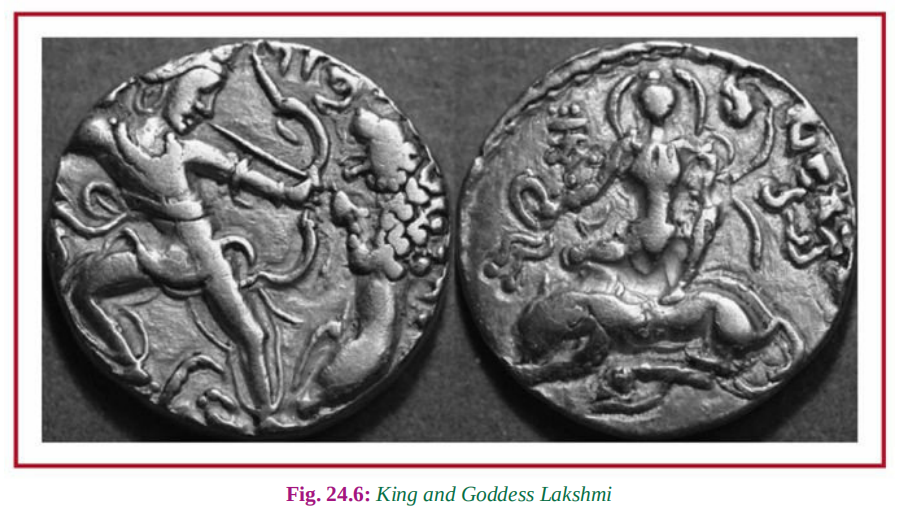
- Materials Used
- Mostly gold.
- Silver and copper coins were issued later (silver introduced by Chandragupta II).
- Designs
- Depicted the king in different activities:
- Making oblations, playing veena, riding a horse/elephant, slaying animals, performing Ashvamedha sacrifice.
- Reverse side:
- Goddess Lakshmi seated on a throne/lotus seal.
- Sometimes depicted the queen.
- Inscriptions
- First coins to have Sanskrit inscriptions (in Brahmi script).
- Depicted Hindu deities like Durga, Ganga, Garuda, Kartikeya.
- Post-Gupta Period
- After the Hun invasion (6th century AD), coinage declined.
- Regional kingdoms issued low-quality coins with mixed designs.
- South India shifted towards a gold standard, inspired by Roman gold coins.
- Coins of the Vardhanas (6th Century AD)
-
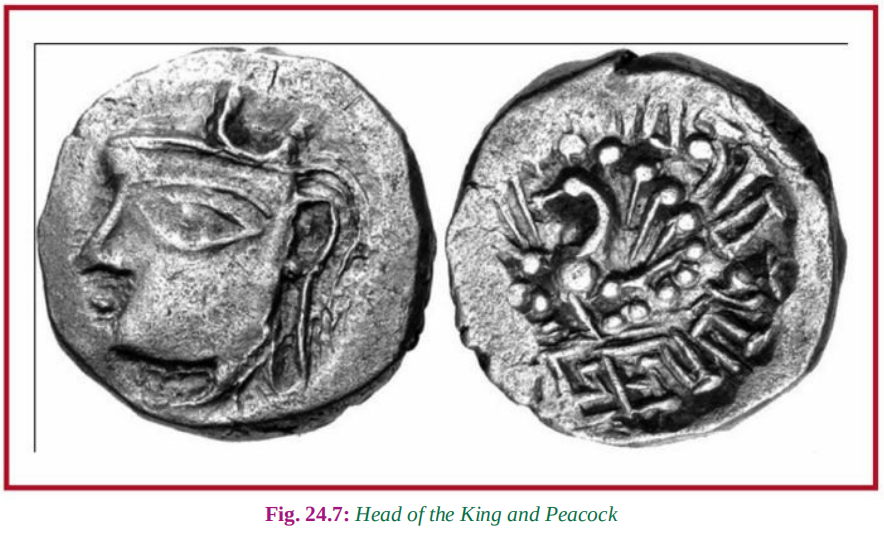
- Harshavardhana’s silver coins had:
- King’s head on one side.
- Peacock on the other.
- Coins marked the beginning of a new era (606 AD), his coronation year.
- Coins of the Chalukyans (6th Century AD)
-
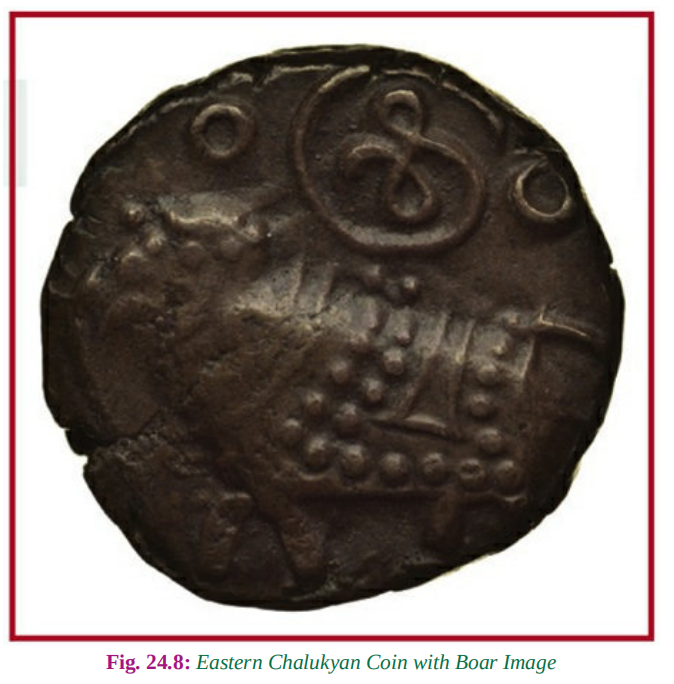
- Western Chalukyas (Pulakeshin I):
- Coins had temple/lion images with inscriptions on one side.
- Reverse side was blank.
- Eastern Chalukyas (7th–12th Century AD):
- Central boar symbol with king’s name inscribed.
- Reverse side blank.
- Coins of the Rajput dynasties (11th–12th Century AD)
- Made of gold, copper, or billon (silver-copper alloy).
- Two major types:
- Sanskrit inscriptions on one side, goddess on the other (Kalachuris, Chandelas, Tomars, Rathores).
- Seated bull on one side, horseman on the other (Gandhara & Sindh kings).
- Coins of the Pandyan & Chola dynasty
-
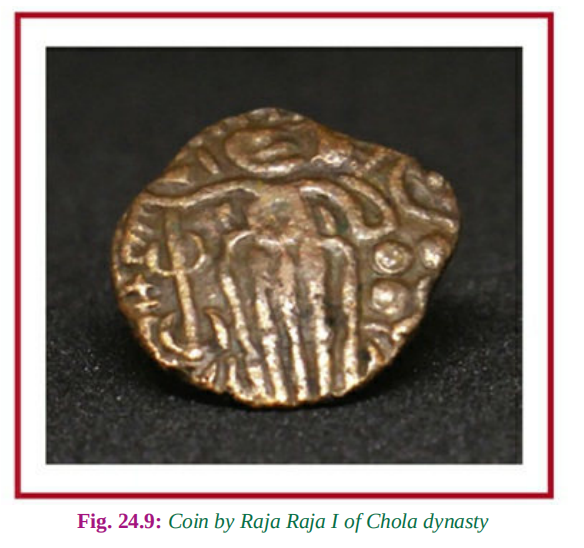
- Pandyan Coins:
- Early coins: Square-shaped with elephant symbol.
- Later coins: Fish symbol.
- Chola Coins:
- Raja Raja I: Standing king on one side, seated goddess on the other.
- Rajendra I: Inscription ‘Sri Rajendra’ with tiger & fish emblems.
- Turkish & Delhi Sultanate coins
- Introduced Islamic inscriptions (king’s name, title, Hijri date).
- No human images due to idolatry prohibition.
- Notable Innovations:
- Iltutmish: Silver Tanka, Copper Jital.
- Muhammad bin Tughlaq: Attempted token currency (failed).
- Sher Shah Suri:
- Introduced Rupee (silver, 178 grains).
- Dam (copper, 330 grains).
- Vijayanagara empire coins (14th–17th Century)
- Issued large quantities of gold coins along with silver and copper coins.
- Types of Coins:
- Pagodas – Higher denomination; featured a running warrior and a dagger symbol.
- Gold Fanams – Fractional units.
- Silver Taras – Fractional units.
- Copper Coins – Used for daily transactions.
- Coinage & Inscriptions
- Early Vijayanagara coins were minted in different regions and had different names, such as Barkur Gadyanas and Bhatkal Gadyanas.
- Inscriptions were in Kannada or Sanskrit.
- Common imagery included:
- Double-headed eagle holding an elephant in each beak and claw.
- Bull, elephant, and various Hindu deities.
- The Gold Varahan Coin issued by Krishna Deva Raya (1509–1529) featured:
- Obverse: Seated Vishnu.
- Reverse: Three-line Sanskrit legend “Shri Pratap Krishna Raya”.
- Mughal coinage
- Standard Gold Coin: Mohur (170–175 grains).
- As per Abul Fazl’s Ain-i-Akbari, one Mohur = 9 Rupees.
- Half and quarter Mohurs also existed.
- Silver Rupee:
- Adopted from Sher Shah Suri’s currency.
- Became the most famous Mughal coin.
- Copper Coins:
- Based on Sher Shah’s Dam (320–330 grains).
- Notable Mughal Rulers & Their Coins
- Akbar (1556–1605)
-
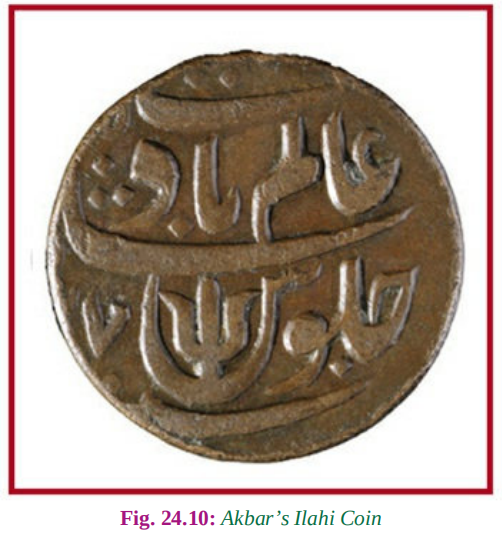
- Issued both round and square coins.
- In 1579, introduced Ilahi Coins to propagate Din-i-Illahi.
- Inscribed with “God is great, may his glory be glorified”.
- Value: 10 Rupees.
- Sahansah – Largest gold coin, bore names of Persian solar months.
- Jahangir (1605–1627)
-
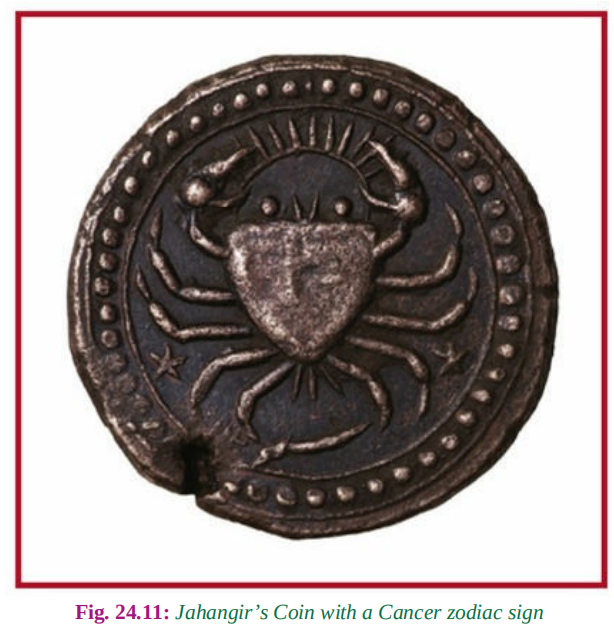
- Introduced couplet legends on coins.
- Some coins included Noor Jahan’s name.
- Most famous coins featured Zodiac signs.
- Other important facts
- Historical References:
- The earliest reference to coins in India is found in the Vedas.
- Nishka was the term used for metal coins in Vedic texts.
- Sher Shah Suri’s Rupee (16th Century)
- Introduced silver Rupee (~11.34g).
- 1 Rupee = 4 Copper Coins.
- The Indian currency is still called Rupee today.
- Ancient Indian Money Trees
- Coins were sometimes stored on “money trees”—flat metal pieces with branches, each ending in a round disk (coin).
- When needed, people broke off a coin from the money tree.
- Gupta Coinage (4th–6th Century AD)
- Front Side: King’s given name.
- Back Side: Assumed name ending with “aditya” (Sun God).
- Maratha & Mysore Coinage
- Chhatrapati Shivaji (1674–1680)
- Issued gold Huns and copper Shivarais with Nagari script inscriptions.
- Wodeyar Dynasty (1399–1947, Mysore)
- King Kanthiraya Narasa issued coins featuring Narasimha Avatar of Vishnu (weighed 6–8 grains).
- Haidar Ali (r. 1761–1782)
- Continued Wodeyar coinage; featured Shiva & Parvati on gold pagodas.
- Tipu Sultan (r. 1782–1799)
- Used two eras in his coinage.
- The Coinage Act, 2011
- Replaced the Coinage Act, 1906.
- Definition of “Coin”:
- A coin is any metal or other material stamped by the Government or an authorized entity.
- Includes:
- Commemorative Coins.
- GOI One Rupee Note.
- Forgery & Penalties:
- Prescribes penalties for forgery, minting violations, etc.
- Indian culture abroad
- Introduction
- India never invaded any country in the last 10,000 years, yet its cultural influence is widespread.
- Unlike many other civilizations that remained regionally confined, Indian culture is often regarded as the First World Culture due to its extensive global impact.
- Who took Indian culture abroad?
- Since the Indus Valley Civilization, India has maintained contact with the outside world through trade, migration, and religious outreach.
- Roma (Wanderers):
- Migrated via Iran and Iraq to Turkey and Europe.
- In Europe, they became known as Gypsies.
- Trade & Migration:
- Trade activities began with Vietnam, Italy, and China.
- Many traders migrated, carrying the legacy of Indian culture.
- In the 1st century BC, Indian traders traveled to Indonesia and Cambodia in search of gold.
- The Kalinga Dynasty established trade relations with Sri Lanka.
- Religious Expansion:
- Emperor Ashoka sent his son and daughter to Sri Lanka to spread Buddhism.
- Cultural Exchange through Foreign Visitors:
- Foreign travelers, monks, and missionaries visiting India or traveling abroad contributed to cross-cultural exchanges across regions.
- Prominent ancient ports of India
- Naval trade with various countries during ancient and medieval times played a significant role in spreading Indian culture abroad.
- Detailed accounts of ancient Indian ports can be found in the books Periplus of the Erythraean Sea and Geographia.
- During the Mauryan rule, the Navadhyaksha (Superintendent of Shipping) managed the shipping administration.
- Coins of the last Satavahana King, Yajna Sri Satakarni, depicted ships, possibly symbolizing the dynasty’s naval strength.
- List of prominent ports in ancient times.
| Name of the Port |
Region |
Associated Dynasty & Time Period |
Brief Details |
| Lothal |
Gujarat (near present Ahmedabad) |
Indus Valley Civilisation; 2400 BC |
Export of copper, hardwoods, ivory, pearls, carnelian, and gold to Mesopotamia; timber wood and lapis lazuli to Sumeria. |
| Barygaza |
Present Bharuch, Gujarat |
3rd century BC onwards; Major trade center under Western Satraps |
Spice and silk trade with Arab countries. Plundered twice in the 17th century but resurged quickly. Import of wheat, rice, sesame oil, cotton, and cloth. |
| Muziris |
Malabar Coast, Kerala (near present-day Kochi) |
1st century BC onwards; Chera Kingdom |
Mentioned in Sangam literature. Export of spices, semi-precious stones (beryl, pearls, diamonds, sapphires), ivory, Chinese silk, Gangetic spikenard, and tortoise shells to Persia, Rome, Greece, and Egypt. |
| Korkai |
Tamil Nadu |
Early Pandyan Kingdom |
Well-known center of pearl fishery. Mentioned in Sangam literature. |
| Puhar (also known as Cauveri Poompattinam) |
Tamil Nadu (at the mouth of the Cauvery river) |
Early Chola Dynasty; 400 BC – 200 AD |
Import of various articles. Mentioned in Silappadikaram. |
| Podouke |
Present Arikamedu near Puducherry |
2nd century BC – 8th century AD |
Greek trading port for trade with Rome. Export of gems, pearls, spices, and silk. Import of wine. |
| Barbarikon |
Near Karachi, Pakistan |
Parthians and Scythians |
Import of linens, topaz, coral, storax, frankincense, vessels of glass, silver, gold plate, and wine. Exports included turquoise, lapis lazuli, Seric skins, cotton cloth, silk yarn, and indigo. |
| Sounagora |
Wari (Bateshwar, present Bangladesh) |
450 BC; Mauryan dynasty |
Mentioned by mathematician Ptolemy in his book Geographia. |
| Maisolia or Masulipatnam |
Machilipatnam, Andhra Pradesh |
From 3rd century BC onwards; Satavahana’s reign |
Muslin clothes were traded by ancient Greeks. Principal sea port of the Golconda Kingdom from the 15th to 17th centuries. |
| Tamralipti |
Present-day Tamluk, West Bengal |
Mauryan Dynasty |
Exit point of the Mauryan trade route for South and Southeast Asia. Mentioned by Ptolemy and Chinese pilgrims Hiuen-Tsang and Fa-hien. |
| Palur |
Odisha |
2nd century AD; Kalinga Dynasty |
Place of voyage to Southeast Asia and China. Mentioned by Ptolemy and Xuanzang (Hiuen-Tsang). |
- Mathematics from India to abroad
- As early as 500 BC, Indians devised a system of different symbols for numbers (1-9).
- This notation system was adopted by the Arabs, who called it numerals.
- Indian maritime traders took the decimal system to Arabia, from where it later spread to the Western world.
- Arabs acknowledged India’s contribution by calling mathematics ‘Hindisat’ (pertaining to India).
- Binary number system was first described by Vedic scholar Pingala in his book Chandashastra, which is the earliest known Sanskrit treatise on prosody.
- Fibonacci numbers were first described in Indian mathematics as Matrameru, mentioned by Pingala in connection with Sanskrit prosody.
- Later, methods for generating Fibonacci sequences were given by Virahanka, Gopala, and Hemacandra, long before Fibonacci introduced them to European mathematics.
- Baudhayana explained the Pythagoras theorem.
- Concepts of Algebra, Geometry, and Trigonometry also originated in India and spread abroad.
- Indian science and technology abroad
- India made significant contributions to science and technology long before modern laboratories.
- Many theories and techniques discovered by ancient Indians laid the foundation for modern advancements.
- Bhaskaracharya correctly calculated the time taken by Earth to orbit the Sun centuries before astronomer Smart:
- 365.258756484 days.
- Kanad developed the atomic theory centuries before John Dalton, introducing the concept of Anu (indestructible particles), much like atoms.
- Zinc extraction was known to Indians thousands of years before the British discovered it.
- The first seamless celestial globe was made in Kashmir by Ali Kashmiri Ibn Luqman during Akbar’s reign.
- Wootz Steel, developed in ancient India, was used to make Damascus swords, known for their sharpness.
- Ancient Indians defined the smallest and largest time units:
- Smallest – 34,000th of a second (Krati).
- Largest – 4.32 billion years (Mahayuga).
- India was the first to invent and use buttons (Indus Valley Civilization, 2000 BC).
- First iron-cased rockets were developed by Tipu Sultan in the 1780s, successfully used against the British East India Company.
- Shampoo originated in India:
- Derived from the Hindi word ‘Champo’.
- Introduced in Britain by Bengali entrepreneur Sake Dean Mahomed (1762).
- Sushruta – Father of Surgery (2600 years ago):
- Conducted C-sections, cataract removal, artificial limbs, fractures, plastic surgery, brain surgery, and used anesthesia.
- First recorded mention of leprosy – Sushruta Samhita (6th century BC).
- Cataract surgery was performed in ancient India using a curved needle to push the lens out. The method later spread worldwide.
- Ayurveda – the earliest school of medicine, dating back to 5000 BC.
- Charaka (Father of Medicine) consolidated Ayurveda 2500 years ago.
- Foreign scholars studied Ayurveda at Taxila and Kashi.
- Siddha system (regional variant of Ayurveda):
- Originated in Tamil Nadu, used metals, minerals, and chemical products.
- Alchemy has its roots in Siddha medicine.
- ‘Varmam’ – Siddha medicine branch dealing with traumatology and injuries.
- Ancient Indian Herbal Knowledge:
- Karela (bitter melon) resembles the pancreas and was used as a diabetes remedy.
- Akhrot (walnut) resembles the human brain and was used as a brain tonic.
- Influence of Indian Religion Abroad
- India’s religious and philosophical traditions influenced South-East Asia, East Asia, Europe, and North America.
- Hinduism Abroad
- Thailand (3rd-4th century AD):
- Brahminical images and Hindu temples were constructed.
- Earliest images found are of Lord Vishnu.
- Vietnam:
- Cham people built many Hindu temples dedicated to Shiva, Ganesha, Saraswati, Lakshmi, and Parvati.
- Shivalingas and deity images were housed in temples.
- Cambodia:
- Champa and Kambuja (Cambodia) kingdoms were ruled by Hindu kings of Indian origin.
- Government followed Hindu polity and Brahminical jurisprudence.
- Malaysia:
- Shaivism evidence found in Kedah and Wellesley.
- Nandi statues, Durga reliefs, Ganesha, and Shivalingas excavated.
- Hinduism is the world’s third-largest religion, with over 1.15 billion adherents.
- Buddhism Abroad
- Acharya Atisa (Vikramshila University) went to Tibet (11th century AD) and strengthened Buddhism.
- Emperor Ashoka sent his son Mahendra and daughter Sanghamitra to Sri Lanka to spread Buddhism.
- Mahavihara and Abhayagiri were the first monasteries built there.
- Thonmi Sambhota, a Tibetan minister, studied at Nalanda and introduced Buddhism to Tibet.
- Silk Route scholars helped spread Buddhism across China and Korea.
- Buddhism in Korea:
- First Buddhist monk, Sundo (352 AD), carried Buddha images and sutras.
- Acharya Mallananda (384 AD) followed.
- Buddhist texts were printed in 6000 volumes.
- Buddhism in Japan:
- Given State Religion status.
- Thousands became Buddhist monks and nuns.
- Myanmar:
- Pagan Kingdom (11th-13th century AD) was a major Buddhist center.
- Buddhist missionaries spread Theravada Buddhism to South-East Asia, Mahayana Buddhism to East Asia, and Vajrayana Buddhism to Central Asia.
- Jainism Abroad
- Jainism (2500+ years old) was described by Greek geographer Strabo (64 BC – 23 AD).
- Jain diaspora spread to East Africa, Britain, Japan, and North America.
- Jain business families settled in East Africa decades ago.
- Jains migrated to Britain after Indian independence, with a large influx from Uganda during Idi Amin’s rule.
- In Japan, Jains were involved in the diamond trade (Kobe).
- Jains migrated to North America after 1965, establishing temples and organizations to maintain their identity.
- Jainism’s environmental ethics align with modern sustainability and activism.
- Indian languages abroad
- India (780 languages) has the world’s second-highest number of languages, after Papua New Guinea (839).
- Sanskrit:
- Originated in India and is the mother of all European languages.
- Thousands of Sanskrit books were translated into Chinese.
- Accepted as the sacred language in Japan, where scholars still study it.
- Other Indian Languages:
- Bengali – Official language of Bangladesh.
- Tamil – Official language of Sri Lanka and Singapore.
- Indian Influence in Other Countries:
- Myanmar:
- Developed their own Pali language and translated Buddhist and Hindu scriptures.
- Tibet:
- Thonmi Sambhot wrote Sanskrit grammar based on Panini’s work.
- 9,600 Sanskrit books were translated into Tibetan.
- Sri Lanka:
- Pali became the literary language.
- Thailand:
- Thai kingdoms were named in Sanskrit (Dwaravati, Shrivijay, Sukhodaya, Ayutthiya).
- Cities like Prachinaburi and Singhaburi derive their names from Sanskrit.
- Cambodia:
- Sanskrit was used for administration until the 14th century AD.
- Malaysia:
- Ancient script was Brahmi in its late form.
- Buddhist texts in a script resembling old Tamil were found in Kedah.
- Many Sanskrit words exist in the language (e.g., svarga, rasa, guna, dahda, mantri, laksha).
- Indonesia: Sanskrit hymns are recited during religious ceremonies.
- Indian temple architectural tradition abroad
- Sthapatya-Shastra: Ancient Indian science of architecture and civil construction.
- Spread of Indian Art and Architecture:
- Afghanistan, Baluchistan, Seistan (Mauryan Empire – Ashoka’s reign): Buddhist stupas were constructed.
- Central Asia:
- Indian art blended with Greek and Kushana styles.
- India’s cultural frontiers extended up to Balkh (Oxus River).
- Gandhara School of Art (Afghanistan and Central Asia) was derived from Indian styles.
- South-East Asia:
- Indian traders introduced architecture to Indonesia, Malaysia, Vietnam, Laos, Cambodia, Thailand, Burma, China, Korea, Japan.
- Portuguese (Manuel I, 1495–1521) exchanged architectural influences with India.
- China:
- Built Indian-style cave temples and monastic complexes.
- Dun-huang, Yun-kang, and Lung-men are famous cave complexes.
- Indonesia:
- Prambanan – Largest Shiva temple on Java island.
- Buddha statue at Dong Duong (108m high) resembles Amaravati sculptures.
- Ganesha idols found in Bali.
- Thailand:
- Ayutthiya (Ayodhya): Many ancient Indian-style temples exist (400 in Bangkok alone).
- Korea:
- An Indian monk built two temples in Pyongyang (5th century AD).
- Myanmar:
- King Aniruddha built Shwezegon Pagoda and ~1,000 temples in Indian style.
- Cambodia:
- Angkor Wat represents Vishnu’s abode (Vaikunthadhama).
- Baphuon (11th century) is another grand Indian-style temple.
- Malaysia:
- Ligor: Over 50 Indian temples exist.
- Afghanistan:
- Bodhisattva statues (Bamiyan, 1st century AD): Carved under Kushana Emperor Kanishka’s patronage.
- Sri Lanka:
- Stupas (3rd century BC – 4th century AD): Followed Indian hemispherical design (Anda).
- Europe:
- Christian Basilicas show similarities to Buddhist stupas.
- Gothic sculpture in Bayeux, Aachen, Trier has Indian motifs.
- Islamic Architecture Influence:
- Dome mosques derive from Indian stupas.
- Byzantine architecture (e.g., Hagia Sophia) has domes resembling Buddhist stupas.
- Global influence of Indian epics
- Ramayana & Mahabharata Influence:
- Wayung (shadow play) in Southeast Asia is based on these epics.
- Thailand: Streets named after Ramayana characters (Rajaram, Rajajrani, Mahajaya, Cakravamsha).
- Cambodia:
- Angkor Wat has Ramayana and Mahabharata engravings.
- Baphuon temple: Depicts Rama-Ravana battle, Shiva-Parvati on Kailash, Kamadeva’s destruction.
- Malaysia:
- Mentioned in Ramayana, Jataka tales, Milind Panha, Silappadikaram, Raghuvamsha.
- Role of Indian universities and scholars
- Major Ancient Indian Universities:
- Takshila (700 BC) – World’s first university (10,500+ students, 60+ subjects).
- Nalanda Mahavihara (5th century AD):
- Hiuen Tsang studied under Shilabhadra for 2 years.
- I-Tsing stayed for 10 years.
- Famous scholars: Aryabhatta, Atisa, Dignaga, Dharmapala, Nagarjuna, Shantarakshita.
- Vikramshila:
- Tibetan king invited its scholars.
- Odantapuri (Bihar):
- Flourished under Pala kings.
- Many monks migrated to Tibet.
- Indian Scholars Abroad:
- Kashyapa Martanga & Dharmarakshita – Sent to China in 67 AD by the Emperor.
- Kamalasheel (Nalanda scholar): Invited by the King of Tibet.
- Bodhidharma (Yoga & Zen Buddhism master): Venerated in China & Japan.
- Indian sages spread Yogic science across Asia, the Middle East, North Africa, South America.
- Agastya (Saptarishi): Propagated a yogic way of life.
- Indian sports and games abroad
- Chess:
- Originated in Gupta Empire (Chaturanga).
- Mentioned in Mahabharata.
- Snakes & Ladders:
- Created by Gyandev (13th century) – Originally Mokshapat.
- Ladders = virtues, Snakes = vices.
- Polo:
- Originated in India.
- Judo & Karate:
- Martial arts originated in India before spreading to East Asia.
- Kho-Kho:
- Originated in Maharashtra.
- Played on ‘raths’ (chariots), initially called Rathera.
- Indian Card Games:
- Ganjifa playing cards.
- Suits (Kridapatram) – Ancient Indian painted rags for playing.
- India through the eyes of foreign travelers
- Introduction
• India as a Center of Attraction:
• Throughout history, India attracted rulers and travelers worldwide due to its vast opportunities, diverse culture, religions, and traditions.
• Many travelers documented their experiences, focusing on different aspects of Indian civilization.
• Themes in Traveler Accounts:
• Some accounts described court affairs.
• Others highlighted contemporary architecture and monuments.
• Some depicted social and economic life.
• These records provide an authentic picture of Indian civilization.
• Travelers in Ancient and Medieval India:
• Many prominent travelers visited India and recorded their observations.
• No accounts from women travelers are available from this period.
- Foreign travelers at a glance:
| Sl. |
Name (Nationality) |
Time Period |
Visited During the Reign of (Dynasty/Ruler) |
| 1 |
Deimachos (Greek) |
320-273 BC |
Mauryan (Bindusara) |
| 2 |
Megasthenes (Greek) |
302-298 BC |
Mauryan (Chandragupta Maurya) |
| 3 |
Fa-Hien (Chinese) |
405-411 AD |
Gupta (Chandragupta II) |
| 4 |
Hiuen-Tsang (Chinese) |
630-645 AD |
Pushyabhuti (Harshavardhana) |
| 5 |
I-Tsing (Chinese) |
671-695 AD |
- |
| 6 |
Al-Masudi (Arab) |
956 AD |
- |
| 7 |
Al-Biruni (Khwarazm) |
1024-1030 AD |
- |
| 8 |
Marco Polo (Venetian) |
1292-1294 AD |
Pandyan (Madverman, Kulshekhara) |
| 9 |
Ibn Battuta (Moroccan) |
1333-1347 AD |
Tughlaq (Muhammad-Bin-Tughlaq) |
| 10 |
Shihabuddin al-Umari (Damascus) |
1348 AD |
- |
| 11 |
Nicolo De Conti (Venetian) |
1420-1421 AD |
Vijayanagara (Devaraya I) |
| 12 |
Abdur Razzaq (Persian) |
1443-1444 AD |
Vijayanagara (Devaraya II) |
| 13 |
Athanasius Nikitin (Russian) |
1470-1474 AD |
Bahmani (Muhammad III) |
| 14 |
Domingo Paes (Portuguese) |
1520-1522 AD |
Vijayanagara (Krishnadeva Raya) |
| 15 |
Fernao Nuniz (Portuguese) |
1535-1537 AD |
Tuluva dynasty (Achyutdeva Raya) |
| 16 |
William Hawkins (British) |
1608-1611 AD |
Mughal Empire (Jahangir) |
| 17 |
Sir Thomas Roe (British) |
1615-1619 AD |
Mughal Empire (Jahangir) |
| 18 |
Peter Mundy (Italian) |
1630-1634 AD |
Mughal Empire (Shahjahan) |
| 19 |
Jean Baptiste Tavernier (French) |
1638-1643 AD |
Mughal Empire (Shahjahan) |
| 20 |
Nicolao Manucci (Italian) |
1653-1708 AD |
Timurid dynasty (Dara Shikoh) |
| 21 |
Francois Bernier (French) |
1656-1717 AD |
Timurid dynasty (Dara Shikoh) |
- Important Travelers and Their Accounts
• Megasthenes | Indica
-
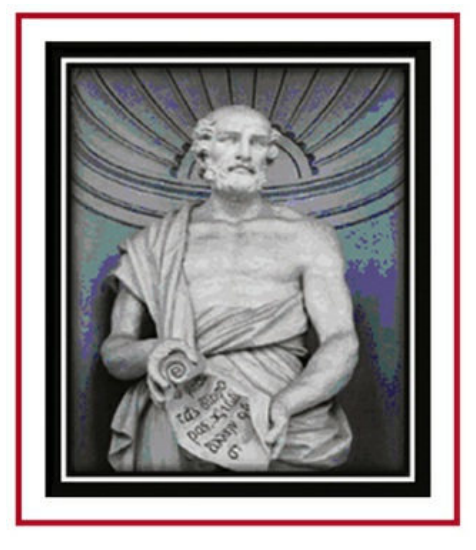
• Ancient Greek historian, diplomat, and explorer (c. 350 BC).
• Visited India (302–288 BC) as an ambassador of Seleucus I Nikator.
• Reached Pataliputra during Chandragupta Maurya’s reign.
• Wrote Indica—a detailed account of Indian geography, society, and administration.
• The original text was lost, but Greek writers like Arrian, Strabo, and Pliny referenced it.
• E. A. Schwanbeck reconstructed Indica in 1887.
- Key Observations:
• Described India as a quadrilateral landmass, bounded by the ocean in the south and east.
• Covered soils, rivers, flora, fauna, administration, and religious life.
• Mentioned worship of Lord Krishna and the caste system (noting endogamy and hereditary occupations).
• Influenced by Herodotus’ classification of Egyptian society.
- Criticism of Indica
• Uncritical acceptance of Indian folklore.
• Idealization of Indian culture from a Greek philosophical perspective.
• Fa-Hien | Record of Buddhist Kingdoms
-
• Chinese Buddhist monk and traveler.
• Visited India around 400 AD during Chandragupta II’s reign.
• Studied Sanskrit in Pataliputra and visited major Buddhist sites.
• Wrote Record of Buddhist Kingdoms, detailing religious and social life.
- Key Observations:
• Buddhism was more popular in Punjab, Bengal, and Mathura.
• Internal and foreign trade flourished, with links to China, Southeast Asia, West Asia, and Europe.
• Hiuen Tsang | Si-Yu-Ki
-
• Chinese Buddhist scholar-monk, also known as Xuanzang.
• Traveled to India (629–644 AD) during Harshavardhana’s reign.
• Wrote Si-Yu-Ki: Buddhist Records of the Western World.
- Key Observations:
• Detailed city life, architecture, and religious centers.
• Kanauj replaced Pataliputra as a major political center.
• Nalanda and Vallabhi emerged as key learning centers.
• Described Harsha’s revenue system:
• ¼ for administration.
• ¼ for government employees.
• ¼ for scholars.
• ¼ for charity.
• Stated that travel was unsafe during that period.
• Spent 5 years at Nalanda University under Acharya Shilabhadra.
• Al-Masudi | Muruj-ul-Zehab
• Arab historian, geographer, and explorer (956 AD).
• Known as the “Herodotus of the Arabs.”
• Wrote Muruj-ul-Zehab (Meadows of Gold and Mines of Gems), covering Indian society and geography.
• Al-Biruni | Kitab-ul-Hind
-
• Persian scholar from Khwarazm (modern Uzbekistan).
• Accompanied Mahmud of Ghazni to India in 1017.
• Learned Sanskrit and translated Indian texts into Arabic.
• Wrote Kitab-ul-Hind—a comprehensive study of Indian religion, philosophy, astronomy, and society.
- Key Observations:
• Used a structured approach—posing a question, describing Indian traditions, and comparing them with other cultures.
• Faced challenges in understanding India due to:
• Language barriers.
• Religious differences.
• Social exclusivity.
• Compared the caste system with similar social structures worldwide.
• Marco Polo | The Book of Sir Marco Polo
-
• Venetian merchant, explorer, and writer (1254 AD).
• His book The Travels of Marco Polo inspired Christopher Columbus.
• Visited the Kakatiya kingdom (1289 CE) under Queen Rudramadevi.
• Wrote The Customs of the Kingdoms of India and Travels in the Land of Serpents and Pearls.
• Ibn Battuta | Rihla
-
-
• Moroccan traveler and scholar.
• Arrived in India (1332–33 AD) during Muhammad Bin Tughlaq’s reign.
• Served as qazi (judge) in Delhi.
• Traveled to China as Tughlaq’s envoy.
• Wrote Rihla—a detailed account of 14th-century India.
- Key Observations:
• Compared Indian cities to those in China.
• Admired the efficiency of the postal system.
• Fascinated by betel leaves (paan) and coconuts.
• Nicolo De Conti
• Italian merchant and explorer.
• Traveled to India (1420–1421 AD), visiting Gujarat and Vijayanagara.
• Noted gold and spice trade between India, Sumatra, and China.
• Called Telugu the “Italian of the East.”
• Abdur Razzaq | Matla-us-Sadain wa Majma-ul-Bahrain
• Persian Timurid chronicler.
• Visited Vijayanagara (1442 AD) during Devaraya II’s reign.
• Wrote a 45-page account of his visit, detailing the grandeur of Vijayanagara.
• Domingo Paes | Chronica dos Reis de Bisnaga
• Portuguese merchant and explorer (1520–1522 AD).
• Provided the most detailed account of Vijayanagara under Krishnadeva Raya.
- Key Observations:
• Advanced irrigation and agriculture.
• Prosperous diamond trade.
• Compared Vijayanagara’s size to Rome.
• William Hawkins (1608–1611 AD)
• English East India Company representative.
• Visited Agra during Jahangir’s reign.
• Secured permission to establish a factory at Surat.
• Sir Thomas Roe (1615–1619 AD)
-
• English diplomat at Jahangir’s court.
• Negotiated trade protection for the British East India Company.
• Wrote The Embassy of Sir Thomas Roe to the Court of the Great Mogul.
• Jean-Baptiste Tavernier (1638–1643 AD)
• French gem merchant and traveler.
• Visited Agra and the Golconda diamond mines.
• Sold the famous Blue Diamond to King Louis XIV of France.
• Francois Bernier | Travels in the Mughal Empire
-
• French physician, philosopher, and historian (1656 AD).
• Compared Mughal India with Europe.
- Key Observations:
• Criticized the Mughal Empire as a land of “beggars and barbarians.”
• Noted the lack of private land ownership.
• Described artisans as lacking incentives to improve their work.
• Called Mughal cities “Camp Towns” due to their dependence on imperial camps.
• Documented imperial workshops (karkhanas).
• Observed organized merchant groups (Mahajans, Sheths, Nagarsheth).
APPENDICES
- Delhi – A City of Seven Sisters
• Introduction
• Delhi, the capital of India, has been a center of power for multiple empires and kingdoms, making it one of the oldest continuously inhabited cities in the world.
• It has been built, destroyed, and rebuilt numerous times by invaders who either plundered it or made it their capital.
• The city’s heritage is a blend of Hindu and Islamic influences, along with British-era architecture in Lutyens’ Delhi.
• Ancient references to Delhi are often based on myths and legends.
• According to the Mahabharata, Indraprastha, the capital of the Pandavas, was located in present-day Delhi.
• Archaeological findings at Purana Qila suggest human settlement as early as 1000 BCE.
• Historically, seven distinct cities have existed in Delhi over different periods.
• The Seven Cities of Delhi
• Qila Rai Pithora (Lalkot) | 10th century AD
• The first recorded city of Delhi.
• Established by Prithvi Raj Chauhan, also known as Rai Pithora.
• Initially controlled by the Tomar Rajputs; later expanded by Prithvi Raj Chauhan.
• Lal Kot, the first known regular fortification of Delhi, was built by Anangpal Tomar.
• Ruins of Qila Rai Pithora are located near Qutub Minar.
• Siri | Early 14th century AD
• Founded by Alauddin Khilji of the Khilji dynasty.
• The second city of Delhi, influenced by Seljuk-style architecture.
• Craftsmen from West Asia, fleeing Mongol invasions, contributed to its architecture.
• Present remains include thick stone walls and the Hauz Khas reservoir.
• Tughlaqabad | 1320s AD
• Built by Ghiyasuddin Tughlaq, founder of the Tughlaq dynasty.
• Featured a massive fort with high walls, parts of which still stand today.
• Jahanpanah | Mid-14th century AD
• Constructed by Muhammad Bin Tughlaq, son of Ghiyasuddin Tughlaq.
• Served as an enclosure between Qila Rai Pithora and Siri.
• Sometimes referred to as the fourth city of Delhi.
• Firozabad (Firoze Shah Kotla) | Late 14th century AD
• Built by Firuz Shah Tughlaq, cousin of Muhammad Bin Tughlaq.
• Established next to the Yamuna River.
• Contained palaces, pillared halls, mosques, a pigeon tower, and a water tank.
• Features an Ashokan pillar placed on top of a palace structure.
• Firuz Shah also restored Qutub Minar, Sultan-e-Garhi Tomb, and Hauz Khas.
• Shergarh (Purana Qila) | 1540 AD
• Originally built by Humayun as Dinpanah.
• Captured and renamed by Sher Shah Suri after he defeated Humayun.
• Present-day Purana Qila contains ruins from both Humayun’s and Sher Shah’s rule.
• Shahjahanabad | 1642 AD
• Built by Mughal emperor Shah Jahan, who shifted the capital back to Delhi.
• The walled city, known today as Old Delhi, was inaugurated on Navroz.
• Key structures include the Red Fort and Jama Masjid.
• Delhi continued evolving under British rule, with architects like Edwin Lutyens and Edward Baker shaping modern Delhi.
- Bhakti and Sufi Movement
- Bhakti Movement
-
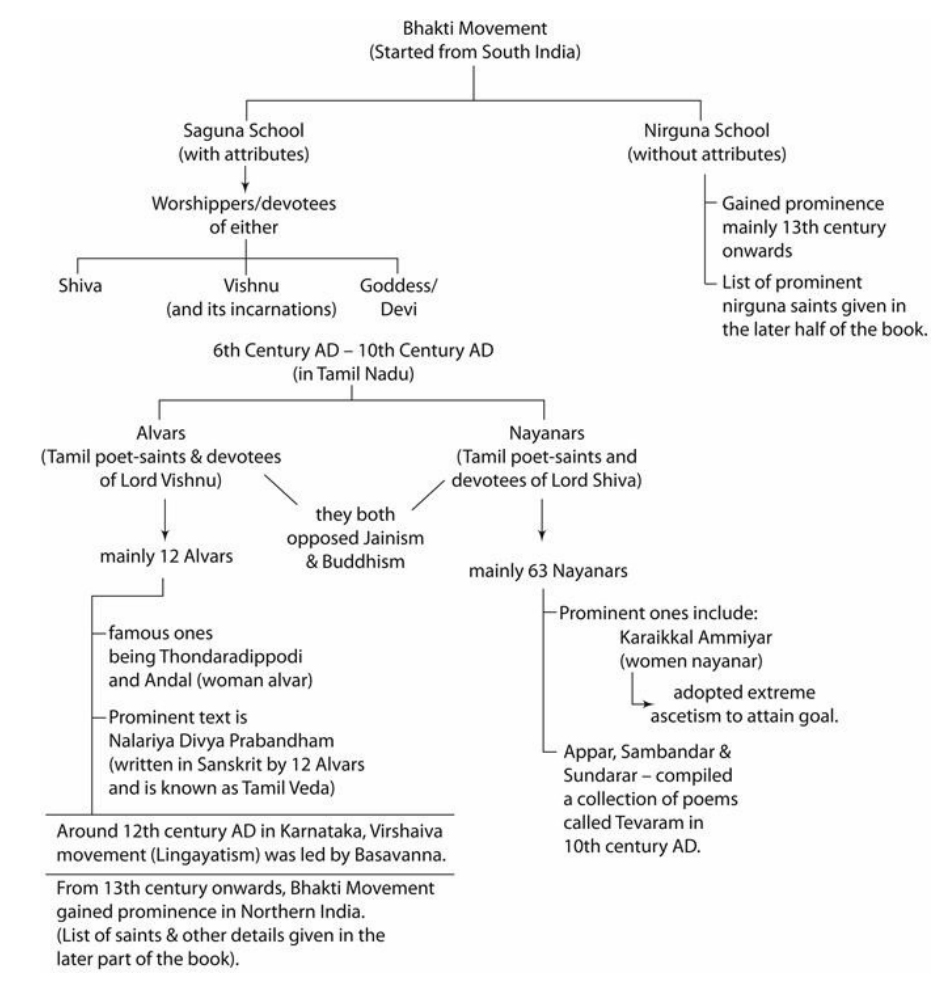
- Origin
- Originated in South India, especially Tamil Nadu, between the 6th and 10th century AD.
- Spread to North India by the late 15th century.
- Focused on devotion (bhakti) as the means of salvation, rejecting the austerities of Buddhism and Jainism.
- Bhakti saints wrote in vernacular languages like Tamil and Telugu, making their teachings accessible to common people.
- Did not require priests, which contributed to its popularity.
- Key Bhakti Traditions
- Alvars (Vaishnavite Poet-Saints)
- Devotees of Vishnu or his avatar Krishna.
- Opposed Jainism and Buddhism.
- 12 Alvars composed Nalariya Divya Prabandham.
- Andal, the only female Alvar, is often called the “Meera of the South.”
- Nayanars (Shaivite Poet-Saints)
- 63 Tamil saints devoted to Lord Shiva.
- Practiced extreme asceticism.
- Three prominent Nayanars—Appar, Sambandar, and Sundarar—compiled Tevaram in the 10th century AD.
- Included people from all castes, opposing Brahmanical domination, Jainism, and Buddhism.
- Laid the foundation of the Bhakti movement in India.
- Virshaiva Movement / Lingayats (12th Century AD)
- Emerged in Karnataka during the reign of the Kalachuri dynasty.
- Founded by Basavanna.
- Opposed elaborate rituals and Brahminical dominance.
- Followers were called Virshaiva (heroes of Shiva) or Lingayats (wearers of Shivalinga).
- Beliefs and Practices:
- Worship Shiva as linga.
- Wear a linga on the left shoulder.
- Bury their dead instead of cremating them, believing in union with Shiva.
- Reject the theory of rebirth.
- Challenge the caste system.
- Encourage widow remarriage and post-puberty marriage.
- Main Features of the Bhakti Movement
- Emphasized intense love and devotion as the means of salvation.
- Believed in the unity of God (Universalism), repeating the one true name.
- Rejected rituals and ceremonies.
- Opposed caste discrimination, promoting religious and gender equality.
- Allowed both men and women to seek salvation.
- Used local and regional languages for preaching.
- Stressed on personal connection with God, rather than through priests.
- Encouraged the role of a true Guru (teacher) in realizing God.
- Promoted equality and brotherhood, similar to Sufi beliefs.
- The Two Schools of Bhakti: Saguna vs. Nirguna
- Nirguna School (God Without Attributes)
- Believed God is formless, without qualities or attributes.
- Focused on acquiring knowledge as the path to salvation.
- Rejected scriptures and idol worship.
- Key figures: Kabir, Guru Nanak, Dadu Dayal.
- Saguna School (God With Attributes)
- Believed God has a definite form, qualities, and attributes.
- Worshipped incarnations such as Rama and Krishna.
- Accepted idol worship and the authority of the Vedas.
- Emphasized love and devotion to a personal God.
- Believed in the need for a Guru as a mediator between God and devotee.
- Key figures: Ramanuja, Ramananda, Chaitanya Mahaprabhu.
- Prominent Bhakti Saints
| Name |
Year and Place |
Details |
| Adi Shankara |
8th century AD, Kerala |
Chief proponent of the Advaita (non-dualism) school of Vedanta philosophy. The school believes in the identity of Atman (individual soul) and Brahman (ultimate reality). |
| Ramanuja |
1017-1137 AD, Tamil Nadu |
Major exponent of Sri Vaishnavism and the chief proponent of Vishishtadvaita philosophy (qualified monism). Vishishtadvaita signifies "all diversity subsuming to an underlying unity." Srirangam Ranganatha temple is associated with his tradition. |
| Madhvacharya |
1238-1317 AD, Karnataka |
Chief proponent of Dvaita (dualism) Vedanta. Named his philosophy "Tatvavada". Believed in a fundamental difference between Atman (individual soul) and Brahman (ultimate reality or Vishnu). Criticized Advaita Vedanta and Vishishtadvaita Vedanta. |
| Nimbarka |
13th century AD, Maharashtra (later migrated to Mathura) |
Vaishnava saint and proponent of Dvait-advait (dualistic non-dualism). Founded Nimbarka Sampradaya. Worships Sri Radha Madhav, where Radha is considered inseparable from Krishna. |
| Ramananda |
1300-1380 AD, Uttar Pradesh |
Vaishnava saint and founder of Ramanandi Sampradaya, the largest ascetic community in India. Synthesized Advaita Vedanta and Vaishnava bhakti. Disciples include Kabir and Ravidas. First to use Hindi for teachings. |
| Vallabhacharya |
1479-1531 AD, North India |
Founder of Krishna-centered Pushti Marg sect. Propounded Shuddha Advaita (Pure Nondualism). Believed in attaining moksha through Sneha (deep-rooted love for God). Nathdwara in Rajasthan is a significant pilgrim site. |
| Kabir |
15th century AD, Uttar Pradesh |
Vaishnavism follower with monist Advaita philosophy. Disciple of Ramananda. Criticized caste system. Followers called Kabir Panthis. Compiled in Bijak and Adi Granth (Sikh scripture). |
| Guru Nanak |
1469-1539 AD, Punjab |
Founder of Sikhism. Inspired by Kabir. First of the ten Sikh Gurus. Belonged to Nirguna school. |
| Narsinh Mehta |
15th century AD, Gujarat |
Vaishnava saint-poet. His bhajan "Vaishnava Jana To" was a favorite of Mahatma Gandhi. Known as Adikavi of Gujarati literature. |
| Chaitanya Mahaprabhu |
1486-1534 AD, West Bengal |
Bengali Hindu saint and proponent of Achintya Bheda Abheda and Gaudiya Vaishnavism. Popularized Kirtans (religious songs). Inspired ISKCON. Authored "Siksastakam". |
| Sankardev |
1449-1568 AD, Assam |
Vaishnava saint-scholar and social reformer. Propagated "Ekasarana Dharma" (one God - Krishna). Established "Sattras" (monasteries). Wrote "Kirtan Ghosa". Successor: Madhavdev. |
| Surdas |
1478-1580 AD, North India |
Blind poet and ardent devotee of Krishna. Belonged to Saguna school. Disciple of Vallabhacharya. Famous work: "Sursagar". |
| Meerabai |
1498-1546 AD, Rajasthan |
Royal devotee of Krishna. Considered Krishna as her husband. Famous bhajan: "Paayoji maine Ram Ratan dhan paayo". |
| Dadu Dayal |
1544-1603 AD, Gujarat |
Rejected Vedas, caste system, and idol worship. Focused on Japa (repeating God's name). Followers called Dadupanthis. |
| Dnyaneshwar |
13th century AD, Maharashtra |
Vithoba worshipper, associated with Varkari sect. Authored "Dnyaneshwari" (Bhagavad Gita commentary) and "Amrutanubhav". Contemporary of Namdev. |
| Namdev |
1270-1350 AD, Maharashtra |
Varkari sect follower. Worshipped Vithoba. His writings are included in Guru Granth Sahib. |
| Eknath |
1533-1599 AD, Maharashtra |
Varkari saint influenced by Sufi mysticism and Vedanta. Famous work: "Eknathi Bhagavata" (Bhagavata Gita commentary). |
| Tukaram |
17th century AD, Maharashtra |
Vithoba devotee. Famous for Abhanga devotional poetry and Kirtans. Opposed caste system and gender discrimination. |
| Samarth Ramdas |
1608-1681 AD, Maharashtra |
Devotee of Rama and Hanuman. Famous work: "Dasbodh" (Advaita Vedanta text). Founded Samarth sect. Shivaji respected him greatly. |
| Guru Ghasi Das |
1756-1836 AD, Chhattisgarh |
Criticized caste system. Founded "Satnami Community". Opposed idol worship. Believed in "Satnam" (God whose name is truth). |
- The Sufi Movement
- Origin of Sufism
- Sufism is the mystical arm of Islam, also known as tasawwuf.
- It emphasizes self-realization, tolerance, righteousness, and universal love.
- The term “Sufism” is derived from:
- Arabic word “suf” (wool) – referring to the rough wool garments worn by ascetics.
- Arabic word “safa” (purity) – symbolizing inner purification.
- The Sufis sought to purify their inner self through introspection and mental struggle to achieve ikhlas (absolute purity of intention and act).
- They believed in intuitive knowledge beyond rational sciences.
- Sufism follows the Pir-Murshid tradition (similar to the Guru-Shishya tradition).
- Ultimate goal: Union with God.
- Core Beliefs and Practices
- Love of God = Love for humanity – service to humanity is considered service to God.
- Tolerance was a key principle of Sufism.
- Essential characteristics of Sufism:
- Fana – Spiritual merger of devotee with Allah.
- Insan-e-Kamil – Attainment of perfection with good virtues.
- Zikr-Tauba – Constant remembrance of God (zikr).
- Wahdat-ul-Wajood – Concept of monotheism (oneness of God).
- Sama – Use of music and dance for spiritual elevation (though music is un-Islamic in orthodox Islam).
- Sufis rejected elaborate rituals but did not practice extreme asceticism like some Bhakti saints.
- They absorbed influences from Islam, Buddhism, Christianity, Hinduism, Zoroastrianism, and other faiths.
- Their teachings reflected Vedantic monism, making them appealing to Hindus.
- Advocated equality of all human beings and universal brotherhood.
- Early Sufis lived in voluntary poverty, shunning worldly pleasures.
- They used the language of love and devotion to describe their relationship with God.
- Sufi Saints and Their Social Role
- Sufi saints were known as Fakirs (poor men) or Dervishes (standing at the door for alms).
- Sufi khanqahs (hospices) were centers of spiritual training, charity, and community service.
- The Pir (Master) or Sheikh (Guide) transmitted teachings to Murid (Disciple).
- A Khalifa (Successor) or Muqqaddam (Representative) carried forward the Sufi legacy.
- Sufis established spiritual and territorial authority, transforming war-torn lands into peaceful regions (Dar-as-Islam).
- Sufism emphasized inner reality over outward religious formalities.
- Stages in the History of Sufism
| Stage |
Period |
Character |
| First stage: Khanqah |
10th century |
Also called the age of Golden Mysticism |
| Second Stage: Tariqa |
11-14th century |
When Sufism was being institutionalised and traditions and symbols started being attached to it. |
| Third stage: Tarifa |
15th century onwards |
The stage when Sufism became a popular movement. |
- Different Sufi Orders in India
- Sufis were organized into silsilas (orders).
- Divided into:
- Ba-shara (Following Sharia) – Adhered to Islamic law (Sharia).
- Be-shara (Not following Sharia) – Wanderers like Mast Kalandars, Malangs, Haidaris who rejected rituals.
- Ain-i-Akbari mentions about twelve major silsilas in India.
- The most prominent Sufi orders were:
- Chishti Silsilah
- Founded in India by Khwaja Muinuddin Chishti (1142-1236 AD).
- Originated in Chist, near Herat (Afghanistan) in 930 AD.
- Ajmer became the center of Chishti activities.
- Emphasized pantheistic monism (Wahdat-ul-Wajood), similar to Vedantic philosophy.
- Prominent Saints:
- Qutubuddin Bakhtiyar Kaki – A disciple of Muinuddin Chishti; inspired the name Qutub Minar.
- Fariduddin Ganjshakar (Baba Farid) – Spread Sufism in Punjab, emphasized hunger as a root problem.
- Sheikh Nizamuddin Auliya (Mahboob-e-Ilahi) – Stressed renunciation and service to humanity; Amir Khusrau was his disciple.
- Sheikh Nasiruddin Mahmud (Chiraag-e-Dilli) – “Lamp of Delhi.”
- Sheikh Hamiduddin of Nagaur – Translated Persian books into Hindi.
- Suhrawardi Silsilah
- Founded by Sheikh Shihabuddin Suhrawardi in Baghdad.
- Introduced in India by Sheikh Bahauddin Zakariya (1182-1262).
- Emphasized spiritual enlightenment (hal), wealth, and knowledge.
- Popular in Punjab, Sindh, Kashmir, Bengal.
- Famous saints:
- Sheikh Ruknuddin (1335 AD) – Peak of Suhrawardi influence.
- Saiyid Nuruddin Mubarak – Another major figure.
- Qadariya Silsilah
- Introduced in India by Shah Namatullah.
- Popular in Punjab and Sindh.
- Supported Wahdat al-Wajood (Unity of Being).
- Prominent Figures:
- Miyan Mir – Enrolled Prince Dara Shikoh.
- Urdu poets Hasrat Mohani, Muhammad Iqbal were associated with this order.
- Naqshbandi Silsilah
- Founded by Khwaja Bahauddin Naqshbandi.
- Prominent Figure: Ahmad Sirhindi (Mujaddid – Reformer of the Millennium).
- Gained popularity during Akbar’s reign and was followed by Aurangzeb.
- Radical and conservative, opposed syncretic elements in Islam.
- Shattari Silsilah
- Founded by Sheikh Sirajuddin Abdullah Shattar.
- Popular in Malwa, Jaunpur, Bengal.
- Famous follower: Tansen, the legendary musician of Akbar’s court.
- Kubrawiya Silsilah (Firdausia Order)
- Founded by Najmuddin Kubra in Turkmenistan.
- Mostly confined to Eastern India, Bangladesh, and Mauritius.
- Importance of Sufi Saints in Society
- Economic influence: Many Sufi saints received land grants (inam), strengthening their position.
- Political influence:
- Sufis delegated political power to kings while maintaining spiritual authority.
- They mediated between rulers and the common people.
- Religious Brotherhood and Equality:
- Promoted social harmony.
- Used vernacular languages to spread messages to the masses.
- Cultural Impact:
- Sufi shrines played a key role in society, economy, and politics.
- Though they lacked formal Sharia power, they had immense social influence over the people.
- Famous Personalities of India
- Chanakya – The King Maker
-
- Roles: Teacher, philosopher, economist, jurist, and royal advisor of the Mauryan dynasty.
- Achievements:
- Known as Kautilya or Vishnugupta.
- Authored Arthashastra and Chanakya Niti.
- Orchestrated Chandragupta Maurya’s rise to power.
- Served as the chief advisor to Bindusara (Chandragupta’s son).
- Ashoka the Great – An Epitome of Buddhist Architecture
- Reign: 273 – 232 BC (Mauryan Empire).
- Achievements:
- Initially a ruthless king but converted to Buddhism after the Kalinga war (265 BC).
- Made Buddhism the state religion (~260 BC).
- Issued 14 Ashokan edicts spreading his philosophy.
- Built thousands of stupas and viharas, including the Great Sanchi Stupa (a UNESCO World Heritage Site).
- The Ashokan Pillar at Sarnath later became India’s national emblem.
- Samudragupta – The Man of Culture
- Reign: 335 – 380 AD (Gupta Empire).
- Achievements:
- Expanded the empire through conquests.
- Performed Ashvamedha (horse sacrifice).
- A patron of learning, poetry, and music (depicted playing the veena on coins).
- Allowed the King of Ceylon to build a Buddhist monastery in Bodh Gaya.
- Court poet Harisena composed the Allahabad Pillar Inscriptions in his praise.
- Kalidasa – The Master of Romantic Plays
- Era: 5th century AD (Gupta period).
- Achievements:
- Greatest Sanskrit poet, originally illiterate but later became a scholar.
- Authored:
- Plays: Malavikagnimitra, Abhigyanashakuntalam, Vikramorvasiyam.
- Epic poems: Raghuvamsa, Kumarasambhava.
- Other works: Ritusamhara, Meghaduta.
- Shashanka – A Great Patron of Hinduism
- Reign: ~600 – 625 AD (Gauda Kingdom, Bengal).
- Achievements:
- Contemporary of Harshavardhana and Bhaskaravarman.
- Issued gold and silver coins.
- Known for suppressing Buddhism, allegedly destroyed Buddhist stupas and cut the Bodhi Tree at Bodh Gaya.
- Harshavardhana – A Great Patron of Mahayana Buddhism
- Reign: 606 – 647 AD (North India).
- Achievements:
- Initially a Shaiva but later converted to Mahayana Buddhism.
- Two major Buddhist councils were held during his reign.
- Feudal system expanded under his rule.
- Chinese traveler Xuanzang recorded his rule in Kannauj.
- Gave up all worldly possessions in his final years.
- Dharma Pala – A Patron of Buddhist Teachings
- Reign: Conflicting dates (770–810 AD or 783–820 AD).
- Achievements:
- Revived Nalanda University and founded Vikramshila University.
- Built Somapuri Vihara (Verendri) and Paharpur Vihara.
- Credited with establishing 50 religious institutions and supporting Buddhist author Haribhadra.
- Associated epigraphs:
- Khalimpur Copper Plate (West Bengal).
- Nalanda Copper Plate & Stone Inscription (Bihar).
- Paharpur Seals (Bangladesh).
- Gorakhnath – The Maha Yogi
- Era: ~11th century.
- Achievements:
- Shaivite Nath Yogi, disciple of Matsyendranath.
- Founded Gorakhnath Math, a cultural and social hub.
- Practiced Hatha Yoga, emphasized spiritual self-discipline.
- Led a warrior ascetic movement against Islamic and British rule.
- Amir Khusrow – An Epitome of Classical Music
- Era: 1253–1325 (Delhi Sultanate).
- Achievements:
- Disciple of Nizamuddin Auliya.
- Known as “Parrot of India” and Father of Qawwali.
- Introduced Persian & Arabic influences in Indian classical music.
- Invented Sitar and developed khyal and tarana styles.
- Wrote love stories like Laila Majnu and Ashiqa.
- Marco Polo – A Famous Italian Traveler to South India
- Era: 1254–1324.
- Achievements:
- Venetian traveler who visited Pandya Kingdom.
- Wrote about Pandyan wealth and horse trade.
- Documented royal servants self-immolating upon the king’s death.
- Rudrama Devi – A Courageous Woman Monarch
- Reign: 1263 – till death (Kakatiya dynasty).
- Achievements:
- One of India’s few female monarchs.
- Promoted non-aristocratic warriors, granting them land tax revenue in return for support.
- Muhammad Bin Tughlaq – A Visionary but Failed Reformer
- Reign: 1324 – 1351 (Tughlaq dynasty).
- Achievements:
- Attempted but failed capital shift from Delhi to Daulatabad.
- Introduced token currency (failed due to forgery).
- Promoted agriculture but high taxes led to failure.
- Ibn Battuta, a Moroccan traveler, documented his rule.
- Narsinh Mehta – The Saint Poet of Gujarat
- Era: 1414–1481.
- Achievements:
- Known as Adi Kavi of Gujarati literature.
- Composed Vaishnav Jan To (Mahatma Gandhi’s favorite bhajan).
- Famous for Pada Verse, Aakhyan, and Prabhatiya.
- Mahmud Begada – A Formidable Sultan of Gujarat
- Reign: 1458 – 1511.
- Achievements:
- Ruled for 50+ years, made Gujarat prosperous.
- Famous for legendary appetite and tolerance towards other religions.
- Focused on fruit tree cultivation.
- Eknath – The Devotional Poet of Maharashtra
- Era: 1533 AD.
- Achievements:
- Varakari Sampradaya saint.
- Wrote Eknath Bhagavata (commentary on Bhagavata Purana).
- Composed Abhangas and Bharudas.
- Advocated kirtana (devotional singing), meditation, and bhakti marga.
- Akbar the Great – A Secular Ruler
- Reign: 1542–1605 (Mughal Empire).
- Achievements:
- Introduced Din-i-Ilahi (a syncretic religious path).
- Had Nine Navaratnas in his court (e.g., Birbal, Tansen, Raja Todar Mal).
- Akbarnama, a Persian biography of Akbar, was written by Abul Fazl.
- Ahilyabai Holkar – A Benevolent Queen
- Reign: 1766 – 1795 (Malwa Kingdom).
- Achievements:
- Defended Malwa from Bhils and Gonds.
- Developed Indore, moving her capital to Maheshwar.
- Built forts, roads, wells, and Hindu temples.
- Promoted textile industry in Maheshwar.
- Ramakrishna Paramahamsa – The Mystic of Bengal
-
- Era: 1836 – 1886.
- Achievements:
- Patron of Dakshineswar Kali Temple.
- Influenced by Tantra, Bhakti, Advaita Vedanta.
- Inspired Ramakrishna Mission, founded by Swami Vivekananda.
- Recent Geographical Indications
- What is a Geographical Indication (GI)?
- A GI tag certifies that a product originates from a specific geographical region.
- It ensures that only authorized producers from that region can use the product name.
- GI products have unique qualities, traditional production methods, or a certain reputation due to their origin.
- Example products: Kanchipuram silk sarees, Alphonso mangoes, Nagpur oranges, Kolhapuri chappals.
- As of April 2019, 344 goods have received GI status.
- Important Facts About GI Registration
- Legal Framework:
- The Geographical Indications of Goods (Registration & Protection) Act, 1999 came into force in 2003.
- The Government of India grants GI certification under this Act.
- Eligibility & Validity:
- Only goods (not services) can receive a GI certification.
- GI registration is valid for 10 years and can be renewed for additional 10-year periods.
- Application & Fees:
- GI certification is granted in 34 product classes.
- An applicant can apply if the item belongs to one of these 34 classes.
- The prescribed application fee is ₹5000.
- Key Statistics (as of April 2019):
- 344 products have received GI status.
- Karnataka has the highest number of GI-registered goods (47 items).
- Darjeeling Tea was the first Indian product to receive a GI tag (2004-05).
- Notable GI-Tagged Products:
- Hyderabad Haleem: The only Indian dish with a GI tag.
- Nilambur Teak (Kerala):
- Originates from Nilambur, Malappuram district, Kerala.
- Nilambur hosts the oldest teak plantation in the world and the first Teak Museum.
- Uttarakhand Tejpatta (Bay Leaf):
- First indigenous product of Uttarakhand to receive GI status.
- List of Recently Registered GIs in India [ 2017-18, 2018-19, 2019-20 (updated till July, 2019)
| Category |
GI Status to |
Belongs to |
Year |
| Agricultural (Turmeric) |
Kandhamal Turmeric |
Odisha |
2019-20 |
|
Sangli Turmeric |
Maharashtra |
2018-19 |
|
Erode Turmeric |
Tamil Nadu |
2018-19 |
| Agricultural (Rice) |
Jeeraphool Rice |
Chhattisgarh |
2018-19 |
|
Boka Chaul Rice |
Assam |
2018-19 |
|
Katarni Rice |
Bihar |
2017-18 |
|
Tulapanji Rice |
West Bengal |
2017-18 |
|
Gobindobhog Rice |
West Bengal |
2017-18 |
| Agricultural (Coffee) |
Coorg Arabica Coffee |
Karnataka |
2018-19 |
|
Wayanaad Robusta Coffee |
Kerala |
2018-19 |
|
Chikmagalur Arabica Coffee |
Karnataka |
2018-19 |
|
Araku Valley Coffee |
Andhra Pradesh and Odisha |
2018-19 |
|
Bababudangiris Coffee |
Karnataka |
2018-19 |
| Agricultural (Fruits) |
Shahi Litchi |
Bihar |
2018-19 |
|
Alphonso Mango |
Maharashtra |
2018-19 |
|
Bhagalpuri Zardalu Mango |
Bihar |
2017-18 |
|
Banaganapalle Mango |
Telangana & Andhra Pradesh |
2017-18 |
| Agricultural (Others) |
Himachali Kala Zeera |
Himachal Pradesh |
2018-19 |
|
Marayoor Jaggery |
Kerala |
2018-19 |
|
Sirsi Supari |
Karnataka |
2018-19 |
|
Nilambur Teak |
Kerala |
2017-18 |
|
Magahi Paan |
Bihar |
2017-18 |
- GI Tag for Rice Varieties in India
- Newly GI-Tagged Rice Varieties (2018–19)
- Jeeraphool Rice – Chhattisgarh
- Boka Chand Rice – Assam
- Other GI-Tagged Rice Varieties
- Katarni Rice – Bihar
- Tulapanji Rice & Govindobhog Rice – West Bengal
- Kalanamak Rice – Uttar Pradesh
- Basmati Rice – Punjab, Haryana, Himachal Pradesh, Uttarakhand, parts of Uttar Pradesh & Jammu and Kashmir
- Ambemohar Rice – Maharashtra
- Kerala Varieties:
- Palakkadan Matta Rice
- Navara Rice
- Pokkali Rice
- Wayanad Jeerakasala Rice
- Wayanad Gandhakasala Rice
- Kaipad Rice
- There are 12 Food Items registered as GI till now:
| Sl. |
GI Status Given To |
Belongs To |
Year |
| 1 |
Jhabua Kadaknath Black Chicken Meat |
Madhya Pradesh |
2018-19 |
| 2 |
Silao Khaja (Sweet Delicacy) |
Bihar |
2018-19 |
| 3 |
Banglar Rasogolla (Sweet Delicacy) |
West Bengal |
2017-18 |
| 4 |
Bardhaman Sitabhog (Sweet Delicacy) |
West Bengal |
2016-17 |
| 5 |
Bardhaman Mihidana (Sweet Delicacy) |
West Bengal |
2016-17 |
| 6 |
Bandar Laddu (Sweet Delicacy) |
Andhra Pradesh |
2016-17 |
| 7 |
Ratlami Sev (Snacks) |
Madhya Pradesh |
2014-15 |
| 8 |
Joynagar Moa (Sweet Delicacy) |
West Bengal |
2014-15 |
| 9 |
Hyderabad Haleem (Dish) |
Telangana |
2010-11 |
| 10 |
Bikaneri Bhujia (Snacks) |
Rajasthan |
2010-11 |
| 11 |
Tirupathi Laddu (Sweet Delicacy) |
Andhra Pradesh |
2009-10 |
| 12 |
Dharwad Pedha (Sweet Delicacy) |
Karnataka |
2008-09 |
- Prohibition of Registration of Certain Geographical Indications
- A Geographical Indication (GI) cannot be registered if:
- It is likely to deceive or cause confusion.
- It violates any existing law.
- It contains scandalous or obscene matter.
- It hurts religious sentiments of any class or section of Indian citizens.
- It is ineligible for legal protection in a court of law.
- It consists of generic names or indications that are not protected in their country of origin or have fallen into disuse.
- It is technically correct about the place of origin but misleadingly suggests a different location.
- Add the marks for each main's PYQ in the bracket alongside before practicing
- Remove this line after adding
- Art and culture mains PYQs
- 2025
- The sculptors filled the Chandella artform with resilient vigor and breadth of life. Elucidate. (Answer in 150 words)
- Mahatma Jotirao Phule’s writings and efforts of social reforms touched issues of almost all subaltern classes. Discuss. (150 words)
- 2024
- Estimate the contribution of Pallavas of Kanchi for the development of art and literature of South India.
- 2023
- Do you think marriage as a sacrament is loosing its value in Modern India?
- 2022
- How will you explain that Medieval Indian temple sculptures represent the social life of those days?
- Discuss the main contributions of Gupta period and Chola period to Indian heritage and culture.
- Discuss the significance of the lion and bull figures in Indian mythology, art and architecture.
- 2021
- Evaluate the nature of Bhakti Literature and its contribution to Indian culture.
- Trace the rise and growth of socio-religious reform movements with special reference to Young Bengal and Brahmo Samaj.
- 2020
- The rock-cut architecture represents one of the most important sources of our knowledge of early Indian art and history. Discuss.
- Indian philosophy and tradition played a significant role in conceiving and shaping the monuments and their art in India. Discuss.
- 2019
- Add the left out questions
- 2018
- Safeguarding the Indian art heritage is the need of the moment. Discuss.
- The Bhakti movement received a remarkable re-orientation with the advent of Sri Chaitanya Mahaprabhu. Discuss.
- 2017
- How do you justify the view that the level of excellence of the Gupta numismatic art is not at all noticeable in later times?
- 2016
- Early Buddhist Stupa-art, while depicting folk motifs and narratives successfully expounds Buddhist ideals. Elucidate.
- 2015
- Mesolithic rock cut architecture of India not only reflects the cultural life of the times but also a fine aesthetic sense comparable to modern painting. Critically evaluate this comment.
- 2014
- Gandhara sculpture owed as much to the Romans as to the Greeks. Explain.
- 2013
- (a) Discuss the ‘Tandava’ dance as recorded in early Indian inscriptions.
- (b) Part "B" is in medieval section.